Table of Contents >> Show >> Hide
- What Happened on Canfield Mountain
- The Instagram Story That Turned a Breaking News Item Into a National Obsession
- What the Grandfather Said, and What He Did Not
- Later Findings Made the Picture Even Darker
- Why This Story Hit So Hard
- The Real Lesson Behind the Headline
- Experiences That Surround a Tragedy Like This
- Conclusion
- SEO Tags
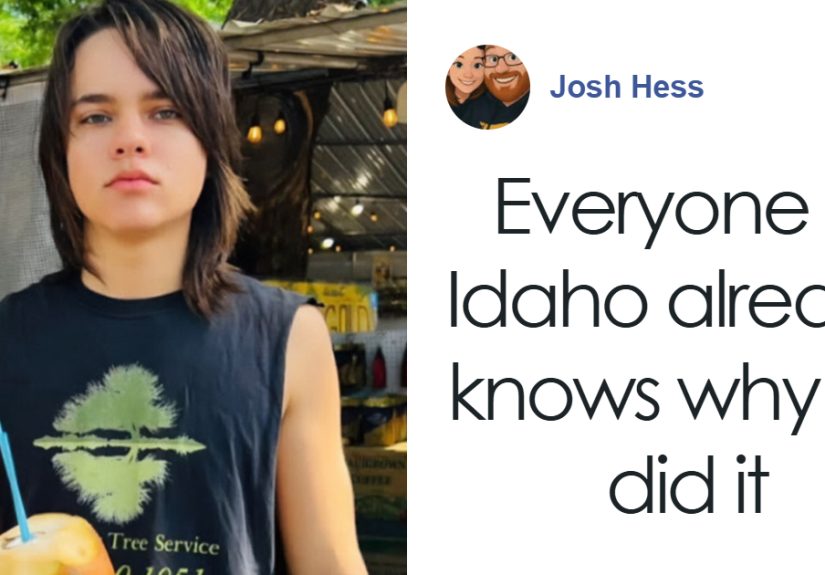
Some headlines move so fast they trip over the facts. This is one of those stories. The suspect in the Idaho firefighter ambush was widely labeled a “teen sniper” in viral coverage, but authorities identified him as 20-year-old Wess Roley. That detail matters, because this case has already generated enough noise without adding avoidable confusion. What remains clear is the larger, more devastating truth: two firefighters were killed, a third was seriously injured, and a community in northern Idaho was left trying to understand how a wildfire call turned into a deadly trap.
The shocking twist that pushed the story even deeper into the national conversation was the now-deleted Instagram Story authorities displayed after the attack. In the image, Roley appeared in dark camouflage with a mask or face covering and face paint, with music playing in the background. On its own, the post looked eerie. In hindsight, it looked ominous enough to send the entire internet into detective mode. But the more complicated question was never just what he posted. It was why he did what he did.
That is where the grandfather’s comments entered the story. Dale Roley described his grandson as a young man who wanted to work outdoors, liked the woods, and had wanted to become a firefighter. In other words, this was not a case that fit neatly into the lazy internet filing cabinet labeled “obvious villain, obvious motive, end of story.” Instead, the reporting painted a messier and more unsettling picture: a young man with firefighting ambitions, growing frustration, and signs of unraveling that only looked unmistakable after the tragedy.
What Happened on Canfield Mountain
On June 29, 2025, firefighters responded to a brush fire on Canfield Mountain near Coeur d’Alene, Idaho. Investigators said the fire was intentionally set to lure first responders into the area. When crews arrived, they came under gunfire. Two veteran firefighters, Battalion Chief Frank Harwood and Battalion Chief John Morrison, were killed. A third firefighter, engineer Dave Tysdal, was seriously injured but survived after emergency treatment and surgery.
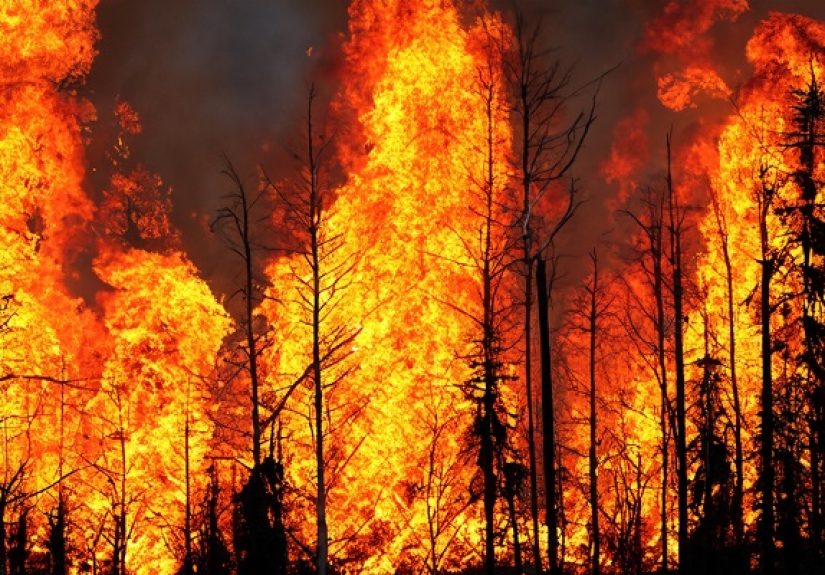
The attack unfolded in terrain that already made the response difficult: rugged ground, timber, smoke, and an active wildfire. Add a hidden shooter into that equation and the result was a worst-case scenario for fire crews who are trained to fight flames, not dodge bullets. Authorities later said more than 300 law enforcement personnel responded, and the fire itself grew to roughly 26 acres before crews were able to regain control.
Investigators said Roley acted alone. Authorities also said they believed he started the blaze and then used the responding emergency call as an ambush opportunity. Later reporting added another detail that made the event feel even colder: firefighters had reportedly asked him to move his vehicle before the shooting began. That detail stripped the attack of any remaining illusion of chaos or accident. It read instead as premeditation with a terrible human cost.
The Instagram Story That Turned a Breaking News Item Into a National Obsession
In high-profile crimes, social media often becomes the digital equivalent of a half-open door: people assume the answer is inside, then discover only more shadows. In this case, authorities released a screenshot from a now-deleted Instagram Story that appeared to show Roley wearing camouflage and a mask, with dark face paint and what looked like ammunition. It was the kind of image that immediately generated headlines because it seemed to transform the attack from horrible to haunting.
There is a reason the Instagram detail caught fire online. Social media posts feel intimate, immediate, and suspiciously cinematic. They create the impression that the perpetrator left behind a final clue for the public to decode. But an ominous post is not the same thing as a complete explanation. The image suggested preparation and mindset; it did not, by itself, provide a fully formed motive.
Still, it mattered. Authorities showed it because it appeared connected to his mental state and timing. Journalistically, the post became important not because it answered every question, but because it reinforced that the attack was not spontaneous in the ordinary sense. It fit with the broader picture investigators were building: deliberate fire-setting, a calculated ambush, and evidence that the suspect was thinking in dramatic, confrontational terms before the shooting.
What the Grandfather Said, and What He Did Not
Many viral articles framed the grandfather’s comments as if he had cracked the case wide open. Reality was less tidy. Dale Roley did not offer a definitive motive in the courtroom sense. What he offered was something more human and, in some ways, more disturbing: contradiction.
He said his grandson had wanted to be a firefighter. He described him as a young man who liked the woods, worked in tree service, and seemed optimistic not long before the shooting. He also expressed disbelief, saying there was no obvious rhyme or reason and suggesting that “something must have snapped.” That is not a solved motive; that is a family member staring into a crater and trying to guess what caused the explosion.
Even so, his remarks mattered because they pointed to a painful possibility. This may have been an attack shaped not by one clean ideological slogan or one dramatic feud, but by resentment, identity collapse, and failed self-image. A young man who wanted to join the ranks of respected public-service workers may have come to see himself instead as excluded from them. That does not excuse anything. It does, however, help explain why this case unnerved so many people. It carried the grim logic of broken aspiration curdling into violence.
Later Findings Made the Picture Even Darker
As the investigation continued, authorities added more context that made the “grandpa disclosed the motive” headline feel too simplistic. Sheriff Bob Norris later said Roley had tried to join the Army and had also gone to a fire station asking about becoming a firefighter. According to the sheriff, he became frustrated when he learned there was a formal hiring process rather than an immediate entry point. Investigators also said they found a farewell letter to his father and drawings that suggested planning and fatalistic thinking before the ambush.
That later reporting did not magically settle every question, but it sharpened the outline. The official picture that emerged was of a young man whose frustrations had been growing, whose ambitions repeatedly stalled, and whose final actions were not random. The attack was described as premeditated. The fire was described as bait. The Instagram Story was no longer an isolated creepy image; it became part of a wider pattern of signaling, ritual, and preparation.
And yet the most frustrating truth remained: even with more evidence, the motive still resisted reduction into one headline-friendly sentence. Was it anger over rejection? A personal collapse? A fantasy of confrontation? A desire for significance through destruction? The reporting suggests all of those currents may have intersected. Tragedy, as usual, refused to be convenient for SEO.
Why This Story Hit So Hard
There are shootings that horrify people because they are shocking. Then there are shootings that horrify people because they violate a basic social script. This was the second kind. Firefighters are among the people communities are conditioned to associate with rescue, not risk from the people they are rescuing. When first responders are lured into danger by the very emergency they are trying to contain, the emotional effect is different. It feels like an attack on the idea of public safety itself.
That is a big reason the Idaho firefighter shooting story spread so widely. The setting was cinematic in the worst possible way: a mountain fire, brush smoke, emergency radio traffic, and a hidden shooter above the scene. The social-media component added another layer. So did the family testimony, especially the grandfather’s insistence that the suspect once admired firefighters. Altogether, the narrative became almost impossible for the public to look away from.
But the deeper reason the story lingered is simpler. Americans understand ambition. They understand disappointment. They understand wanting to belong somewhere honorable. What they do not expect is for that hunger to twist into an ambush against the very people someone once wanted to join. That inversion is what gave the story its lasting chill.
The Real Lesson Behind the Headline
If there is one lesson here, it is that modern warning signs do not always arrive as giant flashing billboards. Sometimes they arrive as fragments: a social media image, growing frustration, erratic behavior, failed applications, isolation, angry fixation, performative toughness. None of those pieces alone automatically predicts violence. Put enough of them together, though, and the pattern starts looking less like randomness and more like deterioration in plain sight.
That makes this story larger than one awful day in Idaho. It touches on first responder safety, online self-staging, mental instability, grievance culture, and the dangerous mythology some people build around confrontation. The Instagram Story drew headlines because it was visually striking. The harder truth is that the warning signs were probably not confined to one post at all. The post was just the final frame people could see.
Experiences That Surround a Tragedy Like This
Stories like the Idaho firefighter ambush are often covered as timelines, evidence lists, and headline updates. But there is another layer that does not fit neatly into breaking-news format: the lived experience around the event. In a real community, a tragedy like this does not arrive as a single moment and then politely leave. It settles in. It changes the emotional temperature of ordinary life.
For firefighters, the experience is especially difficult because their work depends on trust in the mission. They respond to smoke, alarms, crash scenes, and brush fires with the assumption that the threat is the emergency itself. When an attacker weaponizes that call for help, it shakes a professional instinct that is built over years. Colleagues begin replaying routine decisions in their minds. Dispatch audio feels heavier. Approaching a fire line or isolated road no longer carries exactly the same emotional meaning it did before. The job remains the job, but the sense of innocence around it is damaged.
For dispatchers and law enforcement officers, the experience is different but just as intense. They are the people hearing the first fragments before the public knows anything: confusion over the radio, clipped requests for backup, partial descriptions, changing locations, voices straining to stay controlled. In incidents like this, the burden is not only operational. It is psychological. They have to process fear while still sounding calm enough for everyone else to function. Later, when the community moves on to theories and online hot takes, those workers are often still replaying the original audio in their heads.
For neighbors, hikers, and residents near the mountain, the experience becomes strangely physical. A place that used to mean recreation, trees, and weekend air suddenly acquires a second identity. Trails feel different. Smoke smells different. Even a normal siren can trigger a quick stomach drop. People remember where they were when shelter-in-place alerts landed on their phones. They remember watching helicopters circle and realizing that the emergency was not just a wildfire but a human hunt. The landscape keeps its beauty, but it no longer feels untouched.
Families of first responders often carry another version of the story entirely. They know the rhythms of the job, the unpredictable shifts, the interrupted dinners, the late-night calls. What changes after an ambush is the category of worry. Fire was always dangerous. Medical calls were always unpredictable. But targeted violence introduces a fear that feels more personal and less manageable. It is one thing to fear the hazards of the profession; it is another to fear deliberate hatred meeting the profession at the scene.
And then there is the broader public experience: the collective attempt to make sense of a case that does not cooperate. People look for a clean answer because clean answers feel safer. If the motive is simple, then maybe the world is still orderly. But stories like this push back against that comforting idea. They remind us that violence can grow in private, in fragments, in ego, in fantasy, in disappointment, and in silence. That realization is unsettling, but it is also necessary. Communities recover not by pretending the event was easy to explain, but by facing how complicated it really was.
In the end, the Idaho firefighter shooting is remembered not just because of one Instagram Story or one family quote, but because it exposed the fragile line between public service and public danger. The firefighters who responded that day were doing what firefighters do: showing up. The community response afterward, from vigils to processions to recovery efforts, showed the other half of the story. Violence can wound a town deeply, but it does not get the final word unless people surrender the values it attacked in the first place.
Conclusion
The headline version of this story promises a neat arc: ominous Instagram Story, grandfather reveals motive, mystery solved. The real version is more unsettling. Authorities identified a 20-year-old man who allegedly set a fire, ambushed firefighters, and left behind social media and personal evidence that pointed to planning, frustration, and collapse. His grandfather’s comments helped explain the contradiction at the center of the case, but they did not erase the uncertainty surrounding exactly how that contradiction turned deadly.
That is why this case continues to resonate. It is not only about what was posted online. It is about what happens when aspiration turns into grievance, when performance turns into violence, and when a call for help becomes the setup for an attack. The Instagram Story may have been the image that grabbed attention, but the deeper story is the one communities everywhere keep trying to reckon with: how to recognize danger before the smoke rises and the radios start screaming.