Table of Contents >> Show >> Hide
- What “Igneous Wallpaper – Navy” Actually Is (and Why It Looks Like Rock Candy for Grown-Ups)
- Why Navy Works So Well for an Igneous Pattern
- Where Igneous Wallpaper – Navy Shines: Room-by-Room Ideas
- 1) Powder room: small space, huge payoff
- 2) Dining room: instant “even the takeout feels fancy” energy
- 3) Bedroom: the grown-up feature wall behind the headboard
- 4) Home office: moody focus without feeling depressing
- 5) Entryway or hallway: make the first 10 seconds count
- 6) The ceiling: bold, but surprisingly elegant
- Design Pairings That Make Navy Igneous Wallpaper Look Expensive
- Material, Finish, and Lighting: The Practical Stuff People Forget
- Installation: How to Get a Clean Result Without Losing Your Mind
- Care and Longevity: Keeping Navy Looking Fresh
- Conclusion
Some wallpapers whisper. Igneous Wallpaper – Navy strolls in wearing a velvet blazer,
orders an espresso, and somehow makes your plain drywall feel underdressed.
If you’re craving a wall that looks like it was forged somewhere between a luxury hotel lobby and the inside
of a geode, navy “igneous” style is the sweet spot: deep, moody blue with mineral-like movement and a
light-catching finish that reads expensive even when your furniture is… “vintage” (a.k.a. from your last apartment).
This guide breaks down what “Igneous – Navy” is, why it works, where to use it, and how to install it without
turning your weekend into a documentary titled Man vs. Seam.
What “Igneous Wallpaper – Navy” Actually Is (and Why It Looks Like Rock Candy for Grown-Ups)
“Igneous” isn’t just a cool geology word you vaguely remember from middle school. In wallpaper form, it’s a
rock-inspired design that mimics the crystallized texture of igneous stonethink cooled magma, but with better lighting
and less danger to your security deposit.
The signature look: non-repeating, mineral-like movement
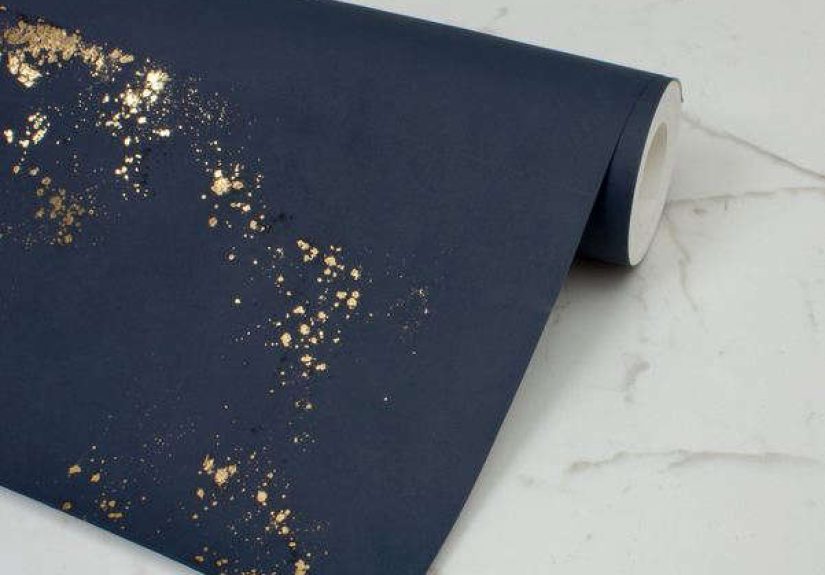
A big reason Igneous Wallpaper – Navy feels custom is the way the pattern behaves. Instead of the obvious
“copy–paste–copy–paste” rhythm that some wallpapers can’t hide, the Igneous design is often described as
non-repetitive down the length, with organic variation that reads more like a material than a print.
Translation: your wall looks curated, not cloned.
The finish: subtle shine that changes with the day
Many Igneous-style “Navy” wallcoverings are known for a metallic or hand-finished effectsometimes a foiled, burnished,
or mineral sheen that catches light differently in the morning vs. evening. It’s the interior design equivalent of a
great jacket: it doesn’t scream, but it definitely gets noticed.
The practical specs you should know before you fall in love
- Material: commonly offered as a durable non-woven wallcovering (often easier to handle than old-school paper).
- Roll format: typically sold by the roll, and luxury versions may be made-to-order.
- Lead time: premium “designer” wallcoverings can take weeks, not daysplan accordingly.
Why Navy Works So Well for an Igneous Pattern
Navy is the rare dark color that can be dramatic without being chaotic. It’s moody, yesbut also classic, and it plays
nicely with everything from minimal modern to “I collect antique brass like it’s a sport.”
Navy is basically black’s friendlier, more interesting cousin
A deep navy can read nearly black in low light, which gives you the sophistication of a dark wall without the “did we
just paint the room into a void?” feeling. With an igneous texture, that depth becomes dimensionallike the wall has
layers instead of just pigment.
It’s a natural match for metallics and warm neutrals
Designers love pairing navy with warm metals (brass, gold tones) and soft neutrals (cream, ivory, warm white). On an
Igneous-style navy wallpaper, metallic highlights feel intentionallike minerals in stonerather than random sparkle.
Where Igneous Wallpaper – Navy Shines: Room-by-Room Ideas
1) Powder room: small space, huge payoff
Powder rooms were basically invented for bold wallpaper. A navy igneous wallcovering can turn a tiny space into a
boutique-hotel momentespecially with a warm brass mirror, a sculptural sconce, and a sink that doesn’t look like it
came free with a rental.
2) Dining room: instant “even the takeout feels fancy” energy
Navy walls make meals feel a little more intentional. Add an igneous texture and suddenly your dining room reads like
a private club (minus the membership fees). Pair with linen drapes, warm wood furniture, and a statement chandelier.
3) Bedroom: the grown-up feature wall behind the headboard
If you want cozy without going full cabin-core, place Igneous Wallpaper – Navy behind the bed. It anchors the room,
frames the headboard, and makes white bedding look crisp instead of “I forgot to add color.”
4) Home office: moody focus without feeling depressing
Dark walls reduce visual noise. A textured navy adds depth without busy patterning. Add a warm desk lamp, a leather
chair (or faux leatherno judgment), and a few natural elements like wood or plants so the room doesn’t become “the
lair of unpaid invoices.”
5) Entryway or hallway: make the first 10 seconds count
Hallways are often neglected because they’re “just a pass-through.” But that’s exactly why wallpaper works: it turns
a boring corridor into a deliberate experience. Navy igneous texture + good lighting = instant upgrade.
6) The ceiling: bold, but surprisingly elegant
Wallpapering a ceiling can feel daring, but navy overhead can read cozy and intentionalespecially in dining rooms,
powder rooms, and reading nooks. Keep trim and walls lighter so the room doesn’t feel compressed.
Design Pairings That Make Navy Igneous Wallpaper Look Expensive
Navy + brass/gold: the “quiet luxury” shortcut
Navy and warm metallics are a power couple. With an igneous pattern, the pairing feels even more naturallike light
catching mineral edges. Try brass picture lights, gold-framed art, or warm-toned cabinet pulls.
Navy + cream: clean contrast that keeps things airy
If you love navy but worry about darkness, cream is your best friend. Cream upholstery, warm white paint, and soft rugs
keep the room balanced while the wallpaper does the drama.
Navy + natural wood: modern, warm, not fussy
White oak, walnut, or even a well-chosen “this is definitely wood” laminate works. Navy adds depth; wood adds warmth;
together they look intentional and timeless.
Navy + layered blues: monochrome, but make it interesting
Navy can handle neighbors. Add denim, slate, and even teal accents (pillows, art, ceramics). The key is texture: mix
matte fabrics with glossy finishes so everything doesn’t blend into one big blur of “blue-ish.”
Material, Finish, and Lighting: The Practical Stuff People Forget
Igneous Wallpaper – Navy is all about how it behaves in real lifeespecially under lighting. Dark colors absorb light,
but mineral and metallic textures can bounce it back in a softer way. Before committing, do what pros do:
order a sample, tape it up, and look at it in morning sun, afternoon glare, and nighttime lamp light.
In a north-facing room (cooler, flatter light), navy can look deeper and moodier. In a south-facing room (warm light),
it may look richer and slightly brighter. If you’re using it in a low-light space, plan layered lighting: overhead +
sconces + a lamp. Your wallpaper is not a flashlight. It will not “light up the room” by itself no matter how much it
sparkles.
Installation: How to Get a Clean Result Without Losing Your Mind
Step 1: Wall prep is not optional (sorry)
The best wallpaper in the world can’t hide a wall that looks like it lost a fight with a roller tray.
Smooth, clean, dry walls are the goal. If you’re using removable or peel-and-stick, wall finish matters even more:
satin or semi-gloss paint is often recommended, while matte and heavily textured surfaces are usually a problem.
Step 2: Choose the right application type for your reality
Wallpaper generally lands in a few camps:
-
Paste-the-wall / non-woven (traditional-but-modern): Often easier to reposition than older styles and
less messy than pasting the paperbecause the adhesive goes on the wall, not the back of the wallpaper. -
Peel-and-stick: DIY-friendly and great for commitment-phobes (and renters), but it demands careful alignment
and clean surfaces to avoid bubbles and lifted seams.
Step 3: Measure like you mean it (then order a little extra)
Wallpaper math is real math. Pattern matching and trimming create waste. Also, color can vary between print batches
(often labeled by a dye lot or run number). If you run out and reorder later, you risk a slightly different shade.
Ordering an extra roll up front is usually cheaper than buying regret later.
Step 4: Avoid the most common DIY mistakes
- Installing over old wallpaper: it can cause bubbling and adhesion issues.
- Skipping the cleaning step: dust and residue reduce adhesion, especially for peel-and-stick.
- Rushing seams and pattern alignment: the first panel sets the whole project’s “straightness.”
- Not wiping away paste residue: dried paste can leave shiny spots on the surface.
Tools that make life easier
- Level (or laser level) + pencil for a plumb line
- Smoothing tool/squeegee
- Sharp utility knife + straightedge
- Step stool or ladder
- Clean microfiber cloths (for hands and for inevitable “oops” moments)
Care and Longevity: Keeping Navy Looking Fresh
Always follow the manufacturer’s care instructions, especially with specialty finishes. In general, treat metallic or
hand-finished surfaces gently: soft cloths, light pressure, and no aggressive chemicals. The goal is to remove dust,
not exfoliate your wall like it’s a skincare routine.
If you’re wallpapering high-traffic areas (hallways, kids’ zones, near bar carts that “somehow” splash), consider how
washable the surface is and whether the substrate is meant for heavy wear.
Conclusion
Igneous Wallpaper – Navy is the kind of wallcovering that makes a room feel intentional fast: deep color,
mineral-inspired texture, and a finish that changes with the light. It works best when you treat it like a hero piece:
balance it with warm metals, creamy neutrals, natural wood, and lighting that lets the texture do its job.
Measure carefully, prep thoroughly, and your walls will look like a designer showed upwithout charging you by the hour.
Real-World Experiences With Igneous Wallpaper – Navy (What It’s Like Once You Actually Live With It)
Here’s what people typically experience when they bring a dramatic navy, mineral-textured wallpaper into their home
the good, the “why is my wall suddenly a mirror,” and the funny little surprises no one mentions until you’re already
holding a smoothing tool like it’s a microphone.
First: the sample stage feels oddly emotional. You tape up a swatch and think, “It’s just wallpaper.”
Then you catch it at 4:30 p.m. when the light hits the surface and the navy shifts from inky to velvety, and suddenly
you’re texting people you haven’t spoken to since college like, “Wait, look at this WALL.” The finish is the whole point:
in bright daylight it can read crisp and modern; at night, it goes moody and luxe. Many homeowners end up sampling
more than one spot because the same paper can look dramatically different on different walls.
Second: you’ll notice the room’s lighting “flaws” immediately. Navy doesn’t forgive weak bulbs.
If you’ve been surviving on one overhead light and vibes, an Igneous-style wallcovering will gently (or not so gently)
encourage you to upgrade. The best lived-in results usually come from layered lighting: a warm overhead, a sconce or two,
and a lamp that creates a soft gradient across the texture. When the lighting is right, the wall looks dimensional.
When the lighting is wrong, you’ll still love itbut you’ll also start shopping for bulbs at midnight.
Third: installation is rarely “hard,” but it is often “fussy.” If you’ve never wallpapered before,
the biggest surprise is how much of success comes from the first panel. Once that first drop is perfectly plumb,
the rest is repetitive in a satisfying way. When that first drop is slightly off, the pattern will politely inform you
by becoming more off as it travels downward. People commonly describe the first hour as “slow and careful,” the middle
as “I’m getting good at this,” and the last panel as “why does the wall suddenly have corners and outlets everywhere?”
Fourth: you will learn new respect for prep work. Anyone who skipped sanding a bump or cleaning a dusty wall
has a story. With a dark finish, small imperfections can cast tiny shadows, especially with side lighting. The good news:
a mineral-like texture can disguise some minor wall sins better than a flat solid color. The bad news: it can’t disguise
a giant drywall ridge. Many DIYers report that spending extra time smoothing the wall is the difference between
“designer feature wall” and “close enough from across the room.”
Fifth: the compliments are disproportionate to the effort. This is the secret joy of wallpaper.
Someone walks into your dining room and says, “Oh wow, did you renovate?” and you get to smile like a mysterious
person who definitely has their life together. A navy igneous wall is especially good at this because it looks like a
material choice, not just a color choice. People read it as stone, textile, or artisan finishsomething curated.
Finally: living with it feels calmer than you’d expect. Navy is bold, but it’s also grounding.
In bedrooms it can feel cocoon-like. In offices it can feel focused. In hallways it can feel gallery-ish.
Most owners report that after a week, the drama settles into “why didn’t we do this sooner?” territory
and then the only real danger is that you’ll start side-eyeing your other walls like they’re underachieving.
If you want a practical takeaway: plan lighting, measure twice, order a little extra, and let the wallpaper be the star.
Navy doesn’t need a lot of backup singers. It just needs a good spotlight and a wall that’s ready for its close-up.