Table of Contents >> Show >> Hide
- Quick answer: Usually no, soy sauce is not gluten-free
- Why does soy sauce contain wheat in the first place?
- So… what soy sauce can be gluten-free?
- How to tell if a soy sauce is gluten-free (without playing ingredient-list detective for an hour)
- What about the claim: “Soy sauce is fermented, so the gluten is gone”?
- Gluten-free soy sauce in real life: where people get tripped up
- Does gluten-free soy sauce taste different?
- Health note: sodium is the real boss level
- FAQ
- Real-life experiences: navigating “Is Soy Sauce Gluten-Free?” in the wild
- Conclusion
Soy sauce is one of those magical liquids that can make plain rice taste like it has a life plan. It’s salty, savory, and basically the shortcut button for “umami.”
But if you’re eating gluten-free, soy sauce can also be the stealthy little troublemaker hiding in your sushi, your stir-fry, and that “healthy” marinade you swore was safe.
So let’s answer the big questionclearly, accurately, and without making you feel like you need a chemistry degree just to season dinner.
Quick answer: Usually no, soy sauce is not gluten-free
Most regular soy sauce contains wheat, which means it contains gluten. This surprises a lot of people because “soy sauce” sounds like it should be… soy. But traditional soy sauce (especially Japanese-style shoyu) is typically brewed with soybeans + wheat + salt + water.
The good news: there are gluten-free options that taste great, work in recipes, and won’t make you feel like you’re dipping sushi into regret.
Why does soy sauce contain wheat in the first place?
Wheat isn’t there to annoy youit’s there for flavor
In traditional brewing, wheat helps feed fermentation and contributes sweetness, aroma, and complexity. During the brewing process, enzymes and microbes break down starches and proteins into flavorful compounds (think amino acids and sugars), which is part of why naturally brewed soy sauce tastes so deep and balanced.
“Shoyu” vs. “tamari” vs. “soy sauce”: what’s the difference?
Here’s the simplest way to think about it:
- Soy sauce (often shoyu): commonly brewed with wheat, so it’s usually not gluten-free.
- Tamari: traditionally more soy-forward and often wheat-free, but not guaranteedsome tamari brands still use wheat.
- “Soy sauce alternatives” (like coconut aminos): not soy sauce, but can be great swaps depending on what you’re making.
So… what soy sauce can be gluten-free?
1) Gluten-free soy sauce (made without wheat)
Many brands make gluten-free soy sauce by replacing wheat with another ingredientoften rice. The result is still dark, salty, and umami-rich, but it may taste a bit smoother or slightly sweeter depending on the formula.
Example: Some gluten-free soy sauces use simple ingredient lists like soybeans, rice, salt, and water (sometimes with small additions like sugar for balance). If the bottle says “gluten-free” and the ingredient list contains no wheat, you’re usually in good shape.
2) Tamari (often gluten-free… but read the label)
Tamari is frequently recommended for gluten-free cooking because many versions are made without wheat. It also tends to be a little thicker and richer than standard soy saucegreat for dipping sauces, dressings, and simple rice bowls where the flavor really stands out.
The key detail: tamari is not automatically gluten-free. Some brands include wheat, or they’re made on shared equipment. If you need to avoid gluten strictly, look for a tamari that specifically says “gluten-free” on the label.
3) Coconut aminos (soy-free and gluten-free, with a sweeter vibe)
Coconut aminos are made from fermented coconut sap (or coconut nectar) and salt. They’re popular with people who are gluten-free and avoiding soy, and they’re often lower in sodium than traditional soy sauce.
Taste-wise, coconut aminos are usually:
- Sweeter
- Less salty
- A bit thinner
They can work beautifully in marinades, stir-fries, and saucesespecially if you add a pinch of salt or a splash of rice vinegar to sharpen the flavor.
4) Liquid aminos (gluten-free, but usually soy-based)
Liquid aminos (like Bragg Liquid Aminos) are another common soy sauce substitute. They’re typically made from soybeans and have a savory flavor that’s close enough for many recipesespecially if you’re cooking, not dipping.
They’re not ideal if you’re avoiding soy, and sodium can still be high, so it’s worth checking the nutrition label if that matters for your health needs.
How to tell if a soy sauce is gluten-free (without playing ingredient-list detective for an hour)
Step 1: Look for a “gluten-free” claim
In the United States, “gluten-free” labeling has a specific meaning: it’s intended for foods that meet a strict threshold for gluten (generally under 20 parts per million). That doesn’t mean “zero gluten,” but it’s the standard used for gluten-free labeling.
Step 2: Check for wheat in the ingredientsor in the “Contains” statement
Wheat is a major allergen in the U.S., and when it’s used as an ingredient, it must be clearly declared either in the ingredient list or in a “Contains: Wheat” statement. That makes it easier to spot the most common gluten issue in soy sauce.
If you see any of these, it’s likely not gluten-free:
- wheat
- wheat flour
- “Contains: Wheat”
Step 3: Remember that gluten isn’t only wheat
Gluten can also come from barley and rye, which are not always as clearly flagged as allergens. Some sauces and seasonings include ingredients like malt (often barley-based).
That’s why, for people with celiac disease or high sensitivity, it’s usually safer to choose products clearly labeled gluten-free rather than guessing based on the ingredient list alone.
Step 4: Consider third-party gluten-free certification
Some products carry third-party gluten-free certification seals. These programs typically involve testing and facility standards beyond basic label claims. Not everyone needs certified products, but certification can add reassuranceespecially if you react to tiny amounts of gluten.
What about the claim: “Soy sauce is fermented, so the gluten is gone”?
You may hear that fermentation “breaks down” gluten. Fermentation can break proteins into smaller pieces, but that doesn’t automatically make the result safe for people with celiac disease.
Another complication: testing fermented foods for gluten can be tricky, and gluten levels can’t be reliably guessed after fermentation.
Bottom line: if you need to avoid gluten, don’t rely on fermentation as your safety plan. Choose a product that’s explicitly labeled gluten-free (or certified gluten-free) and made without wheat.
Gluten-free soy sauce in real life: where people get tripped up
Sushi restaurants
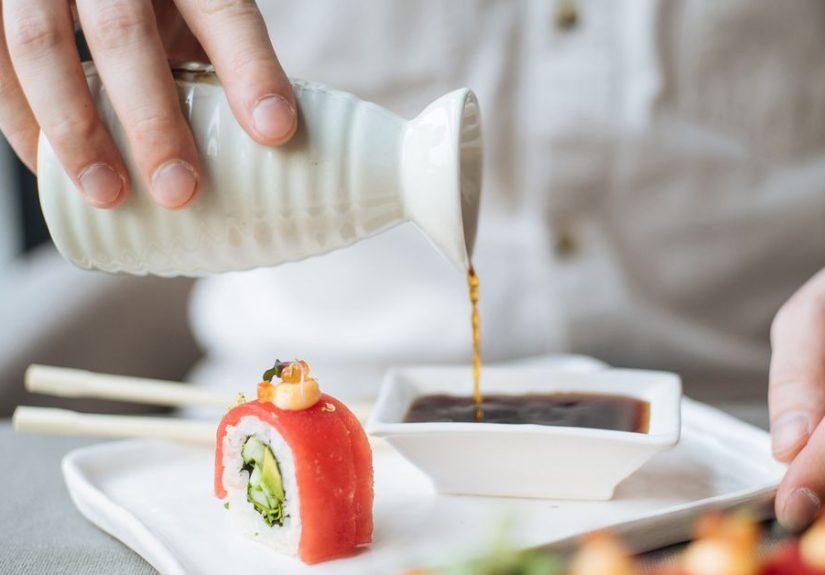
Regular soy sauce is the default at most sushi spots. The easiest move is to ask: “Do you have gluten-free soy sauce or gluten-free tamari?”
If they do, you can also ask if it’s kept separate (to reduce cross-contact from shared dipping bowls or shared bottles).
Stir-fries and marinades
Many stir-fry sauces, bottled marinades, and teriyaki sauces contain soy sauceand therefore often contain wheat. If a recipe calls for soy sauce, you can usually swap in gluten-free soy sauce or gluten-free tamari 1:1.
If you’re using coconut aminos, you may want to add a little salt or reduce the sauce longer to concentrate the flavor.
Hidden soy sauce moments
Soy sauce shows up in places you wouldn’t expect, including:
- teriyaki sauce
- ramen seasoning packets
- “Asian-style” salad dressings
- BBQ sauces with “soy sauce” or “wheat” listed
- frozen meals labeled “stir-fry” or “sweet & savory”
Does gluten-free soy sauce taste different?
Sometimesyesbut “different” doesn’t mean “worse.”
- Rice-based gluten-free soy sauce can taste slightly smoother or a little sweeter.
- Gluten-free tamari is often richer, darker, and a bit less sharp than regular soy sauce.
- Coconut aminos tend to be sweeter and less salty.
- Liquid aminos can be savory and a bit “round,” with a flavor that’s close enough for many cooked dishes.
If you’re dipping sushi or dumplings, gluten-free tamari is usually the closest “classic soy sauce” experience.
If you’re cooking, any of these can workyou just adjust seasoning like you would with any ingredient.
Health note: sodium is the real boss level
Whether it’s regular soy sauce or gluten-free tamari, sodium is usually highoften close to a day’s worth if you’re heavy-handed.
If you’re watching sodium for blood pressure, kidney health, or general wellness, look for reduced-sodium versions, use smaller amounts, and build flavor with other ingredients like garlic, ginger, citrus, rice vinegar, toasted sesame oil, or chili.
FAQ
Is tamari always gluten-free?
No. Tamari is often wheat-free, but some brands include wheat. Always check for a gluten-free label if you need to avoid gluten.
Is soy itself gluten-free?
Yesplain soybeans are naturally gluten-free. The gluten issue usually comes from wheat added during processing (like in regular soy sauce) or from cross-contact in manufacturing.
Can I trust soy sauce if it doesn’t list wheat?
If there’s no wheat in the ingredient list and no “Contains: Wheat” statement, it may be wheat-freebut gluten can still come from other sources or cross-contact.
If you have celiac disease or high sensitivity, the safest choice is a product labeled gluten-free.
What’s the best gluten-free soy sauce substitute for cooking?
For the closest flavor: gluten-free tamari or gluten-free soy sauce (rice-based).
For soy-free needs: coconut aminos.
For convenience in cooked dishes: liquid aminos can work well.
What should I do if I’m newly gluten-free and overwhelmed?
Start with a simple rule: swap regular soy sauce for a bottle labeled gluten-free and use that as your default at home.
If you’re managing celiac disease, consider working with a registered dietitian who specializes in gluten-free living to help you navigate labels and cross-contact confidently.
Real-life experiences: navigating “Is Soy Sauce Gluten-Free?” in the wild
If you’ve ever gone gluten-free and immediately felt like soy sauce was waiting behind every corner like a cartoon villain, you’re not imagining it. One of the most common “first surprises” people run into is sushi night. You order something simplemaybe a basic salmon rollfeeling proud of your responsible choices. Then the soy sauce arrives, and suddenly you’re staring at that little fish-shaped bottle like it contains secrets of the universe. The server says, “It’s just soy sauce,” and you’re thinking, “Yes, and it’s also wheat sauce wearing a disguise.”
At home, the learning curve can be just as sneaky. A lot of people start by cleaning out the pantry and feel victoriousbread, pasta, crackers, goodbye. Then they make a quick marinade with “a splash of soy sauce,” because that’s what they’ve done for years. Only later do they realize that one “splash” is the culinary equivalent of stepping on a rake. The fix is usually simple: keep one clearly labeled gluten-free soy sauce or gluten-free tamari front-and-center, and donate the regular bottle to someone who isn’t living the gluten-free lifestyle (or to the back corner of the fridge where questionable condiments go to retire).
Grocery shopping can be another classic moment. You find a bottle that looks promisingfancy label, beautiful typography, probably costs more than your first car payment. Then you flip it over and see “wheat” in the ingredients, and your excitement deflates like a sad balloon. The good news is that once you know what to look for, the process gets faster. Many people end up with a “default brand” they trust, plus a backup option (like coconut aminos) for friends who need soy-free meals too. Over time, you stop feeling restricted and start feeling oddly empoweredlike you’ve unlocked the secret menu of sauces.
Restaurant life is where strategy becomes your best friend. Some people keep it simple: ask if the restaurant has gluten-free tamari. Others go full-on prepared (and honestly, respect): they bring a small travel bottle in their bag, especially for sushi or poke. It’s not dramaticit’s practical. And it turns out, most servers don’t mind at all. If anything, they’re relieved you have a safe option and aren’t asking them to invent a new sauce in the kitchen during peak dinner rush.
The biggest shift, though, is confidence. At first, “Is soy sauce gluten-free?” feels like a trick question. Later, it becomes a routine checklike looking both ways before crossing the street. With a few solid swaps, a label-reading habit, and one trusty bottle in your kitchen, soy sauce stops being a food fear and goes back to being what it should be: a delicious supporting character in your meals, not the plot twist.
Conclusion
So, is soy sauce gluten-free? Most of the time, nobecause wheat is commonly used in traditional soy sauce. But you have plenty of tasty options:
gluten-free soy sauce (often rice-based), gluten-free tamari, coconut aminos, and liquid aminos. The safest shortcut is simple:
choose a product labeled gluten-free, especially if you have celiac disease or react to small exposures.