Table of Contents >> Show >> Hide
- What Makes an “Italian” Pork Roast Italian?
- Pick Your Cut: Loin vs. Shoulder vs. Porchetta-Style
- The Italian Flavor Blueprint: A Rub That Does the Heavy Lifting
- Italian Pork Roast Recipe (Garlic-Rosemary Pork Loin with Pan Sauce)
- Ingredients (Serves 6–8)
- Helpful Equipment
- Step 1: Make the Herb-Garlic Paste
- Step 2: Season the Pork (and Dry-Brine If You’ve Got Time)
- Step 3: Sear for a Golden Head Start
- Step 4: Roast, Then Roast Smarter (Not Longer)
- Step 5: Rest Like You Mean It
- Step 6: Make a Quick Italian-Style Pan Sauce
- Slice and Serve
- How Long to Cook Italian Pork Roast: A Practical Timing Guide
- Doneness, Resting, and Food Safety (Without the Anxiety)
- Variations: Turn One Roast Into Three Italian Dinners
- What to Serve with Italian Pork Roast
- Leftovers That Taste Like a Plan
- Troubleshooting: Fix the Usual Pork Roast Problems
- of Kitchen Experiences and Little Lessons (So You Don’t Have to Learn the Hard Way)
- Conclusion
- SEO Tags
If you’ve ever tasted an Italian-style pork roast and thought, “Why does this taste like my kitchen just got a promotion?”
you’ve already met the real secret: a simple herb-and-garlic “blueprint” that turns plain pork into the kind of dinner people
casually bring up again next week. (You know, like a humble brag, but edible.)
This guide gives you one foolproof Italian pork roast recipe plus smart variationsso you can go classic Tuscan,
lean-and-juicy pork loin, or full-on porchetta-style aromatherapy. We’ll talk cuts, timing, doneness, pan sauce, sides,
leftovers, and the tiny mistakes that make pork sad (so we can avoid them like an ex at the grocery store).
What Makes an “Italian” Pork Roast Italian?
Italian roast pork isn’t about a single magical ingredientit’s about a flavor rhythm. The usual cast includes:
garlic, rosemary, sage, fennel seed (or fennel pollen if you’re feeling fancy),
olive oil, black pepper, and often lemon zest for brightness. Many recipes also use
white wine in the pan for a savory, glossy sauce. (If you’d rather skip wine, broth works beautifullyno drama, same reward.)
Two iconic Italian inspirations show up again and again:
Arista di maiale (a Tuscan-style roast, often pork loin with rosemary/garlic and a simple pan sauce)
and porchetta (herb-stuffed, rolled pork with bold aromatics and, traditionally, crackly skin).
This article borrows the best ideas from both, but keeps things practical for a home oven.
Pick Your Cut: Loin vs. Shoulder vs. Porchetta-Style
Option 1: Pork Loin Roast (lean, classic, weeknight-friendly)
Pork loin is the “clean white shirt” of roasts: it looks great, cooks fairly quickly, and needs the right approach to stay juicy.
With an Italian herb paste, a hot start, and a thermometer, you’ll get tender slices that feel special without being fussy.
Option 2: Pork Shoulder (rich, forgiving, Sunday-dinner energy)
Pork shoulder has more fat and connective tissue, so it thrives with longer, slower roasting. If you want a roast that’s
difficult to mess upand leftovers that practically beg to be stuffed into sandwichesshoulder is your best friend.
Option 3: Porchetta-Style (showstopper, crispy edges, “who ARE you?” compliments)
Traditional porchetta involves a rolled roast with bold herbs and often skin-on pork for crackling. At home, many cooks use
pork belly (sometimes wrapped around loin) or a butterflied shoulder. It’s more work, but it’s also a crowd-pleaser that makes
your kitchen smell like an Italian festival moved in and refused to pay rent (worth it).
The Italian Flavor Blueprint: A Rub That Does the Heavy Lifting
Think of the seasoning as a concentrated “Italian pesto’s savory cousin.” You’re building a paste that clings to the meat,
perfumes the fat, and flavors the pan juices. The most reliable combo:
- Garlic (a lotItalian roast pork isn’t shy)
- Rosemary + sage (piney + earthy = roast magic)
- Fennel seed (classic porchetta note; toast it if you can)
- Lemon zest (brightens rich pork and pan sauce)
- Olive oil (helps the paste spread and brown)
- Salt + black pepper (don’t fear saltfear blandness)
- Optional heat: crushed red pepper flakes
One key move: season early when you can. Even 2–4 hours in the fridge helps, and overnight is a big upgrade for flavor.
If you’re short on time, you can still make an excellent roastjust don’t skip the resting step after cooking.
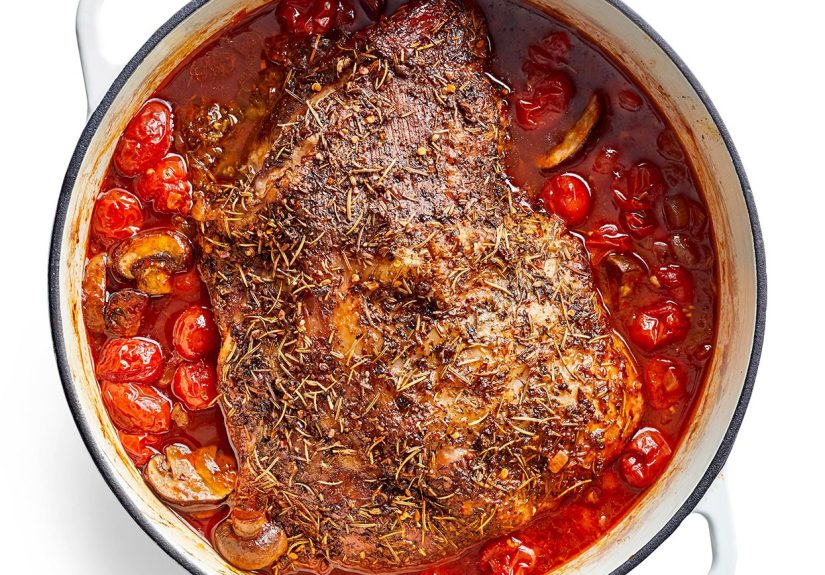
Italian Pork Roast Recipe (Garlic-Rosemary Pork Loin with Pan Sauce)
This is the core recipe: Italian flavors, tender pork, and a pan sauce that makes you want to “accidentally” forget the gravy boat
and drink it from a spoon. It’s written for a pork loin roast, but you’ll also find notes for shoulder and porchetta-style below.
Ingredients (Serves 6–8)
- 1 pork loin roast, 3.5–4.5 lb (boneless; tied if possible)
- 2 1/2 tsp kosher salt (plus more to taste; adjust by roast size)
- 1 1/2 tsp freshly ground black pepper
- 8–10 garlic cloves
- 2 tbsp chopped fresh rosemary (or 2 tsp dried)
- 1 tbsp chopped fresh sage (or 1 tsp dried)
- 2 tsp fennel seeds (optional but highly recommended)
- Zest of 1 lemon
- 3 tbsp extra-virgin olive oil
- 1/2 tsp crushed red pepper flakes (optional)
- 1 cup dry white wine or low-sodium chicken broth (plus more as needed)
- 1 1/2 cups low-sodium chicken broth (for the sauce)
- 1 tbsp flour (optional, for a slightly thicker sauce)
- 1 tbsp butter (optional, for finishing)
Helpful Equipment
- Roasting pan or large oven-safe skillet
- Instant-read thermometer (this is your MVP)
- Kitchen twine (if your roast isn’t already tied)
- Foil (for resting)
Step 1: Make the Herb-Garlic Paste
If using fennel seeds, toast them in a dry skillet for 1–2 minutes until fragrant, then crush coarsely (mortar/pestle or the bottom of a mugvery chef).
Mince garlic, rosemary, and sage together until you get a rough paste.
Stir in salt, pepper, lemon zest, olive oil, and optional red pepper flakes.
Step 2: Season the Pork (and Dry-Brine If You’ve Got Time)
Pat the pork dry. Rub the paste all overtop, sides, and any little folds where flavor can hide.
For best results, refrigerate uncovered (or loosely covered) for at least 2 hours, ideally 8–24 hours.
This helps the salt season the meat more deeply and encourages better browning.
Short on time? Let it sit at room temperature for 30–45 minutes before roasting (while your oven heats). You’ll still get great flavor.
Step 3: Sear for a Golden Head Start
Heat oven to 425°F. Set a large oven-safe skillet or roasting pan over medium-high heat with a drizzle of oil.
Sear the pork 2–3 minutes per side until nicely browned. This step builds flavor (and makes the final roast look like it belongs in a magazine).
Step 4: Roast, Then Roast Smarter (Not Longer)
Transfer the pan to the oven. Roast at 425°F for 15 minutes, then reduce heat to 350°F.
Continue roasting until the thickest part of the pork reaches 145°F.
Depending on roast shape and size, this usually takes 35–60 minutes more.
About halfway through, pour 1 cup wine or broth into the pan (carefullyhot pan!). This helps create flavorful drippings for sauce
and keeps things from getting too dry.
Step 5: Rest Like You Mean It
Move the pork to a cutting board and tent loosely with foil. Rest for 10–15 minutes.
Resting isn’t optionalit’s how you keep the juices in the meat instead of on your cutting board.
Also, the temperature will rise slightly as it rests (carryover cooking).
Step 6: Make a Quick Italian-Style Pan Sauce
Place the roasting pan/skillet over medium heat. If there’s a lot of fat, spoon off a bit, leaving about 1–2 tablespoons.
Sprinkle in 1 tbsp flour (optional) and whisk for 30 seconds.
Add 1 1/2 cups broth and scrape up the browned bits (those bits are basically flavor confetti).
Simmer 3–6 minutes until slightly reduced. Finish with 1 tbsp butter if you want a silky texture.
Taste and adjust salt, pepper, and a little squeeze of lemon if needed.
Slice and Serve
Slice across the grain into 1/2-inch slices. Spoon sauce over the top and brace yourself for people hovering near the platter.
How Long to Cook Italian Pork Roast: A Practical Timing Guide
Roasts are like people: they don’t all behave the same, and some run hot. Use a thermometer for accuracy, but here’s a realistic guide
for a pork loin roast at 350°F after the initial high-heat blast:
| Roast Size | Approx. Time at 350°F (after 15 min at 425°F) | Target Temp |
|---|---|---|
| 3–3.5 lb | 35–45 minutes | 145°F + rest |
| 4–4.5 lb | 45–60 minutes | 145°F + rest |
| 5 lb | 55–70 minutes | 145°F + rest |
If you’re cooking pork shoulder, plan on longer, slower cooking (often 3–5+ hours depending on size) because it’s built for it.
Shoulder is happiest when it gets very tender; loin is happiest when it stays juicy.
Doneness, Resting, and Food Safety (Without the Anxiety)
For whole cuts like pork loin roasts, a safe and juicy finish is 145°F, followed by a 3-minute rest.
That rest time matters for both juiciness and safety.
Ground pork is different (it needs a higher temperature), but for a pork roast, your thermometer is the truth-teller.
One more note: if you use wine in the pan, it adds great flavor, but alcohol may not fully cook off in every dish.
If you’re serving anyone who avoids alcohol, use broth instead. You’ll still get a fantastic sauce.
Variations: Turn One Roast Into Three Italian Dinners
1) Tuscan “Arista” Vibes (Rosemary + Garlic + White Wine)
Lean into rosemary and garlic, keep the seasoning simple, and use white wine (or broth) in the pan. Serve with roasted potatoes,
and suddenly it’s Sunday lunch. Add a handful of sage leaves to the pan for a more Tuscan perfume.
2) Porchetta-Inspired Roast (Fennel, Citrus, Herbs, Big Flavor)
Want that porchetta personality without roasting an entire pig? Use pork shoulder (or a belly-wrapped loin if you’re adventurous),
season aggressively with fennel seed, rosemary, sage, garlic, lemon/orange zest, black pepper, and a little chili.
Roll and tie if you can. Chill uncovered overnight to dry the surface for better browning.
Roast low and slow until tender, then blast heat at the end to crisp the exterior.
3) Gremolata Finish (Fresh, Bright, Restaurant-Looking)
Make a quick topping: finely chop parsley with lemon zest and a small clove of garlic.
Sprinkle over sliced pork right before serving. This adds a fresh “snap” that cuts through richness and makes leftovers taste newly exciting.
What to Serve with Italian Pork Roast
Italian pork roast loves sides that either soak up sauce or bring freshness. A few winning combos:
- Roasted potatoes with rosemary and olive oil (classic)
- Creamy polenta (the sauce and polenta become best friends immediately)
- Garlicky greens like sautéed broccoli rabe, spinach, or kale
- White beans with herbs and lemon (simple, hearty)
- Big salad with bitter greens, shaved Parmesan, and a sharp vinaigrette
Leftovers That Taste Like a Plan
Italian roast pork leftovers are dangerously useful. Try:
- Porchetta-ish sandwiches: warm pork, crusty bread, arugula, lemony mayo, and pan juices
- Pasta night rescue: toss chopped pork with garlicky olive oil, greens, and Parmesan
- Polenta bowls: polenta + pork + sauce + a handful of herbs
- Breakfast hash: crisp potatoes, pork, onions, then top with an egg
Troubleshooting: Fix the Usual Pork Roast Problems
“My pork is dry.”
The usual culprit is overcooking. Pork loin is leanpull it at 145°F, rest it, and slice after resting.
Also, don’t skip the early seasoning; salt helps moisture retention.
“The outside browned, but the inside took forever.”
Roast shape matters. A long, thin roast cooks faster than a squat, thick one. Tie the roast for even thickness if possible,
and always use a thermometer in the thickest center.
“My sauce tastes flat.”
Add a pinch of salt, a squeeze of lemon, or simmer a little longer to concentrate flavors. Scraping the browned bits from the pan
(fond) is the difference between “fine” and “wow.”
of Kitchen Experiences and Little Lessons (So You Don’t Have to Learn the Hard Way)
A funny thing happens with an Italian pork roast recipe: it often becomes the meal people “request” without realizing they’re requesting it.
Someone tastes a slice with that rosemary-garlic perfume, the pan sauce hits the plate, and suddenly you’re hearing,
“So… when are we doing that pork again?” It’s not because the recipe is complicatedit’s because it feels like a restaurant meal,
even though the process is mostly: season well, roast thoughtfully, rest properly, sauce heroically.
One of the most common “first-time” experiences is underestimating how much garlic and herbs the roast can handle.
Italian-style seasoning is bold, and pork is a generous canvas. If you’ve ever made the paste and thought,
“This seems like a lot,” you’re probably doing it right. The aroma mellows in the oven, and what tastes intense in a raw rub
usually turns into a balanced crust after roasting.
Another frequent lesson: the thermometer changes everything. Many home cooks grew up with pork cooked until it was… let’s say “enthusiastically done.”
The result was often dry slices that needed gravy as emotional support. Cooking to 145°F with a rest gives you pork that’s still juicy and tender,
and it surprises people in the best waylike finding out your quiet friend is secretly hilarious.
There’s also the “pan sauce awakening.” The first time someone scrapes up those browned bits and watches wine or broth turn them into a glossy sauce,
it feels like a cooking cheat code. You didn’t add a long list of ingredientsyou simply didn’t waste the flavor that was already there.
That’s a very Italian cooking philosophy: make the most of what you’ve got, and do it with confidence.
Timing is another real-life experience worth mentioning. Italian pork roast can be a calm dinner… unless you skip the rest.
People often pull the roast from the oven and immediately start slicing because the kitchen smells incredible and patience becomes fictional.
But resting is where the roast finishes settling down, and it’s the difference between juicy slices and a cutting board that looks like it’s been crying.
A helpful habit is to make the sauce while the roast rests; it keeps your hands busy and your roast happy.
Finally, leftovers are a whole separate experience. Italian roast pork is the rare leftover that doesn’t feel like a compromise.
It becomes sandwiches, pasta, breakfast hash, and “just one more bite” straight from the fridge.
If you’ve never planned a roast dinner around the leftovers, this is the one to start withbecause day two can be even better than day one.
Conclusion
A great Italian pork roast isn’t about being fancyit’s about being intentional. Season boldly with garlic, rosemary, and friends.
Roast to a juicy temperature, rest so the meat stays tender, and use the pan drippings for a sauce that tastes like you meant to impress someone.
Whether you keep it simple Tuscan-style or go porchetta-inspired for a showstopper, this is the kind of recipe that earns repeat requests
and makes your kitchen smell like it has excellent taste.