Table of Contents >> Show >> Hide
If lockdown taught me anything, it’s this: when the world gets weird, people get creative. Some folks baked sourdough. Some learned guitar. I made masksone for every dayuntil I hit 100. Not just “plain navy, plain black, and a panic-sewn emergency bandana” masks. I mean the fun ones. The dramatic ones. The “did you make that out of a curtain?” ones. The kind that make someone smile before they even hear you say hello.
This project started as practical sewing and slowly turned into a wearable art diary. Every mask marked a mood, a news cycle, a family joke, or a random Tuesday when I needed to do something with my hands instead of doom-scrolling. And yes, I learned very quickly that a creative mask still has to do the boring-but-important jobs: fit well, feel breathable, and sit snugly enough to avoid turning into a chin hammock by noon.
So this article is part gallery, part reflection, and part “what I wish I knew on Day 1.” I’ll walk you through my 30 newest mask designs, plus the real-world lessons behind themwhat makes a mask more comfortable, why fit matters more than people think, and how creativity can be a surprisingly powerful way to stay grounded when life feels upside down.
Why Creative Masks Became More Than Just Fabric
During the pandemic, face coverings became many things at once: public health tools, daily essentials, social signals, and even tiny canvases for self-expression. Public health guidance repeatedly emphasized that the type of mask and how it fits both matter. In plain English: a beautiful mask is great, but a better-fitting one is even better. That’s why my design rule became simpledecorate the outside, protect the structure, and never sacrifice comfort for style.
I also realized that “creative” didn’t always mean flashy. Sometimes it meant a better shape for glasses wearers. Sometimes it meant an adjustable nose bridge that didn’t fog up my lenses while I tried to read an expiration date at the grocery store like a confused archaeologist. And sometimes it meant making a mask that helped someone feel seenespecially when isolation made everyone feel like a floating head on a video call.
Museums and cultural institutions noticed this too. Pandemic masks were collected not just as medical-era objects, but as snapshots of everyday life, community identity, and resilience. That makes sense. A handmade mask can tell you a lot about a moment: what people feared, what they valued, and how they used humor and design to make hard days a little softer.
Before the Gallery: My “Creative but Functional” Mask Rules
1) Start with fit, then add flair
If the mask gaps at the cheeks or slides off the nose every ten seconds, no pattern in the world can save it. I build every design on a snug, structured base with adjustable ear loops or ties. The fun stuff comes after the fit is dialed in.
2) Decorations stay on the outer layer
Sequins, trims, embroidery, painted details, appliquéthese belong on the outside only. The inner layer stays soft, breathable, and skin-friendly. Nobody wants a bead imprint on their face that looks like they took a nap on a craft store.
3) Comfort is a design feature
The most successful masks in my collection are not the loudestthey’re the ones people actually wear for more than ten minutes. Soft lining, balanced weight, and a nose bridge that behaves are the MVPs.
4) Washability wins
If a mask can’t survive regular cleaning, it’s not a practical design. I learned to avoid fragile trims unless they were removable. “Looks amazing in photos” is nice. “Still looks good after laundry” is better.
The 30 Newest Masks From My 100-Day Lockdown Project
Color Therapy Collection
- Sunrise Stripe Mask Warm orange, gold, and blush bands stitched onto a neutral base. I made this after a rough news day, and it somehow feels like wearing optimism with ear loops.
- Mint Condition Soft mint outer layer with crisp white edging and a hidden nose wire. Minimalist, clean, and the one I reach for when I want “calm dentist office, but make it chic.”
- Electric Lemon Neon yellow cotton with charcoal lining. This one is impossible to lose, which is ideal if your house has a mysterious mask-eating dimension.
- Blue Hour Gradient Hand-dyed ombré from pale sky to deep navy. It took forever to get the gradient right, but the result looks surprisingly expensive for something born in my kitchen.
- Confetti Dot Tiny multicolor dots on black, like a party invitation that turned into PPE. Great for video calls when you need “I’m trying” energy.
- Lavender Reset A soft purple linen-cotton blend with a smooth interior. This one became my “errands and no drama” mask because it feels peaceful and doesn’t wrinkle weirdly.
Pattern Play Collection
- Checkerboard Remix Classic black-and-white checks, but cut on the bias so the pattern angles across the face. It looks dynamic without screaming for attention.
- Tiny Florals, Big Mood Vintage-style floral print with a slightly curved shape for better cheek fit. This one convinced me that “grandma curtain energy” can absolutely be a compliment.
- Comic Pop Mask Bold graphic shapes and speech-bubble vibes. It’s playful, goofy, and somehow makes waiting in line feel less bleak.
- Map Print Wanderlust A travel-themed print I made when nobody was going anywhere. Tiny roads, tiny cities, and one giant “someday” feeling.
- Plaid on Purpose Red-and-navy plaid matched at the center seam (yes, I suffered for that alignment). Worth it. Pattern matching is the sewing equivalent of parallel parking under pressure.
- Monochrome Maze Geometric lines that look almost optical-illusion-ish. It’s a smart-looking mask that pairs well with plain clothes and mild existentialism.
Texture and Trim Collection
- Quilted Cloud Softly quilted outer layer with lightweight batting and a breathable lining. Cozy-looking without being bulky, and surprisingly good in cooler weather.
- Denim Patchwork Mask Made from scraps of old jeans and chambray shirts. Heavy on personality, light on waste, and each one looks slightly different.
- Corduroy Accent Thin corduroy panel detail on the outside only, with a smooth interior layer. Texture adds depth, but the inside stays soft so your face doesn’t file a complaint.
- Ribbon Rail Mask Inspired by ribbon-based designs I admired during lockdown, this one uses narrow stitched ribbon bands for color and symbolism. It feels like craft, history, and care all in one piece.
- Satin Edge Everyday Matte cotton body with a satin binding edge. It’s subtle, but the trim gives it a finished look that makes basic outfits seem intentional.
- Pocket Panel Pro Built with a neat internal filter pocket and labeled top edge so nobody wears it upside down. Practical? Yes. Glamorous? No. Useful? Extremely.
Humor and Statement Collection
- Smile But Make It Safe A printed, hand-drawn grin on the outer layer. It’s my favorite “friendly but distant” design and gets the most comments at pickup counters.
- Mute Button Mask Tiny embroidered microphone icon with a slash through it. A tribute to the era of talking for two full minutes while muted on Zoom.
- Loading… Please Wait Pixel-style text across the side panel. This one perfectly captures the energy of 2020 and also most Mondays.
- Plant Parent Mask Little potted plant motifs and a leafy green trim. Made during my “I now have 14 houseplants” phase, which was cheaper than therapy and slightly more humid.
- Grocery List Mask Hand-stamped icons: milk, bread, pasta, coffee. Surprisingly practical if you forget your list and can just stare at your own face in the freezer door reflection.
- No Small Talk Today A tiny text print near the cheek that only people standing too close can read, which is honestly perfect.
Art Mask Collection
- Watercolor Wash Fabric-painted blues and pinks sealed for washability. Every version comes out different, and the soft blending makes it look more like wearable art than PPE.
- Collage Mask Small printed fragments, stitched together in layered blocks. It’s inspired by paper collage techniques but made entirely in fabric.
- Night Sky Embroidery Tiny stars and crescent stitching over dark navy cotton. Time-consuming, yes. Worth it, also yes.
- Museum Label Mask A cream base with a faux “Object No. 28” stitched tag on the edge. This is my nerdy favorite and a wink to how masks became part of history collections.
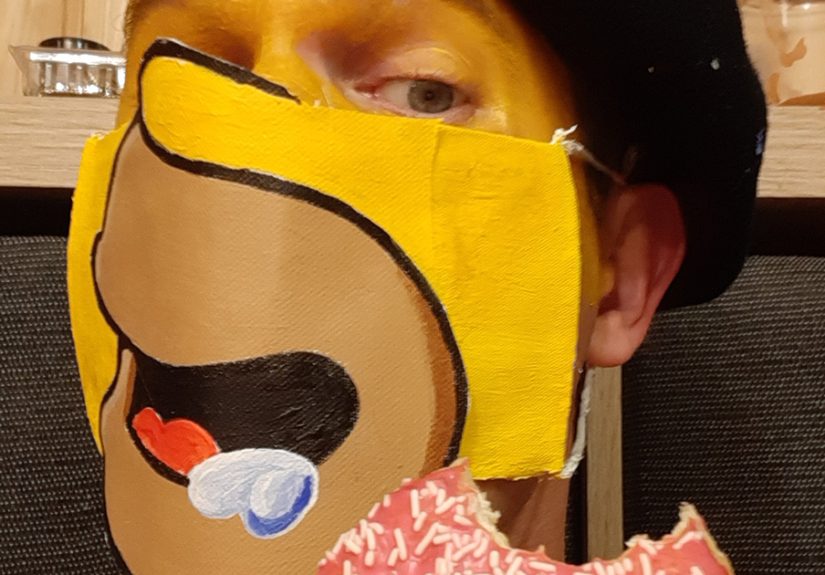
- Comic Tearaway Mask Trompe-l’oeil design that looks like a paper rip revealing bright color underneath. People always try to touch it. Please don’t.
- Patch Note #100+1 This one celebrates the project itself: scraps from earlier masks pieced together into a final “newest” design. It’s part memory quilt, part victory lap.
What I Learned While Making 100 Masks
The biggest lesson? Creativity works best when it respects reality. Early on, I made a couple of “look at me, I’m an artist” masks that were so stiff and overbuilt they felt like wearing a decorative potholder. Very memorable. Completely unhelpful. After that, I got smarter: lighter materials, better seams, adjustable fit, and decorative details that didn’t interfere with breathing or washing.
I also learned that people don’t always want the most dramatic option. They want the mask that fits their glasses. The one that doesn’t tug their ears. The one that makes them feel a little less invisible. The practical masks got worn the most; the artistic masks got talked about the most. The best designs did both.
Another surprise was how emotional the project became. I made masks for neighbors, family, delivery drivers, and one exhausted friend who just wanted “something cheerful that doesn’t look like hospital wallpaper.” A creative mask can’t solve everything, obviouslybut it can soften a stressful interaction. It can spark a conversation. It can say, “I thought of you,” in a moment when that mattered a lot.
And maybe that’s why mask design exploded during lockdown. It wasn’t vanity. It was adaptation. We took something required and made it personal. We turned a daily obligation into a small act of style, humor, and connection.
Extra Reflection: From the Worktable
By the time I got to mask number 100, my sewing table looked like a very specific kind of storm had passed through: thread nests, half-used elastic, tiny fabric triangles I was sure would be useful later, and a coffee mug that had become a temporary home for sewing clips. I started this project because I needed masks. I kept going because I needed a ritual.
During lockdown, days blurred together in a way that was both funny and unsettling. Tuesday felt like Thursday, and every day felt a little like March. Making one mask per day gave me a beginning, middle, and end. I’d choose a fabric in the morning, draft or tweak a pattern at lunch, and finish the final topstitch in the evening. It was a small structure, but it made the day feel real.
The experience also changed how I think about design. Before this, I thought creativity was mostly about originality. Now I think it’s also about empathy. A mask is one of the most intimate things people wear outside of clothing basicsit sits on your face, touches your skin, moves when you talk, and shows up in every conversation. If it pinches, slips, scratches, or fogs your glasses, you notice it immediately. So every design decision became a question: Will this help someone wear it comfortably? Will this hold up after washing? Will this make them feel like themselves?
Some of my favorite moments came from feedback. One person loved a bright geometric print because it made her students smile. Another asked for a softer shape because standard masks pressed on a sensitive area near the nose. Someone else wanted a plain black mask with a hidden floral lining, “just so I know it’s there.” That one really stayed with me. It reminded me that creativity doesn’t always need an audience. Sometimes it’s a private detail that gives you a tiny boost.
I also learned to loosen my grip on perfection. Mask number 12 had uneven pleats. Mask number 27 had a crooked topstitch that I pretended was “organic.” Mask number 46 was technically wearable but emotionally chaotic. And yet each one taught me something useful. Better seam allowance. Better fabric pairing. Better shaping over the nose. The project got stronger because I kept making, not because every piece was flawless.
Most of all, this project gave me a record of a strange time. When I look at these 30 newest masks, I don’t just see fabric. I see phases: the anxious weeks, the hopeful weeks, the “I need color right now” weeks, the practical weeks when I made extras to give away. It’s a timeline you can fold, wash, and hang to dry.
If you’re thinking about starting your own creative challengemask-related or notmy advice is simple: keep it useful, keep it honest, and let it be a little weird. The point isn’t to impress people every day. The point is to keep showing up. Some days your work will be beautiful. Some days it will be lopsided. Both days count.
Final Thoughts
These 30 masks are my newest, but they also feel like a summary of the whole project: practical design, personal style, and a lot of trial-and-error stitched together. If lockdown taught us anything, it’s that creativity doesn’t always arrive as a grand masterpiece. Sometimes it shows up as a well-fitted mask with a ridiculous print and a great nose wire.
And honestly? That’s enough. More than enough. It’s design, it’s resilience, and it’s a reminder that even in hard seasons, people will keep making things beautifuland usefulone day at a time.