Table of Contents >> Show >> Hide
- What Is “Kartoon,” Exactly?
- Why Cardboard Makes Such a Great Illusion Material
- The 15 Pics: Cardboard Illusions That Mess With Your Brain (In a Good Way)
- How the Illusions Work (No CGI Required)
- Creative Recycling, But Make It Actually Useful
- Want to Try a Cardboard Illusion Shoot? Here’s a Safe, No-Drama Way to Start
- Extra Add-On (500+ Words): The Maker Experience Behind Cardboard Illusions
- Conclusion
- SEO Tags
Cardboard is supposed to have a short, forgettable life: it arrives, it protects your stuff, it gets flattened, and it vanishes into the great
blue-bin beyond. Kartoon disagrees. Loudly.
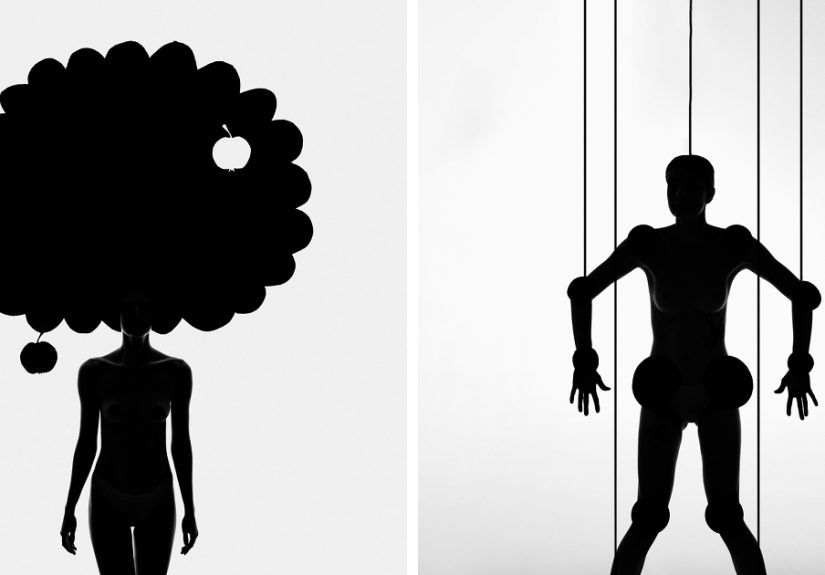
This striking photo series turns “packaging waste” into bold, black silhouettes that fuse with the human body and trick your brain into seeing
something that feels drawn, sculpted, and photographed all at once. It’s minimalism with a mischievous streaklike a comic strip that escaped
the page and started photobombing reality.
What Is “Kartoon,” Exactly?
Kartoon is a studio-based photographic project built around a deceptively simple idea: combine recycled cardboard constructions
with human figures in front of a bright, clean background to create optical illusionsthen photograph the result with a commitment to keeping it
real (as in: real materials, real lighting, real alignment).
The magic lives in the collision of three things: the body (gesture, posture, presence), cardboard
(cut, shaped, and repurposed), and light (used to flatten detail into graphic shadow). The final images land somewhere between
fashion silhouette, surreal poster art, and a visual pun that makes you lean closer and squintbecause your eyes don’t like being pranked this
elegantly.
Beneath the playful look, the concept has teeth: cardboardone of the most common symbols of consumer culturebecomes a “second skin,” asking what
happens when even identity feels packaged, reshaped, and reused. In other words: it’s fun to look at, and it also quietly side-eyes our entire
modern relationship with stuff.
Why Cardboard Makes Such a Great Illusion Material
1) It’s rigid enough to draw with, humble enough to toss
Corrugated cardboard holds its shape better than thin paper, which means you can cut big, confident formscurves, angles, long edgesand they’ll
still read clearly on camera. It’s basically a low-cost sculptural line.
2) It loves high contrast
Illusions like these rely on clean edges and simple shapes. Cardboard, painted or lit into darkness, becomes a
crisp silhouette that your brain instantly interprets as “graphic design,” even though it’s physically in the scene. That tensionflat-looking
shapes on a three-dimensional bodyis where the “Wait… how?” happens.
3) It upgrades recycling into storytelling
Recycling is great. But upcycling is recycling with ambition. When you turn a box into art, you’re not just diverting wasteyou’re changing what
the material means. Kartoon takes that idea to a dramatic extreme: what was meant to disappear becomes the star of the photo.
The 15 Pics: Cardboard Illusions That Mess With Your Brain (In a Good Way)
Below are 15 standout illusions from the Kartoon styleeach one built on bold silhouette logic, clever negative space, and the kind of visual
confidence that says, “Yes, I meant to do that,” even when your brain is still buffering.


What ties these together isn’t just “cool shapes.” It’s consistency: a restrained palette, a controlled background, and a refusal to clutter the
frame. The result is illusion you can understand and still find surprisinglike a magic trick that shows you the deck and wins anyway.
How the Illusions Work (No CGI Required)
Silhouette physics: light does the heavy lifting
Kartoon-style images lean on a classic visual principle: when you reduce detail, the brain fills in the story. Strong lighting and a bright
background push the subject toward shadow, and shadow turns into a readable graphic.
Alignment is everything
The cardboard isn’t just “near” the subjectit’s composed to merge with the body at exactly the right angle. A cutout becomes hair because it
lands where hair would be. A zigzag becomes a “tear” because it splits two profiles with clean symmetry. It’s not digital trickery; it’s
real-world precision.
Negative space is the secret narrator
The most memorable illusions here often depend on what’s missing: a cutout eye, a hollow shape, a gap between forms. Negative space becomes a
design element, which is why these images feel half photograph, half symbol.
Creative Recycling, But Make It Actually Useful
Cardboard and paper products are among the most commonly recycled materials in the U.S., but recycling only works well when the material stays
clean and dry. Food contamination (think grease) and soggy fibers can reduce what facilities can do with it.
The Kartoon approach highlights a practical truth: the “best” use of cardboard is the one that keeps it valuablewhether that’s properly recycled
or repurposed into something that lasts longer than a shipping label.
Quick cardboard reality check
- Flatten boxes to save space and help sorting.
- Keep food and liquids out of recycling; scrape residue when possible.
- Separate extras like plastic inserts, foam, or excessive tape when you can.
- Don’t guess: local rules vary, so treat your city’s guidelines like the actual law of the land.
Kartoon doesn’t pretend art will solve waste by itselfbut it does something powerful: it makes you look at a “throwaway” object long enough to
realize it was never truly worthless. It was just under-imagined.
Want to Try a Cardboard Illusion Shoot? Here’s a Safe, No-Drama Way to Start
You don’t need a giant studio to explore this vibe. You need a willingness to experiment and a respect for sharp tools. (Cardboard is friendly.
Blades are not.)
Step 1: Think in silhouettes, not details
Start with one bold idea: a single shape that “becomes” something when aligned with a personhair, a hat, wings, a halo, a second face. If it
wouldn’t read as a simple logo, it’s probably too detailed for your first attempt.
Step 2: Use clean, dry cardboard
Choose cardboard that’s not greasy, damp, or flimsy. Sturdy packaging works well because it holds edges and doesn’t curl as easily.
Step 3: Cut safely
Use scissors for simpler shapes. If a craft knife is required for thick cardboard, have a responsible adult handle the cutting and always use a
cutting mat and slow, controlled pressure. No rushing. No “just one more cut” while holding it in the air like an action hero.
Step 4: Control the background
A plain wall and one strong light source can go a long way. The cleaner the background, the more your silhouette reads. If you can reduce visual
noise, you’ll increase the illusion.
Step 5: Photograph from one locked angle
Illusions break when the camera drifts. Choose your viewpoint, align the cardboard, and keep the camera level and steady. Tiny shifts can turn
“mind-blown” into “confusing blob” in half a second.
Extra Add-On (500+ Words): The Maker Experience Behind Cardboard Illusions
The first thing most people discover when they try cardboard illusion art is that it feels nothing like “regular crafting.” With many crafts,
you can measure, assemble, and trust the process. With illusions, you measure, assemble, and then your eyes politely inform you that reality has
other plans. The experience is less like building furniture and more like negotiating with perception.
Typically, the process starts with confidence: you sketch a shape, you imagine it hovering perfectly over a shoulder, and you can practically hear
the applause. Then you hold the cutout up and… it looks like a random chunk of cardboard. That’s the humbling part. Illusions usually don’t look
like anything until the final alignment clicks into place. And that means you spend a lot of time doing micro-adjustmentstilting a shape a few
degrees, moving it an inch left, raising it slightly, lowering it slightly, questioning your life choices, repeating.
But here’s the payoff: when the alignment finally locks, it feels electric. One second you’re holding a jagged edge; the next second it becomes a
“tear” down the middle of a portrait. A weird blob becomes hair. A set of curves becomes wings. That moment is the reason illusion art is so
addictiveit’s a sudden switch from chaos to clarity, like your brain snaps a magnet into place.
People also tend to underestimate the role of the human subject. The body isn’t a mannequin; it’s a living, breathing element that can improve
the illusion with the smallest changes. A turned chin can sharpen a profile. A relaxed hand can make a “puppet” concept read as eerie instead of
silly. Even posture can change the story: tall and still feels iconic; slouched and soft feels vulnerable; arms raised feels theatrical. In
Kartoon-style work, the subject is co-author, not background.
There’s also a surprising emotional layer to using recycled material. Cardboard carries a historyshipping labels, creases, the memory of being
“temporary.” When you transform it into something that looks like graphic art, you get this satisfying reversal: the disposable becomes deliberate.
Many makers describe a specific kind of pride here, because the work doesn’t just look coolit feels resourceful. It’s creativity that doesn’t
require fancy supplies, only attention and intention.
Finally, illusion projects train patience in a sneaky way. You can’t muscle your way to a great result; you have to refine the idea until it reads
instantly. That means simplifying shapes, reducing clutter, and letting negative space do the talking. Over time, makers start seeing the world in
silhouette termsshadows on a wall, a coat on a hook, a plant’s outline in bright daylight. The real “experience” isn’t just building one illusion.
It’s developing a new visual language: bold shapes, clear contrast, and stories told with less.
And if you end up staring at a wall thinking, “This would look amazing if it were a giant cardboard face with tiny legs,” congratulationsyou’re
officially in the club.