Table of Contents >> Show >> Hide
- The Moment That Set the Internet Grinning
- Why This Counted as Redemption in the First Place
- How John Legend Became the Perfect Co-Star for the Payoff
- Why “Since U Been Gone” Was the Perfect Song for This Story
- What the Redemption Says About Kelly Clarkson’s Star Power
- Why This Also Worked as Great TV, Not Just Great Gossip
- The Ongoing Chemistry Between Kelly Clarkson and John Legend
- Experiences That Make This Moment So Relatable
- Conclusion
Every so often, pop culture gives us a moment so specific, so delightfully chaotic, and so human that it practically writes its own headline. Kelly Clarkson finally redeeming herself thanks to John Legend is one of those moments. It had everything: a viral memory, a hit song everybody and their emotionally complicated ex knows by heart, a little friendly competition, and a giant wink from the universe.
If you somehow missed the setup, here is the short version. Kelly Clarkson once had one of the funniest celebrity self-own moments on daytime TV when Anne Hathaway identified Clarkson’s own smash hit, “Since U Been Gone,” before Kelly could. It was the kind of clip the internet loves because it felt impossible and completely relatable at the same time. Then, in a later full-circle moment, John Legend showed up, the music started, and Clarkson finally beat the joke. Redemption achieved. Confetti not included, but spiritually present.
That is exactly why the phrase “Kelly Clarkson Finally Redeemed Herself Thanks to John Legend” works so well. It is not really about failure. It is about recovery, comedy, timing, and the strange magic that happens when extremely talented people allow themselves to look gloriously silly on camera. And honestly, that may be even more entertaining than perfect vocals and polished sound bites.
The Moment That Set the Internet Grinning
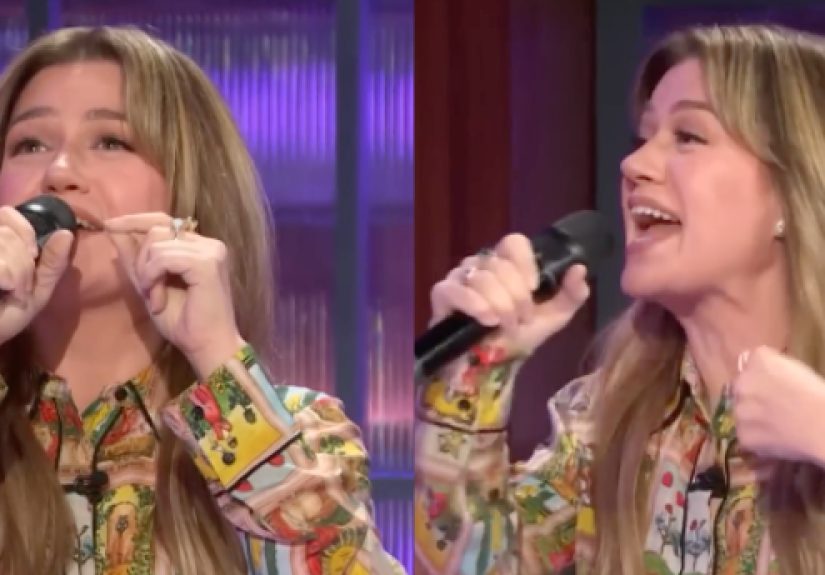
The buzz centered on a segment from The Kelly Clarkson Show in which Clarkson and John Legend played a round of “Sing That Name That Tune.” The setup was already juicy because Clarkson had history with this game. When the band started playing “Since U Been Gone,” you could practically feel the audience leaning in. Was she really about to get haunted by her own hit again?
Not this time.
Clarkson immediately recognized the song and blurted it out with the kind of joy usually reserved for lottery winners, toddlers with cupcakes, and people who finally remember a password they made in 2014. Instead of becoming the punch line, she became the payoff. The moment felt spontaneous, funny, and weirdly triumphant, which is exactly why fans ate it up.
What made it work was Clarkson’s reaction. She did not play it cool. She did not try to act above the joke. She practically jumped into the bit with both boots on, embracing the fact that yes, this was personal, yes, this was ridiculous, and yes, she was absolutely going to celebrate recognizing her own song like she had just discovered gravity.
John Legend, meanwhile, was the perfect scene partner. He did not need to overtake the moment. His presence sharpened it. He was credible enough to make the competition feel real, charming enough to keep the tone playful, and famous enough to make the whole exchange feel like premium television rather than two talented people accidentally wandering into karaoke chaos.
Why This Counted as Redemption in the First Place
To understand why people called it redemption, you have to go back to the original incident. In 2022, Anne Hathaway appeared on Clarkson’s show for the same music game. Clarkson, already frustrated, joked that she wanted the band to play a song she would actually know. Naturally, fate laughed. The song was “Since U Been Gone,” one of Clarkson’s most recognizable hits, and Hathaway beat her to the answer.
That clip became instant comedy gold because it hit a universal nerve. Most people have had some version of that experience. You forget your own phone number while filling out a form. You blank on your favorite restaurant’s name while giving a recommendation. You stand in the grocery store, staring at an ingredient you buy every week, as if it just arrived from another planet. Clarkson’s mistake felt enormous because she is Kelly Clarkson and the song is Kelly Clarkson’s song. But that is exactly what made it human.
So when John Legend stepped into the frame and the same song came around again, the moment carried stakes that were not serious in a life-or-death sense, but were very serious in a “the group chat will never let this go” sense. Clarkson did not just identify the track. She finally closed the loop on one of the funniest recurring jokes attached to her public image.
That is the difference between embarrassment and legend status. Embarrassment is the initial flop. Legend status is when you survive the flop, joke about it, and then come back later to win the sequel.
How John Legend Became the Perfect Co-Star for the Payoff
John Legend’s role in this story matters because he was not just any guest. He is one of the few artists who can walk into a segment like that and immediately add both prestige and comic balance. He has the serious-musician credibility, the smooth TV presence, and the kind of understated humor that makes everybody else look even funnier.
He and Clarkson also have genuine professional history. They are not random celebrities tossed into a segment by a producer holding a clipboard and a dream. Over the years, they have shared TV space, competed in The Voice ecosystem, and even recorded a duet together. That familiarity gives their interactions a lived-in ease. They know how to bounce off one another without turning everything into a fake feud.
And that is why the redemption felt satisfying instead of forced. John Legend was not there to “save” Kelly Clarkson in some dramatic, movie-trailer way. He helped redeem the moment simply by being the right rival at the right time. He gave the scene shape. He gave the joke someone for Kelly to beat. In a weirdly elegant way, he became the witness Clarkson needed.
Every good comeback needs an audience. Every great comeback needs the right foil. Legend was that foil: cool, polished, musically sharp, and just competitive enough to make Clarkson’s victory feel earned.
Why “Since U Been Gone” Was the Perfect Song for This Story
This entire saga works because the song at the center of it is not some obscure album track only hardcore fans whisper about on forums. “Since U Been Gone” is one of the defining pop-rock songs of the 2000s. It helped turn Clarkson from reality-show winner into full-scale pop force. It was loud, cathartic, hooky, and perfectly built for both sing-alongs and emotional overreactions in parked cars.
The song still carries weight because it represents a version of Clarkson that people instantly recognize: funny, fierce, wounded, powerful, and impossible to ignore. It is not just a hit. It is a cultural alarm bell. The opening notes are enough to wake up a whole era of listeners who still know exactly where to scream along.
That legacy matters here. If Clarkson had failed to identify a lesser-known track, the joke would have landed softly. But forgetting this song, of all songs, was comedic gold because “Since U Been Gone” is so tightly tied to her public identity. And recognizing it later, in front of John Legend, turned the moment into a miniature pop-cultural victory lap.
There is also something fitting about a song built on release and moving on becoming the soundtrack for Clarkson’s own public recovery. First the song embarrassed her. Then it rescued her. That is range.
What the Redemption Says About Kelly Clarkson’s Star Power
One reason Clarkson remains so watchable is that she never seems trapped by celebrity polish. She can sing at a level that makes most living humans reconsider every time they have ever attempted karaoke, but she also has no problem being the butt of the joke. That balance is rare. Some stars protect the image at all costs. Clarkson tends to protect the fun.
That instinct is a huge reason her talk-show presence works. Viewers do not tune in only because she can sing. They tune in because she can react. She can laugh at herself. She can turn awkwardness into content. She can make a giant, absurd, deeply online moment feel warm instead of overly managed.
In other words, the “redemption” worked because Clarkson has already built the kind of public persona that can survive a joke. She does not crumble when the internet laughs. She joins in, grabs a mic, and somehow ends up sounding better than everybody else while doing it.
That is also why the moment appealed to fans of both her music and her TV work. It linked the two versions of Kelly Clarkson people love most: the powerhouse vocalist behind a generation-defining breakup anthem and the daytime host who can turn a tiny mishap into a running gag with excellent comedic timing.
Why This Also Worked as Great TV, Not Just Great Gossip
There is a difference between a celebrity moment that trends for a day and one that actually sticks. The second kind usually has a clean narrative. This one had a perfect three-act structure.
Act One: The fall
Kelly Clarkson does not recognize her own song when Anne Hathaway does.
Act Two: The memory
The clip lives online, fans keep referencing it, and it becomes part of her lovable mythology.
Act Three: The comeback
John Legend enters the chat, the same song returns, and Clarkson finally nails it.
That is not just a funny anecdote. That is storytelling. It has setup, callback, payoff, and enough music-industry sparkle to make it feel bigger than a one-minute clip. No wonder entertainment sites jumped on it. It was the rare piece of celebrity content that did not need scandal, outrage, or mystery. It just needed rhythm and memory.
And in a media landscape that often mistakes chaos for relevance, this was refreshingly simple. Talented people. Friendly rivalry. A hit song. A delayed comeback. Sometimes that is all you need.
The Ongoing Chemistry Between Kelly Clarkson and John Legend
If this moment had been a one-off, it still would have been fun. But what gives it extra life is the longer Kelly-John dynamic. They have crossed paths enough over the years that their interactions carry familiarity rather than stiffness. They can do playful competition without slipping into awkward overacting.
That chemistry matters because both of them occupy an interesting space in pop culture. They are major music names, but they are also incredibly comfortable on television. Clarkson thrives in unscripted banter. Legend has the calm, polished delivery of someone who can hold a tune, a panel, or a punch line. Put them together and you get the kind of TV energy that feels effortless even when the format is silly.
Later appearances tied to The Voice only reinforced that dynamic. Their shared promotional moments, including music-heavy appearances and playful interviews, showed that the “redemption” clip was not a fluke. Viewers like seeing them together because they bring different flavors to the same table. Clarkson is fireworks. Legend is velvet. Somehow, that combination works.
And yes, it helps that both of them have the musical credibility to turn any segment into an event. Even when they are joking, there is an unspoken understanding that these are not amateurs clowning around. These are serious artists having fun with their own reputations. That is a very specific pleasure to watch.
Experiences That Make This Moment So Relatable
Here is the secret sauce in the whole “Kelly Clarkson Finally Redeemed Herself Thanks to John Legend” story: people did not love it only because it involved celebrities. They loved it because it mirrored ordinary life in an absurdly glamorous wrapper.
Most people know what it feels like to freeze on something they absolutely should know. You forget your own ZIP code at a self-checkout. You introduce a friend and temporarily lose their name. You rehearse a presentation 12 times and then blank on slide three the second someone important walks in. That is why Clarkson’s original fumble landed. It was exaggerated by fame, but emotionally identical to normal human embarrassment.
And redemption matters because almost everyone craves a second chance after a public stumble. Maybe you tell a joke at work and it dies like a plant in a windowless office. Then one week later, you land the timing and suddenly you are hilarious. Maybe you mess up a recipe in front of family, then make it again and become the hero of dinner. Maybe you bomb karaoke with confidence that should have been illegal, and then six months later come back with the right song and the crowd finally cheers for the correct reasons.
Clarkson’s comeback with John Legend taps into that exact emotional rhythm. It says the cringe moment is not always the end of the story. Sometimes it is just the first draft. Sometimes the thing that embarrassed you becomes the thing that makes your comeback sweeter. Sometimes the callback is better than the original setup.
There is also something deeply satisfying about shared laughter that is not cruel. The audience was in on the joke, but Clarkson was in on it too. John Legend’s presence made it feel communal rather than mean-spirited. That is an underrated quality in celebrity culture, where too many moments are built around tearing people down. This one worked because it let a star be goofy, self-aware, and victorious all at once.
In everyday life, those are often the best moments too. Not the ones where you look flawless. The ones where you recover. The ones where the room remembers your stumble, but you still manage to own the sequel. The ones where somebody beside you helps the moment click, whether that somebody is a friend, a coworker, a sibling, or, if you are Kelly Clarkson, John Legend standing nearby while your own anthem finally comes back home.
That is why the story stuck. It was not just another celebrity clip. It was a miniature masterclass in how to survive a public brain freeze with humor, talent, and a very convenient hit song. Clarkson did not erase the original blunder. She made it better by adding a second chapter. And honestly, that is usually how the best redemption stories work.
Conclusion
Kelly Clarkson finally redeeming herself thanks to John Legend was never about proving she is talented. We already knew that. It was about seeing a beloved star turn a viral facepalm into a full-circle win. The joke was funny the first time because it was unexpected. The comeback was even better because it was earned.
John Legend helped make the moment click, “Since U Been Gone” supplied the emotional rocket fuel, and Clarkson’s willingness to laugh at herself turned the whole thing into irresistible television. That is why the clip resonated. It blended music nostalgia, celebrity chemistry, and plain old human relief into one neat, replayable package.
So yes, Kelly Clarkson finally redeemed herself. Thanks to John Legend, the bit got the perfect stage. Thanks to Kelly Clarkson being Kelly Clarkson, it became more than a joke. It became one of those tiny pop-culture moments that reminds us why charisma beats perfection every single time.