Table of Contents >> Show >> Hide
- Quick Verdict
- Key Specs
- Design & Build: Built for Bad Days
- Tool-by-Tool Breakdown
- Performance in the Real World
- Raptor Rescue vs. Raptor Response vs. Standard Trauma Shears
- Who Should Buy the Raptor Rescue?
- Pros and Cons
- Cleaning & Maintenance Tips
- FAQ
- Conclusion: Is the Leatherman Raptor Rescue the Best Emergency Multitool?
- Experience Section: Practical Moments That Make the Raptor Rescue Shine (About )
- 1) The denim seam showdown
- 2) Seatbelts under tension
- 3) Jewelry turned problem
- 4) The go-bag that stays organized
- 5) Outdoor first aid and gear fixes
- 6) Cardboard, tape, and “temporary” repairs
- 7) Oxygen access without the missing-key game
- 8) The rare window-access problem
- 9) Home emergencies that don’t make the highlight reel
- 10) The “I actually carried it” effect
Trauma shears are supposed to be boring. They’re scissors with a blunt tip, right? Then the Leatherman Raptor Rescue shows up, folds in half like a pocket tool, and quietly packs a seatbelt cutter, ring cutter, oxygen wrench, and a glass breaker. Suddenly “boring scissors” becomes “the thing you keep in your glovebox like it’s a seatbelt insurance policy.”
This in-depth review covers what the Raptor Rescue does well, where it’s overkill, and whether it’s truly the best emergency multitool for your kitor just very fancy shears with outstanding pocket manners.
Quick Verdict
If you want folding trauma shears that carry easily and add real rescue functions, the Raptor Rescue delivers. Cutting performance is strong, the tool selection is practical (no “8 tools” where 3 are the same screwdriver), and the included holster helps you actually keep it accessible. Downsides: premium price, more crevices to clean than one-piece EMT shears, and ergonomics that not everyone will love for long, repetitive cuts.
Key Specs
- Tool set (6-in-1): 420HC folding shears, strap cutter, ring cutter, 5 cm ruler, oxygen tank wrench (US standard), carbide glass breaker
- Size: 5 in closed, 8 in open
- Weight: ~5.8 oz (164 g)
- Carry: folds + locks; holster included; pocket clip and lanyard hole
- Made: USA & global parts; backed by a 25-year limited warranty
Design & Build: Built for Bad Days
Folding + locking is the real magic
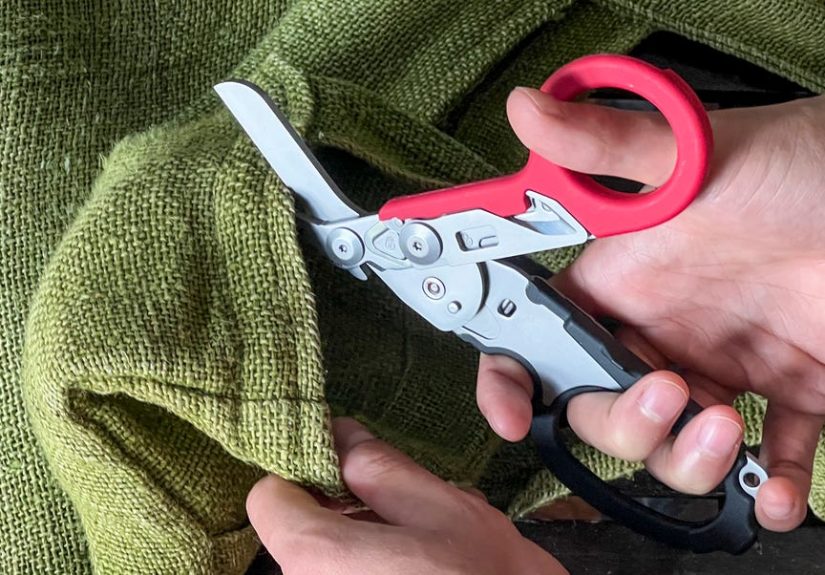
The Raptor’s advantage isn’t a secret bladeit’s carryability. Standard EMT shears are great until they poke your thigh, snag your pocket, or vanish into the bottomless pit of your bag. The Raptor folds down compactly, then locks open so the tool feels stable when you’re cutting under pressure.
Materials and grip
Leatherman uses stainless steel where strength matters and a durable, grippy handle material to keep control when hands are wet, gloved, or both. Translation: it feels like professional gear, not a gadget.
Holster included (and that matters)
The holster keeps the tool accessible and reduces pocket lint infiltrationbecause nobody wants their rescue shear to sound like it’s chewing cereal when you open it. For vehicle kits, the holster also prevents the “loose tool avalanche” that happens every time you grab something from a bag.
Tool-by-Tool Breakdown
1) 420HC folding shears
The main blades are designed to cut tough materials cleanlyclothing, bandages, webbing, and thick seams. In comparative testing and hands-on reviews, the Raptor is consistently described as a strong cutter on fabric and cardboard, with enough bite to handle harder “stress tests” better than many budget shears.
2) Strap (seatbelt) cutter
Webbing is slippery and often under tension. A dedicated strap cutter can be faster than wrestling a seatbelt with the shear blades, and it’s also handy for pack straps, dog leashes, and the occasional “why is this tied in three knots?” situation.
3) Ring cutter
Rings and swelling don’t mix. This tool is made for safe removal when jewelry becomes a circulation problem. It’s the kind of feature you’ll forget existsright up until you really, really need it.
4) Oxygen tank wrench
Not exciting, extremely practical. If you work around oxygen bottles, having the wrench built in means one less small tool to lose when your attention should be on the patient, not your pockets.
5) Carbide glass breaker
This is for rare but serious access problemslike needing to break a vehicle window to reach a patient. It’s not a daily-use feature, but it’s a major reason the Rescue model stands apart from simpler medical shears.
6) 5 cm ruler
Short, but useful for quick reference in clinical checks or gear tasks. Think “good enough for field decisions,” not “architect-grade precision.”
Performance in the Real World
Cutting clothes quickly (the core job)
For emergency care, speed is about exposure: jeans, jackets, belts, and layers need to come off fast without creating new injuries. The Raptor’s shears handle dense fabric well, and the folding design doesn’t compromise stability once locked open.
One tool, fewer fumbles
In a car kit or go-bag, the Raptor Rescue can replace a separate seatbelt cutter and window punch. That simplifies your loadout and makes “grab and go” easier when adrenaline is doing cartwheels in your brain. It also means fewer single-purpose items to buy, store, and forget you own.
Comfort: where opinions differ
Some testers love the grip; others prefer dedicated premium shears for long cutting sessions. If you cut fabric all day, comfort becomes a buying factor. If this lives in a glovebox for the once-in-a-blue-moon emergency, comfort matters less than capability.
Portability: the reason it’s on so many shortlists
Plenty of people own trauma shears. Fewer people actually carry them. A folding form factor plus holster is the difference between “I’m prepared” and “my gear is at home, politely waiting for an appointment.”
Raptor Rescue vs. Raptor Response vs. Standard Trauma Shears
The Raptor line has two personalities: Rescue (full-featured) and Response (slimmer). The Response keeps the shears plus ring cutter, oxygen wrench, and ruler, but drops the strap cutter and glass breaker to save space and simplify carry.
| Choice | Why you’d pick it | What you give up |
|---|---|---|
| Raptor Rescue | Best “all-in-one” emergency multitool: shears + strap cutter + glass breaker, plus holster | Costs more; more detailed cleaning; bulkier than basic shears |
| Raptor Response | Smaller medical EDC with key essentials and a lighter carry profile | No strap cutter; no glass breaker; fewer rescue-centric features |
| Standard EMT shears | Cheap, light, easy to sanitize or replace in high-volume environments | No multitool functions; often less durable; easier to misplace |
Who Should Buy the Raptor Rescue?
It’s a great fit if you…
- Build vehicle emergency kits and want a single, dependable cutting/access tool
- Work as EMT/paramedic, firefighter, rescue staff, or in a role where seatbelts and thick clothing are common
- Carry a first-aid kit for outdoor travel and want tougher-than-average emergency shears
- Prefer gear that stays compact, organized, and actually gets carried
Consider something else if you…
- Need ultra-fast sanitation and minimal crevices (high-volume clinical use)
- Only want “cut tape and gauze” and don’t need rescue extras
- Want the lightest, simplest option at the lowest price
Pros and Cons
Pros
- Strong cutting performance for clothing and webbing
- Useful rescue tools: strap cutter, ring cutter, oxygen wrench, glass breaker
- Folds compactly and locks open for safe cutting
- Holster included; pocket clip and lanyard hole options
- Made in the USA with a long 25-year warranty
Cons
- Premium price compared to regular trauma shears
- More crevices = more time to clean than one-piece shears
- Not everyone finds it comfortable for prolonged cutting
Cleaning & Maintenance Tips
Rescue tools live in messy places: pockets, rigs, car consoles, and dusty bags. The Raptor stays smooth with basic care:
- Wash with mild soap and warm water; use a soft brush for pivots and tight areas.
- Dry thoroughly (especially around the hinge) to reduce corrosion risk.
- Apply a light coat of oil to metal surfaces and pivots after cleaning.
- Use the pivot screw to tune tension if cuts feel too loose or too tight.
- Skip disassembly: the manufacturer advises against taking it apart for cleaning, since it can affect performance and warranty coverage.
If this lives in a car kit, check it a couple times per year. Heat and dust can turn “ready to rescue” into “ready to squeak.”
FAQ
Is the Raptor Rescue overkill for a car emergency kit?
It can beuntil it isn’t. If you want one tool that can cut clothing, slice a seatbelt, and help with window access, it’s a tidy solution. If you’re building a budget kit, basic trauma shears plus a separate window punch may be more cost-effective.
Is it better than premium dedicated shears?
Dedicated premium shears can win on comfort and easy sanitation, especially for high-volume use. The Raptor wins on carryability and having multiple emergency functions in one package.
Should nurses or clinicians consider it?
Yesespecially if you want compact, reliable shears with a pro build. Just make sure the extra tools fit your workplace rules and that your cleaning protocol is compatible.
What’s the difference between Raptor Rescue and Raptor Response?
Response is smaller and lighter with fewer tools: shears, ring cutter, oxygen wrench, and ruler. Rescue adds the strap cutter and carbide glass breaker and typically includes a holster.
Conclusion: Is the Leatherman Raptor Rescue the Best Emergency Multitool?
For a lot of people, yesbecause emergencies usually come down to two needs: access and cutting. The Leatherman Raptor Rescue gives you both in a compact, carryable tool designed with real field use in mind. If you’re a first responder, a prepared driver, or someone building a serious emergency bag, it’s an easy recommendation.
If your day-to-day demands fast sanitation and hours of cutting, consider whether dedicated premium trauma shears fit you better. Either way, you’ll still be ahead of the person trying to cut a seatbelt with a house key and optimism.
Experience Section: Practical Moments That Make the Raptor Rescue Shine (About )
Specs are helpful, but experience is what sells a rescue tool. Here are realistic scenarios where the Raptor Rescue’s “shears plus extras” setup earns its spot.
1) The denim seam showdown
Heavy jeans, work pants, and thick seams don’t care that you’re in a hurry. A tool with sturdy blades and a stable lock helps you keep a cut going instead of stalling out at the toughest part of the fabric.
2) Seatbelts under tension
After a collision, webbing can be twisted tight or pinned. A dedicated seatbelt cutter is often quicker than trying to angle scissor blades under a strap while the strap fights back. It’s a small advantage that can feel huge when seconds matter.
3) Jewelry turned problem
Swelling can turn a ring into a constricting band fast. Having a ring cutter on the same tool you’re already using avoids the “wait, where’s the ring tool?” scramble and reduces unnecessary handling.
4) The go-bag that stays organized
Most bags become chaos over time. A holstered tool is easier to locate than loose shears drifting through pockets. When you’re stressed, clean organization is basically a superpower.
5) Outdoor first aid and gear fixes
Trail cuts, blisters, ripped straps, and athletic tape are the unglamorous side of adventure. Strong shears handle medical tasks and quick gear trimming without feeling fragile or disposable.
6) Cardboard, tape, and “temporary” repairs
Emergency prep isn’t always dramaticsometimes it’s breaking down boxes, cutting duct tape cleanly, and making a messy situation slightly less messy. The Raptor is overbuilt for this, which is exactly why it feels satisfying to use.
7) Oxygen access without the missing-key game
If you work around oxygen bottles, you’ve seen someone hunt for the tiny wrench like it’s an Easter egg. Built-in is better than “somewhere in my pocket, probably.”
8) The rare window-access problem
You hope you never need a glass breaker. But if you do, you want it to be the tool already in your handnot buried in a trunk organizer under an ancient flashlight and a granola bar that has achieved fossil status.
9) Home emergencies that don’t make the highlight reel
Kitchen mishaps, kids, pets, and DIY accidents account for a lot of real-world first-aid situations. Being able to cut clothing, bandages, tape, or a stuck strap quickly is more common than most people admit.
10) The “I actually carried it” effect
The best emergency tool is the one that’s with you. Folding shears in a holster are more likely to live on a belt, pack strap, or vehicle kit than full-size shears rattling loose. That’s the Raptor Rescue’s not-so-secret advantage: capability that shows up.
The through-line is simple: a tool that’s easy to carry is more likely to be present when you need it. Stash it where your hands can find it fast (holstered, top pocket, dedicated kit slot) and practice opening it once in a while. In emergencies, being present and being familiar is most of the battle.