Table of Contents >> Show >> Hide
- What a macro pad actually does
- Why "cheap enough to give away" finally makes sense
- Who this gift works for (spoiler: more people than you think)
- Buy like a pro: what matters on budget macro pads
- Three budget-friendly routes (with realistic examples)
- Starter macro ideas that make people keep using it
- Setup cheat sheet (so the gift doesn't turn into a weekend project)
- Common pitfalls (and how to avoid them)
- How to gift it so it actually gets used
- Conclusion
- Experiences (about ): why people fall in love with cheap macro pads
Some gifts are “I thought of you.” A budget macro pad is “I noticed you do the same annoying clicks every day-and I want you to stop.” It’s a tiny programmable keypad that can trigger shortcuts, paste text, and control apps, turning repetitive computer work into one-button habits.
The fun part: macro pads aren’t just for streamers anymore. Between cheaper programmable keypads, open firmware like QMK, and friendlier remapping tools, you can now buy (or build) a macropad that’s genuinely useful without spending “premium gadget” money.
What a macro pad actually does
A macro pad is a small set of keys-anywhere from two buttons to a couple dozen-that you assign actions to. Those actions might be a single shortcut, a sequence of keystrokes, a text snippet, or a workflow trigger inside companion software. Many macro pads present themselves to your computer as a standard keyboard, which is why they work across lots of programs with minimal fuss.
Think of it as a “shortcut amplifier.” Your main keyboard already has shortcuts, but a macro pad puts the best ones on dedicated keys-no contortions, no remembering five-key combinations, and no hunting through menus.
At the enthusiast end, firmware like QMK supports macros and layers, letting one physical button do different things depending on the “mode” you’re in. If the device supports a configurator like VIA, you can often remap keys visually instead of living inside a code editor.
Why “cheap enough to give away” finally makes sense
For years, you had two choices: bargain keypads with questionable software, or polished control decks that cost as much as a good keyboard. Now you can pick a path based on how much you want to tinker-and still keep the cost gift-friendly.
- Plug-and-play programmable keypads (often $20-$50): simple grids of keys; great for shortcuts and text snippets.
- Mini control decks with icons (often under $100, frequently discounted): polished software and visual labels.
- DIY macropads (often $30-$60 plus your time): perfect for makers and for personalized gifts.
Here’s a helpful way to define “cheap enough to give away”: you should be comfortable buying it without needing a long conversation about “value.” If it’s in the same mental category as a nice water bottle or a good desk lamp, you’re in the right price zone.
Who this gift works for (spoiler: more people than you think)
- WFH folks who live on video calls and constantly mute/unmute.
- Students who juggle notes, screenshots, citations, and timers.
- Creators who repeat the same export, edit, and tool-switch actions daily.
- Gamers/streamers who want scene changes, push-to-talk, and audio control.
- Anyone who hates remembering shortcuts but loves the result of shortcuts.
Buy like a pro: what matters on budget macro pads
1) How it’s programmed (and where the macros live)
Some pads store macros on the device. Others need a companion app running in the background. For a gift-especially for someone on a locked-down work laptop-onboard memory is gold. It also makes the pad “portable”: it behaves the same on any computer you plug it into.
2) Compatibility and software reality
Cheap hardware is easy; good software is harder. Confirm whether setup works on Windows, macOS, and Linux. Proprietary tools can be Windows-only; QMK/VIA-style boards are often more cross-platform-friendly.
3) A knob is the “cheap luxury” upgrade
A rotary encoder (turn + press) makes a budget pad feel premium. Volume is the obvious use, but the magic is mapping it to zoom, scrolling, or timeline scrubbing-tasks that feel more natural with a dial.
4) Labeling and memory
If a macro pad doesn’t show labels (screens or icons), include a cheat sheet or stickers. The fastest way for a gift to fail is: “I forgot what button 7 does.”
5) Build quality signals
Hot-swappable mechanical sockets, a stable case, and a sturdy USB-C port usually mean fewer headaches. You don’t need boutique quality-but you do want “doesn’t slide around the desk” and “doesn’t disconnect if you sneeze.”
Three budget-friendly routes (with realistic examples)
Route A: Simple programmable keypads
These are the “just give me extra buttons” options: small grids of keys that you program for shortcuts, combos, and text. They’re excellent for office workflows, study setups, and light creative work. The best versions let you save multiple profiles (for different apps) and keep those profiles stored on the device.
Best for: basic shortcuts, paste snippets, launching apps, window management.
Route B: Stream Deck-style mini control decks
Control decks earn their price with software and feedback. Being able to put an icon or label on a key reduces guesswork and makes multi-page setups usable. They’re especially strong for creators (OBS, audio routing, editing presets) and for “meeting control” buttons like mute/camera toggles.
Best for: people who want clear labels and a polished setup experience.
Route C: DIY kits that look custom
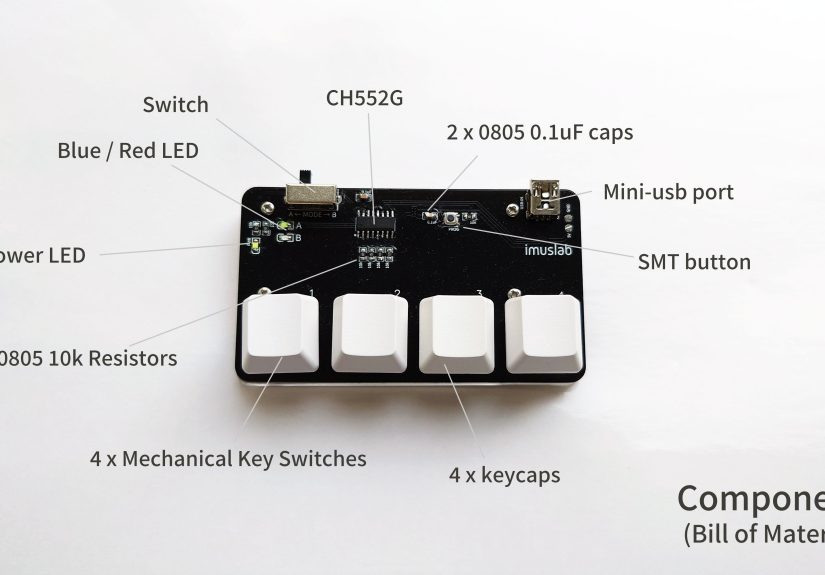
If your recipient likes building things-or you want to build and gift the finished piece-DIY macropads are a sweet spot. Boards designed for macropads often combine a small key grid with LEDs and a rotary encoder. The result can feel far more “special” than the price suggests, especially if you program it for the person’s job or hobby.
Best for: makers, tinkerers, and “I want this to feel personal” gifting.
Starter macro ideas that make people keep using it
The adoption secret is simple: ship the gift with 6-10 “daily wins.” Once the recipient feels the payoff, they’ll expand the layout themselves.
- Meetings: mute, camera toggle, share screen, “I’ll follow up” paste snippet.
- Students: open notes + timer + class portal, screenshot + paste, citation template snippet.
- Creatives: export presets, add marker, toggle tools/panels, zoom in/out on a knob.
- Developers: run build/test, open repo + issue tracker, paste a commit message template.
- Everyday: media controls, launch favorite apps, window snapping shortcuts.
Don’t store passwords or sensitive info as “type this text” macros. Treat the pad like convenience hardware, not a security tool.
Setup cheat sheet (so the gift doesn’t turn into a weekend project)
Windows: easiest starting point
For simple remaps, Microsoft PowerToys Keyboard Manager can map one key to another or remap shortcuts. For bigger automations, tools like AutoHotkey can run scripts that send keystrokes and mouse actions-your macro pad can trigger those scripts with a single key press.
QMK/VIA-style boards
If the pad supports VIA, build a couple of layers: “Daily,” “Meetings,” and “Creative.” Put a layer-switch key in a corner, and your tiny pad becomes three pads without taking more desk space.
Common pitfalls (and how to avoid them)
- Different apps, different mute keys: dedicate one key per app (or a “meeting layer”) instead of guessing.
- Work laptop restrictions: prefer hardware-stored macros over software that needs admin rights.
- USB hub flakiness: test directly on the computer first, especially with RGB-heavy devices.
- Too many macros, too soon: start with a small set, then expand once it’s habit.
How to gift it so it actually gets used
Include a one-page legend (“Key 1 = Mute,” etc.) and a short note: “Tell me the three most annoying repetitive things you do. We’ll make them one button.” That tiny promise is what turns a gadget into a thoughtful tool.
Conclusion
A macro pad cheap enough to give away is a rare kind of practical gift: small, affordable, and instantly useful when it’s mapped to someone’s real life. Pick a simple programmable keypad for low cost, a mini control deck for easy labeling, or a DIY kit for maximum personality-and then add a handful of macros that solve real daily friction.
Experiences (about ): why people fall in love with cheap macro pads
Macro pads don’t win hearts because they’re powerful. They win hearts because they remove tiny annoyances-over and over-until you wonder how you lived without them. Here are a few experiences people commonly describe after adding a budget macropad to their desk.
The “meeting save” is real. Someone asks you a question on Zoom/Teams/Meet, you start answering, and then you see the dreaded muted icon. A dedicated mute button is the desk equivalent of a seatbelt: boring until the moment it prevents embarrassment. Add a camera toggle and you get a second kind of relief-no frantic cursor hunting when you need to look professional right now.
Templates become effortless. Teachers, support reps, recruiters, and anyone who writes the same polite sentences all day often end up with a “snippet layer.” One key drops a well-worded response, another inserts a signature, another pastes a checklist (“Here’s what I need from you…”). The joy isn’t the automation itself-it’s the calm of knowing you’ll never retype the same paragraph again.
Creative work feels less like finger yoga. Editors and designers love shortcuts, but remembering dozens of key combos can slow you down-especially if you jump between apps. A small pad turns “Split Clip,” “Add Marker,” “Export Draft,” and “Toggle Panels” into big, reliable buttons. People describe it as making their workflow feel more physical and less mental, like the tools are waiting for them instead of demanding attention.
The knob changes everything. If your macropad has a rotary encoder, you start with volume and end up mapping it to zoom, scrolling, and timeline scrubbing. Turning a knob is faster than hunting for a tiny UI slider, and it’s oddly satisfying. It also makes the pad feel “expensive” even if it wasn’t-like you upgraded your computer with a tactile control.
Students use it as a ritual. One button opens a notes app, a class portal, and a timer. Another starts a break timer and puts music on. It’s not about laziness; it’s about momentum. When a study session starts with one key press, it’s easier to begin-and beginning is usually the hardest part.
It can reduce strain. Not everyone finds multi-key shortcuts comfortable. A macro pad can move the most-used actions to larger, dedicated keys, which some people find easier on their hands and wrists. Even a simple change-one button for a hard-to-reach shortcut-can make a workstation feel more friendly.
The best gifts become inside jokes. Many people end up with one “fun” key: a “BRB” message, a “panic mute,” or a button that launches a celebratory sound effect (used responsibly). That playful element matters. It keeps the pad on the desk, which means the useful keys get used, too.
If you want the gift to stick, don’t overwhelm the recipient with a 40-macro masterpiece on Day 1. Give them a small set of daily wins-then let the pad grow with their habits. That’s when a cheap macro pad turns into a tiny, indispensable part of someone’s day.