Table of Contents >> Show >> Hide
- What Is Androgenetic Alopecia, Really?
- Male Pattern Baldness: How It Typically Looks
- Female Pattern Hair Loss: Same Disease, Different Look
- Male vs. Female Pattern Baldness: A Side-by-Side Comparison
- How Doctors Diagnose Pattern Hair Loss
- Treatment Options: Where Men and Women Overlap – and Where They Don’t
- The Emotional Side of Pattern Hair Loss
- When Should You See a Dermatologist?
- Extra: Real-Life Experiences with Male and Female Pattern Baldness
- Key Takeaways
- Conclusion
If you’ve ever caught yourself zooming in on a selfie to analyze your hairline, welcome to the club. Pattern hair loss – also called androgenetic alopecia – is one of the most common reasons people visit a dermatologist. It affects men and women, but it doesn’t show up in quite the same way, doesn’t always start at the same time, and doesn’t always respond to the exact same treatments.
This guide breaks down the differences between male and female pattern baldness, from causes and symptoms to treatment options and real-life experiences. Think of it as Hair Loss 101 with a calm, science-based voice and a little bit of humor, because your hair may be thinning, but your sense of self definitely doesn’t have to.
What Is Androgenetic Alopecia, Really?
Androgenetic alopecia (often shortened to AGA) is a hereditary form of hair loss that affects the scalp in a “patterned” way. It’s driven by a combination of genetics, hormones called androgens, and time. The main culprit hormone is dihydrotestosterone (DHT), a breakdown product of testosterone that can shrink susceptible hair follicles over years.
When follicles are sensitive to DHT, they gradually miniaturize. Thick, pigmented “terminal” hairs slowly turn into finer, shorter “vellus-like” hairs. Eventually, some follicles may stop producing visible hair altogether. The result on the outside is familiar: receding hairlines, bald spots, and diffuse thinning. On the inside, this process is the same basic disease in men and women – but how it looks and how it’s managed often differs.
How Common Is Pattern Baldness?
Androgenetic alopecia is the most common cause of hair loss worldwide. By midlife, a large proportion of men have noticeable male pattern baldness, and a significant number of women develop some degree of female pattern hair loss. The risk rises with age, but it can start surprisingly early – in late teens or 20s in men, and often in the 30s, 40s, or around menopause in women.
Family history plays a strong role. If your father, mother, grandparents, or siblings have pattern hair loss, your odds increase. The inheritance is complex: it’s not “one baldness gene,” and it can come from either side of the family.
Male Pattern Baldness: How It Typically Looks
The Classic “M” Shape and Beyond
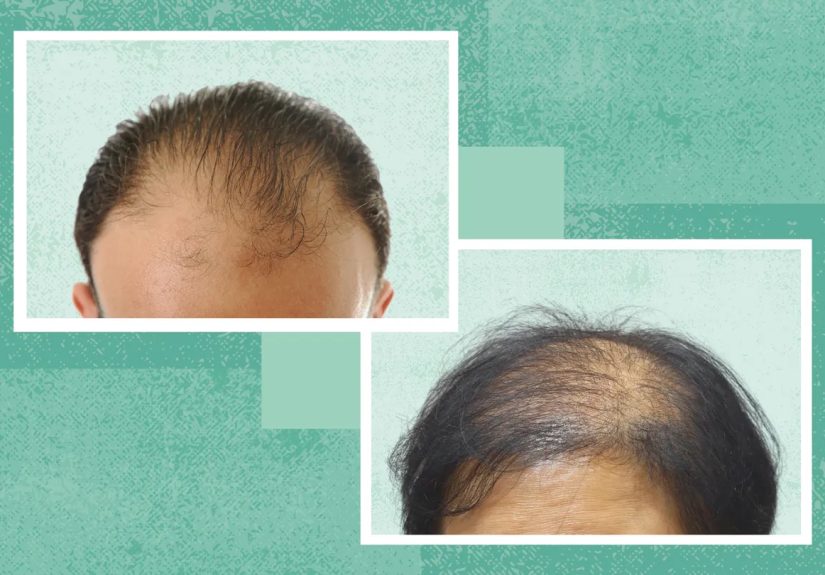
When people say “male pattern baldness,” they’re usually talking about a very recognizable distribution. Dermatologists often describe it using the Hamilton–Norwood scale, which outlines stages of male hair loss:
- Receding temples: Hair starts thinning at the front hairline on both sides, creating an “M” shape.
- Vertex thinning: A bald spot develops on the crown (the top/back of the head).
- Progressive expansion: The frontal and crown areas gradually enlarge and may merge.
- Advanced baldness: Hair remains mainly on the sides and back of the scalp (the “horseshoe” pattern).
Some men primarily recede at the temples; others mainly thin at the crown. Many have a combination of both. The rate is highly individual – some progress slowly over decades, while others notice fairly rapid change over a few years.
Onset and Clues in Men
Male pattern baldness can begin as early as the late teens or 20s. Men may notice:
- More hairs on the pillow, shower drain, or sink.
- A hairline that’s “creeping back” in photos over time.
- A “see-through” look under bright light at the crown.
Most men with classic pattern loss are otherwise healthy. However, early-onset AGA (especially severe before age 35) has been linked in research to higher rates of metabolic issues such as insulin resistance and cardiovascular risk factors. That doesn’t mean baldness causes heart disease, but it may be a good reason to pay attention to lifestyle and routine checkups.
Female Pattern Hair Loss: Same Disease, Different Look
Diffuse Thinning, Not a Receding Hairline
Female pattern hair loss (FPHL) is the same underlying condition – androgenetic alopecia – but the pattern is different. Instead of a dramatic receding hairline or a shiny bald patch, women typically develop diffuse thinning on the top of the scalp, with the frontal hairline often preserved.
Common features include:
- Widening part: The line where you part your hair looks broader over time.
- Thinning at the crown: The top of the head looks less dense, especially under bright light.
- “Christmas tree” pattern: Some women develop thinning that’s more pronounced at the front of the part and gradually less toward the back.
Dermatologists often classify female pattern hair loss using the Ludwig or Olsen scales, which describe degrees of diffuse thinning rather than complete baldness. Total scalp baldness is rare in women with androgenetic alopecia; most maintain at least some coverage.
The Role of Hormones in Women
In women, the relationship between hormones and hair is a little more complicated. Many women with FPHL have normal androgen levels on blood tests. However, genetic sensitivity of hair follicles to androgens still seems to matter, and hormonal shifts (such as those around menopause) often coincide with the onset or worsening of female pattern hair loss.
Some women with FPHL also have signs of excess androgens, such as acne, irregular periods, or unwanted facial/body hair. In those cases, clinicians may look for conditions like polycystic ovary syndrome (PCOS) or other endocrine disorders. That’s one big reason women with significant hair thinning often need a more extensive laboratory evaluation than men.
Male vs. Female Pattern Baldness: A Side-by-Side Comparison
| Feature | Male Pattern Baldness | Female Pattern Hair Loss |
|---|---|---|
| Typical age of onset | Late teens to 30s (can progress with age) | 30s–50s, often around menopause; can start earlier |
| Pattern of loss | Receding hairline, temple loss, crown thinning, eventual horseshoe fringe | Diffuse thinning on crown, widening part; frontal hairline usually preserved |
| Severity | Can progress to large bald areas | More often thinning than complete baldness |
| Hormonal considerations | Clearly androgen dependent (DHT); evaluation usually limited unless other signs | May occur with normal labs; sometimes associated with androgen excess, PCOS, menopause |
| Diagnostic workup | History, exam, sometimes dermoscopy; labs typically not extensive | History, exam, plus more frequent lab tests (thyroid, iron, hormones) to rule out other causes |
| Common first-line treatment | Topical minoxidil, oral finasteride (for adult men), lifestyle optimization | Topical minoxidil, sometimes oral or topical antiandrogens in selected patients, lifestyle and medical evaluation |
| Unique safety issues | Finasteride can cause sexual side effects; not for use in pregnancy | Some medications (like oral antiandrogens) require contraception and medical monitoring |
| Psychological impact | Can affect self-esteem but is socially more “expected” | Often highly distressing; hair is strongly tied to femininity in many cultures |
How Doctors Diagnose Pattern Hair Loss
While many people can guess what’s going on by looking in a mirror, a proper diagnosis matters. Other conditions can mimic androgenetic alopecia, such as thyroid disease, iron deficiency, telogen effluvium (shedding after stress or illness), autoimmune alopecia areata, and scarring scalp disorders.
In a typical evaluation, a dermatologist may:
- Ask about timing of hair loss, family history, diet, stress, medications, and menstrual history (in women).
- Examine the scalp for pattern, inflammation, scaling, and follicle openings.
- Use a dermatoscope to look at hair shaft diameter variation and follicle density.
- Order blood tests (especially in women) to check thyroid function, iron status, and sometimes hormone levels.
- Occasionally perform a scalp biopsy if the diagnosis is unclear.
Getting the right diagnosis early helps target treatment correctly and avoid wasting time and money on products that don’t address the real problem.
Treatment Options: Where Men and Women Overlap – and Where They Don’t
Treatments Used in Both Men and Women
Despite the differences in pattern, male and female pattern baldness share several treatment strategies:
- Topical minoxidil: Often the first-line therapy for both sexes. It can help prolong the growth phase of hair and increase follicle size. It’s available over the counter in foam or solution. Consistency is key; results usually show over several months.
- Low-level laser/light therapy (LLLT): Laser combs, caps, or helmets use specific wavelengths of light to stimulate hair follicles. Studies suggest modest benefits in some patients when used regularly.
- Platelet-rich plasma (PRP) injections: A doctor draws your blood, concentrates the platelets, and injects them into the scalp. Growth factors in the platelets may support hair growth in some people.
- Hair transplant surgery: Follicles from DHT-resistant areas (usually the back and sides of the scalp) are moved to thinning regions. This can work for both men and women, but pattern and donor density matter a lot.
- Styling and camouflage: Strategic haircuts, root powders, hair fibers, and volumizing products can make a big visual difference while medical treatments do their slow, steady work.
Treatments Typically Used in Men
For men, oral medications that block the conversion of testosterone to DHT are common options:
- Finasteride: A prescription pill that inhibits the enzyme 5-alpha-reductase, lowering DHT levels and slowing hair loss. It can help maintain existing hair and in some cases promote regrowth.
- Dutasteride: Blocks more forms of 5-alpha-reductase than finasteride and may be more potent, but is less commonly used for hair loss in some regions.
These medications are generally used in adult men. They are not recommended for use in pregnancy and can cause side effects such as reduced libido or erectile issues in a minority of patients. Because of their potential effects on a developing fetus, women who are pregnant or may become pregnant should not handle crushed or broken tablets.
Treatments Often Used in Women
Women also use topical minoxidil widely, but systemic treatments differ:
- Topical minoxidil (foam or solution): A mainstay for female pattern hair loss. Many women use 2% or 5% formulations, depending on their dermatologist’s advice.
- Oral medications targeting androgens (in selected women): Some women, especially those with signs of androgen excess, may be prescribed medications such as spironolactone or certain hormonal therapies to help reduce androgen effects on hair follicles.
- Occasional use of low-dose oral minoxidil: In some cases, physicians may use low-dose oral minoxidil off-label to support hair growth, with careful monitoring.
Because many of these medications can affect pregnancy and can have systemic side effects, women need individualized evaluation and counseling from a healthcare professional before starting them.
Setting Realistic Expectations
Here’s the tough love: no current treatment “cures” androgenetic alopecia. Most therapies aim to slow progression, preserve existing hair, and modestly improve density. They work best when started early – waiting until there’s shiny scalp everywhere makes regrowth much harder.
Most medical treatments need to be continued long term. Stopping treatment often means hair gradually returns to its untreated pattern over months to years. That’s why choosing an approach you can realistically stick with matters just as much as picking the strongest option on paper.
The Emotional Side of Pattern Hair Loss
Hair is deeply tied to identity and self-image. Men may worry that balding makes them look older, less attractive, or less confident. Women often feel intense distress because female hair loss is less socially visible and less “normalized.” Some people avoid photos, social events, or even bright lighting.
It’s completely valid to feel upset about hair loss. But it’s also important not to blame yourself. You didn’t “cause” androgenetic alopecia by wearing hats, using the wrong shampoo, or not doing enough hair masks. Most of it comes down to genes and hormones.
Counseling, support groups, or simply having honest conversations with friends, partners, and healthcare providers can make coping easier. For some, embracing a shaved head or a new style is empowering; for others, long-term treatment and hair restoration are worth pursuing. There’s no “right” emotional response – just what works for you.
When Should You See a Dermatologist?
Consider seeing a dermatologist or hair specialist if you notice:
- Gradual thinning on the top of the head or a receding hairline.
- A widening part or decreased ponytail volume.
- Rapid shedding after illness, childbirth, or major stress.
- Patchy hair loss, broken hairs, redness, or scaling on the scalp.
- Other symptoms like fatigue, weight changes, irregular periods, or acne.
The sooner you get evaluated, the more options you usually have. A professional can distinguish between pattern hair loss and other conditions, recommend appropriate tests, and help you build a realistic, personalized treatment plan. Online advice and over-the-counter products can be helpful starting points, but they aren’t a substitute for medical evaluation.
Extra: Real-Life Experiences with Male and Female Pattern Baldness
To understand the difference between male and female pattern baldness, it helps to look beyond diagrams and dive into everyday experiences.
“Jake”: The Receding Hairline in His Late 20s
Jake is 28, works in marketing, and first noticed his hairline changing when he saw old college photos. Back then, his hair was thick across his forehead. Now, the corners have crept back, forming that classic “M” shape. His barber gently mentioned it, and suddenly Jake couldn’t unsee it.
At first, Jake tried denial: new hairstyles, hat collections, and avoiding overhead lighting. After a while, he did what many people do – he searched online at midnight, saw a mix of miracle claims and horror stories, and felt overwhelmed.
When he finally saw a dermatologist, he learned that his pattern perfectly matched early male pattern baldness. He had no other health red flags, so his doctor explained options like topical minoxidil, oral finasteride, and lifestyle choices to support overall health. Jake chose a combination of minoxidil and finasteride after discussing risks and benefits. Within several months, he noticed less shedding and better density at the crown. His hair didn’t magically return to high-school thickness, but the sense of control helped his confidence almost as much as the regrowth.
“Mia”: The Widening Part in Her 40s
Mia is 45, a teacher who frequently wears her hair in a loose ponytail. She noticed that her part seemed wider in classroom selfies, and her students commented on her “new highlights” – except she hadn’t colored her hair. Under bright school lighting, she could see more scalp than before.
Unlike Jake, Mia didn’t see bald spots or a receding hairline, just an overall “see-through” look at the top. She also dealt with irregular periods and occasional chin hair, which she chalked up to getting older. When she saw her doctor, labs showed borderline low iron stores and signs consistent with perimenopause. A dermatologist confirmed female pattern hair loss, likely influenced by hormonal shifts and genetics.
Her treatment plan looked different from Jake’s. She started topical minoxidil, adjusted her iron intake with medical guidance, and after a joint discussion with her healthcare team, considered an antiandrogen medication appropriate for her situation. She also worked with a stylist who knew how to cut and layer hair to create more volume on top. Over time, she saw less scalp under the lights and felt more like herself again.
Couples, Friends, and Shared Journeys
Sometimes pattern hair loss becomes a shared experience. Partners may both be dealing with thinning hair in different ways. One might opt for a buzz cut and beard, leaning into a new aesthetic, while the other tests foam, serums, and scalp massages. They trade product reviews over breakfast and tease each other about which side of the bathroom cabinet looks like a pharmacy shelf.
These experiences highlight a key point: although male and female pattern baldness follow different patterns and may need different treatments, the emotional journey often overlaps. People worry about aging, attractiveness, identity, and how others see them. But they also discover that those around them care more about who they are than about how many hairs are on their head.
Whether you’re a “Jake,” a “Mia,” or somewhere in between, the most powerful step is moving from silent worry to informed action – asking questions, seeking expert advice, and choosing a path that fits your body, lifestyle, and goals.
Key Takeaways
- Male and female pattern baldness share the same root cause – androgenetic alopecia – but look very different on the scalp.
- Men tend to have a receding hairline and crown thinning; women usually have diffuse thinning and a widening part.
- Genetics and hormones play central roles, but factors like age, health, and stress can influence how it shows up.
- Effective treatments exist for both men and women, but they must be tailored to each person’s pattern, health status, and life stage.
- Early evaluation and consistent treatment often give the best chance at preserving and improving hair density.
- Hair loss is medical, but it’s also emotional. Both deserve attention and compassion.
Conclusion
Male and female pattern baldness are two sides of the same medical coin. Understanding the differences in patterns, underlying hormonal context, diagnostic approach, and treatment options can make the situation feel less mysterious and more manageable. Whether you’re seeing a receding hairline or a widening part, you’re not alone – and you’re not powerless.
If you’re noticing changes in your hair, consider talking with a dermatologist or healthcare professional. With a thoughtful plan, realistic expectations, and support, you can protect the hair you have, optimize what you can regain, and, most importantly, keep your identity and confidence firmly intact.
sapo: Male and female pattern baldness share the same medical name – androgenetic alopecia – but they don’t look or feel the same. Men are more likely to see a receding hairline and crown thinning, while women usually notice a widening part and diffuse loss on top. This in-depth guide breaks down how pattern hair loss shows up in each sex, what really drives it, how doctors diagnose it, and which treatments are commonly used for men and women. You’ll also find real-life examples and practical tips so you can move from late-night Googling to informed decisions about your hair and your health.