Table of Contents >> Show >> Hide
- The “I’m The Prize” Mindset: Confidence’s Toxic Cousin
- Calling a Partner “Fat and Lazy” Isn’t HonestyIt’s Contempt
- A Working Mom of Four: The Math Doesn’t Math (For the “Prize”)
- Then the Job Disappears: Why Reality Hits Like a Brick
- He Wants to “Un-File” the Divorce: Can You Undo That Kind of Damage?
- If Divorce Happens: A Practical, Not-Scary Overview
- How Couples Prevent This Spiral (Before Someone Googles “Divorce Lawyer Near Me”)
- Conclusion: Nobody Is the PrizePartnership Is
- of Lived-Through-It Experiences (What People Say After the Dust Settles)
There are two kinds of “I’m the prize” energy in the world: the playful, confident kind that makes someone buy concert tickets and
insist you deserve the better seat… and the other kind. The kind that treats marriage like a reality show where one spouse gets voted
off the island for gaining weight, getting tired, or (wild concept) raising four humans while also working.
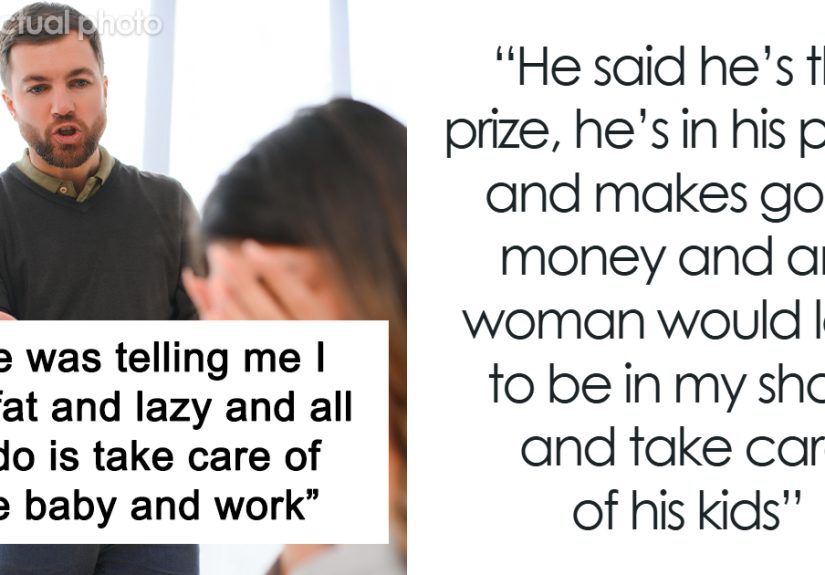
This storyequal parts ego, economics, and a brutally timed plot twistlands on a question a lot of families wrestle with:
What happens when one partner mistakes entitlement for self-esteem, and then the “provider” identity collapses
overnight?
Let’s break down what’s really going on in a scenario like this, why it’s so common, and what it would actually take to repair
the damage (hint: it’s not a bouquet and a speech about how you “realized her value” once your paycheck disappeared).
The “I’m The Prize” Mindset: Confidence’s Toxic Cousin
When self-worth turns into a ranking system
Healthy confidence says, “I bring good things to this relationship.” The “I’m the prize” mindset says, “You should feel lucky I
tolerate you.” That second version is less “self-love” and more “customer service survey,” where your spouse is always failing the rubric.
In marriage, that mentality usually shows up as:
- Scorekeeping: “I work, so you owe me.”
- Conditional affection: “I’ll be kind when you earn it.”
- Appearance policing: treating a partner’s body like a subscription that can be canceled.
- Parenting denial: acting like the home runs itself because you can’t see the labor.
Why “scorekeeping” quietly kills marriages
Scorekeeping turns partnership into a transaction. And transactions have fine print. The working mom of four isn’t just “doing chores”;
she’s running a small nation with tiny citizens who think sleep is optional and snacks are a human right.
If one spouse decides the other is “lazy,” it’s usually not because the other is actually idleit’s because the observer isn’t tracking
the invisible work: scheduling, planning, anticipating needs, managing school calendars, medical appointments, groceries, and the
emotional temperature of the entire household. That’s not laziness. That’s leadership.
Calling a Partner “Fat and Lazy” Isn’t HonestyIt’s Contempt
Contempt: the relationship termite
Criticism says, “I’m frustrated about this specific thing.” Contempt says, “I’m better than you.” Once contempt enters the chat,
it doesn’t just hurt feelingsit rewires the relationship into a hierarchy. In many couples-therapy frameworks, contempt is treated
as one of the most corrosive communication patterns because it erodes respect, safety, and friendship.
Translation: if you’re insulting your spouse’s body or character, you’re not “being real.” You’re doing damage.
Body-shaming after kids is a special kind of cruel
A working mom of four has likely spent years in a body that’s been through pregnancies, hormonal shifts, interrupted sleep, chronic
stress, and constant caregiving. Many women experience postpartum mood challenges and prolonged exhaustion; “get back to normal”
is not a button anyone can press between carpool and laundry.
So when a partner reduces that reality to a sneer, it’s not just unkindit’s destabilizing. It teaches the other person that love
is conditional, intimacy is unsafe, and home is not a refuge.
When insults cross into emotional abuse territory
Name-calling, humiliation, condescension, and repeated put-downs aren’t “marriage problems” in the cute sitcom way. They’re warning
signs that a relationship has become emotionally unsafe. If a partner regularly uses shame, threats, intimidation, or control, that’s
a different conversation than “we’re not communicating well.”
If you see a pattern of degradationespecially paired with control of money, isolation, or intimidationprofessional support matters.
And if anyone feels physically unsafe, immediate help and a safety plan come before any attempt at “fixing the marriage.”
A Working Mom of Four: The Math Doesn’t Math (For the “Prize”)
The invisible labor economy at home
In many U.S. households, even when both spouses work, women still carry a heavier share of housework and caregiving. That imbalance
doesn’t just create fatigueit creates resentment. And resentment doesn’t usually announce itself with a trumpet. It shows up as
emotional withdrawal, low libido, irritability, and the haunting sentence: “I feel like I’m doing this alone.”
Why burnout gets mislabeled as “lazy”
Burnout looks boring from the outside. It’s not dramatic. It’s a person moving through tasks on fumes, with no extra energy for charm,
flirting, or “bouncing back.” A spouse who thinks parenting is “helping” (instead of co-owning) may interpret burnout as a character flaw.
Here’s a practical thought experiment: if you removed the working mom of four from the home for one weekno meals, no planning, no
school logistics, no bedtime, no clean uniformswhat would the household cost to replace? Childcare, meal services, cleaning, admin time,
tutoring, transportation, and emotional support aren’t free. They’ve just been outsourced to one exhausted person.
Then the Job Disappears: Why Reality Hits Like a Brick
Job loss isn’t just financialit’s identity
Many people tie their self-worth to being the provider. When that role is threatened, shame can spike, anxiety can rise, and a person can
become defensive or controlling. That doesn’t excuse crueltybut it explains why some people lash out right before (or right after)
a job loss: they’re trying to regain a sense of power.
Research consistently links unemployment and job instability with worse mental health outcomesmore stress, more depressive symptoms,
more anxiety. And in families already running hot, that stress can pour gasoline on conflict.
Financial stress magnifies existing cracks
Money problems don’t usually invent new relationship issues. They reveal the ones that were already there:
- If respect was shaky, money stress makes it shakier.
- If teamwork was absent, money stress makes it painfully obvious.
- If one spouse was controlling, money stress can turn control into coercion.
And here’s the dark comedy: the person who thought he was “the prize” may suddenly realize that the home he criticized was being held
together by the spouse he devalued. When the paycheck goes away, the fantasy of “I can do better” meets the reality of:
“Wait… who schedules the kids’ dentist appointments again?”
He Wants to “Un-File” the Divorce: Can You Undo That Kind of Damage?
Apologies vs. accountability
An apology is a doorway, not the destination. “I’m sorry” only matters if it’s paired with:
- Ownership: “What I said and did was demeaning and wrong.”
- Specific repair: “Here’s how I’m changing my behaviorstarting today.”
- Patience: understanding that trust returns on foot, not by FedEx Overnight.
- New skills: learning respectful conflict, emotional regulation, and shared labor.
If the “changed his mind” moment happened only after job loss, the working mom is allowed to wonder:
Do you value me… or do you need me?
What the working mom should consider (without guilt)
In a situation like this, the working mom of four is not required to “be the bigger person.” She’s been doing thatprobably while packing
lunches. Before making any decision, it helps to consider:
- Safety: Are insults escalating? Is there intimidation, threats, or control?
- Stability for the kids: What environment are they learning is “normal”?
- Financial reality: Can the household function on one income? What support exists?
- Support network: Friends, family, counseling, legal resources.
- Pattern vs. moment: Was this a one-time blowup or a long-running contempt habit?
It’s also fair to seek legal information earlyeven if reconciliation is possible. Knowing options reduces fear and increases agency.
What the “prize” must do if he genuinely wants the marriage
If he wants to repair, he needs to retire the crown and pick up a broomliterally and emotionally. Here’s a non-glamorous checklist that
actually works:
- Stop all degradation. No “jokes,” no sarcasm, no body commentary. Ever.
- Get help for his mindset. Individual therapy can address entitlement, shame, and anger patterns.
- Learn the household systems. Not “helping,” but owning full domains (meals, laundry, school logistics).
- Rebuild friendship. Daily respect, gratitude, and basic kindnessespecially when stressed.
- Accept consequences. She may still choose divorce. Repair is not a coupon you redeem for forgiveness.
If Divorce Happens: A Practical, Not-Scary Overview
No-fault divorce basics (general info, not legal advice)
In much of the U.S., divorce can be pursued without proving wrongdoing, often using language like “irreconcilable differences.”
The legal process varies by state, and families with children typically navigate issues such as custody schedules, decision-making,
child support, and division of assets and debts.
The key idea for parents: divorce is a legal ending, not a moral scorecard. Many healthy co-parenting arrangements start with two people
deciding to stop hurting each other and start protecting the kids from adult conflict.
Co-parenting with dignity (even when you’re furious)
The children in this story are watching the adults teach them what love looks like. Whether the marriage continues or ends, the goal is:
- Keep adult conflict out of the kids’ ears and texts.
- Use structured communication tools if needed (calendars, written agreements).
- Do not recruit kids as therapists or spies.
- Build stable routineskids thrive on predictability.
How Couples Prevent This Spiral (Before Someone Googles “Divorce Lawyer Near Me”)
Hold a weekly “household operations meeting”
It’s not sexy, but it saves marriages. Once a week, review schedules, expenses, kid needs, and who owns what. Ownership means:
you plan it, you execute it, you follow through. No “just tell me what to do.” You’re an adult, not an intern.
Replace contempt with appreciation on purpose
Appreciation isn’t denial. It’s a practice that prevents emotional erosion. “Thanks for handling bedtime” and “I see how hard you work”
are small sentences with big structural value.
Get ahead of money stress
Money conversations go better when they’re not happening in a panic. Build a simple plan: a shared budget, transparent accounts,
and an agreed “what we do if income drops” playbook. Financial stress is easier to survive when it’s a shared problem, not a blame game.
Know when it’s time for couples therapy
Therapy isn’t just for “we’re about to split.” It’s for “we keep having the same fight and it’s getting uglier.” Many evidence-based
approaches focus on communication patterns, empathy, and practical behavior change. If contempt, name-calling, or intimidation are present,
professional support becomes even more important.
Conclusion: Nobody Is the PrizePartnership Is
The “I’m the prize” fantasy collapses the moment real life shows up: kids, bills, stress, bodies that change, energy that runs out,
and jobs that disappear. Marriage isn’t a trophy case. It’s a team sport.
If a man wants to divorce his working-mom spouse because she doesn’t meet his “prize” standardsand then changes his mind after losing
a jobhe’s not facing a romance problem. He’s facing a character problem. Repair is possible, but only if respect becomes non-negotiable,
responsibility becomes shared, and humility replaces entitlement.
And for the working mom of four? She doesn’t need to “prove” she’s worthy. She needs to decide what kind of home she wants to live in
and what kind of love she wants her kids to learn.
of Lived-Through-It Experiences (What People Say After the Dust Settles)
People who’ve lived through a “divorce threat + disrespect + job loss” combo often describe the same emotional timeline. First comes the
shock: the moment you realize your partner isn’t merely stressedthey’re rewriting your value as a person. It’s not the logistics that
break you at first; it’s the disrespect. Many working parents say the hardest part is hearing their exhaustion called laziness, as if
the mountain of invisible labor is a personal flaw instead of a predictable consequence of carrying too much.
Then comes the practical grief. Even when the relationship is unhealthy, the idea of separating can feel like failureespecially with kids.
People describe lying awake not thinking about romance, but about school drop-offs, health insurance, rent, and whether the other parent will
show up consistently. In those moments, some spouses “change their mind,” not because their worldview transformed, but because fear finally
introduced them to reality.
The couples who rebuild tend to share one trait: the offending partner stops negotiating with accountability. They don’t ask for forgiveness
on a schedule. They don’t say, “I said sorry, why are you still hurt?” Instead, they do boring, repetitive repair work: therapy, honest
job-search routines, taking full responsibility for childcare blocks, and actively replacing contempt with respect. One common phrase from
repaired couples is: “I had to become safe before I could become loved again.”
The couples who don’t rebuild also share a pattern: the apology is theatrical, but the behavior stays the same. The “changed” spouse wants
emotional comfort while still avoiding real partnership. In those situations, many working parents say divorce wasn’t the most painful part
staying was. They describe a surprising relief once the home became quieter, even if life became more complicated.
A practical lesson people repeat: if you’re deciding whether to reconcile, watch actions for months, not speeches for minutes. Consistency is
the true apology. And if you’re the person who did the damage, remember this: losing a job can be a crisis, but losing your partner’s respect
is a consequence. If you want a second chance, earn it with humility, service, and sustained changebecause nobody is the prize. The prize is
a home where everyone is treated like a human being.