Table of Contents >> Show >> Hide
- The headline is scarier than the doll: what actually happened
- Meet Annabelle: the real doll, the legend, and the Hollywood glow-up
- Why the internet feels bad for the doll
- Buying a haunted museum in 2025: the logistics are scarier than demons
- If the doll is “allegedly possessed,” why do people still care?
- What happens next: tours, content, and a very watchful glass case
- Quick FAQ
- Extra: of Annabelle-adjacent experiences (for the brave and the curious)
- Conclusion
There are two kinds of people in this world: the ones who hear “Annabelle doll” and immediately picture a creepy porcelain nightmare with a vendetta, and the ones who hear “Annabelle doll” and picture a totally normal Raggedy Ann plush who’s just trying to get through the day without being blamed for someone’s bad vibes.
Either way, when headlines started circling that comedian Matt Rife “owns” the allegedly possessed Annabelle doll, the internet reacted in the only responsible way it knows how: by panicking, memeing, and then somehow concluding the doll was the one who deserved sympathy. Because if your reputation is “possibly haunted,” and you end up in the middle of a celebrity content cycle… honestly, same.
The headline is scarier than the doll: what actually happened
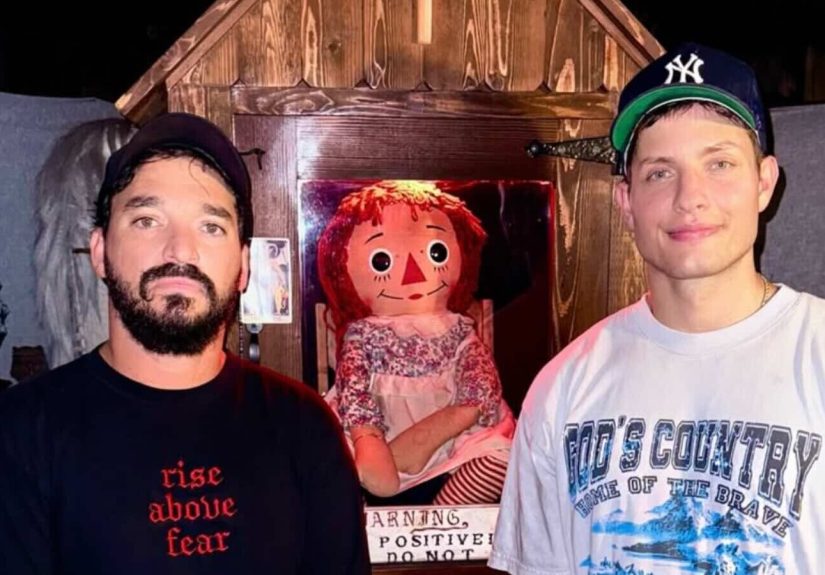
Here’s the less-demon-y version: Matt Rife, along with YouTuber/creator Elton Castee, announced that they purchased the late paranormal investigators Ed and Lorraine Warren’s home and the building tied to the Warrens’ famous occult collection. In the same announcement, Rife described himself as the “legal guardian” of the collection for a set periodoften described as five yearsrather than the permanent owner of every artifact in the basement of America’s spookiest storage unit.
That “guardian” language matters, because it’s a very different vibe from “I bought a haunted doll off Craigslist, cash only, no refunds.” The Warrens’ collection has historically been associated with the New England Society for Psychic Research (NESPR) and the Warren family’s estate. In other words: the doll didn’t get shipped to a comedy club green room in a box marked “fragile, cursed.”
Guardian vs. owner: why the wording matters
If you’re wondering why anyone would choose to be a “legal guardian” of haunted objectsvoluntarily!think of it like taking stewardship of a weird little museum. Ownership can be complicated when a collection has legacy ties, caretakers, and organizational custody. Guardianship suggests responsibility and management: maintaining the property, handling access, and (ideally) not letting tourists lick the display case for TikTok.
It also lets everyone keep the story straight: Rife is publicly positioning himself as a caretaker of a culturally famous collection, not someone who personally “bought a demon.” Which is probably wise, because the moment you say you “own” Annabelle, half the internet starts acting like you’ve adopted a pet tiger and the other half starts asking if it’s housebroken.
Meet Annabelle: the real doll, the legend, and the Hollywood glow-up
The real Annabelle is a Raggedy Ann dollsoft, stitched, and aggressively unthreatening in the way only children’s toys from another era can be. The story attached to her is what made her famous: the Warrens told a case narrative in which a nurse reportedly experienced strange occurrences connected to the doll, leading to claims that something non-human was involved.
Skeptics, researchers, and plenty of reasonable adults with rent to pay have long pointed out that the evidence for “possessed doll” stories typically lives in anecdote, folklore, and pop-culture feedback loops. But folklore doesn’t need peer review to go viral. It needs a good villain, a memorable prop, and a franchise deal.
Real Annabelle vs. movie Annabelle
The version of Annabelle you see in movies is not a Raggedy Ann. The Conjuring Universe made her into a porcelain-faced horror icon because, frankly, Hollywood understands that a soft cloth doll reads “grandma’s attic,” while a porcelain doll reads “I’m about to ruin your whole third act.”
That design change is part of why the legend persists: people mentally merge the cinematic Annabelle with the real Raggedy Ann behind glass. The real doll becomes a symbola physical object you can point to when you’re telling a scary story at a sleepover, a podcast, or an overnight tour where the gift shop sells “I survived Annabelle” mugs.
How the Warrens’ story became modern folklore
The Warrens built a career investigating paranormal claims and presenting case stories to the public. Over time, those stories shaped a whole ecosystem: books, documentaries, movies, tourism, and a modern appetite for “haunted object” mythology. Annabelle sits right at the intersection of all of it: a simple object turned into a narrative magnet.
And once something becomes a narrative magnet, it doesn’t stay still. It collects new layers: social media rumors, “missing doll” chatter, tour updates, and the kind of online exaggeration where “it moved two inches” becomes “it teleported and filed my taxes.”
Why the internet feels bad for the doll
Now we reach the emotional core of this story: why are people acting like Annabelle is the victim here?
Because the internet is a strange place where empathy is distributed like confetti, and sometimes the confetti lands on a Raggedy Ann doll behind a warning sign.
Because “haunted” has become a brand, and the doll didn’t consent
Whether you believe in the paranormal or not, the marketing of the paranormal is very real. Haunted museums, tours, content creators, and cinematic universes all rely on an audience’s willingness to be scared in a controlled environment.
In that environment, Annabelle is less a doll and more a mascotan object that carries an entire genre on its yarn hair. People “feel bad” for her in the same way you might feel bad for a celebrity pet: it’s not that the dog has opinions about fame (it does not), it’s that the human world keeps projecting drama onto it.
Because Matt Rife is a lightning rod, and the memes write themselves
Matt Rife is widely known for his rapid rise through stand-up and social mediabig crowds, big clips, big opinions about him online. When someone with that level of visibility intersects with a pop-culture horror icon, the internet doesn’t ask, “How will the zoning commission feel about this?” It asks, “Who is more cursed: the doll or the comment section?”
The “everyone feels bad for the doll” framing isn’t a literal claim about Annabelle’s emotions (no one has confirmed the doll has a therapist). It’s a comedic way of saying: if anything is going to suffer from the public attention, it’s the object that can’t log off.
Buying a haunted museum in 2025: the logistics are scarier than demons
Haunted collections are spooky in theory, but they’re bureaucratic in practice. If you plan to open a property to visitorseven just day toursyou’re dealing with rules that are far more relentless than any supposed spirit: inspections, permits, liability, crowd management, and community concerns.
Zoning, safety, and “you can’t just Airbnb the paranormal”
The Warrens’ museum history includes closures tied to local regulations, and any plan to reopen or host overnight stays has to contend with municipal approval. The spooky part is the folklore; the real part is compliance. Fire safety doesn’t care if your artifact is haunted. It cares if your exit signs work.
That’s why announcements about “overnight stays” immediately trigger two reactions: (1) horror fans: “Yes, finally!” and (2) practical adults: “Who is insuring this and how many bathrooms are there?”
Why people pay to be mildly terrified on purpose
Haunted tourism is basically a thrill ride without the roller coaster. People like fear when it’s framed as optional, temporary, and socially shared. A haunted museum gives you:
- A story you can repeat later (“You guys, the case had a warning sign.”)
- A prop (Annabelle) that makes the story feel anchored in something physical.
- A safe containera building, a tour guide, a time limit, and ideally, a gift shop.
Whether or not you think the doll is “possessed,” you can still enjoy the cultural experience of spooky storytelling. It’s like watching a horror movie: you don’t need to believe the monster exists to enjoy the adrenaline.
If the doll is “allegedly possessed,” why do people still care?
Because “allegedly” is the secret sauce of modern fascination. It keeps the story floating between belief and disbeliefmeaning everyone can participate.
Pop-culture physics: the Conjuring effect
Annabelle isn’t just a doll; she’s a symbol in one of the most recognizable horror franchises of the last decade-plus. The movies didn’t just popularize the storythey created a shared reference point. Now, when someone mentions Annabelle, audiences aren’t pulling from one tale; they’re pulling from trailers, memes, jump scares, and behind-the-scenes lore.
So when a celebrity says, “I’m now the legal guardian of that collection,” people instantly imagine the cinematic version of events: flickering lights, ominous chanting, and a camera dolly shot toward a case that says “DO NOT OPEN” (which is basically a “Please Open” sign for the human brain).
The comfort of a contained fear
There’s also something oddly comforting about an object-based fear. A haunted doll is scary, surebut it’s a small scary. It’s fear you can put behind glass. Compared to the real-world anxieties people carry (finances, health, relationships, the group chat), a “haunted object” story offers a neat, narratively satisfying kind of dread.
That’s why people are invested even if they’re skeptical. The point isn’t proof. The point is the story.
What happens next: tours, content, and a very watchful glass case
If Rife and Castee follow through on opening the property for tours or stays (and if local rules allow it), the likely future looks less like a horror climax and more like a structured visitor experience: scheduled entries, guided walk-throughs, clear boundaries, and Annabelle staying exactly where she’s always beensealed up, photographed, and politely blamed for everything.
The modern twist is that the museum experience may be intertwined with creator culture: behind-the-scenes content, storytelling clips, and the kind of “we’re doing a night in the haunted house” episodes that sit somewhere between entertainment and tourism marketing.
And that’s where the “feel bad for the doll” jokes come back. Because Annabelle has gone from folklore artifact to pop-culture celebrity, and now possibly to recurring character in internet content. If she’s truly haunted, she’s probably exhausted. If she’s not haunted, she’s still exhaustedby association.
Quick FAQ
Is the real Annabelle doll a Raggedy Ann?
Yesthe real-world doll connected to the Warren story is commonly described as a Raggedy Ann doll, not the porcelain doll from the movies.
Does Matt Rife actually own the doll?
Public reporting around Rife’s announcement emphasizes “legal guardian/caretaker” language and a time-bound arrangement for managing the collection, rather than straightforward personal ownership of every artifact.
Where is the Warrens’ home and collection located?
The Warrens’ home and the collection associated with them are tied to Monroe, Connecticut.
Can you visit?
Plans for tours or overnight stays have been discussed publicly, but real-world access depends on approvals, safety requirements, and local regulationsso “can you visit” is a moving target.
Is there proof it’s haunted?
The Annabelle story is rooted in the Warrens’ case narrative and decades of retelling. Belief varies widely. Many people treat it as folklore and pop culture; others treat it as a genuine paranormal claim. The story’s cultural impact is undeniable, even if its supernatural claims are debated.
Extra: of Annabelle-adjacent experiences (for the brave and the curious)
If you’ve ever visited a “haunted” locationwhether it’s a historic house, a spooky museum, or a tour that promises you’ll “feel a presence”you already know the real experience is a blend of atmosphere, storytelling, and your own imagination doing cardio.
Most people don’t walk into a paranormal exhibit expecting a Hollywood moment where furniture starts levitating. What they expect is something subtler: a chill when the guide lowers their voice, a sudden silence in a hallway that makes you aware of your own footsteps, a nervous laugh you can’t quite control. The fear is social as much as it is personal. You’re reacting to the group’s energy, the guide’s pacing, the way a good story can make you look twice at a perfectly normal shadow.
And haunted-object displays are their own specific flavor of eerie. You’re not just hearing about a place; you’re looking at a thing. The mind loves that. It turns the object into a character. A doll behind glass becomes an unwilling celebrity, and the warning sign becomes a little script your brain reads like dialogue: “Do not open.” “Do not touch.” “Do not take selfies with your face pressed against the case, please, for the love of liability.”
In many “haunted collection” experiences, the most memorable moments aren’t supernatural at allthey’re human. It’s the person who swears the room got colder (even though the AC vent is right there). It’s the friend who starts confident and ends up holding your sleeve like you’re crossing a busy street. It’s the guide who knows exactly when to pause so your imagination fills in the blank with something worse than anything they could say out loud.
If the Warrens’ collection reopens in a visitor-friendly format, expect the Annabelle moment to be less “possession” and more “pilgrimage.” People will line up because they want to see the cultural artifactthe physical anchor of a story they’ve heard a hundred times in different forms. They’ll take pictures. They’ll make jokes to manage their nerves. And they’ll walk away with the same paradoxical feeling many haunted attractions create: “That was terrifying,” followed by “Let’s do it again,” followed by “Okay but I’m sleeping with the lights on anyway.”
The best way to approach experiences like thesewhether you’re a believer, a skeptic, or a person who says “I don’t believe” while speed-walking through the darkis with respect and a little self-awareness. Respect the rules, respect the space, and respect your own limits. Fear is supposed to be fun here. If you’re not having fun, it’s okay to step out, breathe, and rejoin when you’re ready. The goal is a good story, not a bad night.
Conclusion
The funniest part of the “Matt Rife owns Annabelle” saga is that it’s basically a perfect modern myth: a celebrity, a haunted icon, a legal nuance the internet ignores, and a comment section that turns everything into a punchline.
In reality, the story is less about a doll changing hands and more about how horror folklore keeps evolvingmoving from case files to movies to memes to influencer-era tourism. Annabelle remains what she has always been: an object loaded with story. Whether you think that story is supernatural truth, elaborate legend, or pop-culture performance art… the internet has already decided one thing for sure: the doll is never getting a quiet weekend again.