Table of Contents >> Show >> Hide
- Why people self-treat (and why clinicians still worry)
- The dumbest self-treatment moves clinicians see (and why they backfire)
- 1) “If it’s a cleaner, it must clean my insides too.” (No. Please no.)
- 2) The “mouth pain hack” that turns into a chemical burn
- 3) “Natural” remedies that aren’t gentle (essential oils edition)
- 4) Colloidal silver: the “supplement” that can leave a permanent souvenir
- 5) Ear trouble: when “just put something in it” becomes the problem
- 6) Pink eye myths: “I heard breast milk works”
- 7) “I had leftover antibiotics, so I basically did a medical residency”
- 8) Borrowing prescriptions: sharing is caring… except with medication
- 9) Skin problems: turning fungus into a chemistry project
- 10) Wart warfare: duct tape vs. “hold my soda” improvisation
- 11) DIY wound care: “I sealed it with something from the garage”
- 12) Parasite panic and miracle drugs: when misinformation goes shopping
- Red flags: when self-care should stop and medical care should start
- How to self-treat smarter (without auditioning for the ER)
- Conclusion
- Extra: of “You did WHAT?” clinic moments (composite experiences)
Somewhere, right now, a stressed-out human is standing in front of an open bathroom cabinet thinking,
“Okay… if I combine this one thing I saw on TikTok with two things my aunt swears by,
I can basically become my own doctor.”
And lookwanting to feel better fast is completely normal. People get scared. They get busy. They get
a $200 urgent-care copay jump-scare. They Google symptoms at 2 a.m. and suddenly they’re convinced
they have a rare tropical illness called “I Shouldn’t Have Googled This.”
But medical professionals (ER docs, nurses, pharmacists, dentists, dermatologists, poison-control specialists)
see a special category of “home treatment” that isn’t just unhelpfulit’s actively making things worse.
Sometimes it delays real care. Sometimes it causes chemical burns, infections, poisoning, or injuries that
become the new, bigger problem.
This article is a reality checkwith humor, but also with respect. Because these stories can be funny
until they aren’t. The goal: help you recognize unsafe DIY medical treatment, avoid “home remedies gone wrong,”
and learn what safer self-care actually looks like.
Why people self-treat (and why clinicians still worry)
Most “bad ideas” don’t start out as bad intentions. People self-treat because they:
can’t get an appointment fast, don’t want to miss work, can’t afford a visit, are embarrassed,
or genuinely believe “natural” remedies are automatically gentle.
The problem is that bodies are not craft projects. You can’t just “wing it” with chemicals, pills,
or sharp objects and expect a bonus health upgrade. When clinicians say “don’t do that,” it’s not because
they hate fun. It’s because they’ve seen what happens next.
The dumbest self-treatment moves clinicians see (and why they backfire)
Important: The examples below are described in a non-instructional way on purpose.
If you’ve already tried something risky, don’t panicget help. If there’s a possible poisoning,
contact Poison Control (in the U.S., that’s 1-800-222-1222) or emergency services if symptoms are severe.
1) “If it’s a cleaner, it must clean my insides too.” (No. Please no.)
Medical teams have seen people apply household cleaners to skin, inhale chemical fumes intentionally,
or even ingest cleaning products thinking it will “kill germs.” This can cause burns, breathing problems,
and serious toxic reactions. It’s a classic example of confusing “disinfecting a countertop” with
“treating a body.” Your body is not a kitchen surface.
What to do instead: If you’re worried about infection, use treatments meant for humans,
in the correct form and dose. For illness prevention, follow evidence-based steps (vaccines when appropriate,
handwashing, ventilation). For exposures, call Poison Control.
2) The “mouth pain hack” that turns into a chemical burn
Dentists still see patients who place pain relievers directly on the gums or tooth area, hoping for faster relief.
The result can be an ugly, painful chemical burn that makes eating and drinking miserableand doesn’t fix the toothache.
What to do instead: Use OTC pain meds only as directed on the label, consider a cold compress,
and make a dental plan. Tooth pain often means inflammation, decay, or infectionthings that DIY can’t “erase.”
3) “Natural” remedies that aren’t gentle (essential oils edition)
Essential oils can smell great. They can also irritate skin, trigger asthma-like symptoms, and cause poisoning if swallowed.
Clinicians and poison-control experts regularly deal with exposures from “just a little sip” or heavy skin application.
“Natural” does not mean “risk-free,” especially for kids and pets.
What to do instead: If you use essential oils, treat them like concentrated chemicals.
Keep them away from children, avoid ingestion, and don’t use them as a replacement for medical treatment.
For accidental exposure or symptoms, call Poison Control.
4) Colloidal silver: the “supplement” that can leave a permanent souvenir
Medical professionals still see people taking colloidal silver because the internet promised it could do everything
from “boost immunity” to “fight infections.” The evidence doesn’t support those claims, and long-term use can cause
argyriaa blue-gray discoloration of the skin that can be permanent. It’s one of those “I wish someone had stopped me earlier” situations.
What to do instead: If you’re dealing with chronic symptoms, focus on proven care: diagnosis,
appropriate meds, and lifestyle changes that actually have data behind them. If a product claims it cures dozens of unrelated conditions,
that’s a red flag wearing a neon sign.
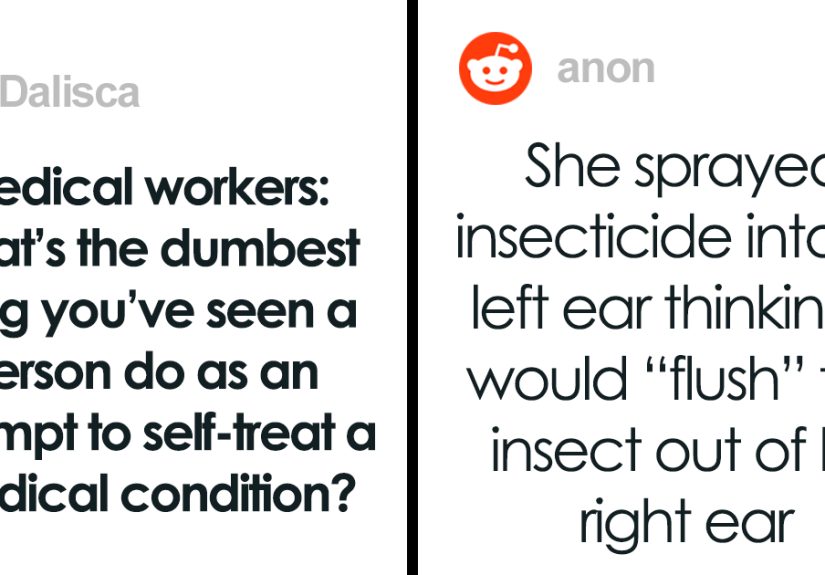
5) Ear trouble: when “just put something in it” becomes the problem
Ear pain and wax buildup make people desperate. Clinicians see all kinds of DIY ear experiments:
random liquids, home concoctions, and aggressive cleaning attempts.
The ear canal and eardrum are delicateirritation, burns, or a perforated eardrum can turn a small issue into a bigger one.
What to do instead: For pain and fever, stick with safe symptom relief and seek evaluation when needed.
If you suspect an infection, severe pain, drainage, hearing loss, or a ruptured eardrum, get medical advice before trying home treatments.
6) Pink eye myths: “I heard breast milk works”
Eye doctors warn against putting breast milk in the eye for conjunctivitis (“pink eye”).
Besides not being a substitute for treatment, it can introduce bacteria and worsen symptoms.
Eyes are not the place to run experimentsvision is a high-stakes feature.
What to do instead: Use clean compresses, avoid touching your eyes, practice careful hand hygiene,
and get proper guidanceespecially if there’s pain, light sensitivity, vision changes, or symptoms in a newborn.
7) “I had leftover antibiotics, so I basically did a medical residency”
Clinicians often hear: “I started the antibiotics I had from last time.” The problem is that many common illnesses
are viral, antibiotics won’t help, and incomplete or inappropriate antibiotic use contributes to resistance and side effects.
Plus, the “right” antibiotic depends on the infection, allergies, interactions, and dosing.
What to do instead: Don’t self-prescribe antibiotics. If symptoms suggest a bacterial infection,
get evaluated so the right medicine (or no medicine) is used at the right dose for the right duration.
8) Borrowing prescriptions: sharing is caring… except with medication
Borrowing someone’s prescription (pain meds, steroids, blood pressure meds, “a little something for anxiety”)
is a common shortcut with uncommon consequences. Interactions, wrong dosing, hidden medical conditions,
and allergic reactions are all risksplus it can mask serious problems.
What to do instead: If you need a medication, get your own prescription.
Pharmacists are also an underrated resource for safe OTC options and interaction checks.
9) Skin problems: turning fungus into a chemistry project
Dermatology clinics see the after-effects of harsh DIY “treatments” for rashes and suspected fungal infections:
irritated, inflamed skin made worse by caustic products or the wrong kind of medication.
For example, using the wrong topical steroid on a fungal rash can make it spread and look “weirder,” not better.
What to do instead: Keep the area clean and dry, use appropriate OTC antifungal treatments when indicated,
and get evaluated if it’s widespread, severe, on the scalp, in a young child, or not improving.
10) Wart warfare: duct tape vs. “hold my soda” improvisation
Here’s where clinicians get nuanced: some at-home wart approaches are reasonable (and even studied),
but people sometimes escalate into painful experimentsacid stacks, blades, or caustic household products.
That’s how you end up with burns, infections, and scars… plus the wart still paying rent.
What to do instead: If you’re treating warts at home, stick to methods recommended by dermatology sources
and consider professional care for stubborn, painful, or spreading wartsespecially on the face or genitals.
11) DIY wound care: “I sealed it with something from the garage”
Clinicians sometimes see cuts “closed” with household adhesives, covered with questionable substances,
or kept under an airtight bandage forever like it’s in witness protection.
The big risk is trapping bacteria, delaying proper cleaning, and missing deeper injuries.
What to do instead: Clean minor cuts gently, keep them protected, and watch for infection
(spreading redness, warmth, pus, fever, worsening pain). Deep, gaping, dirty, or animal-bite wounds deserve real medical care.
12) Parasite panic and miracle drugs: when misinformation goes shopping
Health professionals have had to address people taking medications meant for animals or taking human meds in inappropriate ways
because a post online promised a cure-all. The danger isn’t just “it won’t work”it can cause real toxicity and delay care
for the actual condition.
What to do instead: If you think you need a prescription treatment, use a clinician as your filter.
A good rule: if a remedy is promoted as a secret cure “they don’t want you to know about,” it’s usually because
it doesn’t hold up to evidence.
Red flags: when self-care should stop and medical care should start
Self-care has a placerest, hydration, OTC meds as directed, and basic first aid can be appropriate.
But certain symptoms deserve urgent evaluation. Seek prompt care for:
- Chest pain, trouble breathing, fainting, or severe weakness
- Signs of stroke (face drooping, arm weakness, speech trouble)
- High fever with stiff neck, confusion, or severe headache
- Severe allergic reaction (swelling of lips/tongue, hives with breathing trouble)
- Severe abdominal pain, vomiting blood, or black/tarry stools
- Eye pain, vision changes, or significant eye discharge in a newborn
- Rapidly spreading rash, blistering, or chemical exposure to skin/eyes
- Worsening infection signs (spreading redness, pus, fever, escalating pain)
How to self-treat smarter (without auditioning for the ER)
Use the “human label” rule
If a product is meant for countertops, cars, animals, or crafts, it should not be used on (or in) your body.
“But it’s strong!” is not a medical credential.
Stick to reputable sources
For health info, look for guidance from major medical organizations, academic medical centers,
government public health agencies, and poison-control resources. If the advice is mainly coming from
a comment section with 47 fire emojis, maybe pause.
Don’t combine remedies like you’re mixing a playlist
Mixing multiple OTC products, supplements, and topical treatments can cause interactions and irritation.
More isn’t bettersometimes it’s just more.
Know your backup plan
If symptoms are worsening, not improving, or you’re unsure about a product exposure, get help.
In the U.S., Poison Control (1-800-222-1222) is a fast, expert resource for accidental ingestions and chemical exposures.
Conclusion
Medical professionals don’t expect you to run to the doctor for every sniffle. They do want you to avoid
turning a minor issue into a major one by trying risky DIY “cures.”
The dumbest self-treatment stories usually share the same ingredients: desperation, misinformation, and
something from under the sink.
The smarter path is boringbut effective: safe symptom relief, evidence-based home care, and getting real help when red flags show up.
Your future self (and your immune system) will thank you.
Extra: of “You did WHAT?” clinic moments (composite experiences)
To be clear: the stories below are blended, anonymized “greatest hits” based on common scenarios clinicians describe.
They’re not meant to shame anyone. They’re meant to show how quickly “I’ll just handle this at home” can go sideways.
Moment #1: The toothache that became a gum injury
A patient comes in for “tooth pain,” but the dentist notices the gums look white and irritated in one specific spot.
The patient admits they tried a “direct application” trick because it felt logical: pain is in the mouth,
so medicine goes on the mouth. Unfortunately, some medications aren’t designed to sit on delicate tissue.
The result is a painful burn that makes eating harder, which makes sleep worse, which makes the tooth pain feel even louder.
The lesson: follow label directions and get a dental evaluation. Toothaches are often signals, not puzzles.
Moment #2: The rash that fought back harder
Someone gets an itchy ring-shaped rash and decides it’s either fungus or “something gross.”
They throw a bunch of products at itsome drying, some irritating, some that calm redness temporarily.
The rash gets angrier. Now it’s spreading. Now it stings. When they finally see a clinician,
the skin is so inflamed it’s hard to tell what the original rash looked like.
The lesson: if a rash is growing, painful, widespread, or not improving with appropriate OTC care,
it’s time for a diagnosis, not a product buffet.
Moment #3: The ear that didn’t need “deep cleaning”
A patient complains of muffled hearing and tries to “flush it out” with a home experiment.
Instead of relief, they get painsometimes dizzinesssometimes worse blockage.
Clinicians see this pattern a lot: the urge to do something immediately in a place you can’t see.
The lesson: ears are self-cleaning more often than people realize. Aggressive DIY can irritate the canal
and complicate problems that could have been managed gentlyor addressed safely in clinic.
Moment #4: The wellness trend that didn’t come with a safety manual
Someone takes a “natural immune support” product for weeks because it’s marketed as safe and “ancient.”
They’re shocked when a clinician tells them it can cause harm, interact with medications, or create side effects.
The patient’s reaction is honest and common: “But it was sold in a health store.”
The lesson: marketing isn’t medicine. “Natural” is not a guarantee, and supplements can still cause real problems.
Moment #5: The DIY fix that delayed the real fix
This is the one clinicians worry about most: the home remedy that doesn’t just failit delays care.
A person tries one thing, then another, then another. Each attempt buys them a day or two of hope.
Meanwhile, the underlying issue continues. By the time they seek help, the condition is harder to treat.
The lesson: the earlier you get the right diagnosis, the fewer “creative” solutions you’ll need.
If you’re repeatedly searching for new hacks, that’s a clue you’re past the point where hacks help.