Table of Contents >> Show >> Hide
- A Show Set in the 1870s, But Speaking to the 1970s
- Michael Landon Was More Than a Star. He Was the Atmosphere.
- The Girl Who Became Laura Before She Even Knew It
- Offscreen, Laura and Nellie Were Not Enemies at All
- Why the Show’s Values Still Hit a Nerve
- Melissa Gilbert’s Life Now Gives the Story a New Shape
- Extra Reflections: The Experiences Behind the Memories
- Conclusion
- SEO Metadata
Some TV shows fade gently into the rerun pasture. Little House on the Prairie did not get that memo. Decades after bonnets, braids, and Walnut Grove first marched into American living rooms, the series still has a grip on viewers that is part nostalgia, part comfort food, and part emotional ambush. You think you are just watching a family drama set in the 1800s, and then suddenly you are crying over kindness, community, or a very stern life lesson delivered in a cabin with suspiciously perfect lighting.
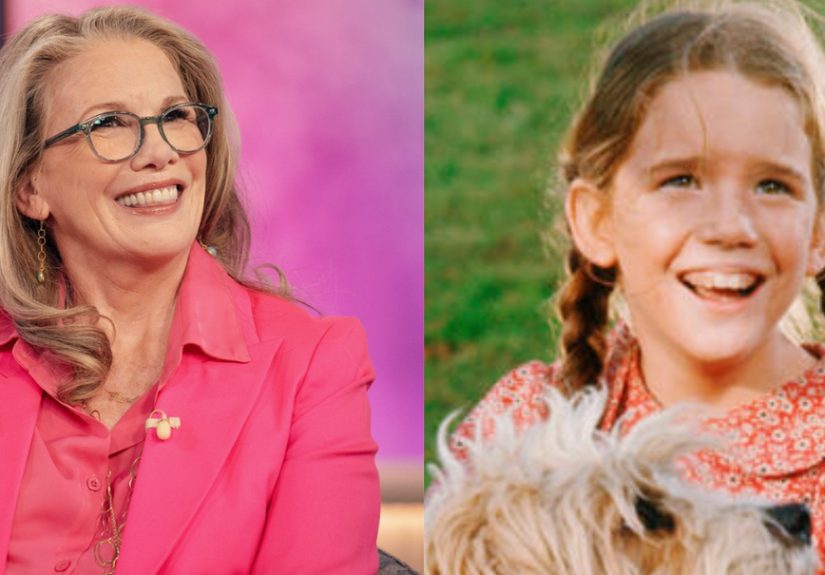
At the center of that legacy is Melissa Gilbert, forever known to generations of fans as Laura Ingalls, the scrappy, curious, occasionally stubborn heart of the show. But what makes Gilbert’s recent reflections so interesting is that she is no longer talking about Little House as a former child star trotting out the usual greatest hits. She is talking about it as a woman who has lived a full life, stepped away from Hollywood’s hamster wheel, written memoirs, embraced aging, built a quieter life, and looked back on the series with clearer eyes. In other words, Half-Pint grew up, got perspective, and started telling the story with more depth than ever.
That fresh perspective changes everything. Instead of simply remembering Little House on the Prairie as a beloved classic, Gilbert now frames it as a formative emotional education, a workplace shaped by Michael Landon’s leadership, a set where childhood and professionalism collided, and a series that was far more socially aware than its prairie wallpaper might suggest. The result is a richer conversation about why the show endured, what it taught her, and why people still feel such fierce loyalty to it today.
A Show Set in the 1870s, But Speaking to the 1970s
One of Gilbert’s most revealing recent points is also one of the most important: Little House on the Prairie may have been dressed in calico and wagon dust, but it was never just about the 1870s. In her reflections, she has emphasized that the stories were consciously relevant to the era in which they were made. That helps explain why the series still feels more emotionally alive than many period dramas that are technically polished and spiritually asleep.
The show tackled prejudice, poverty, disability, loneliness, addiction, class differences, grief, injustice, and moral compromise without acting smug about it. It was not interested in being a museum piece. It wanted to be a conversation with American families. That is a big reason why viewers did not merely watch the Ingalls family. They moved in emotionally, borrowed sugar, and never fully left.
Gilbert’s current take invites a smarter reading of the series. Yes, there were sunlit wheat fields and enough suspenders to stock a small frontier department store. But there was also urgency. The writers were using the distance of the past to talk about the tensions of the present. Seen that way, Little House becomes less of a quaint relic and more of a slyly effective family drama that smuggled serious issues into prime time under the cover of a fiddle tune.
Michael Landon Was More Than a Star. He Was the Atmosphere.
Every long-running television series develops a culture, and Gilbert has made it clear that on Little House, Michael Landon created it. She has described him as the one who set the tone, and that idea keeps surfacing whenever she talks about the series now. Not just because he played Charles Ingalls, but because he shaped the emotional weather on and off camera.
Gilbert’s memories of Landon are not vague, ceremonial praise. They are specific, lived-in, and affectionate. She has recalled how he nurtured the younger actors rather than treating them like cute props with lines. He drew performances out of them. He expected emotional truth. He praised them when they connected and pushed them when they drifted. That combination of warmth and seriousness mattered, especially for a child actor growing up under studio lights.
She also remembers him as funny, human, and deeply attentive. If still photography made her uncomfortable as a child, he would fool around to make her laugh. If the set needed leadership, he provided it without creating a hierarchy of preciousness. One of the enduring lessons she says she learned from him was that no one on a production is more important than anyone else. On the Little House set, status games were not the point. The work was the point.
And then there is the emotional piece. Gilbert has said Landon became a father figure in her life, which makes her reflections especially moving. You can hear in her recent interviews that she does not remember him as merely a famous coworker from childhood. She remembers him as part mentor, part protector, part mischief-maker, and part moral center. Even now, when she talks about the values of the show, she often circles back to him. In her telling, the decency viewers felt in Little House did not come out of thin prairie air. It came from the man steering the wagon.
The Girl Who Became Laura Before She Even Knew It
Gilbert’s newer stories about getting cast add another layer to the mythos. The role of Laura Ingalls did not arrive with grand Hollywood fanfare. By her own account, she was still very young, disappointed over another audition, and not exactly entering the room like a child who knew she was about to become television history. That is part of what makes the story charming. America’s future favorite frontier firecracker was not manufactured in a lab. She came in as herself.
Even the way she learned she had gotten the job feels wonderfully old-school and slightly chaotic. Rather than a glossy announcement, the news reached her through Michael Landon’s daughter, Leslie. It sounds less like a formal career milestone and more like a kid finding out a life-changing secret at school. That odd, human-sized beginning fits the role she would go on to play. Laura was never polished. She was alive.
The nickname story is just as revealing. On the first day of filming, Landon gave Gilbert the nickname “Half-Pint,” and it stuck for life. That detail has followed her for decades because it captures something larger about the bond between actor and role. Laura was a character. Half-Pint became a cultural identity. Gilbert has spent years carrying both, and now she speaks about that inheritance with more humor and less performance. She seems to understand that fans do not just remember the character. They remember the feeling of her.
Offscreen, Laura and Nellie Were Not Enemies at All
If you grew up believing Laura Ingalls and Nellie Oleson were natural-born enemies, television did its job. Very well, in fact. Too well. Because one of the funniest truths Gilbert’s circle has shared in anniversary coverage is that offscreen, Melissa Gilbert and Alison Arngrim were close. While their characters shoved, schemed, and glared their way into TV history, the actresses were having sleepovers and reportedly choreographing their fight scenes together from the earliest years.
That detail is delightful, but it also reveals something important about Gilbert’s experience on the show. Little House was not only a famous production; for many of its young actors, it was childhood. Real childhood. Messy, playful, bonded, emotional childhood. Gilbert has spoken about how overwhelming it can be to revisit the series because it brings back so much of that life at once. Not just plotlines, but people. Not just episodes, but feelings.
That is one reason her recent comments land differently than standard anniversary nostalgia. She is not simply saying, “Those were good times.” She is talking about memory as a place she can still walk into. Watch an old episode, and she is not just seeing a performance. She is seeing what amounts to home movies from an extraordinary, impossible kind of upbringing.
Why the Show’s Values Still Hit a Nerve
Gilbert has repeatedly pointed to the values embedded in Little House on the Prairie as part of the reason it still connects with people. Family, fairness, tolerance, community, redemption, and simple human decency are not exactly trendy concepts in an age of doomscrolling and algorithmic outrage. That may be precisely why they feel so powerful now.
The show did not pretend that life was easy. In fact, life in Walnut Grove was often one bad harvest, one illness, or one moral crisis away from disaster. But the series believed that hardship did not cancel compassion. It made compassion necessary. That distinction matters. Plenty of modern shows are good at showing suffering. Fewer are good at showing goodness without becoming syrupy. Little House pulled off that balance more often than people give it credit for.
Gilbert’s mature reflections help explain why the show’s comfort is not shallow. It is not comforting because nothing bad happens. Quite the opposite. It is comforting because the stories keep returning to the possibility that people can choose grace, even when circumstances are brutal. That worldview feels radical again. Maybe it always was.
Melissa Gilbert’s Life Now Gives the Story a New Shape
Part of what makes Gilbert’s recent commentary so compelling is where she is speaking from now. She has written about leaving behind Hollywood pressure, moving toward a quieter rural life, and rediscovering herself away from the machinery of perpetual youth. That journey matters because it echoes the emotional DNA of Little House without turning it into cosplay. She is not pretending to live in Walnut Grove. She is drawing meaning from the values that the show planted early.
There is something almost poetic about the fact that the actress who spent years playing Laura Ingalls eventually wrote Back to the Prairie, a memoir about remaking home and reclaiming her life in a simpler setting. No, she is not milking cows in a gingham apron while Pa saws lumber nearby. But she has clearly come to appreciate the deeper appeal of the world that first made her famous: work that feels real, relationships that feel equal, and a life not entirely arranged around image.
That shift also seems to have made her less defensive about the show’s legacy and more generous about its future. Gilbert has supported the newer adaptation in development and has said there is room for other interpretations. That is a striking stance from someone whose face is permanently tied to one of the most iconic roles in television history. It suggests confidence, not insecurity. She understands that classics survive because they are revisited, not sealed in amber like a museum butter churn.
Extra Reflections: The Experiences Behind the Memories
To really understand why Melissa Gilbert talking about Little House on the Prairie feels different now, you have to look at the experiences sitting underneath the stories. This is not just an actress revisiting a successful old show. It is a woman revisiting the place where she learned how to work, how to belong, how to be watched, and how to separate the public version of herself from the private one. That is a lot to pack into braids and pinafores.
As a child, Gilbert was not merely playing Laura Ingalls. She was growing up while millions of people watched her do it. That kind of experience leaves a strange double exposure. One life happens in real time, with all the awkwardness and uncertainty of childhood. The other life becomes cultural memory, polished by reruns and audience affection. When Gilbert talks about the show now, she seems more interested in the overlap between those two lives than in preserving some polished legend. And honestly, that makes her reflections far more powerful.
There is also the matter of labor, something nostalgia pieces often skip. Child stardom can be treated like magic, as if a famous young performer simply wandered into a costume and became a symbol. Gilbert’s recent recollections push back against that fantasy. She describes acting as work, emotional work, and set life as a real education. She learned timing, discipline, collaboration, and empathy. She learned how a production runs. She learned that the camera sees more than lines; it sees whether a scene is emotionally true. That is not just cute TV trivia. That is an apprenticeship.
Then there is the emotional inheritance of the show itself. Gilbert has spoken about the cast and crew as a kind of family, and you can feel that in the way she remembers the series. For longtime viewers, that may explain why Little House still feels unusually personal. The show worked because it was not built entirely from technical competence. It was built from relationships that, while imperfect, were real enough to give the material warmth. Audiences may not have known the behind-the-scenes details, but they recognized sincerity when they saw it.
Another reason her perspective resonates now is that she is talking from the other side of reinvention. She has aged publicly, changed priorities, moved away from old pressures, and returned to the role of cultural memory without seeming trapped by it. That gives her authority. She is not clinging to Laura. She is interpreting Laura. That is a huge difference. It allows her to be affectionate without being sentimental, honest without being bitter, and funny without making the whole thing feel lightweight.
And perhaps that is the biggest reason fans lean in when Gilbert talks about the show today. She is no longer offering a souvenir version of Little House on the Prairie. She is offering context. She is explaining why the series mattered to her, why Michael Landon mattered, why the cast dynamics mattered, why the themes still land, and why audiences continue to feel that sudden lump in the throat when Walnut Grove comes back into view. The prairie, in her hands, stops being a set. It becomes a place where American television figured out how to be earnest, topical, and emotionally generous all at once. No wonder people still return to it. No wonder Gilbert still carries it. And no wonder, when she talks about it now, it feels less like nostalgia and more like wisdom finally catching up to memory.
Conclusion
Melissa Gilbert’s recent reflections make one thing clear: Little House on the Prairie endures not because it is old, but because it still feels alive. In her telling, the show was a training ground, a surrogate world, a values-driven drama, and a rare production where leadership, heart, and craft all pulled in the same direction. She remembers Michael Landon as mentor and compass, the cast as real companions in childhood, and the stories as more socially aware than many people realized at the time.
That is why hearing Gilbert talk about Little House now feels so satisfying. She is not flattening the past into a Hallmark card. She is giving it shape, texture, humor, and grown-up insight. She knows the show means comfort to viewers, but she also knows it carried real weight. And maybe that is the secret. Behind all the prairie dresses and fiddle music was a series brave enough to believe that kindness matters, relevance matters, and the stories we tell families at the end of the day matter most of all.