Table of Contents >> Show >> Hide
- Why metal keeps returning to murder
- Murder songs vs. murder fantasies: the line metal tries to walk
- Classic murder narratives in heavy metal and thrash
- When murder becomes a “special effect”: death metal and extreme subgenres
- True-crime metal: songs inspired by real cases
- Historical killers and “legend” villains in black metal and gothic extremes
- How to build a murder-themed metal playlist without making it weird
- Why people enjoy this stuff (even though it sounds alarming on paper)
- Listener experiences: what it feels like to explore murder-themed metal (about )
- Conclusion
- SEO tags (JSON)
Content note: This article discusses murder-themed lyrics, true-crime inspirations, and violent storytelling in metal. It does not include graphic lyric excerpts or instructions for harm. If you’re here for riffs, history, and the weirdly comforting art of musical darknesswelcome to the basement. The snacks are probably black.
Why metal keeps returning to murder
Metal has always loved extremes. Not just “turn the volume up,” but “turn the emotions up until they have their own zip code.” Murder-themed songs show up across thrash, death metal, black metal, groove metal, and even traditional heavy metal because they’re a shortcut to intensity: fear, adrenaline, disgust, grief, rage, and fascination all hit at once.
But here’s the key: in most cases, these songs are storytellinghorror cinema for your ears. Sometimes the narrator is a villain. Sometimes the song is a documentary-style snapshot of real crimes. Sometimes it’s social commentary about violence, punishment, war, and the systems that grind humans into headlines. And sometimes it’s pure theatrical shock: blood-curdling vocals, ridiculous imagery, and a “can you believe they went there?” grin that’s equal parts juvenile and cathartic.
Metal doesn’t “cause” murder; it talks about itoften in the same way true-crime podcasts, horror novels, or slasher films do. That doesn’t make it automatically tasteful. It does mean the intent is usually to provoke, process, or perform, not to instruct.
Murder songs vs. murder fantasies: the line metal tries to walk
There’s a big difference between (1) songs that depict violence as a horror narrative and (2) songs that feel like they’re celebrating harm. Listeners don’t all draw that line in the same place, and metal has a long history of pushing boundaries to see what the crowd will tolerate. A good rule of thumb: if a song makes you feel uneasy, you’re allowed to hit “skip.” You’re not failing a metal exam. There is no diploma. (If there were, it would be written in unreadable band-logo font anyway.)
Many bandsespecially in thrashframe murder and atrocity in a “reportage” style: cold, descriptive, meant to shock you into confronting the ugliness of real history. Others lean into fictional murder as a character study: obsession, paranoia, guilt, the collapse of sanity. And in some extreme subgenres, violence becomes a special effectlike a haunted-house actor jumping out at you with a chainsaw that is (thankfully) not connected to anything.
Classic murder narratives in heavy metal and thrash
If you want the “gateway” routesongs that are intense, sinister, and memorable without going full splatter-filmtraditional metal and thrash offer plenty. These tracks often feel like mini thrillers: sharp hooks, tense pacing, and lyrics that play out like crime scenes you can’t stop watching.
Slayer’s true-crime shadow: “Dead Skin Mask”
Few metal bands are as associated with serial-killer subject matter as Slayer, and one of their most infamous entries is “Dead Skin Mask,” commonly tied to American killer Ed Gein. The song’s slow, stalking feel matches the unsettling subject: it’s less “speed chase,” more “you hear a floorboard creak and instantly regret living in a house with floors.”
Why it works (musically) is the restraint. Metal doesn’t always need to sprint to be terrifying. Sometimes the scariest thing is a riff that just keeps walking toward you, calmly, like it already knows your address.
Judas Priest and the mythic killer: “The Ripper”
Long before “true crime” became a streaming-category personality trait, Judas Priest wrote “The Ripper,” a song widely associated with Jack the Ripperan example of metal using infamous history as a dark stage prop. The track is short, sharp, and theatrical, the musical equivalent of a streetlamp flickering in Victorian fog.
Iron Maiden’s literary murder: “Murders in the Rue Morgue”
Not all metal murder stories are ripped from police files; some come from classic literature. Iron Maiden’s “Murders in the Rue Morgue” draws from Edgar Allan Poe, turning an early detective/horror tale into a galloping heavy metal narrative. It’s a great reminder that metal isn’t only about darknessit’s also about story craft.
Slayer’s controversy magnet: “Angel of Death”
“Angel of Death” is often discussed in the same breath as murder-themed metal, though its focus is atrocity and war crimes rather than a single “murder mystery.” The song’s subject matter is commonly linked to Nazi doctor Josef Mengele, and it’s long been a lightning rod for debates about depiction vs. endorsement. Guitar-focused retrospectives and band commentary have noted the inspiration and the resulting controversy.
If you’re building a playlist around “killing & murder,” this track belongs in the “historical horror” corner: brutal music confronting real-world evil. It’s also a good example of why context matters when you share metal with newcomers. A one-sentence intro can prevent a three-hour argument.
When murder becomes a “special effect”: death metal and extreme subgenres
In death metal, brutal death metal, grindcore, and certain strands of extreme metal, murder-themed lyrics can be part of a larger aesthetic: the grotesque, the forbidden, the “too much.” Think of it like practical effects in horror films. Some bands want realism; others want a cartoonishly over-the-top shock that’s clearly not meant to be taken as a moral statement.
This is also where taste varies wildly. Some listeners love the absurditylike watching a B-movie monster stomp through a miniature city. Others find it unpleasant, exhausting, or gratuitous. Both reactions are valid. Metal is a big house with many rooms. You don’t have to hang out in the one that smells like a haunted butcher shop.
Even within mainstream metal culture, outlets have noted how far some “gore” and atrocity-focused lyrics can goand why many people choose to avoid that end of the pool.
True-crime metal: songs inspired by real cases
A major lane within murder-themed metal is the “true-crime” approach: songs inspired by documented crimes, notorious killers, or unsolved mysteries. This shows up across stylesclassic metal, thrash, death metal, and even genre-adjacent actsbecause reality is often stranger (and darker) than fiction.
Lists and features from metal-focused publications regularly connect specific songs to real casessometimes as direct retellings, other times as loose inspirations.
Church of Misery: the serial-killer catalog approach
If there’s a band that treats true-crime murder as an ongoing lyrical “project,” it’s Church of Misery, widely described as building songs around individual serial killers. That premise alone explains why the band frequently comes up whenever people trade recommendations for murder-themed metal.
Musically, it’s not just shock value; it’s often riff-driven, groove-heavy, and built for head-nodding rather than hyperspeed chaos. That contrastgroovy, almost classic-rock DNA paired with horrific subject matteris part of what makes it feel so unsettling.
Modern examples: when extreme metal turns “case files” into songs
Contemporary extreme metal still mines real-world cases, sometimes even naming tracks after killers or building entire concepts around them. For example, coverage in metal outlets has discussed songs tied to figures like Andrei Chikatilo, reflecting how international crime stories get absorbed into modern metal’s thematic arsenal.
Whether you see that as educational, exploitative, or just another form of horror storytelling depends on the band’s framing and your own comfort level. The healthiest listening posture is awareness: remember there were real victims, and treat the subject with something more mature than a punchline.
Historical killers and “legend” villains in black metal and gothic extremes
Not all murder-themed metal is grounded in modern crime. A lot of it lives in the foggy border between history and legend: aristocratic killers, medieval cruelty, and infamous figures whose stories have been re-told so many times they become mythic monsters.
Elizabeth Báthory is a prime exampleher legend has inspired a long trail of metal references and dedicated songs. Metal publications have repeatedly cataloged tracks inspired by her story, reflecting the character’s enduring grip on the genre’s imagination.
This category often overlaps with gothic metal and theatrical black metal: dramatic arrangements, lavish imagery, and a “dark novel” vibe. The murder is part of the atmosphere, not the entire point.
How to build a murder-themed metal playlist without making it weird
Yes, that’s a sentence we’re all okay with reading on the internet in 2025.
If you’re curating “Metal Songs About Killing & Murder” for yourself (or for friends who consent to your musical chaos), try organizing by tone rather than by “most violent.” Here are a few playlist lanes that keep things interesting:
1) The thriller lane (tense, narrative, not ultra-graphic)
- Story-driven songs with clear scenes, suspense, and memorable hooks.
- Great for people who like horror movies but don’t want splatter.
2) The true-crime lane (documentary-ish, history-forward)
- Songs tied to known cases, infamous criminals, or historical atrocities.
- Best enjoyed with contextand a little respect for real-world harm.
3) The theatrical lane (camp, shock, and dark humor)
- Over-the-top villain narration, horror aesthetics, and exaggerated imagery.
- Works when the band is clearly performing a character, not preaching.
4) The “too much for Tuesday” lane (extreme metal)
- For experienced listeners who know what they’re signing up for.
- Not ideal for casual playlists, family road trips, or anyone who eats while reading lyrics.
Why people enjoy this stuff (even though it sounds alarming on paper)
It can feel strange to admit: “I like songs about murder.” Out of context, that sounds like a sentence that should come with a required home visit from a concerned therapist and a golden retriever trained in emotional support.
In context, though, people often enjoy murder-themed metal for reasons that have nothing to do with wanting harm:
- Catharsis: Metal gives shape to fear and anger in a controlled environment.
- Curiosity: Humans are drawn to taboo stories; metal doesn’t pretend otherwise.
- Craft: Great bands build tension like filmmakerspacing, mood, dynamics.
- Community: Fans bond over the shared language of “dark art” without real-world darkness.
- Distance: The extremity can be so stylized it becomes surrealmore like mythology than reality.
That last point matters. A lot of metal is “unreal” on purpose. It’s horror theater with a drum kit.
Listener experiences: what it feels like to explore murder-themed metal (about )
Most people don’t stumble into murder-themed metal because they woke up and thought, “Today I will develop a hobby that sounds suspicious if quoted in court.” They get there the way people get into any intense music: one song at a time.
For many listeners, the first experience is a vibe shift. You put on a track with a darker narrativemaybe something like a slow, stalking riff where the vocals sound more like a warning than a chorusand suddenly you’re paying attention differently. You’re not just tapping your foot. You’re scanning the edges of the sound, like your brain is looking for movement in the shadows. It’s the musical equivalent of walking through a haunted house and realizing the scariest part is your own imagination filling in the blanks.
Then comes the curiosity spiral. You read about the song’s inspiration. You learn that some bands pull from literature or history, while others borrow from true-crime headlines. That can be unsettlingespecially when you discover a track is tied to a real case. A lot of listeners report an internal “check” moment: Am I okay with this? That’s not overthinking; it’s emotional literacy. Some people keep going, but with more awareness. Others decide they’d rather stick to fictional horror and leave the real-world stuff alone.
Another common experience is discovering the difference between sound brutality and lyrical brutality. Some songs sound like a wrecking ball but are actually social commentary. Others have catchy grooves but extremely dark stories. That mismatch can be jarring at firstlike realizing the upbeat song you’ve been humming is about something you definitely shouldn’t be humming while grocery shopping.
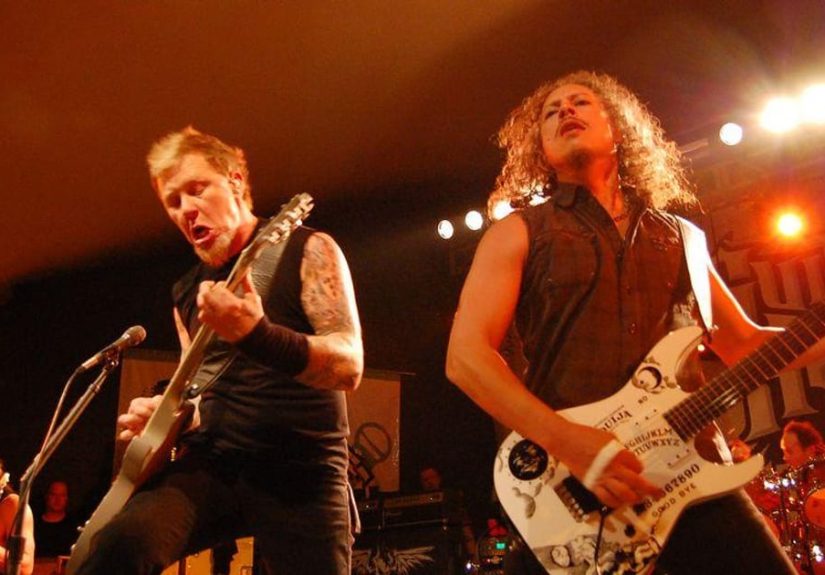
Live shows add their own layer. In a venue, murder-themed songs don’t usually feel like a “violent message.” They feel like shared performance: the band playing a role, the crowd releasing energy, and everyone agreeing (without a meeting) that this is theater. The pit isn’t a crime scene; it’s a sweaty physics experiment where bodies bounce, people help each other up, and the collective mood is strangely supportive for music that sounds like it was recorded inside a collapsing factory.
And finally, there’s the long-term experience: you start to hear these songs less as “songs about murder” and more as “songs about fear, obsession, power, and consequences.” The best murder-themed metal doesn’t just point at a knifeit points at the human mind holding it, the culture that romanticizes it, and the cost left behind. If you end up loving this corner of metal, it’s often because the music lets you stare into darkness without stepping into it.
Conclusion
Metal songs about killing and murder sit at the intersection of storytelling, taboo, and emotional intensity. Sometimes they’re fictional thrillers. Sometimes they borrow from history or true crime. Sometimes they’re theater with a distortion pedal. The best way to approach them is with context, curiosity, and a personal boundary line you’re not afraid to enforce.
If you want a playlist that’s heavy but not gross, lean into narrative thrash and classic metal. If you want documentary-style darkness, explore true-crime-inspired trackswith respect for the real suffering behind the stories. And if you want the extreme end, go in with eyes open and a finger near the skip button. That’s not weakness. That’s taste.