Table of Contents >> Show >> Hide
- What Are Miguelitos?
- Why This Recipe Works (A Little Pastry Science, But Make It Fun)
- Ingredients
- Equipment You’ll Want (No, You Don’t Need a Pastry Degree)
- Step 1: Make the Pastry Cream (Crema Pastelera)
- Step 2: Bake the Puff Pastry Squares
- Step 3: Assemble the Miguelitos (The Best Part)
- Troubleshooting and Pro Tips
- Flavor Variations (Because Miguelitos Love Attention)
- Make-Ahead and Storage
- Serving Ideas
- Recipe Recap (Quick Version)
- Real-World Miguelitos Moments ( of “Yep, That’s Exactly What Happens”)
- Conclusion
Miguelitos are the kind of dessert that make people assume you own a tiny pastry shop and a dramatic scarf collection.
In reality, you’re using puff pastry (your freezer’s greatest flex) and a silky pastry cream that comes together on the stove in minutes.
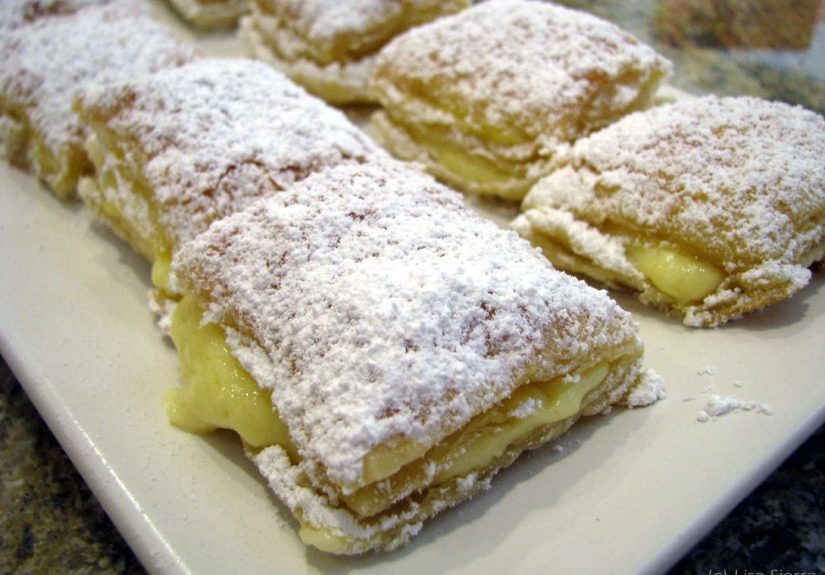
The result: flaky, golden layers with a cool, vanilla-scented custard center and a snowy shower of powdered sugar.
Fancy enough for guests, easy enough for a “just one more episode” night.
What Are Miguelitos?
Miguelitos are a beloved Spanish pastry associated with La Roda, a town in the province of Albacete. They’re typically made from
baked puff pastry cut into small squares or rectangles, sliced open, and filled with pastry cream (often called crema pastelera),
then finished with a generous dusting of confectioners’ sugar.
Think “mille-feuille’s laid-back cousin”all the flaky drama, less assembly stress.
Why This Recipe Works (A Little Pastry Science, But Make It Fun)
Puff pastry rises because cold layers of fat meet hot oven heat and create steam, which separates those layers into crisp, airy sheets.
Pastry cream thickens because egg proteins set and starch gelatinizes as the mixture heatstranslation: if you whisk and heat it properly,
you get a custard that pipes like a dream instead of pouring like a sad latte.
The key is timing: keep puff pastry cold, bake it hot, and chill the pastry cream so it stays plush and stable inside the crisp shell.
Miguelitos aren’t hardjust mildly allergic to chaos. (So, basically all pastry.)
Ingredients
For the puff pastry
- 1 box (about 17 ounces) frozen puff pastry (2 sheets), thawed but still cool
- 1 large egg (for egg wash)
- 1–2 tablespoons all-purpose flour (for dusting your surface)
- Confectioners’ sugar (powdered sugar), for finishing
For the pastry cream filling (crema pastelera)
- 2 1/2 cups whole milk
- 1/2 cup granulated sugar
- 3 large egg yolks
- 3 tablespoons cornstarch
- 1 teaspoon vanilla extract (or vanilla bean paste)
- Optional but very “Spain”: a strip of lemon peel and/or 1 small cinnamon stick
- Pinch of salt
- Optional (for extra richness): 1 tablespoon unsalted butter
Equipment You’ll Want (No, You Don’t Need a Pastry Degree)
- 1 medium saucepan
- Whisk (your best whiskthis is its moment)
- Fine-mesh strainer (helpful for ultra-smooth cream)
- Baking sheets + parchment paper
- Sharp knife or pizza cutter
- Piping bag or zip-top bag (optional, but makes filling neater)
Step 1: Make the Pastry Cream (Crema Pastelera)
Make this first so it has time to chill and set. Warm custard is delicious, but it also turns crisp pastry into a spongegreat for dishwashing,
not great for dessert.
1) Infuse the milk (optional, but highly recommended)
In a saucepan, warm the milk over medium heat until steaming and just shy of simmering.
If using lemon peel and/or cinnamon, add them now. Let it steep for 5–10 minutes off the heat, then remove the peel and cinnamon.
(Your kitchen will smell like you know what you’re doing. Enjoy that.)
2) Whisk the yolks, sugar, and cornstarch
In a bowl, whisk egg yolks, sugar, cornstarch, and a pinch of salt until smooth and slightly lighter in color.
This step helps the starch disperse so you don’t end up with custard confetti.
3) Temper, then thicken
Slowly whisk a ladle of warm milk into the yolk mixture to bring it up to temperature (this prevents scrambled-egg surprise).
Pour everything back into the saucepan. Cook over medium heat, whisking constantly, until it thickens to a pudding-like texture.
Once it starts bubbling, keep whisking for about 30–60 seconds to fully cook out the starch so it holds its shape.
4) Finish and chill
Remove from heat. Whisk in vanilla (and butter, if using). For the smoothest pastry cream, strain it into a clean bowl.
Press plastic wrap directly onto the surface (touching the cream) to prevent a skin. Refrigerate at least 2 hours.
Step 2: Bake the Puff Pastry Squares
1) Prep your oven and pans
Heat your oven to 400°F. Line two baking sheets with parchment paper.
Puff pastry likes decisive heatpreheat fully.
2) Cut the pastry
Lightly flour your work surface. Unfold one sheet of puff pastry and gently roll it just enough to even it out (don’t crush the layers).
Cut into 2-inch squares (or rectangles if you want a more classic bakery look). Repeat with the second sheet.
3) Egg wash for that golden glow
Beat the egg with a teaspoon of water. Brush the tops lightlythink “shiny postcard,” not “omelet.”
4) Bake until tall, crisp, and golden
Bake 10–14 minutes, rotating pans halfway, until the pastry is deeply golden and feels dry and crisp (not pale or doughy).
Transfer to a rack and cool completely.
Step 3: Assemble the Miguelitos (The Best Part)
- Once cool, slice each puff pastry square horizontally like a sandwich bun.
- Spoon or pipe chilled pastry cream onto the bottom half.
- Top with the “lid,” then dust generously with confectioners’ sugar.
- Serve immediately for maximum crispness and dramatic flaky crumbs.
Troubleshooting and Pro Tips
If your pastry cream is lumpy
Don’t panic. Strain it while warm and call it a “chef’s choice texture correction.”
Lumps usually happen when the custard heats unevenly or the eggs set too quickly. Constant whisking and moderate heat help.
If your pastry cream is too runny
It likely didn’t cook long enough after thickening. Custards need enough heat for starch gelatinization and egg proteins to set.
Next time, let it bubble briefly while whisking. If it’s only slightly loose, chilling can still firm it up.
If your puff pastry didn’t puff
Common causes: pastry got too warm before baking, oven wasn’t fully preheated, or you rolled it aggressively and pressed out the layers.
Keep the dough cool and work quickly. If your kitchen is warm, pop cut squares in the fridge for 10 minutes before baking.
If the bottoms are soggy
Bake a bit longer so the pastry dries out. Cool on a rack so steam doesn’t soften the underside.
Also: always fill only after the pastry is completely cool.
Flavor Variations (Because Miguelitos Love Attention)
Chocolate miguelitos
Whisk 2 tablespoons cocoa powder into the sugar/cornstarch mixture, or stir in melted dark chocolate at the end.
Finish with powdered sugar or a light cocoa dusting.
Citrus-kissed pastry cream
Add lemon or orange zest to the milk while warming, then strain before thickening. This gives the cream a brighter, more aromatic edge.
Diplomat-style filling
Fold whipped cream into chilled pastry cream for a lighter, mousse-like texture. It’s softer, so it’s best for serving right away.
Mini miguelitos for parties
Cut 1 1/2-inch squares and bake a minute or two less. They’re bite-sized, fancy, and dangerously easy to “sample” repeatedly.
Make-Ahead and Storage
- Pastry cream: Keep refrigerated in an airtight container with plastic wrap pressed on the surface. Best used within 3 days.
- Baked puff pastry: Store unfilled shells in an airtight container at room temperature for up to 2 days. Re-crisp briefly in a hot oven if needed.
- Assembled miguelitos: Best the day they’re filled. If you must store them, refrigerate and accept that the pastry will soften (still tasty, less crunchy).
- Food-safety note: Cream-filled pastries are perishabledon’t leave them out at room temperature for long stretches. Refrigerate promptly after serving.
Serving Ideas
Miguelitos shine with coffee (espresso, café con leche, or a plain drip that’s proud to be invited).
They also make an excellent dessert after tapas-style meals, because their portions are smallemotionally supportive, not emotionally devastating.
If you’re serving a crowd, put out a tray with powdered sugar and let people dust their own: instant “interactive dessert station” energy.
Recipe Recap (Quick Version)
- Cook and chill pastry cream.
- Cut puff pastry into 2-inch squares, egg wash, bake at 400°F until golden and crisp.
- Cool, slice, fill, dust with powdered sugar, and serve.
Real-World Miguelitos Moments ( of “Yep, That’s Exactly What Happens”)
The first time you make miguelitos at home, the biggest surprise is how fast they go from “I’m just baking something simple” to
“Why is my kitchen covered in powdered sugar like a festive blizzard?” You’ll dust the tops carefully, then pick one up to admire it,
and a soft white cloud will float down onto your counter, your shirt, and somehow your phone screen. This is normal. Powdered sugar has
strong opinions about personal space.
You’ll also learn that puff pastry has a personality: it behaves best when it’s cool, calm, and not being handled like stress dough.
On a chilly day, you’ll cut neat squares and feel like a pastry prodigy. On a warm day, the pastry will start to soften and you’ll realize
why so many bakers casually mention “chill the dough” like it’s a spiritual practice. Sliding the cut squares into the fridge for 10 minutes
can feel like hitting the reset button on your confidence.
Then there’s the pastry creamaka the moment you start whisking and think, “This looks like sweet soup; I have made a mistake.”
You haven’t. It thickens suddenly, like it remembered it has a job. One minute it’s loose and glossy, and the next it’s a soft custard that
clings to the whisk. The key experience here is realizing that constant whisking isn’t just busywork; it’s the difference between silky cream
and a pot of accidental scrambled eggs. If you do get a few tiny lumps, straining the cream is like using an undo button. It’s not cheating;
it’s called being resourceful and emotionally stable.
Assembly is where miguelitos become a choose-your-own-adventure. You’ll slice a pastry square and discover a dramatic honeycomb interior.
Some pieces will split perfectly; others will crack and shed flakes like confetti. The “mess” is part of the charmthose crisp shards are
basically bonus snacks. When you pipe the filling, you’ll notice how chilled pastry cream sits proudly in the center, holding its shape like
it’s posing for a magazine cover. Spoon it in and it will still taste amazing, but piping feels delightfully extra, and miguelitos support
harmless extravagance.
The best real-life move is serving them right after filling, when the pastry is still audibly crisp. You’ll hear that tiny crunch as someone
takes a bite, followed by the universal expression that says, “I didn’t know puff pastry could do this.” People will ask if you made them
from scratch. You can answer honestly (“store-bought puff pastry, homemade cream”), because the real magic is not suffering unnecessarily.
Miguelitos are proof that smart shortcuts can still taste like celebration.
Conclusion
Miguelitos are the dessert equivalent of showing up looking effortlessly put-togetherflaky, elegant, and suspiciously easy once you know the
steps. Keep your puff pastry cold, bake it hot, chill your pastry cream, and assemble right before serving for that crisp-meets-creamy bite.
Whether you stick to classic vanilla crema pastelera or go rogue with chocolate or citrus, this Spanish cream-filled pastry is a crowd-pleaser
that rewards you with big bakery vibes and minimal stress.