Table of Contents >> Show >> Hide
- What Is Moxibustion, Exactly?
- Types of Moxibustion and What a Session Feels Like
- What Is Moxibustion Used For?
- Does Moxibustion Actually Work? A Look at the Evidence
- Risks, Side Effects, and Who Should Skip It
- How to Try Moxibustion Safely
- Moxibustion vs. Other Complementary Therapies
- Should You Try Moxibustion?
- Real-World Experiences with Moxibustion
- The Bottom Line
If you’ve ever seen someone lying on a table with what looks like a smoldering cigar hovering over their skin,
you’ve probably stumbled across moxibustion. This traditional Chinese medicine (TCM) therapy has
been used for thousands of years to “warm the meridians,” move qi (energy), and support overall health. In modern
wellness circles, it’s pitched for everything from breech babies and arthritis to digestive issues and stress.
But what exactly is moxibustion? Is it just fancy incense and warm fuzzies, or does it actually do anything
measurable for your health? Let’s break down what it is, how it’s used, what the science says, and how to decide
if it’s worth trying with a side of common sense and a dash of humor.
What Is Moxibustion, Exactly?
Moxibustion is a form of heat therapy used in traditional East Asian medicine. Practitioners burn a dried herb
called mugwort (often called moxa when prepared for treatment) near or on specific acupuncture
points on the body. The heat is meant to stimulate those points, improve circulation, and support the smooth flow
of qi.
Roots in Traditional Chinese Medicine
In TCM theory, illness can show up when qi and blood aren’t flowing properly, or when the body is cold, weak, or
“deficient.” Moxibustion is considered a warming, tonifying treatment. It’s traditionally used for conditions
associated with cold or stagnation think cramps, chronic pain, fatigue, or slow digestion and is often paired
with acupuncture in the same session.
While moxibustion is best known in Chinese medicine, it’s also used in Japanese, Korean, and other East Asian
medical traditions. The basic idea is the same: carefully applied heat plus specific points equals therapeutic
effect.
How Practitioners Say It Works
From a TCM perspective, the warmth of burning moxa:
- Warms the channels and dispels “cold” from the body.
- Invigorates blood circulation.
- Supports organ systems like the spleen, stomach, kidneys, and uterus.
- Promotes overall balance and resilience.
From a biomedical point of view, researchers think moxibustion may:
- Increase local blood flow and tissue temperature.
- Influence the nervous system and pain pathways.
- Modulate immune and inflammatory responses.
That doesn’t mean it’s a miracle cure; it just means heat plus specific stimulation might be doing more than
smelling like a campfire in the clinic.
Types of Moxibustion and What a Session Feels Like
A typical moxibustion session usually happens in an acupuncture or integrative medicine clinic. You’ll lie on a
treatment table while the practitioner positions moxa near certain points. You should feel warmth, not
pain if you feel like bacon in a skillet, something is wrong.
Direct vs. Indirect Moxibustion
There are two main approaches:
-
Direct moxibustion: Tiny cones of moxa are placed on the skin at specific points. In
scarring moxibustion, the cone is allowed to burn down close to the skin, sometimes leaving small blisters
or scars. In non-scarring moxibustion, the practitioner removes or extinguishes the cone before the skin
is burned. -
Indirect moxibustion: This is more common in modern clinics. The practitioner may hold a
smoldering moxa stick a few centimeters from your skin, move it in small circles, or use a barrier like ginger
slices, salt, or a small moxa box placed over an area.
Indirect methods are generally considered safer and more comfortable, and they’re what you’ll usually encounter in
U.S. integrative clinics.
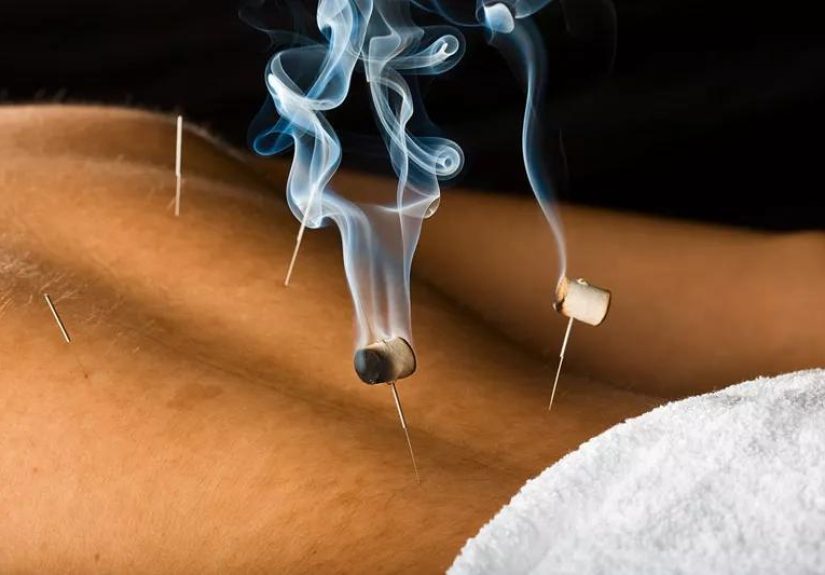
“Warming Needle” Moxibustion
Another technique combines acupuncture and moxibustion. After inserting fine acupuncture needles, the practitioner
attaches a small piece of moxa to the end of each needle and lights it. The warmth travels down the metal needle,
delivering heat more directly into the tissue around the point. It looks dramatic but, done correctly, should feel
warmly soothing rather than fiery.
At-Home Moxa Sticks
Some practitioners show patients how to use moxa sticks at home for certain conditions, such as breech pregnancy or
chronic pain. While that convenience is appealing, it also raises the stakes: you’re literally handling something on
fire near your skin. If you’re going to do at-home moxibustion, you need clear instructions, ventilation, and a
healthy respect for gravity and hot ashes.
What Is Moxibustion Used For?
In practice, moxibustion is used for a wide range of issues. In TCM textbooks, the list is long; in modern clinics,
a few uses come up again and again.
Turning a Breech Baby
One of the most publicized uses of moxibustion is helping to turn a baby who is in a breech position (bottom or feet
down instead of head down) late in pregnancy. The classic protocol involves applying moxa to an acupuncture point at
the outer edge of the little toe (Bladder 67, or BL67) for a set amount of time each day, usually over one to two
weeks.
Research has found that when moxibustion is added to usual care, it can modestly reduce the chance that a baby
remains in a breech position at birth. However, it doesn’t clearly reduce the rate of Cesarean delivery, and
reporting on side effects has been inconsistent. In other words, it may help some babies turn, but it’s not a magic
guarantee for a vaginal birth.
Pain, Arthritis, and Neuropathy
Moxibustion is also commonly used for musculoskeletal pain low back pain, knee osteoarthritis,
neck and shoulder tension, and peripheral neuropathy. Some clinical studies suggest that, compared to usual care or
sham treatments, moxibustion can reduce pain and improve function in people with knee arthritis and certain
neuropathic pain conditions. The research is still limited, but there’s enough signal that pain clinics and
integrative centers sometimes include it as a complementary option.
Digestive and Inflammatory Conditions
Practitioners may use moxibustion for digestive complaints like chronic diarrhea, irritable bowel–type symptoms, or
inflammatory bowel diseases such as ulcerative colitis. Some small trials and animal studies have found improvements
in symptoms or markers of inflammation, but overall the evidence is mixed and often low quality. Moxibustion has
also been explored for conditions like hypertension, stroke rehabilitation, and cancer-related symptoms again, with
inconsistent and generally low-certainty results.
Stress, Sleep, and “General Wellness”
Not every moxibustion session is about a specific diagnosis. Some people use it as part of a broader stress-management
or “tune-up” routine alongside acupuncture, herbal medicine, or meditation. The warmth and ritual can be deeply
relaxing, even if research hasn’t pinned down exactly what that means in terms of measurable outcomes.
Does Moxibustion Actually Work? A Look at the Evidence
The short answer: sometimes, maybe but the evidence is uneven. Moxibustion research is growing,
but many studies are small, not well controlled, or done in ways that make them hard to interpret. Here’s the big-picture
view.
Where Evidence Looks More Promising
-
Breech presentation: A 2023 Cochrane review concluded that moxibustion plus usual care probably
reduces the chance of a baby remaining in a non-head-down position at birth compared with usual care alone. The
effect size is modest, and it doesn’t clearly reduce C-section rates, but there is some moderate-certainty evidence
that it can help turn babies in certain cases. -
Pain syndromes: Some randomized studies and reviews suggest moxibustion may help reduce pain and
improve function in conditions like osteoarthritis of the knee and certain neuropathies when used alongside other
care. These findings are encouraging but not definitive, and more high-quality trials are needed. -
Inflammation: Experimental work indicates that moxibustion can affect immune markers and
inflammatory pathways, which might explain some of its effects on pain and chronic inflammatory conditions. Again,
this is early-stage science, not a green light to ditch your rheumatologist.
Where Evidence Is Weak, Mixed, or Lacking
For many of the things moxibustion is advertised for like boosting immunity, treating cancer, fixing stroke
deficits, curing digestive diseases, or normalizing blood pressure systematic reviews generally say the same thing:
studies are small, methods are inconsistent, and publication bias is likely. Some trials show benefits, others don’t;
overall certainty is low.
That doesn’t necessarily mean moxibustion never helps in those situations just that we don’t currently have strong,
reliable evidence to support it as a primary treatment. If you see a claim that moxibustion “cures” a major disease
by itself, it’s safe to raise an eyebrow.
Why Research on Moxibustion Is Tricky
Studying moxibustion is harder than studying a pill:
-
Creating a convincing “sham” or placebo is challenging people can feel warmth and smell smoke, so blinding isn’t
easy. - Treatment protocols vary: different points, different intensities, different session counts.
-
Many trials combine moxibustion with acupuncture, herbs, or conventional care, making it hard to isolate the
specific effect of moxa.
Because of this, most experts view moxibustion as a complementary therapy that might offer extra
benefit in certain contexts, not a stand-alone cure.
Risks, Side Effects, and Who Should Skip It
“Natural” does not automatically mean “risk-free” especially when fire is involved. While serious complications are
uncommon in trained hands, moxibustion does have potential side effects.
Possible Side Effects
- Burns and blisters if the moxa is held too close or left in place too long.
- Scarring with certain direct moxibustion techniques.
-
Allergic reactions to mugwort (moxa), including skin rashes or respiratory symptoms in people who
are sensitive. -
Smoke irritation, such as coughing, sore throat, or headaches, especially in poorly ventilated
rooms or for people with asthma or other lung conditions. -
Infection if burned or blistered skin isn’t properly cared for (less common with indirect
methods).
People Who Should Be Extra Cautious
-
Anyone with reduced sensation (for example, due to diabetic neuropathy) who may not feel heat
properly. - People with asthma or chronic lung disease, who may be sensitive to smoke.
-
Pregnant people considering moxibustion for a breech baby this should always be coordinated
with their obstetric provider. - Children and older adults, who may have more fragile skin and lower tolerance to heat.
If you’re thinking about moxibustion, it’s wise to talk to your primary care clinician first, especially if you have
chronic health conditions, are pregnant, or take multiple medications.
How to Try Moxibustion Safely
Choosing a Qualified Practitioner
In the U.S., moxibustion is typically performed by licensed acupuncturists or other clinicians with training in
East Asian medicine. When you’re vetting a provider, look for:
- Current licensure in your state (often as an L.Ac. or similar credential).
- Formal training in acupuncture and moxibustion from an accredited program.
- Experience with your specific concern (pain, breech pregnancy, digestive issues, etc.).
- Willingness to coordinate with your other health-care providers.
Smart Questions to Ask Before You Book
- “How often would you recommend treatments, and for how long?”
- “What does a typical session look like for my condition?”
- “What are the possible side effects, and how do we minimize them?”
- “How will we know if it’s working, and when would you suggest stopping?”
A good practitioner should be able to answer these without hand-waving or promising miracles.
What to Expect During and After a Session
During moxibustion, you’ll feel a gradually increasing warmth at the treatment area. Practitioners should keep
checking in so the heat stays comfortable. Afterward, you might notice:
- Mild redness where the moxa was applied.
- A lingering herbal, smoky smell (don’t wear your favorite silk blouse).
- Temporary relaxation, sleepiness, or a “looser” feeling in the treated area.
If you experience sharp pain, burning, dizziness, severe coughing, or feel unwell, say something immediately you
’re there for healing, not a barbecue.
Moxibustion vs. Other Complementary Therapies
Moxibustion isn’t the only game in town. It’s often combined with:
-
Acupuncture for pain, stress, and many of the same conditions. Some people respond well to acupuncture
alone; others may find added warmth helpful. -
Cupping, which uses suction cups to improve circulation and relieve muscle tension another
traditional technique that’s become more mainstream. -
Conventional care, like physical therapy, medications, or surgery, depending on the condition. For
serious or progressive diseases, moxibustion should be a bonus, not a replacement.
If you like the idea of gentle heat and relaxation, moxibustion may be worth a trial run as part of a broader
treatment plan especially for pain or breech pregnancy, where there’s at least some evidence to work with.
Should You Try Moxibustion?
You might be a good candidate to consider moxibustion if:
- You’re dealing with chronic pain or stiffness and open to integrative options.
- You’re pregnant with a breech baby and your obstetric provider says it’s safe to explore.
- You’re already under medical care and want an additional, low-risk therapy for symptom relief.
- You like the idea of warm, focused therapy and are okay with a bit of smoke and herbal smell.
On the other hand, if you’re hoping moxibustion will single-handedly shrink a tumor, cure advanced disease, or
replace a needed surgery, that’s unrealistic and potentially dangerous if it delays effective conventional care.
Real-World Experiences with Moxibustion
Research gives us statistics and effect sizes; real-world experiences fill in what it actually feels like to try
moxibustion. While everyone’s story is unique, common patterns show up in clinics and patient reports.
A First-Timer’s Experience
Imagine someone who’s had low back pain for years from sitting at a desk and weekend “I’m still 20” home improvement
projects. They’ve tried physical therapy, stretching apps, and a foam roller that now lives under the bed. Their
acupuncturist suggests adding moxibustion.
During the first session, the main surprise is how gentle it feels. The practitioner hovers a moxa stick a
few inches above the skin, slowly moving it until the area feels deeply warm not like being burned, but like a
heating pad that’s dialed in just right. There’s a faint herbal smell, a little like sage or campfire smoke. By the
end of the session, the back feels looser and lighter, and the person is unexpectedly sleepy in that “post-massage”
kind of way.
Over several weeks, they may notice that flare-ups are less intense or less frequent. Is it only the moxibustion?
Probably not. It’s likely a mix of acupuncture, stretching, lifestyle changes, and simply having a regular space to
de-stress. But for some people, the warmth of moxibustion is the part they look forward to the most.
The Athlete with Knee Pain
Now picture an amateur runner with knee osteoarthritis who still loves 5Ks but hates the post-race stiffness. They
see a sports-minded acupuncturist who suggests local moxibustion sessions around the joint.
The practitioner uses indirect moxibustion with a moxa stick or small moxa boxes placed over key points around the
knee. The athlete feels radiant warmth seeping into the joint more focused than a hot pack, but less intense than
something like deep tissue work. Over a series of treatments, they might report that running feels smoother or that
recovery time is shorter, especially when moxibustion is combined with strength training and medical management.
Importantly, the athlete still works with their orthopedist and physical therapist. Moxibustion is a supporting
player, not the star of the show. But when pain is chronic, even a modest improvement can feel life-changing.
The Breech Baby Story
One of the most emotionally loaded experiences around moxibustion is when it’s used for breech pregnancy. Picture a
pregnant person at 34–36 weeks, newly told their baby is breech. They’re trying to process discussions about
external cephalic version (ECV), planned C-section, or “wait and see.” A midwife or obstetrician mentions that some
people try moxibustion at BL67 to encourage babies to turn.
After consulting their provider, they meet with an experienced acupuncturist. The practitioner demonstrates how to
safely use moxa at home and coordinates care with the obstetric team. For 10–14 days, the pregnant person or their
partner aims a smoldering moxa stick at each little toe for a set time, often noticing more fetal movement afterward.
In some stories, the baby turns and stays head down. In others, the baby stays breech despite everyone’s best
efforts. From an evidence standpoint, we know that moxibustion can probably improve the odds of a head-down position
but doesn’t guarantee it. Emotionally, many people appreciate feeling like they participated actively in their care,
even if the final birth plan still involves a C-section.
What These Experiences Have in Common
Across these scenarios, a few themes repeat:
- Moxibustion is rarely used alone; it’s part of a broader care plan.
- People often value the warmth, relaxation, and sense of being cared for as much as the physical effects.
- Realistic expectations make a big difference hoping for “helpful” rather than “miraculous” leads to less disappointment.
If you go into moxibustion understanding its limits and potential benefits, you’re more likely to have a positive
experience, whether that means meaningful symptom relief or simply a new way to support your body while you follow
your main medical plan.
The Bottom Line
Moxibustion is an ancient therapy that’s still finding its place in modern health care. There is some
evidence that it can help with specific issues like breech presentation and certain pain conditions, especially when
used alongside conventional care. For many other claims, the evidence ranges from “interesting but early” to “not
convincing yet.”
If you’re curious, have access to a qualified practitioner, and your medical team is on board, moxibustion can be a
reasonable complementary option especially if you enjoy the ritual of hands-on, heat-based therapies. Just don’t
let the smoke and ancient mystique distract you from the basics: staying engaged with your primary care, asking good
questions, and choosing treatments that support your overall health, not replace proven care when you need it most.