Table of Contents >> Show >> Hide
- What Is the Neverending Glory Palais Garnier Pendant, Exactly?
- Why “Palais Garnier” Hits Different (Even If You’ve Never Been to Paris)
- Design Breakdown: What Makes It Look So Iconic
- Where This Pendant Works Best (and Why)
- How to Size and Hang It (Without Starting a Household Debate)
- Make It Feel Expensive: Layered Lighting Matters
- Styling Ideas: 6 Ways to Work the “Opera House” Energy Into Real Homes
- Care and Maintenance: Keep the Glass Gorgeous (and Your Sanity Intact)
- What to Check Before You Buy or Install
- Experiences With the Neverending Glory Palais Garnier Pendant (The “ of Real Life” Part)
- Final Take: Who Should Buy This Pendant?
Some pendant lights are “nice.” Some are “fine.” And some walk into the room like they own the place,
wearing an imaginary velvet cape and demanding applause before you’ve even found the dimmer.
The Neverending Glory Palais Garnier Pendant falls firmly into that last categoryminus the cape,
unless you decide to hang one on it (please don’t).
If you’ve ever wished your kitchen island, dining table, or entryway could feel a little more like an opening night in Paris,
this chandelier-inspired glass pendant is basically your shortcut. It’s dramatic without being fussy, sculptural without being loud,
and it turns “We should really update that light” into “Why does my ceiling suddenly look expensive?”
What Is the Neverending Glory Palais Garnier Pendant, Exactly?
The Neverending Glory series is a modern lighting concept that takes the silhouettes of iconic chandeliers from world-famous performance halls
and reimagines them as sleek, minimal pendant forms. The Palais Garnier variation is named for the legendary Paris opera house,
and its profile is inspired by the venue’s theatrical grandeurtranslated into a clean, symmetrical glass shape that feels both classic and current.
In plain English: it’s a pendant light that looks like an opera-house chandelier went to design school, learned restraint, and came back glowing.
It’s typically made in hand-blown glass, and the artisan nature of the process means each piece can carry subtle variationsmore “handcrafted character,”
less “copy-paste lighting aisle.”
Why “Palais Garnier” Hits Different (Even If You’ve Never Been to Paris)
The Palais Garnier isn’t just a buildingit’s a mood. It’s one of those cultural landmarks that designers reference because it represents peak
“grand interior energy”: ornate, celebratory, and unapologetically beautiful. The opera house was designed by architect Charles Garnier and opened in 1875,
becoming a signature example of Second Empire-era spectacle.
And it’s not just old-world glamour for glamour’s sake. The place is famous for ceremonial spaces that make everyday movement feel like a scene:
think sweeping staircases, rich materials, and a sense that the architecture itself is performing.
Even details added laterlike Marc Chagall’s 1962 ceiling artworkadd to the layered “history + artistry + drama” effect.
So when a pendant borrows the name “Palais Garnier,” it’s borrowing a design language:
symmetry, opulence, and a little bit of “you’re the main character.”
Design Breakdown: What Makes It Look So Iconic
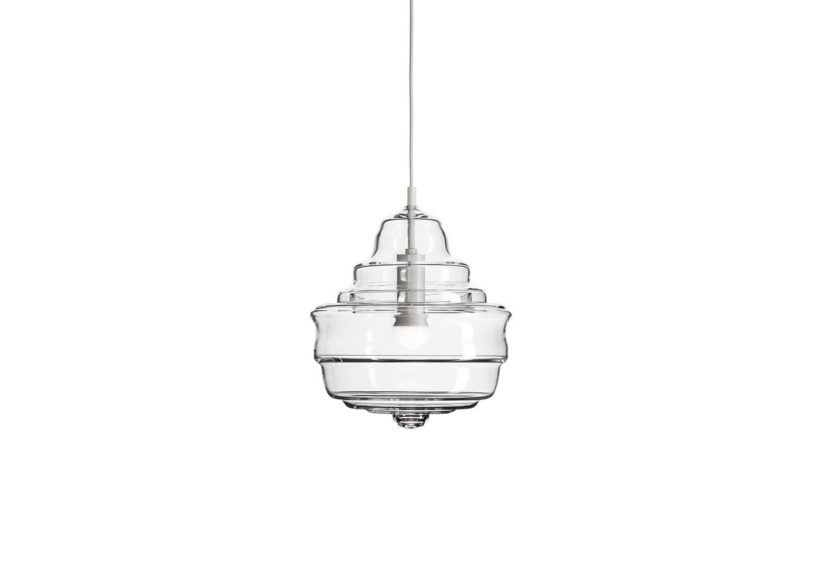
1) A chandelier silhouetteedited into a modern pendant
The core trick is the shape: instead of recreating a chandelier with a hundred dangling crystals (and a thousand dust particles),
the Palais Garnier Pendant captures the outline of that grandeur and turns it into a single sculptural form.
It’s the lighting version of a great tailored blazer: dramatic presence, clean lines.
2) Hand-blown glass that behaves like jewelry for your ceiling
Glass does something other materials can’t. It reflects, refracts, and softens light at the same time,
which gives the pendant that “glow” people describe as warm, dimensional, and quietly luxurious.
Depending on the finish (clear vs. opal-style diffused looks), you can get anything from crisp sparkle to a gentler, milky ambiance.
3) The “statement piece” that still plays well with others
A lot of statement lighting has a downside: it’s so loud you have to redecorate the entire room just to keep up.
A Palais Garnier–inspired pendant usually avoids that trap because the silhouette is strong but not chaotic.
It can live above a modern marble island, a rustic farmhouse table, or a contemporary entry console without picking a fight.
Where This Pendant Works Best (and Why)
Over a dining table
This is the classic stage for a sculptural pendant. Over a dining table, the piece becomes a visual anchor:
it frames the table, creates intimacy, and makes even takeout look like it arrived with a wine pairing.
Over a kitchen island
Kitchen islands love pendants because they define a “zone” in open layouts. A chandelier-inspired glass pendant is especially good here
because it adds elegance without turning the kitchen into a formal dining room that’s afraid of spaghetti sauce.
In an entryway or foyer
If you want your home to feel “designed” from the first step inside, put a showpiece light where people can’t miss it.
A Palais Garnier pendant is basically a handshake that says, “Welcome. Please compliment my ceiling.”
In a bedroom (yes, really)
Bedrooms aren’t only for recessed lights and regret. If the rest of the room is calm, a dramatic pendant can act like functional art
especially with warm bulbs and a dimmer.
How to Size and Hang It (Without Starting a Household Debate)
Let’s keep this practical. You can have the most beautiful pendant on earth and still hate it if it’s hung too high, too low, or right in someone’s line of sight.
Here are field-tested guidelines designers lean on.
Dining table hanging height
- For standard 8-foot ceilings, hang the bottom of the pendant about 30–36 inches above the tabletop.
- For higher ceilings, raise the fixture about 3 inches for every extra foot of ceiling height (so the proportions still feel right).
Kitchen island hanging height + spacing
- Over an island, a common target is 30–36 inches above the countertop.
-
If you’re using multiple pendants, a typical spacing guideline is roughly 24–30 inches apart (or about 2–3 feet center-to-center),
depending on shade size and island length.
Choosing the right size (so it looks intentional, not accidental)
-
Over a table, many lighting guides recommend the pendant’s diameter (or the overall spread for a cluster) land around
one-half to two-thirds the table’s width. - If you’re using a single statement pendant, err slightly larger rather than too smallglass forms need enough scale to read as sculptural.
Pro tip: before the electrician arrives, mock it up. Use painter’s tape on the ceiling and a cardboard circle roughly the pendant’s diameter.
It’s the cheapest way to prevent “Why does it look tiny?” heartbreak.
Make It Feel Expensive: Layered Lighting Matters
A Palais Garnier pendant can be the star, but it should not be the only actor on stage.
The rooms that feel best-lit use layers: ambient (overall glow), task (focused light), and accent (visual interest).
This is where a dimmer becomes your best friendbecause “bright enough to chop onions” and “soft enough for dessert” should not be the same setting.
For the most flattering, lived-in look, keep bulbs on the warmer side (many designers prefer color temperatures under roughly 3000K for cozy spaces),
and use other sourceslamps, under-cabinet lighting, sconcesto eliminate harsh shadows.
Styling Ideas: 6 Ways to Work the “Opera House” Energy Into Real Homes
1) Modern Parisian
Pair the pendant with creamy walls, brass accents, and a mix of curved shapes (oval table, rounded-back chairs). Add one bold art piece.
It’ll feel curated, not costume-y.
2) Contemporary minimalism (with a secret flourish)
Keep everything else simple: flat-front cabinetry, clean-lined furniture, neutral textiles. Let the glass pendant be the one “extra” thing.
Minimalism doesn’t have to be boringit can just be selective.
3) Warm industrial
The glass looks great against darker backdrops: charcoal paint, blackened steel, concrete counters, or reclaimed wood.
The contrast makes the pendant glow like it’s doing magic tricks.
4) Transitional dining room
If you’re blending styles (traditional table + modern chairs, or vice versa), this pendant is a bridge.
It references old-world chandelier shapes while still reading modern.
5) “Collector” vibe
Mix vintage with modernantique mirror, art books, sculptural ceramics. The Palais Garnier pendant will feel like part of a story, not just a fixture.
6) The small-space flex
In a small entry or breakfast nook, one dramatic pendant can make the whole area feel intentional.
It’s the design equivalent of a great pair of shoes: suddenly your whole outfit makes sense.
Care and Maintenance: Keep the Glass Gorgeous (and Your Sanity Intact)
Glass pendants don’t demand daily attention, but they do love a little maintenanceespecially in kitchens where cooking residue can build up.
Always turn power off and let bulbs cool before cleaning.
Quick maintenance routine
- Weekly/biweekly: light dusting with a microfiber cloth or gentle duster.
- Seasonal deep clean: wipe glass with a soft cloth slightly dampened with a mild solution.
Cleaning solutions that are commonly recommended for glass fixtures
- Vinegar + water: a diluted mix can help cut film on glass.
- Dish soap + water: gentle, widely safe for most finishes (avoid soaking electrical parts).
- Isopropyl alcohol + water: sometimes used for a streak-free finish on glass (test a small area first).
If the pendant has removable parts, cleaning is easier when you remove glass components carefully and clean them separately.
If it’s not designed to come apart easily, don’t force itno one wants “modern art” made from accidental shards.
What to Check Before You Buy or Install
- Ceiling support: confirm your junction box and mounting are rated for the fixture’s weight.
- Drop length: make sure the cord/stem works for your ceiling height and the look you want.
- Bulb + dimmer compatibility: especially if you want warm, mood-friendly light.
- Finish choice: clear glass = more sparkle; diffused/opal = softer glow.
- Room function: for serious task lighting, pair it with under-cabinet lights or additional sources.
Experiences With the Neverending Glory Palais Garnier Pendant (The “ of Real Life” Part)
People don’t just buy a chandelier-inspired pendant because they need light. They buy it because they want a feeling.
And living with a Palais Garnier–style pendant tends to be less about “Is it bright enough?” and more about
“Why does everyone keep standing under it like it’s a photo booth?”
In kitchens, the first thing homeowners often notice is how the pendant changes the room even when it’s off.
During the day, natural light hits the glass and the fixture acts like sculpturequietly reflective, slightly dramatic,
and very good at making countertops look cleaner than they actually are. (This is not a guarantee. This is simply the confidence of good lighting.)
At night, the mood flips: instead of a flat overhead glare, you get a soft pool of light that makes the island feel like a destination,
not just a place where mail goes to die.
Over dining tables, the experience is usually about intimacy. Hanging a pendant at the right height creates a “ceiling” over the table,
even if the actual ceiling is far above. That visual boundary makes dinners feel more focused and comfortableespecially in open layouts.
People tend to linger longer, talk more, and, if the pendant is dimmable, suddenly become passionate about lighting levels.
(“No, waitturn it down two clicks. Two. Perfect. Now the pasta tastes better.”)
In entryways, the story is different: it’s all about the first impression. A Palais Garnier–inspired pendant makes a home feel
intentionally designed from the moment you walk in. Guests frequently look upsometimes mid-sentenceand the fixture becomes an instant conversation starter.
The funniest part is that it doesn’t have to match everything. It just has to be good. In fact, a little contrast helps:
simple console + bold pendant is an easy win that reads “collected,” not “catalog.”
There’s also a surprisingly practical side to living with a glass statement pendant: it trains you to care about the details.
People often end up adding a dimmer, swapping to warmer bulbs, or layering in lamps to support the pendant’s glow.
It’s like the light fixture quietly persuades you to upgrade your entire lighting strategy.
Not in a bossy waymore like a stylish friend who says, “You deserve better than one overhead light and a dream.”
The only “learning curve” tends to be maintenance. Glass is honest. It will reflect fingerprints, dust, and the occasional kitchen splatter if it’s near cooking.
But once you get into a simple rhythmquick dusting, occasional wipe-downit’s manageable. Most people decide the payoff is worth it,
because the pendant delivers what it promised: a daily micro-dose of grandeur, without requiring you to own an actual opera house.
Final Take: Who Should Buy This Pendant?
If you love architectural references, sculptural glass, and lighting that feels like functional art, the Neverending Glory Palais Garnier Pendant
is the kind of piece that rewards you every day. It’s especially perfect for people who want a single “wow” element that elevates a room
without forcing a full renovation.
Just remember: measure carefully, hang it at the right height, add a dimmer, and give it a little cleaning love now and then.
Do that, and you’ll get the best kind of luxuryone you actually live with.