Table of Contents >> Show >> Hide
- What the Chesterfield 948 Actually Is (and why it’s different from the trendy ones)
- Quick Spec Snapshot: Chesterfield 948 at a Glance
- Design: Why Chesterfield Looks “Built-In” Instead of “Bolted On”
- Performance: Telescopic, Non-Aerated Flow, and What That Means on a Weeknight
- Placement: The Difference Between “Dream Upgrade” and “Why Did We Do This?”
- Installation Reality Check: It’s Not “Hard,” It’s “Needs a Plan”
- Maintenance and Finish Care: Keep It Pretty Without Babysitting It
- Value Analysis: Who the Chesterfield 948 Makes Sense For
- Chesterfield 948 vs. “9481/9482”: What Shoppers Often See Online
- FAQ
- Conclusion: Is the Newport Brass Chesterfield 948 Worth It?
- Real-World Experiences with the Newport Brass Chesterfield 948 Pot Filler (Extra Insights)
- 1) The first week feels ridiculously fancy
- 2) Placement becomes a personality test
- 3) It changes the rhythm of cooking (in a good way)
- 4) You’ll develop strong opinions about water spots
- 5) The “unused faucet anxiety” fades
- 6) Installers tend to emphasize backing and alignment
- 7) It’s a quiet luxuryuntil guests see it
A pot filler is the most “I cook enough to deserve this” faucet in the kitchen. It’s also the most
“wait, why is there a faucet over my stove?” conversation-starter. The
Newport Brass Chesterfield 948 pot filler sits right in that sweet spot where old-school
elegance meets everyday practicality: traditional cross handle, solid-brass build, and a telescoping
spout designed to reach the heavy-duty pots that usually make you regret skipping arm day.
In this guide, we’ll break down what the Chesterfield 948 is, what it’s great at, what it’s not trying
to be, and how to decide if it belongs in your kitchen. We’ll also cover placement tips, installation
realities, maintenance, and a real-world “how it feels to live with it” section at the endbecause
a pot filler looks glamorous until you’re wiping water spots off it with the intensity of a museum
curator.
What the Chesterfield 948 Actually Is (and why it’s different from the trendy ones)
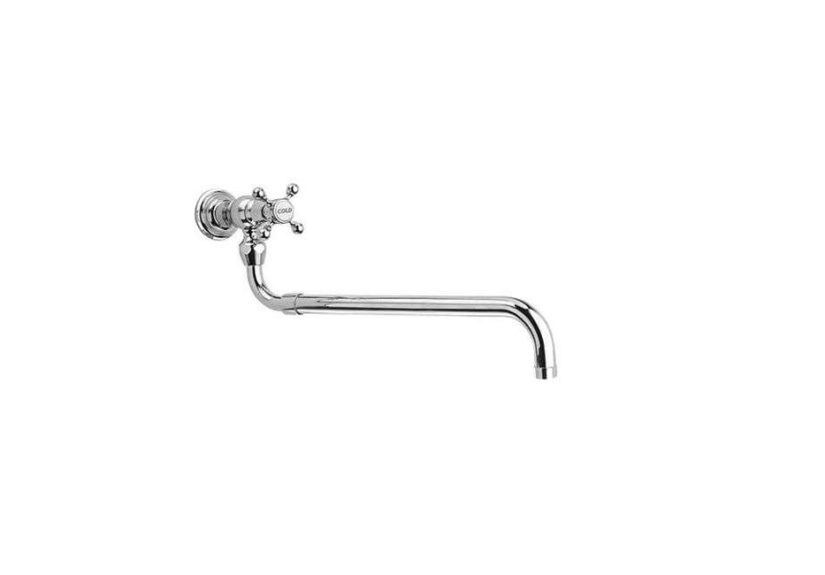
The Chesterfield 948 is a wall-mounted pot-filler faucet in Newport Brass’s classic
Chesterfield style. It’s built with solid brass construction and uses a
quarter-turn washerless ceramic disc valve cartridgebasically, the “smooth, reliable, doesn’t
want drama” kind of internal hardware you want in a faucet. It’s also designed around a
single-valve, inlet flow control setup (one control at the wall) and a
single-pivot, telescopic spout with non-aerated flow.
Translation: it’s traditional, clean-looking, and purpose-built to move water into large cookware
without hauling a stockpot from sink to stove like you’re reenacting a medieval water-carrying scene.
Quick Spec Snapshot: Chesterfield 948 at a Glance
Here are the headline details people care about when they’re deciding if the 948 is “the one”:
- Mounting: Single-hole, wall-mounted configuration
- Material: Solid brass construction
- Handle style: Traditional cross handle (ADA-compliant design)
- Valve: Quarter-turn ceramic disc cartridge
- Spout: Single-pivot, telescopic (extends and retracts), non-aerated flow
- Reach (pivoting spout reach): about 15-3/16″ from inlet valve center-to-center
- Offsets: roughly 6-5/8″ downward spout offset; 2-13/16″ inlet valve offset (wall-center)
- Standards/compliance (at date of manufacture): Includes ASME/CSA, IAPMO/cUPC, NSF 61, ADA, and other applicable regulations
- Finishes: Offered with multiple finish suffixes (common ones include Oil Rubbed Bronze, Polished Nickel, Antique Nickel, Polished Chrome)
If you’re comparing listings, you may also see newer Chesterfield pot filler model numbers (like 9481/9482)
that use a different valve/spout configurationmore on that laterso make sure the listing really says
“948” if that’s what you’re shopping for.
Design: Why Chesterfield Looks “Built-In” Instead of “Bolted On”
Chesterfield is a traditional collection, and the 948 leans into that on purpose. The cross handle reads
classicthink “old estate kitchen,” not “space station galley.” That’s especially helpful if your kitchen
already has details like inset cabinets, bridge faucets, decorative hood trim, or unlacquered brass
hardware. A hyper-modern pot filler can look like it wandered in from another renovation.
Newport Brass is known for offering a wide range of decorative finishes across many products, which is
a big deal if you’re trying to match cabinet pulls, lighting, or a main sink faucet without resorting to
the sad compromise of “close enough.” The 948’s finish suffix system is also a practical shopping tool:
you’re essentially choosing the same faucet body with different finish codes.
Solid brass isn’t just a bragit’s the point
Pot fillers live in a splash zone. They face steam, grease, heat swings, and the occasional chaotic
stirring incident. A solid brass body is a durability choice and a stability choice: when you
swing the arm out and turn water on, you want it to feel plantednot wobbly, hollow, or “mildly offended
by being used.”
Performance: Telescopic, Non-Aerated Flow, and What That Means on a Weeknight
The Chesterfield 948 uses a single-pivot telescopic spoutso it extends outward to reach your pot,
then folds back closer to the wall when you’re done. The flow is described as non-aerated, which can
affect how the stream behaves.
Non-aerated flow typically looks like a clearer, more direct column of water. That can be great for
quickly filling large pots without a lot of “white, bubbly” splashiness. But it also means you’ll want to
pay attention to placement: the closer the outlet is to the pot rim (without bumping lids/handles), the
calmer the fill tends to be.
Single-valve control: simpler, but it’s a choice
The 948 is a single-valve, inlet control designmeaning you’re controlling the water at the wall.
Some pot fillers use two valves (one at the wall and one at the spout) so you can shut off at either point.
With the 948, the simplicity is the appeal: one handle, one shutoff point, traditional form.
If you’re someone who likes redundant shutoffs “just because,” you may prefer a two-valve pot filler.
If you like fewer controls and a cleaner look, the 948’s approach makes senseespecially in a traditional
kitchen where visual calm matters.
Placement: The Difference Between “Dream Upgrade” and “Why Did We Do This?”
Pot fillers are extremely helpful… when they’re placed well. The Chesterfield 948’s reach and offsets
should guide where it lands on your wall.
Height: keep it usable, not theatrical
A common mistake is mounting a pot filler too high because it “looks balanced” with a tall backsplash.
In reality, usability wins. You want the spout outlet to land comfortably over the pot without you having
to tip the pot, contort your wrist, or perform a careful lid ballet.
A practical approach: think about the tallest pot you use most (stockpot, pasta pot, canner). You want
clearance for fillingand also clearance for stirringwithout the spout living so high that it splashes
like a tiny indoor fountain.
Horizontal location: center on the work you actually do
If you mostly use front burners, center the reach where the front burners sit. If you can frequently fill
on a back burner (for soups, simmering, or long boils), make sure your chosen location can reach both.
The Chesterfield 948’s reach is generous for many ranges, but you still want to map it out before the wall
is closed.
Installation Reality Check: It’s Not “Hard,” It’s “Needs a Plan”
A pot filler is not a “surprise Saturday project” unless your idea of fun is opening drywall and meeting
your studs in person. Newport Brass installation documentation for these models recommends professional
installation, and the process involves tying into a cold water line and bringing a threaded connection out
at the finished wall.
What installers typically focus on
- Cold water supply: Pot fillers are generally fed by cold water, with a wall connection sized for common plumbing standards.
- Secure blocking: The faucet needs solid backing in the wall so it stays stable when you swing it in and out.
- Leak prevention: Proper thread sealant and careful testing/flush after installation matter.
- Finish protection: Using the wrong materials can risk damage and warranty issues.
A small but important detail in Newport Brass instructions: they caution against using petroleum-based plumber’s putty
on their products and recommend clear silicone sealing materials instead. That’s the kind of line you only ignore once.
(After that, you become a “read-the-instructions first” person through character development.)
Maintenance and Finish Care: Keep It Pretty Without Babysitting It
A pot filler sits right near steam and cooking residue, so it will show grime faster than a faucet over a sink.
The good news: consistent, gentle cleaning usually keeps it looking sharp.
- Daily/weekly: Soft cloth, mild soap, rinse, and dry. Drying matters because water spots love attention.
- Avoid: Abrasive pads, harsh chemicals, and anything that feels like it belongs in a garage.
- Moving joints: Swing it in and out smoothlydon’t force it past its natural range.
If you’re picking a finish, think like a realist. Polished finishes can look stunning but may show fingerprints and spots more.
Some darker or brushed finishes can be more forgiving in a busy kitchen. Matching the rest of your hardware is nice; choosing a
finish you won’t resent is nicer.
Value Analysis: Who the Chesterfield 948 Makes Sense For
Newport Brass sits in the premium category, and the Chesterfield 948 is not trying to be the cheapest pot filler on the internet.
It’s aiming for long-term build quality, a coordinated design language, and a finish lineup that can match higher-end kitchens.
It’s a great fit if…
- You’re building a traditional or transitional kitchen and want the pot filler to look intentional (not like a random add-on).
- You value solid-brass construction and reputable internal components.
- You care about finish matching across the room and want more than three basic choices.
- You use large pots often enough that carrying water feels like a recurring plot point in your life.
Think twice if…
- Your cooking is mostly sheet-pan meals and your largest pot is “that one saucepan with the wobbly handle.”
- You strongly prefer a two-valve setup with an extra shutoff at the spout (some newer models offer that style).
- You’re not opening walls and you don’t already have plumbing in the right spot (retrofits can be expensive).
Chesterfield 948 vs. “9481/9482”: What Shoppers Often See Online
When you search for “Chesterfield pot filler,” you may run into close relatives in the same style family.
For example, Newport Brass’s Chesterfield 9481 listings describe a two-valve inlet/outlet flow control design
and a double-pivot spout with a longer reach, along with MSRP-style pricing shown on the manufacturer site.
That doesn’t make the 948 “wrong”it just means you should confirm which configuration you want:
single-valve telescopic (948) vs. two-valve double-pivot (9481-style).
The practical takeaway: treat the model number like a recipe title. “Chesterfield pot filler” is the cuisine.
“948” is the exact dish you ordered.
FAQ
Does a pot filler replace a kettle or a sink?
It’s a convenience tool, not a replacement. You’ll still use your sink constantly. A pot filler simply reduces the number of times
you carry heavy water-filled pots across the kitchenespecially helpful for pasta night, stock-making, or canning.
Is it safe to have water over a stove?
In normal use, yesbecause you control the water flow. The bigger “safety” issue is installation quality: secure mounting, proper
connections, and leak testing. Many homeowners also like having an accessible shutoff valve feeding the line, for peace of mind.
Will it splash?
Any faucet can splash if it’s mounted too high or the stream hits the pot at the wrong angle. The 948’s non-aerated flow can be
very smooth, especially when the outlet is positioned close to the pot rim before turning on the water.
Can I install it myself?
If you’re already comfortable with opening walls, running water lines, properly sealing threaded connections, and building solid wall
backing, it’s possible. But many installations are best handled by a professional, especially in finished kitchens where mistakes are
costly.
Conclusion: Is the Newport Brass Chesterfield 948 Worth It?
The Newport Brass Chesterfield 948 pot filler is a classic, well-built upgrade for kitchens where cooking is frequent,
aesthetics matter, and quality is a priority. It’s not just about filling pots; it’s about doing it with a faucet that feels
substantial, looks designed-in, and belongs to a coordinated hardware story.
Get the placement right, install it thoughtfully, and treat it like the premium fixture it isand it’ll feel like a small luxury that
pays you back every time you make something that starts with, “Okay, first we need a lot of water.”
Real-World Experiences with the Newport Brass Chesterfield 948 Pot Filler (Extra Insights)
People don’t buy a pot filler because they love plumbing. They buy it because they love the moment when a heavy pot stays put and the
water comes to itlike room service, but for soup. Here are the kinds of real-life experiences homeowners, designers, and installers
often talk about when living with (or planning for) a Chesterfield-style pot filler like the 948.
1) The first week feels ridiculously fancy
The first time you swing the arm out and fill a stockpot right on the stove, you will have a brief “I am the main character” moment.
It’s normal. You might even narrate it to a family member: “Notice how I am not carrying the pot.” The Chesterfield style adds to that
vibe because it looks like it was always meant to be thereespecially in kitchens with traditional lighting or a statement hood.
2) Placement becomes a personality test
If the pot filler was placed based on real cooking habits, it’s smooth sailing. If it was placed based on symmetry alone, you may end up
doing mild geometry every time you fill a pot. In day-to-day use, people tend to appreciate when the spout naturally lines up over the
burner they use most. You’ll hear comments like, “It hits my pasta pot perfectly,” or, “It reaches the front burner but not the back,
which is fine because I only boil on the front anyway.”
The most satisfied owners are usually the ones who mocked it up before installationtaping out reach on the wall or using a cardboard
template. It’s not glamorous, but neither is patching tile.
3) It changes the rhythm of cooking (in a good way)
On busy nights, the pot filler can remove a surprising amount of friction. You can start filling water while you prep ingredients,
instead of making a separate trip to the sink. People who make pasta, soups, stocks, beans, or large batches of anything tend to notice
this immediately. It’s not that the pot filler “saves hours”it saves the annoying moments that make cooking feel like a chore.
4) You’ll develop strong opinions about water spots
Pot fillers live near heat and steam, so they get a front-row seat to everything your range produces. In real kitchens, owners often say
the fixture stays nicest when they do quick wipe-downsespecially if the finish is glossy. The funny part is how quickly the pot filler
turns people into “wipe it before it dries” folks. It’s like adopting a fancy white couch: you didn’t think you’d become this person,
but here you are, doing it anyway.
5) The “unused faucet anxiety” fades
A common worry is: “What if I don’t use it enough?” In practice, many people use it more than expected. Not just for stockpots, but for
filling watering cans, topping off a pasta pot that’s boiling down, adding water to a Dutch oven, or even filling a large measuring jug
when the sink is busy. It becomes part of the kitchen’s workflowespecially in households where multiple people cook or where the sink is
constantly in use.
6) Installers tend to emphasize backing and alignment
In the field, the biggest “make it great” factor is how well it’s supported in the wall. A pot filler that’s perfectly anchored feels
confidentswing it out, swing it back, no wobble, no drama. People tend to be happiest when the handle is positioned so it’s easy to
reach without leaning over hot burners, and when the spout folds away neatly without bumping a hood, shelves, or a backsplash ledge.
7) It’s a quiet luxuryuntil guests see it
Owners often describe the pot filler as something they stop “noticing” because it becomes normalright up until someone visits and says,
“Oh wow, you have a pot filler!” Then it becomes a mini show-and-tell. If you enjoy functional upgrades that also happen to look
impressive, the Chesterfield 948 fits that category perfectly.
The best summary of the real-world experience is this: a pot filler won’t make you a better cook, but it can make cooking feel easier,
cleaner, and more enjoyableespecially when the fixture is built well and matches the kitchen’s style. And the Chesterfield 948’s whole
personality is “classic, sturdy, and quietly proud of itself.” Which, honestly, is also a solid personality for a kitchen.