Table of Contents >> Show >> Hide
- Why airlines care about weight (even when they swear they’re not “judging” you)
- The moment “safety math” turns into “pricing policy,” everything gets messy
- Has weight-based airfare ever been tried? Yesand the reactions were loud
- What do people actually think about pay-per-weight pricing? Research says: “mostly no”
- Why the controversy explodes: the human side of a “simple” idea
- The seat-size elephant in the cabin
- What U.S. airlines do today (hint: it’s usually “space-based,” not “weight-based”)
- If airlines ever tried weight-based ticket fees, what would a “less awful” version look like?
- So… is it “not an airline problem”?
- Real traveler experiences from the aisle seat (and why this debate feels personal)
- 1) The “armrest test” anxiety
- 2) The quiet kindness (and the quiet resentment)
- 3) The “two seats” logistics spiral
- 4) Tall travelers: “I’m not wide, I’m just folded like origami”
- 5) The weigh-in headline effect
- 6) Flight attendants caught in the middle
- 7) The “please let me travel like a normal person” request
- Conclusion: the controversy isn’t going awaybecause the underlying tension isn’t either
- SEO Tags
Every few months, the internet rediscovers a fact that airline ops people have known forever:
planes don’t fly on vibes. They fly on weight. And when that reality bumps into modern air travel
(tight seats, rising fares, climate anxiety, and everyone already mad about baggage fees), it sparks a debate
hot enough to warm up a frozen airport pretzel.
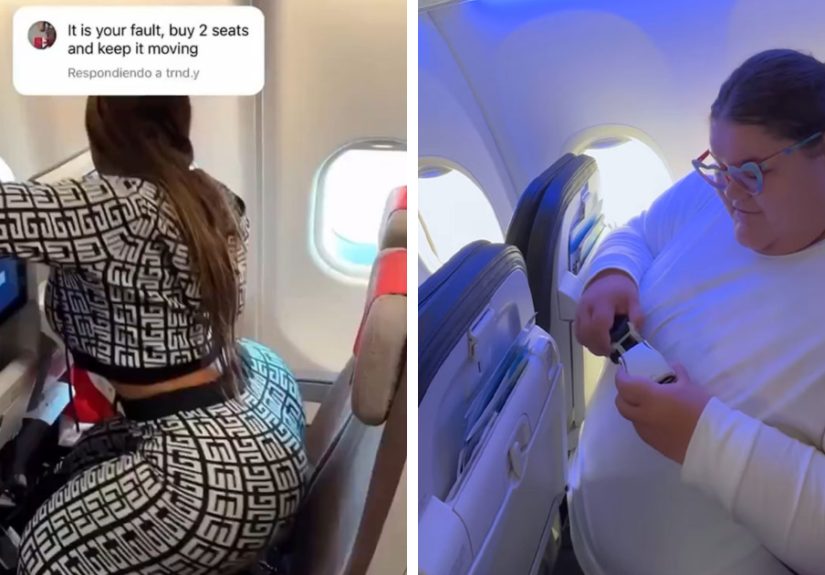
That’s basically what happened in the viral swirl captured by Bored Panda: a headline-ready questionshould
airlines charge passengers based on body weight?followed by a comment-section brawl over fairness, health,
discrimination, and whether seatbelts were invented by an enemy of joy. In the mix, you’ll also see a blunt
refrain from some travelers: “This is not an airline problem.” Others argue the opposite: if airlines sell a
seat that many bodies can’t reasonably fit into, then it is an airline problem… and a consumer problem…
and maybe a regulator problem… and definitely a “please stop yelling in row 23” problem.
Why airlines care about weight (even when they swear they’re not “judging” you)
1) Safety: aircraft weight-and-balance is non-negotiable
Airlines have to keep an aircraft within safe limits for takeoff and landing, and they must distribute weight
correctly so the plane handles as designed. That’s why airlines and aviation authorities use standardized
weights (or periodic surveys) for passengers and carry-on items. The goal isn’t to embarrass anyone; it’s to
make sure the math is right.
This is exactly what drove those “step on the scale” moments that made headlines. In 2024, Finnair ran a
voluntary, anonymous weigh-in (passenger plus carry-on) to update average weights used for loading and balance
calculationsdata intended for operational safety planning, not public scorekeeping. In 2023, Air New Zealand
similarly asked travelers to participate in an anonymous weight survey to improve weight-and-balance estimates.
2) Economics: weight affects fuel burn, which affects ticket prices (whether airlines admit it or not)
Airlines pay a lot for fuel. Even small efficiency gains matter when you’re moving hundreds of people,
thousands of bags, and a rolling buffet of emotional support neck pillows across the sky. Operationally,
airlines already optimize weight in plenty of ways: lighter seats, lighter service carts, reduced water loads
on certain routes, and strict baggage rules.
The controversial leap is this: if weight is part of the operating cost, should weight be part of the
passenger price? That’s where the “pay-per-weight airfare” idea starts looking, to some people, like the
“logical next step”and to others, like a dystopian game show hosted by a bathroom scale.
3) Climate pressure: aviation emissions are real, and people want “fair” solutions
Aviation is a visible, growing piece of the climate conversation. It’s not the largest slice of global
emissions, but it’s the kind of slice that has a frequent-flyer account. This creates demand for policies
that reduce fuel burn and emissionsyet still feel ethically defensible.
The moment “safety math” turns into “pricing policy,” everything gets messy
Here’s the key distinction that often gets lost online:
weighing passengers for safety (to refine averages used in calculations) is not the same as
charging passengers by weight.
Finnair’s 2024 program, for example, was framed as voluntary and anonymous and tied to required operational
updates. But once the public sees a scale near the gate, people naturally worry about the next step:
“Today it’s a survey. Tomorrow it’s a surcharge.”
And honestly? That concern isn’t irrational. Airlines have a long track record of turning operational
constraints into revenue streams. (See: baggage. See also: “basic economy.” See also: the $8 snack box that
tastes like it was seasoned with regret.)
Has weight-based airfare ever been tried? Yesand the reactions were loud
Samoa Air’s “pay-as-you-weigh” experiment
The most famous real-world example is Samoa Air, which introduced a system where fares reflected passenger
weight (and typically baggage weight too). The airline argued it was the “fairest” method because aircraft
performance depends on weight. Critics saw it as stigmatizing and unworkable at scale. The headlines were
intense, the debate was global, and the phrase “fat tax” got tossed around in ways that… did not improve the
mood.
What’s different today: bigger planes, bigger data, and a bigger ethics problem
Modern airlines have more customer data than ever and greater ability to personalize pricing. That makes
weight-based fees technically easier to implement than they were a decade ago. But it also makes the
privacy and discrimination concerns biggerbecause now you’re not just talking about a number, you’re talking
about how that number is stored, used, protected, and potentially weaponized.
What do people actually think about pay-per-weight pricing? Research says: “mostly no”
A University of New Hampshire researcher and colleagues tested public attitudes toward three fare approaches:
a standard fare (everyone pays the same), a threshold model (above a set weight triggers a fee), and a
unit-of-body-weight model (your combined body weight and baggage weight influences price). The bottom line:
most travelers prefer the current approach and see weight-based pricing as ethically riskyespecially because
body weight is influenced by more than personal choice (health conditions, medication, income, access to
nutrition, and more).
Notably, when people did show openness, it often correlated with self-interestmeaning lighter passengers
were more likely to find weight-based pricing “acceptable” than heavier passengers. That’s not shocking; it’s
also exactly why the policy feels unfair to many people.
Why the controversy explodes: the human side of a “simple” idea
1) Privacy and dignity
Airports are already a gauntlet: long lines, shoe removal, surprise liquids, and the emotional damage of
watching someone ahead of you try to bring a full-sized shampoo through security “because it’s basically
lotion.” Adding weigh-insespecially if tied to moneyraises legitimate dignity concerns, even if the process
is private.
2) Health isn’t a morality play (and weight isn’t a perfect health proxy)
People’s bodies vary for countless reasons. Some conditions and medications affect weight. Some bodies carry
weight differently. Some people are muscular. Others have disabilities that complicate mobility, seating, or
comfort. Turning weight into a fee risks turning a complex reality into a blunt penalty.
3) The “who pays for space?” question
The most practical argument for a second seat is space: if a passenger can’t sit without encroaching on
someone else’s seat, the next passenger loses what they paid for too. But that’s not a “weight” issue so much
as a “seat dimensions and cabin design” issuebecause two people of the same weight can have very different
shapes, shoulder widths, hip widths, or mobility needs.
The seat-size elephant in the cabin
A lot of this debate is really about the shrinking definition of a “standard” economy seat. Consumer groups
have pushed U.S. regulators to set minimum seat dimensions, arguing that smaller seats can affect safety and
evacuation. Recent coverage has noted that U.S. airlines aren’t required to meet a specific minimum seat size,
and debates over seat space continue alongside FAA-related studies and reviews.
If you’re trying to understand why people get so fired up about weight-based fees, start here:
many travelers feel airlines created the comfort crisis by selling more seats in the same spaceand now want
to charge customers for not fitting into the new, tighter box.
What U.S. airlines do today (hint: it’s usually “space-based,” not “weight-based”)
In the United States, most major airlines do not publish “pay-per-pound” ticket pricing. Instead, they use
policies that effectively treat the issue as one of seat fit (armrests down, not encroaching)
and neighbor impact. That typically means:
-
If you cannot sit within a single seat without extending into the adjacent seat, you may be asked to buy an
additional seat (sometimes with refund rules depending on the airline and whether the flight is full). -
Some airlines have clearer “customer of size” guidance than others. Southwest, in particular, has been
widely discussed for offering options around extra seats and refunds, though the exact terms and conditions
can change over time.
It’s also important to understand the legal framework: for disability-related protections in air travel,
U.S. rules generally flow through the Air Carrier Access Act (ACAA) and DOT guidance, which prohibit certain
forms of discrimination and limit when airlines can restrict seating based on disability (with safety-based
exceptions).
If airlines ever tried weight-based ticket fees, what would a “less awful” version look like?
Let’s be real: a pure “step on the scale, pay the surcharge” model is almost guaranteed to generate backlash,
lawsuits, bad press, and a thousand TikToks filmed from the jet bridge.
If an airline wanted to address the underlying problemlimited space and real operating costswithout turning
check-in into a public referendum on someone’s body, these approaches are more defensible:
1) Price the product you’re actually selling: space
Seats already come in different sizes (standard economy, extra-legroom economy, premium economy, business).
Airlines could expand “space tiers” and make them more transparent: seat width, pitch, and armrest layout
clearly stated at purchase. The customer chooses the space they need, and the airline stops pretending all
bodies fit one template.
2) Make “two-seat bundles” straightforward and humane
If someone needs two adjacent seats for comfort or disability-related reasons, the booking flow should make
that simple and predictableideally with clearer refund rules and less gate-agent roulette. This helps both
the customer and the neighbor, and it addresses the real issue (space) rather than using weight as a proxy.
3) Keep weight collection strictly operational (with hard privacy walls)
If airlines need updated average weights for safety planning, the process should remain anonymous, voluntary,
and clearly separated from ticket pricing. The moment weight data can influence how much you pay, the privacy
stakes jump dramatically.
4) If the goal is emissions, use emissions tools
There are other levers: newer aircraft, operational efficiencies, sustainable aviation fuel (SAF),
optimized routing, and broader carbon policy. Charging individuals based on body weight is a blunt tool for a
problem that has many more precise solutions.
So… is it “not an airline problem”?
The honest answer is: it’s both.
Individual passengers do have responsibilitiesbasic courtesy, awareness of shared space, and planning ahead
when a situation is likely to affect a neighbor. But airlines also make deliberate business choices about seat
dimensions, pricing structures, and policies that shift discomfort and conflict onto customers and staff.
When you sell a standardized seat in a country where bodies vary widely (and where a large share of adults
live with obesity), the “one size fits all” approach becomes less believable every year. In other words:
it’s not any single passenger’s fault. But it is an airline’s responsibility to sell a product that
works in the real world.
Real traveler experiences from the aisle seat (and why this debate feels personal)
To understand why people react so strongly, you have to look past policy language and into lived airport
reality. Here are common experiences travelers describeacross many body typeswhen “space” becomes the issue.
(These are representative scenarios drawn from widely reported traveler accounts and recurring airline-policy
discussions; details vary by carrier, route, and cabin.)
1) The “armrest test” anxiety
Some travelersespecially those who’ve had a bad experience onceboard with a specific fear: “Will I fit with
the armrests down?” Not because they want special treatment, but because they don’t want to inconvenience a
stranger or be publicly singled out. The awkward part is that the test happens in the most public place
possible: a narrow aisle with an audience of stressed-out people holding backpacks like battering rams.
2) The quiet kindness (and the quiet resentment)
Many seat neighbors handle it with grace: they lift the armrest briefly, shift a little, and move on.
Others feel cheatedbecause they paid for a full seat and now they’re sharing it. Both reactions can exist
at the same time, and airlines rarely give customers a clean, conflict-free way to resolve the mismatch.
3) The “two seats” logistics spiral
Buying a second seat sounds simple until it isn’t. Travelers describe spending time on the phone to get the
booking coded correctly, worrying whether the seats will stay together after a schedule change, and fearing a
gate reassignment that separates the pair. On full flights, the stress spikes: “What happens if there aren’t
two adjacent seats left?” It’s not just the moneyit’s the uncertainty.
4) Tall travelers: “I’m not wide, I’m just folded like origami”
A lot of people who are not plus-size still feel punished by modern economy seats. Tall travelers describe
knee pain from tight pitch, hip pain from fixed armrests, and the exhausting mental math of “Can I trade for
an aisle without becoming the person who blocks the cart?” This matters because it shows the debate isn’t
only about weightit’s about the broader squeeze of cabin design.
5) The weigh-in headline effect
When news breaks that an airline is weighing passengers (even for safety surveys), some travelers immediately
imagine the worst-case scenario: a public scale, a visible number, a fee, and a viral video. Even when an
airline promises anonymity, the fear is realespecially for people with a history of stigma, eating
disorders, or medical trauma. That’s why “it’s voluntary and anonymous” doesn’t magically make everyone feel
okay. Airports are already emotionally loud. A scale makes them louder.
6) Flight attendants caught in the middle
Cabin crews often become the referees of a conflict they didn’t create: one passenger wants space, another
wants what they paid for, and the plane is full. Flight attendants can sometimes reseat people, but they can’t
manufacture extra inches. Many travelers sympathize with crew members herebecause even the best customer
service can’t solve a design problem mid-flight.
7) The “please let me travel like a normal person” request
Over and over, travelers across sizes say some version of the same thing: “I don’t want a spectacle. I don’t
want a debate. I just want a predictable, dignified way to get from Point A to Point B.” That’s the most
useful takeaway for airlines and regulators. People can handle rules. What they can’t handle is surprise,
shame, and ambiguityespecially at 6:00 a.m. in a TSA line.
Conclusion: the controversy isn’t going awaybecause the underlying tension isn’t either
Airlines will keep caring about weight because weight affects safety, fuel, and emissions. But
turning body weight into a pricing lever is ethically combustible and operationally messy. If the industry
wants fewer conflicts and better outcomes, the more realistic path is to be transparent about seat space,
improve customer-of-size booking options, and keep safety data separate from pricing.
In short: the plane runs on weight, but the ticket should still run on dignity.