Table of Contents >> Show >> Hide
- Why the 2025 REAL SIMPLE Home Feels So Much Bigger
- A Showhouse That Understands 2025 Living
- Warmth Wins: The End of the Cold, Blank-Box Interior
- The Wellness Room Might Be the Smartest Space in the Whole Home
- Storage Finally Got a Personality Upgrade
- Personality Is Back, and Minimalism Is No Longer Running the Meeting
- Indoor-Outdoor Living Isn’t Just for Suburbs Anymore
- What Readers Can Steal From the 2025 REAL SIMPLE Home Right Now
- 1. Trade stark white for a warmer neutral.
- 2. Add character before you add more stuff.
- 3. Let storage serve your routine, not your fantasy self.
- 4. Make one area of your home feel intentionally restorative.
- 5. Mix eras and textures for a collected look.
- 6. Use color and texture to soften modern architecture.
- Why the 2025 REAL SIMPLE Home Is Better Than Ever
- Walking Through the 2025 REAL SIMPLE Home: The Experience
Some showhouses are so polished they feel like they were designed for a very glamorous ghost who has never misplaced a phone charger, spilled coffee, or panic-cleaned before guests arrived. The 2025 REAL SIMPLE Home is not that. Yes, it’s stunning. Yes, it has the kind of Manhattan views that make your houseplants feel underachieved. But what makes this year’s reveal genuinely exciting is that it expands the idea of what a “dream home” can be.
Instead of going all-in on a single, ultra-styled fantasy space, the 2025 REAL SIMPLE Home goes bigger in the smartest possible way: it includes two residences in Lower Manhattan’s One Park Rowa dramatic four-bedroom penthouse and a two-bedroom DIY Annex. That move changes everything. Suddenly, the project is not just a design flex. It becomes a broader conversation about how we actually want to live in 2025: warmly, functionally, beautifully, and with just enough personality to keep our homes from looking like a furniture showroom with Wi-Fi.
And that’s why this year’s REAL SIMPLE Home feels better than ever. It doesn’t just show off trends. It translates them. It takes the biggest ideas in home design trends 2025wellness rooms, earthy colors, layered textures, smarter storage, indoor-outdoor living, and more personal décorand puts them in spaces that feel aspirational and usable. In other words, it’s big on style without being allergic to real life.
Why the 2025 REAL SIMPLE Home Feels So Much Bigger
The obvious answer is scale. Two residences will always beat one. But the more interesting answer is range. The penthouse and the annex serve two very different design purposes, and together they make a stronger case for modern living than either one could on its own.
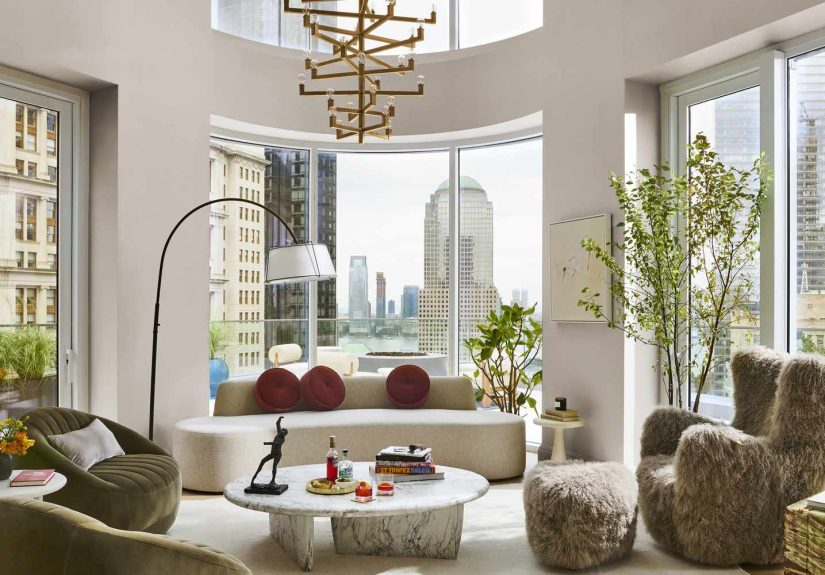
The penthouse is the polished older sibling: confident, elegant, and absolutely aware that the lighting is flattering. It’s filled with designer moves that soften a modern new-buildcurved furniture, layered gallery walls, earth-toned plaster, wallpaper, rich wood, and an emphasis on texture over sterile minimalism. The result is luxurious without feeling cold, which is no small feat in a glassy, light-filled Manhattan residence.
The DIY Annex, meanwhile, is the charming overachiever who says, “Oh, this old thing?” after turning an IKEA cabinet into a faux built-in. It brings the whole concept back down to earth in the best way. Here, home design feels approachable. There are hacks, vintage touches, handmade details, and clever projects that readers can actually borrow without needing a penthouse budget or a contractor named Luca.
Together, the two homes broaden the editorial promise of the project. This isn’t just a high-end showplace. It’s a design ecosystem. One space says, “Here’s the dream.” The other says, “Here’s how to steal it.” That combination is what makes the 2025 REAL SIMPLE Home bigger in a way that matters.
A Showhouse That Understands 2025 Living
If there’s one theme running through the best American home coverage in 2025, it’s this: people are done with rooms that look good but don’t help. Beauty still matters, of course, but the strongest interiors now pull double duty. They soothe, store, adapt, and support everyday routines. The 2025 REAL SIMPLE Home gets that memo loud and clear.
Its designer lineup reflects a modern mix of talents rather than a single aesthetic doctrine. There are established interior designers, content creators with serious DIY credibility, an organizing expert, and Drew Barrymore contributing a wellness-focused room that brings celebrity energy without tipping into celebrity excess. That diversity gives the home a more realistic rhythm. Different rooms solve different problems. Different personalities show up. And that layered point of view is exactly what makes the project feel current.
In 2025, homeowners want spaces that feel collected, not cookie-cutter. They want warmth, but not visual chaos. They want convenience, but not a home that looks like a gadget convention. Most of all, they want rooms with emotional intelligence. The REAL SIMPLE Home responds to all of those impulses with refreshing clarity.
Warmth Wins: The End of the Cold, Blank-Box Interior
One of the biggest reasons this home lands so well is that it rejects the tired fantasy of the perfectly white, perfectly impersonal modern interior. Across the design world, 2025 has leaned hard toward warmer palettes, tactile surfaces, and rooms that feel lived in. The REAL SIMPLE Home embraces that shift with enthusiasm.
In the penthouse, texture does the heavy lifting. Earth-toned plaster in the primary suite brings depth and softness without screaming for attention. In other rooms, wallpaper isn’t treated like an afterthought; it becomes the starting point for the entire story. Rich wood tones, velvet, layered textiles, and cozy lighting help turn a sleek new build into something far more inviting.
This is especially important in modern towers, where floor-to-ceiling windows and crisp architecture can easily tip into “beautiful but emotionally unavailable.” The 2025 REAL SIMPLE Home avoids that trap by adding materials and tones that feel grounded: terracotta, sandy neutrals, warm creams, muted greens, jewel accents, grasscloth, millwork, and vintage-inspired details. The look is refined, but it still has a pulse.
That makes this project feel aligned with the broader 2025 move toward modern cozy interiors. The mood is less “don’t touch anything” and more “please sit down, here’s a throw blanket, and no one will judge you if you stay for three hours.” Frankly, that is progress.
The Wellness Room Might Be the Smartest Space in the Whole Home
Wellness has been hovering around home design for years, usually in the form of spa bathrooms, meditation corners, or home gyms full of expensive regret. In 2025, though, the idea has matured. Wellness is no longer just about installing a sauna and calling it personal growth. It’s about creating environments that genuinely lower the noise level of daily life.
Drew Barrymore’s “feel-good room” in the penthouse taps directly into that evolution. Instead of building a sterile fitness zone, the room is designed as a soft, grounding retreat. Terracotta-pink walls create warmth without going saccharine. Exercise equipment is intentionally attractive rather than shoved in as an awkward afterthought. A bar cart becomes a water station. Books, plants, and closed storage keep the room useful but calm. The overall effect is less “workout dungeon” and more “your nervous system just unclenched.”
That matters because one of the strongest wellness room ideas for 2025 is integration. The best spaces no longer separate self-care from the rest of the home as if wellness only happens behind a frosted glass door. Instead, they weave calm into the visual language of the house. The REAL SIMPLE Home understands this beautifully. Its wellness room is functional, yes, but it is also aesthetically coherent, emotionally warm, and easy to imagine adapting in real life.
And that’s the real trick: not every reader is going to carve out a dedicated wellness room, but many will recognize the larger lesson. A single chair, a beautiful lamp, a soft paint color, hidden storage for workout gear, and a no-clutter policy can turn an ordinary corner into something restorative. The dream here is not extravagance. It’s permission.
Storage Finally Got a Personality Upgrade
Organizing is often treated like the spinach of home content: necessary, respectable, and not exactly thrilling. But the 2025 REAL SIMPLE Home makes storage feel surprisingly chic because it focuses on systems that actually support life instead of just staging it for Instagram.
Tyler Moore, better known as Tidy Dad, brings the kind of practical logic that can save a household from daily low-grade chaos. In the kitchen, he recommends keeping condiments on a turntable rather than wasting prime fridge-door real estate. Pantry items get decanted into clear bins, loose snacks are tucked into floating baskets, and shelf risers help tall shelving work harder. In the laundry room, a small footprint is divided into clear functional zones for washing, storing, and launching out the door.
What’s great about these choices is that they don’t feel precious. They feel maintainable. That’s important in 2025, because the organizing conversation has shifted away from high-maintenance systems that look beautiful for eight minutes and then become another chore. The REAL SIMPLE Home leans instead toward flexible, visible, household-friendly storage that reduces friction.
There’s also a subtle aesthetic lesson here: good storage makes a room feel calmer not just because it hides stuff, but because it creates confidence. You know where the snacks are. You know where the mop goes. You know that the pantry is not hiding six half-empty bags of pasta plotting against you. That kind of order changes how a home feels, and the 2025 REAL SIMPLE Home recognizes that function is part of designnot separate from it.
Personality Is Back, and Minimalism Is No Longer Running the Meeting
Another reason this year’s home works so well is that it doesn’t confuse restraint with boredom. Across 2025 interiors, personality has made a very clear comeback. Not chaotic clutter. Not random trend-hoarding. Personality. Rooms that reveal taste, memory, humor, and a point of view.
The REAL SIMPLE Home expresses that through details that feel specific instead of generic. Jason Saft uses rounded furniture to echo architectural curves in the penthouse living area. Mandy Cheng creates a checkerboard-style wall installation that mixes mirrors and frames for a custom, almost theatrical effect. Candace Griffin makes a kids’ room playful through geometric pattern mixing that still feels grown-up. In the annex, Drew Michael Scott layers pieces from different eras and countries, while Mallory Fletchall adds molding and faux built-ins to give a clean modern room some old-soul character. Valeria Jacobs leans on earthy color, texture, and grasscloth wallpaper to make a new space feel like it has history.
That’s the magic word: history. Even when the building is brand-new, the rooms don’t feel brand-new in the bland sense. They feel edited, shaped, and inhabited. The spaces suggest a life instead of merely showcasing products.
This is a major reason the 2025 REAL SIMPLE Home feels more compelling than a standard luxury home reveal. It understands that today’s readers are looking for more than a beautiful room. They want a room with a story. They want to know why the wallpaper works, why the vintage sideboard matters, why the molding changes the mood. And the answers here are generous and clear.
Indoor-Outdoor Living Isn’t Just for Suburbs Anymore
One of the most interesting ideas threaded through 2025 home design is the desire to blur the line between inside and outside. In suburban homes, that often shows up as large sliders, outdoor kitchens, and extended entertaining zones. In the REAL SIMPLE Home, the same instinct appears in a more urban way.
The penthouse’s expansive terrace becomes part of the home’s emotional footprint, not just a bonus amenity for nice weather and dramatic selfies. It reinforces one of the strongest design priorities of the moment: usable flow. Homeowners want spaces that feel breathable, connected, and adaptable. They want natural light, better transitions, and rooms that don’t dead-end emotionally.
That desire shows up inside the home, too. Open areas are given more texture and better zoning. Furniture helps define conversation, dining, and lounging without killing openness. The overall message is that bigger isn’t only about square footage; it’s about circulation, movement, and the feeling that a home can stretch around your life rather than forcing your life into rigid boxes.
What Readers Can Steal From the 2025 REAL SIMPLE Home Right Now
The best thing about this project is that many of its most effective ideas are not outrageously expensive. They are clever, strategic, and absolutely stealable. Here are a few takeaways worth borrowing from this Manhattan show house immediately:
1. Trade stark white for a warmer neutral.
Sandy creams, earthy pinks, muted greens, and soft browns do more emotional work than cold white ever could. They still feel fresh, but they’re far more forgiving and welcoming.
2. Add character before you add more stuff.
Molding, wallpaper, plaster finishes, framed panels, and faux built-ins can transform a room faster than buying ten decorative objects ever will.
3. Let storage serve your routine, not your fantasy self.
Organize for the way your household moves. Think turntables, bins, hooks, carts, and clear zonesnot complicated systems that require a user manual.
4. Make one area of your home feel intentionally restorative.
You may not have a formal wellness room, but you can absolutely create a wellness mood. Paint, lighting, seating, and hidden storage can do a lot of heavy lifting.
5. Mix eras and textures for a collected look.
A home feels richer when not everything arrived in the same box on the same day. Vintage, handmade, and new pieces play better together than many people think.
6. Use color and texture to soften modern architecture.
If your home feels a little too sleek or “developer beige,” warm it up with wallpaper, layered textiles, darker woods, rounded silhouettes, and tactile surfaces.
Why the 2025 REAL SIMPLE Home Is Better Than Ever
The short answer is that it’s more useful. This year’s home doesn’t just present beautiful rooms; it presents a fuller philosophy of living well at home in 2025. It recognizes that the modern dream home needs to be flexible, calming, organized, expressive, and a little bit forgiving.
It also understands something many showhouses miss: readers don’t just want inspiration. They want translation. They want to know how to make a towering new build feel cozy, how to hide everyday clutter, how to add charm to plain architecture, how to blend wellness with style, and how to create rooms that feel personal without becoming visually chaotic. This project delivers on all of that.
So yes, the 2025 REAL SIMPLE Home is bigger. But its greatest upgrade is not the extra apartment or the expansive penthouse layout. It’s the expanded point of view. This year’s edition invites more styles, more budgets, more routines, and more kinds of people into the conversation. And in a year when homes are expected to do almost everything, that kind of generosity might be the most beautiful design move of all.
Walking Through the 2025 REAL SIMPLE Home: The Experience
To really understand why the 2025 REAL SIMPLE Home works, you have to imagine the emotional sequence of moving through it. You start with the penthouse, and there’s an immediate sense of scale. The windows do what great Manhattan windows do: they make the city feel like part of the décor. But the surprise is that the rooms don’t compete with the view. They calm it. Instead of feeling flashy, the home feels composed. The curves in the living area soften the architecture. The gallery wall adds energy without noise. The colors don’t shout. They hum.
Then you notice the textures. That may sound like something a design editor says before handing you a swatch book, but it’s true. The plastered walls, the velvet, the wood, the wallpaper, the layered fabricit all changes the temperature of the home. A new build can sometimes feel like a very expensive laptop: sleek, shiny, and slightly impersonal. This one feels warmer, like someone took the software update and added a soul.
The “feel-good room” shifts the tone again. It doesn’t read like a gym, and thank goodness for that. There’s no sad corner treadmill glaring at you like an unpaid invoice. Instead, the room feels like a gentle exhale. The terracotta-pink walls wrap everything in softness, and the details encourage you to slow down without putting on a performance of wellness. It’s a space that suggests that feeling better might begin with sitting down, lowering the lights, drinking some water, and not checking your email for five blessed minutes.
Then the annex changes the conversation entirely. Suddenly, the dream gets more relatable. You can see the thinking behind the hacks, the molding, the vintage finds, the creative layering. The rooms have charm, but they also have a kind of optimistic practicality. This is where the project starts to feel especially generous. It’s no longer saying, “Look what great designers can do.” It’s saying, “Look what ideas can do.” That distinction matters.
The office with faux built-ins and added molding feels like a master class in giving a plain room a backstory. The living room’s mix of eras reminds you that good taste isn’t about matching; it’s about editing. The bedroom’s grasscloth, warm color palette, and textured finishes prove that coziness is often built from restraint and layering, not just piling on more pillows until the bed looks like it has emotional baggage.
By the time you mentally walk back through both homes, the whole project feels less like a magazine stunt and more like a design manifesto for right now. It says that beauty and usefulness can live together. It says a home can be elevated without being uptight. It says storage deserves just as much applause as wallpaper. And most of all, it says that a home should help you livenot just impress people for seven seconds on social media.
That’s why the experience of the 2025 REAL SIMPLE Home lingers. Not because every room is perfect, but because every room feels considered. It invites you to borrow an idea, rethink a habit, warm up a wall color, add a little texture, hide a little clutter, and make your everyday spaces feel more like you. And honestly, that may be the best kind of bigger there is.