Table of Contents >> Show >> Hide
- What Makes a Nordic Kitchen Feel So Copenhagen?
- The Paint Story: The Colors That Set the Tone
- The Materials Palette: Why the Colors Work Better Here
- Layout, Light, and the Art of Looking Effortless
- How to Build This Palette in Your Own Kitchen
- Why This Style Has Staying Power
- A Longer, More Personal Walk Through the Space
There is a particular kind of kitchen that makes you want to stand a little straighter, sip your coffee a little slower, and pretend your grocery list is actually a poem. That kitchen is the Nordic kitchen in Copenhagen. It is calm without being sleepy, practical without looking bossy, and stylish without shouting, “Look at me, I own artisanal salt.” In other words, it is the rare room that manages to be both deeply functional and annoyingly photogenic.
At first glance, the look seems simple: pale woods, soft paint colors, clean lines, maybe a black faucet showing up like a well-dressed guest. But the magic is in the balance. Copenhagen kitchens are not just white boxes with a chair from a design museum and a lemon in a bowl. They are carefully layered spaces where color, finish, texture, and light work together to create an atmosphere that feels fresh, human, and lived in. The palette matters because the palette does the emotional heavy lifting.
That is what makes this style so compelling. A Nordic kitchen is not trying to impress you with excess. It is trying to make daily life smoother, brighter, and a bit more beautiful. The paint colors tend to be thoughtful rather than flashy. The materials lean natural. The storage is usually smart enough to hide the visual chaos of real life. And the overall effect is a kitchen that says, “Yes, I am elegant, but I also know where the bread knife lives.”
What Makes a Nordic Kitchen Feel So Copenhagen?
Copenhagen brings a slightly warmer, more expressive spin to the broader Scandinavian design language. The classic Nordic foundation is still there: natural light, restrained decoration, honest materials, and furniture or millwork that values function as much as form. But Copenhagen interiors often feel a touch softer and more playful than the cool stereotype people imagine when they hear the word minimalism. Think less frozen museum and more lived-in calm.
In the kitchen, that usually means a soothing base palette instead of stark contrast for contrast’s sake. Bright white may appear, but it is often tempered with creamy undertones, warm grays, oat-colored plaster, putty shades, pale sage, or muted blue-grays. Woods are typically blond or light-to-medium in tone, especially oak. Hardware is discreet, sometimes integrated into cabinet fronts. Open shelving is used carefully, not as an invitation to display every mug you have ever loved. Even when the kitchen is compact, the room aims to feel breathable.
Copenhagen style also embraces mood. That is an important distinction. A Nordic kitchen is not simply light; it is atmospheric. A soft off-white wall can bounce daylight in the morning and glow by candlelight in the evening. A gray-green cabinet can feel earthy without becoming rustic. A matte black pendant can add definition without visual clutter. This is where the “paints and palettes” part really matters. The color story is subtle, but it is not accidental.
The Paint Story: The Colors That Set the Tone
Soft whites that do not feel clinical
The best Nordic kitchens rarely use a white that feels sterile. Instead, they lean toward whites with cream, beige, or gray undertones. These shades make walls and cabinetry feel brighter without creating that harsh, over-lit look that can make a kitchen feel like it is one clipboard away from becoming a dental lab. Soft whites also pair beautifully with daylight, especially in kitchens where large windows are part of the design story.
These warmer whites work because they create a forgiving backdrop. They allow wood grain, stone variation, ceramic tile, and even everyday objects like cutting boards and linens to stand out naturally. A slightly warmed-up white also makes a space feel more welcoming in winter, which is very much in tune with Nordic ideas of comfort and coziness.
Greige, mushroom, and oat for quiet depth
If white is the leading actor, greige is the critically acclaimed supporting cast. A Nordic kitchen in Copenhagen often benefits from those in-between shades: mushroom, stone, oat, flax, sand, and putty. These are colors that do not stomp into the room wearing sequins. They slide in quietly, make everyone look better, and keep the atmosphere sophisticated.
Used on cabinetry, these shades bring depth without heaviness. Used on walls, they can soften a kitchen with lots of hard surfaces. Used on a range hood or pantry bank, they create visual interest while staying within the calm language of the space. They also play especially well with unlacquered brass, brushed nickel, blackened steel, and pale oak.
Muted greens and dusty blues for a Danish wink
One of the loveliest ways to give a Nordic kitchen a Copenhagen personality is with a muted color accent that still behaves itself. Soft sage, eucalyptus, misty blue, and blue-gray are all excellent candidates. These shades connect the interior to nature, which is central to Nordic design, while adding just enough character to keep the room from feeling too uniform.
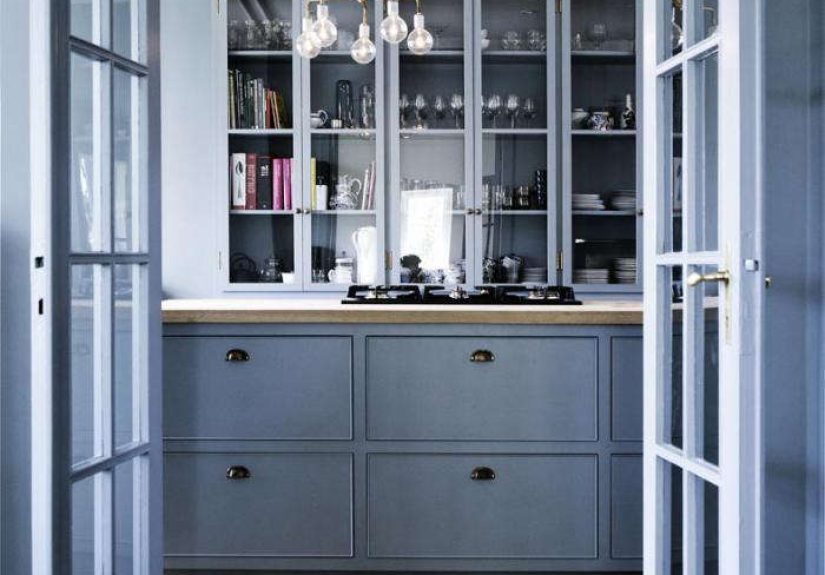
A pale green island, for example, can anchor a white-and-wood kitchen without overpowering it. Dusty blue lower cabinets can feel classic and coastal at the same time, especially when paired with white walls, simple hardware, and warm wood shelving. The key is restraint. The colors should feel washed by weather and daylight, not squeezed straight from a marker pack.
Black as punctuation, not a monologue
Black remains important in Nordic kitchens, but usually as an accent. A black faucet, a slim-framed pendant, dark window trim, or a charcoal stool leg can sharpen the whole composition. Used carefully, black gives structure to a pale palette. It is the eyeliner of the kitchen: a little bit goes a long way, and too much can quickly turn dramatic.
The best Copenhagen-inspired spaces use black to define rather than dominate. That keeps the room from drifting into gloom and preserves the airy quality that makes Nordic design so appealing in the first place.
The Materials Palette: Why the Colors Work Better Here
Paint does not live alone. In a Nordic kitchen, its success depends on the materials around it. Light oak is the obvious hero because it brings warmth, grain, and a sense of craftsmanship. Flat-front oak cabinetry, oak floors, or even a simple oak rail for hanging towels can prevent a soft palette from feeling too polished. It also gives the room that grounded, tactile quality that Scandinavian interiors do so well.
Stone and tile matter, too. Countertops often skew natural and restrained: soft white quartz, honed marble, pale limestone looks, or deeper stone used sparingly for contrast. Backsplashes may be simple square tile, handmade ceramic, vertical stack tile, or even the same surface as the counter for a seamless effect. Matte finishes usually win over glossy ones because they feel calmer and less reflective.
Then there are the softer layers: linen cafe curtains, woven runners, ceramic vessels, wood boards, and chairs that look good from every angle. These details help explain why the color palette in a Copenhagen kitchen feels complete rather than flat. You are not just seeing paint. You are seeing paint in conversation with timber, clay, metal, glass, and daylight.
Layout, Light, and the Art of Looking Effortless
Of course, the room cannot coast on pretty colors alone. Nordic kitchens earn their charm through planning. The layout is usually clean and intuitive, with enough storage to keep countertops from becoming a parking lot for appliances. This is one of the least glamorous but most important design truths: a serene palette looks far better when the toaster is not fighting the fruit bowl for survival.
Light is equally essential. In Copenhagen-inspired spaces, windows are not treated like shy relatives who need to be hidden behind twelve yards of fabric. Natural light is celebrated. If privacy is needed, the solution is usually subtle: a light linen panel, a cafe curtain, or a barely-there shade. The goal is to preserve brightness while keeping the room soft.
Artificial lighting follows the same logic. Pendant lights tend to be sculptural but simple. Under-cabinet lighting is warm and discreet. A wall sconce near a breakfast nook or shelf can create evening atmosphere. The result is layered lighting that makes the kitchen useful at 7 a.m. and lovely at 7 p.m., which is frankly more than can be said for many fluorescent situations around the world.
How to Build This Palette in Your Own Kitchen
Start with a restrained base
Choose one calm anchor color for the largest surfaces. That may be a soft white wall color, warm greige cabinets, or pale oak cabinetry paired with light walls. Keep the base quiet enough that the room can breathe.
Add one nature-based color
Bring in a muted green, dusty blue, clay pink, or soft charcoal through an island, lower cabinets, pantry doors, or even dining chairs. One thoughtful color move is often more effective than five small ones that do not know each other.
Use contrast in slim doses
Let black, dark bronze, or deep charcoal appear in lighting, hardware, stool frames, or a faucet. These details sharpen the palette without making the room feel heavy.
Mix finishes, but keep them honest
A Nordic kitchen loves contrast in texture more than contrast in spectacle. Pair matte paint with warm wood, smooth stone with handmade tile, or crisp cabinetry with soft linen. The room should feel quietly layered, not desperate for applause.
Edit the styling
Keep countertops mostly clear. Leave out only what is useful or genuinely beautiful: a ceramic bowl, a pepper mill, a wooden spoon crock, a lamp, maybe a stack of plates if you are feeling brave. Clutter is not charming just because it is artisanal.
Why This Style Has Staying Power
The reason people keep returning to the Nordic kitchen is simple: it respects real life. It does not ask you to become a different person. It just asks your space to work harder and look better while doing it. The palette is soothing, the materials age gracefully, and the whole room is built around ease. That makes it trend-resistant in the best way. It evolves, but it does not panic.
And that is exactly what makes a Copenhagen kitchen so appealing. It understands that beauty is not only visual. Beauty is also a drawer that opens smoothly, a wall color that flatters the morning light, and a countertop that still looks elegant when someone leaves a loaf of bread on it. It is design that knows how to live.
A Longer, More Personal Walk Through the Space
Imagine stepping into a Nordic kitchen in Copenhagen just after sunrise. The light arrives quietly, not with theatrical spotlight energy, but with a gentle silver glow that turns the walls into something between cream and cloud. The oak cabinets look almost golden for a moment, and the stone countertop feels cool under your fingertips. Nothing in the room is loud. The colors are doing what good colors do: holding the mood together without demanding attention.
There is a mug on the counter, handmade and slightly imperfect, which somehow makes it more convincing than anything factory-perfect could ever be. A linen towel hangs from a rail. A black pendant light hovers above the island like a punctuation mark. Somewhere near the window, a pot of herbs leans toward the glass as if it, too, understands the importance of daylight in a northern city.
What is striking is not just the beauty of the room, but the feeling of ease. You can picture breakfast here without the space collapsing into chaos. Toast crumbs would not ruin the aesthetic. A stack of plates waiting to be put away would still look oddly civilized. The room seems designed for the rhythms of everyday life: coffee, chopping, chatting, wiping down a counter, opening a drawer, closing it again. Nothing feels overly precious, and that is part of the luxury.
As the day goes on, the palette shifts with the light. That is one of the hidden pleasures of this kind of kitchen. The soft white walls look brighter at noon, then warmer in the late afternoon. The muted green cabinet front near the pantry starts to read almost gray when the sky turns overcast. The black accents remain crisp, but never harsh. By evening, the room becomes calmer still, especially once the pendants are on and the outside world begins to dim.
There is also an emotional intelligence to the space. It never overwhelms you. It never begs to be photographed from twelve angles before anyone is allowed to sit down. It simply makes the practical acts of living feel more considered. Pulling a stool up to the island feels natural. Setting out bread, butter, cheese, and fruit feels enough. Even the silence in the room feels designed, softened by wood, textiles, and the absence of visual noise.
That may be the real lesson of a Nordic kitchen in Copenhagen. The beauty is not only in the paint colors or the cabinet style or the oak shelf lined with ceramics. The beauty is in the way all those pieces create relief. The room lowers the temperature of the day. It helps you think clearly. It gives you just enough order to feel supported and just enough softness to feel human.
And perhaps that is why the palette matters so much. In a room used constantly, color affects everything. A harsh white can feel tiring. A heavy dark tone can shrink the space. But a carefully chosen off-white, a gentle greige, a washed sage, or a dusty blue can make the kitchen feel not only larger and lighter, but kinder. That sounds dramatic for paint, but anyone who has ever spent time in a thoughtfully designed room knows it is true. Color is not decoration alone. Color is atmosphere. Color is behavior. Color is memory forming in real time.
So if you are chasing the mood of Paints & Palettes: A Nordic Kitchen in Copenhagen, do not think only about trends. Think about how you want the room to feel at eight in the morning, on a gray afternoon, or during dinner with friends when the candles are lit and the dishes are stacked but nobody is rushing yet. The best Nordic kitchens are not trying to look empty. They are trying to make space for living. And that is a palette worth borrowing.