Table of Contents >> Show >> Hide
- Why Pat Sajak’s Return Was Such a Big Deal
- Why Celebrity Wheel of Fortune Was the Perfect Place for His Encore
- The Timeline Behind the Comeback
- What Fans Expected From Pat’s Return
- The Celebrity Factor: More Than Glitz, More Than Gimmick
- What the Return Says About Pat Sajak’s Legacy
- Experiences Fans and Viewers Connect to This Return
- Final Thoughts
- SEO Tags
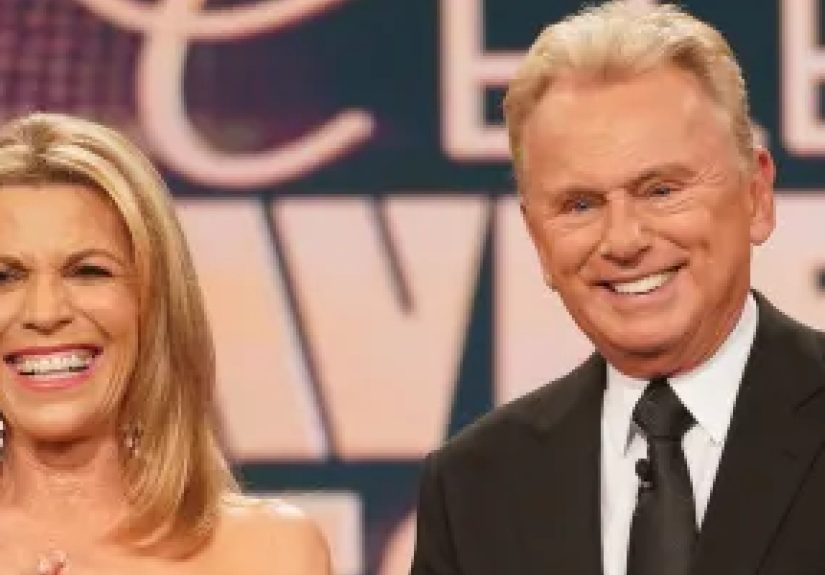
Just when America had started getting used to the idea of a Wheel of Fortune without Pat Sajak at center stage, the franchise pulled off one more polished, camera-ready surprise: Pat Sajak would officially be back to host Celebrity Wheel of Fortune. For longtime fans, that news felt a little like spotting an old friend at your favorite diner. You were not expecting it, but suddenly the coffee tastes better, the room feels warmer, and somebody in the corner is probably humming the theme song.
The return mattered for more than nostalgia. It signaled that Pat’s goodbye to the daily syndicated show was not quite the final curtain for the broader Wheel universe. Instead, his comeback on the celebrity edition gave viewers one more chance to enjoy the easy rhythm that made him a television institution: the dry one-liners, the perfectly timed eyebrow lift, and the uncanny ability to keep a game moving even when a contestant was one vowel away from total chaos. In a television landscape obsessed with dramatic reinvention, Pat Sajak’s return worked because it offered the opposite. It promised comfort, familiarity, and one more spin with a host who never had to beg for attention to command it.
Why Pat Sajak’s Return Was Such a Big Deal
Pat Sajak is not just another TV host attached to a recognizable brand. He is, for millions of viewers, one of the defining faces of game-show television. His decades-long run on Wheel of Fortune made him part ringmaster, part straight man, part unofficial American evening ritual. Families watched him while eating dinner on folding trays, college students caught him in hotel rooms, and grandparents used him as the human version of a clock: if Pat was on, evening had officially begun.
That is why the announcement of his return to Celebrity Wheel of Fortune landed with unusual force. It was not simply another programming update. It felt like a postscript to a major television era. Pat had already taken his bow from the flagship syndicated series, so this celebrity edition comeback carried a little more meaning. It was a bonus chapter, not a reboot. A final lap, not a full-time reversal.
And that distinction matters. Audiences are usually skeptical when retirements in entertainment turn into “just kidding” moments. But Pat’s case felt different because the return was specific, limited, and clearly framed as a last special run. That gave the comeback a sense of purpose instead of making it feel like a ratings panic wrapped in a press release.
Why Celebrity Wheel of Fortune Was the Perfect Place for His Encore
If Pat Sajak was going to come back anywhere, Celebrity Wheel of Fortune made the most sense. The celebrity edition has always had a slightly different energy from the daily syndicated show. It is looser, brighter, and more willing to let the personalities of the contestants take over the room. Celebrities play for charity, the stakes are high, and the mood is lighter. In other words, it is exactly the kind of environment where an experienced host can have a little extra fun without upsetting the soul of the format.
Pat has always excelled in spaces where the tension needs to be managed with precision. On the regular show, that meant keeping everyday contestants calm enough to solve puzzles instead of mentally leaving their bodies on national television. On the celebrity edition, it meant something slightly different: steering famous people through a game they think they understand until the board reminds them, very politely, that fame does not automatically help you spell “onomatopoeia.”
That made his return feel less like a corporate decision and more like a natural fit. The celebrity version gave him room to be playful while still letting fans enjoy the classic Pat-Vanna dynamic. It also allowed the show to frame the comeback as a celebratory event rather than a contradiction of his retirement.
The Timeline Behind the Comeback
The story of Pat Sajak’s return was not just about the announcement. It was also about timing. The initial excitement around his comeback came with the expectation that fans would see him back on ABC in the fall. That fit neatly into the emotional arc of his departure from the daily series. One door closes, another opens, and television moves forward with a little grace.
Then came the scheduling shuffle. Like many network plans, the return did not unfold in a perfectly straight line. The season’s rollout changed, the timing shifted, and anticipation stretched longer than viewers first expected. Oddly enough, that delay may have helped the comeback. Instead of being swallowed by the immediate afterglow of his syndicated farewell, Pat’s return built its own identity. Fans had time to miss him. Time to talk about the old days. Time to realize that television transitions are rarely smooth, especially when the person leaving is a living landmark.
By the time the season was formally positioned as Pat’s “final spin,” the framing had become sharper. This was not an accidental extra appearance. It was a designed farewell within the primetime branch of the franchise. That gave the return a ceremonial feeling. It was less “surprise, he’s back” and more “one more round, and this time everyone knows to appreciate it.”
What Fans Expected From Pat’s Return
Fans did not need Pat Sajak to reinvent the wheel. Literally or figuratively. What they wanted was the thing he had been giving audiences for years: steady hosting, crisp timing, and an ability to make the room feel both polished and spontaneous. In a celebrity environment, that balance becomes even more valuable. Stars can be funny, charming, and generous, but they can also get flustered, overconfident, or spectacularly baffled by puzzles that seem obvious from the couch.
That is where Pat’s style shines. He never overplays a joke. He does not lunge at every comic opening like it owes him money. He lets the moment come to him. A wrong guess, an awkward hesitation, a celebrity who confidently says something utterly incorrect Pat can make those beats funny without making them cruel. It is a hosting skill that looks effortless only because he spent decades making it look that way.
His reunion with Vanna White also added a huge layer of emotional value. Their on-screen partnership has always been one of television’s most dependable pairings, built less on flashy banter than on trust, familiarity, and rhythm. You never watch Pat and Vanna and think, “Please prove you’re friends.” They do not need to prove it. The ease is the proof.
That chemistry gave the return extra weight. Audiences were not just seeing Pat again. They were seeing them again. In television terms, that is the difference between getting a souvenir and getting the real thing.
The Celebrity Factor: More Than Glitz, More Than Gimmick
One reason Celebrity Wheel of Fortune works is that it preserves the core mechanics of the classic show while adding just enough Hollywood shine to make primetime feel special. The celebrities are not there merely to pose dramatically under the lights and pretend they know how consonants work. They are playing for charities, which gives the competition a broader emotional frame and allows the show to blend entertainment with goodwill.
That charitable angle also suits Pat Sajak’s final return. The comeback was not just about honoring a host’s legacy. It was tied to a format that lets well-known contestants raise money for causes they care about. That gives the show a cleaner emotional center than many celebrity spinoffs, which sometimes feel like famous people gathering to remind viewers they are famous.
With a lineup that included recognizable faces from comedy, television, sports, and film, the series had plenty of built-in appeal. But the star power only works if the host knows how to organize the energy. Pat has always been especially good at that. He can let celebrities be themselves without letting the show become a traffic jam of self-promotion and side chatter. That is not a minor talent. That is the whole game.
What the Return Says About Pat Sajak’s Legacy
Pat Sajak’s legacy was already secure before this comeback. He did not need one more season to prove he belonged in the top tier of TV hosts. But the return helped clarify what made him so durable in the first place.
He represented a style of hosting that trusted the format. He was not there to dominate the screen or turn every episode into a personality showcase. He understood that the host of a great game show is part traffic controller, part tone manager, part audience stand-in. The job is not to compete with the game. The job is to make the game look easy, inviting, and just funny enough to keep the wheel spinning.
That is why viewers responded so strongly to the news of his return. They were not asking for novelty. They were asking for excellence they already recognized. In an era when television often mistakes louder for better, Pat’s comeback was a reminder that calm confidence still has enormous value.
There is also something elegant about ending this chapter with the celebrity edition. The regular syndicated show is the daily heartbeat of the franchise, but the primetime version gave Pat a setting that felt celebratory. It let the return be festive, not routine. It turned a programming announcement into an event.
Experiences Fans and Viewers Connect to This Return
The most interesting thing about the news that Pat Sajak would officially be back to host Celebrity Wheel of Fortune is how personal the reaction felt. People did not respond to it like they respond to a random casting update. They responded like they had history with the guy, because in a strange but very real television sense, they did.
For many households, Wheel of Fortune has never been just a show. It is background music to ordinary life. It is what played while homework got finished at the kitchen table. It is what your parents watched after asking if anyone wanted dessert. It is what was on in waiting rooms, vacation rentals, and grandparent living rooms where the remote always seemed to have exactly three working buttons. Pat Sajak became woven into those routines so thoroughly that his presence started to feel less like entertainment and more like infrastructure. Not flashy, not trendy, just permanently there.
That is why the return on the celebrity edition stirred up such a distinct kind of feeling. It reminded viewers of what they loved about appointment television before streaming turned everything into an endless buffet of half-finished choices. You were not picking from nine hundred prestige dramas and seventeen murder documentaries with gloomy blue posters. You were watching Pat Sajak guide people through word puzzles, and somehow that was enough. More than enough, actually.
There is also the specific experience of watching Pat and Vanna together. Their partnership has lasted so long that it carries the comfort of a favorite sitcom duo, except without the need for plot twists, surprise breakups, or someone secretly having an evil twin. They show up, the board lights up, the wheel turns, and order is restored. In a culture that loves disruption, their consistency has felt almost rebellious.
Then there is the couch perspective. Every fan knows the sensation of shouting the answer at the screen while a contestant stares at the puzzle as if it were written in ancient code. That shared experience is part of the magic. Pat’s reactions often mirrored what viewers were thinking, only with more restraint and better tailoring. He knew when to tease, when to pause, and when to let the moment do the work. That made audiences feel included in the joke instead of talked down to by it.
For some viewers, Pat’s return also brought a generational feeling. Parents who watched him for decades could point to the screen and tell younger family members, “That’s the original host you’ve heard me talk about.” And younger viewers, used to faster and louder TV styles, got to see why an understated host can still own a room. The comeback became more than a nostalgia button. It became a bridge between audiences who experienced the show in different eras.
Even fans who knew this return was limited could appreciate the beauty of one last polished encore. Not every television goodbye gets to be graceful. Some end too late. Some end abruptly. Some get dragged through awkward rebranding until viewers barely recognize what they once loved. Pat Sajak’s return to Celebrity Wheel of Fortune offered something rarer: a farewell that understood the audience, respected the format, and gave people one more chance to say thank you without turning the whole thing into a funeral with better lighting.
And maybe that is the real experience at the center of this story. It is not just excitement that Pat came back. It is gratitude that he came back in the right way.
Final Thoughts
Pat Sajak’s official return to host Celebrity Wheel of Fortune worked because it gave fans exactly what they hoped for without pretending time had stopped. It honored his history, embraced his chemistry with Vanna White, and turned a familiar format into a meaningful encore. The comeback was not about reversing retirement. It was about giving one of television’s most recognizable hosts a final primetime chapter that felt earned, affectionate, and refreshingly unforced.
In the end, that is why this story mattered. It was not just another entertainment headline. It was a reminder that some hosts do more than present a show. They become part of how audiences remember entire seasons of life. Pat Sajak’s return to Celebrity Wheel of Fortune was one more spin, yes but it was also one more memory added to a very full board.