Table of Contents >> Show >> Hide
- What Is Animeyed, Exactly?
- The Origin Story: A Selfie, A Dog, And A Perfectly Timed “Huh”
- How The Images Are Made: Craft, Illusion, And A Lot Of Patience
- The 13 New Pics: Animals That Change The Mood With One Look
- Why Animal Eyes Feel So Powerful: A Little Science Behind The Stare
- The Message Under The Makeup: Empathy, Respect, And Not Treating Animals Like Props
- What Photographers Can Learn From Animeyed
- Conclusion and Field Notes
If you’ve ever tried taking a selfie with a pet, you already know the rules: you get one good shot, seventeen blurry
mysteries, and at least one photo where your dog looks like a philosophy professor judging your life choices.
For Hungarian fine-art photographer and retoucher Flóra Borsi, that everyday chaos turned into a surreal, internet-stopping
ideaone where humans and animals literally see eye to eye.
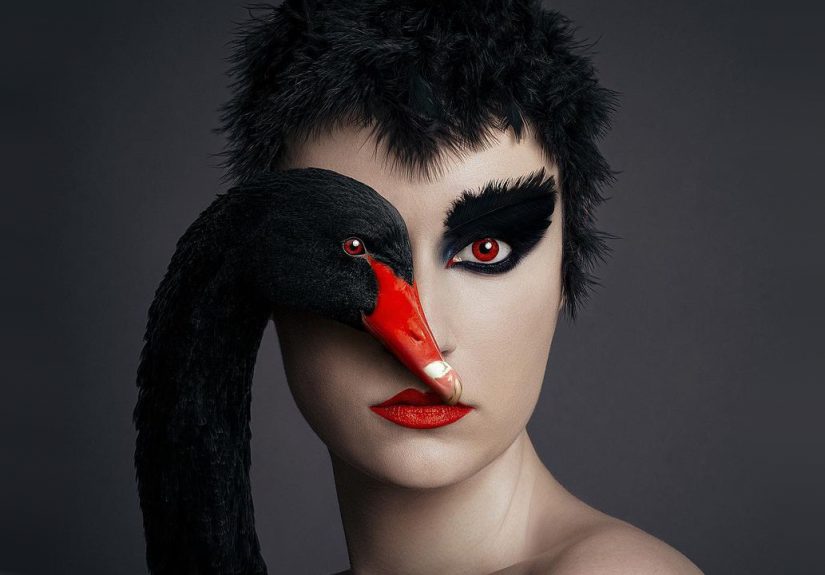
In her ongoing self-portrait project Animeyed, Borsi creates images in which one of her eyes is visually shared
with an animal’s. The result is equal parts elegant and uncanny: a portrait that reads as human… until it doesn’t.
It’s not a “costume” series and it’s not a simple overlay trick. Animeyed is a carefully staged conversation about identity,
empathy, and the strange closeness we often ignore between ourselves and the rest of the living world.
What Is Animeyed, Exactly?
Animeyed is a self-portrait series where Borsi blends her face with an animal’s eye so the two subjects appear fused into
a single, believable presence. On her project page, she describes it as a visual dialogue that blurs the boundary between
human and non-human, inviting viewers to reflect on similarities that are emotional, physical, and even spiritual.
That may sound lofty (fine art loves a good “visual dialogue”), but the images sell the concept in a split second:
you feel watched, and you can’t look away.
The viral magic is that the portraits don’t scream “Photoshop!” even though Photoshop is absolutely doing the heavy lifting.
The lighting, the makeup, the pose, and the gaze all match the animal partner, so the blend reads like a single photograph
captured in one click. The mind knows it’s impossible; the eyes remain suspiciously convinced.
The Origin Story: A Selfie, A Dog, And A Perfectly Timed “Huh”
According to coverage of the series, the spark came when Borsi tried to take a selfie with her dog and realized the dog’s eye
aligned so well with hers that it looked eerily similar. That accidental “match” kicked off the whole projectproof that
creativity sometimes begins with a mundane moment and a camera roll full of near-misses.
That origin matters because it explains the tone of Animeyed. This isn’t about transforming into a monster or disguising
yourself as wildlife. It’s about resemblance. About noticing. About what happens when you stop treating animals as “other”
and instead admit, quietly, that you’re both just creatures trying to make sense of light.
How The Images Are Made: Craft, Illusion, And A Lot Of Patience
Let’s clear up a common assumption: Animeyed is not a series where every animal is sitting calmly in a studio, posing like
a paid model. Multiple write-ups point out that digital techniques are central to the final look, and the realism is part of
the pointshe wants the images to feel like unedited snapshots even when they’re carefully constructed.
Borsi has shared that she photographed her self-portraits and combined them with animal imagery using professional tools.
In one early feature, the workflow is described plainly: a Canon 7D for the self-portraits, plus Adobe Stock and Photoshop
for the animal overlays and compositing. That detail reveals something important: Animeyed isn’t “filters.” It’s
photo-retouching as storytellingprecision work where millimeters matter.
The Invisible Ingredients That Make It Feel Real
- Matching light direction: If the animal eye is lit from the left and the face from the right, the illusion collapses instantly.
- Consistent catchlights: The bright reflections in the eye must agree with the scene, or the portrait feels “wrong” in a way you can’t name.
- Color harmony: Skin tones, eye whites, and surrounding textures get nudged so they belong in the same world.
- Makeup and styling: In the Animeyed II era especially, styling often echoes the animalfeathers, gloss, shadow shapes, or color palettes that “rhymes” visually.
- Edge discipline: The transition around eyelids and lashes is where amateurs panic and professionals quietly win.
The craft is why the images linger. Animeyed isn’t just “cool.” It’s controlled. It’s the difference between a mashup and a
portrait that seems to breathe.
The 13 New Pics: Animals That Change The Mood With One Look
The fun part of an Animeyed update is seeing how different creatures change the emotional temperature of a portrait.
Swap one eye and everything changes: innocence becomes intensity, elegance turns alien, softness becomes predatory
all without moving the mouth or changing the pose.
Across features and galleries, the animals associated with Animeyed and its second iteration include a wide rangefrom pets
to birds to aquatic life to tiny insects. Here are 13 animal “eye partners” that reflect the kind of variety
audiences see in these updates (and why each one hits differently):
- Dog: The series’ origin vibewarm, familiar, and strangely human when the gaze locks in.
- Black cat: Sleek and mythic; the shared eye feels like a secret you weren’t invited to know.
- White dove: Soft and symbolic; it turns the portrait into something calm, almost ceremonial.
- Snake: Instant tensionreptile eyes carry a “no blinking, no negotiating” energy.
- Goldfish: Bright and reflective; it leans surreal without needing extra drama.
- Fish: Similar to the goldfish but moodier depending on the speciesmore “ocean dream” than “golden bowl.”
- Puffin: Graphic and high-contrast; the eye and surrounding patterns feel like wearable design.
- Rabbit (bunny): Gentle but intense; prey-animal alertness makes the stare feel wide and watchful.
- Beetle: Tiny creature, huge effectunexpected texture and shine turn the face into living jewelry.
- Swan: Smooth, elegant, and almost royal; it shifts the portrait toward fashion editorial.
- Black swan: Darker, more charged; Borsi has spoken about identifying with the black swan’s “not accepted for being different” symbolism.
- Squirrel: Playful and livelysuddenly the portrait feels like a woodland fairytale with a pulse.
- Parrot: Bold color and intelligence; the gaze feels like it’s evaluating you right back.
Notice what’s happening here: Animeyed doesn’t rely on shock. It relies on biology plus symbolism.
Every species brings its own visual logicpupil shape, reflectivity, textureand its own cultural story. A dove reads differently
than a snake. A puffin reads differently than a beetle. The series is basically a masterclass in how one detail can rewrite a face.
Why Animal Eyes Feel So Powerful: A Little Science Behind The Stare
Animeyed lands so hard because eyes are the brain’s favorite shortcut for “personhood.” We instinctively search eyes for intent,
emotion, and attention. Animal eyes scramble that instinctespecially when they’re placed on a human face that already carries
human cues like skin texture and symmetrical bone structure.
Pupil Shapes: Nature’s Job Titles
One reason animal eyes feel so distinctive is pupil shape. Research and expert summaries have linked elongated vertical pupils
with certain ambush predators and horizontally elongated pupils with many prey animalsadaptations that can improve survival
in different ecological niches. When Animeyed swaps a human pupil for an animal pupil, your brain reads that shape like a mood.
Vertical slit? “Hunter.” Wide, sideways pupil? “Always scanning.”
Night Shine And The Tapetum Effect
Many animals also have anatomical features that change how their eyes reflect light. A well-known example is the
tapetum lucidum, a reflective layer in the eyes of various species that can boost low-light vision by giving
light a second pass through the retina. That’s why some animals seem to glow in headlights or flash photos.
Even when Animeyed isn’t depicting “glow,” our brains carry those associations: animal eyes can feel luminous, deeper, and more
“alive” in dim scenes.
Evolution Made Eyes For Worlds We Don’t Live In
National Geographic has explored how diverse animal eyes areshaped by environments and behaviors that range from reef color
chaos to Arctic darkness. Animeyed taps that diversity without turning it into a lecture. It lets you feel, in a single image,
that there are countless ways to perceive the worldand your human default is only one option.
The Message Under The Makeup: Empathy, Respect, And Not Treating Animals Like Props
What keeps Animeyed from being a gimmick is that it’s anchored in an ethic: animals aren’t decorative.
In commentary on the series, Borsi has framed the project as a reminder that animals are unique and special, and that people
should treat them kindlyfrom fish to swans to everything in between. That message becomes more persuasive because the images
are beautiful, not preachy.
There’s also a subtle correction baked into the concept: we often talk about animals in categories (“pets,” “pests,” “wildlife”)
that let us ignore their individuality. Animeyed fights that by forcing you to look at one animal featurean eyewith the same
seriousness you’d give a human portrait. The work says, without words: “This is someone’s face, too.”
What Photographers Can Learn From Animeyed
Even if you never plan to blend a beetle into your next headshot (no judgment if you do), Animeyed offers practical lessons
in modern portrait craftespecially for creators who live somewhere between camera and computer.
1) Concept First, Effects Second
The technique is impressive, but the idea is stronger: “What if we shared a gaze?” That’s a concept you can explain in one
sentence. If your concept needs three paragraphs and interpretive dance, the effect won’t save it.
2) Consistency Is The Real Special Effect
Lighting consistency, skin texture consistency, grain consistencythese are the quiet details that let a surreal image feel
documentary. Animeyed proves that realism isn’t the opposite of surrealism; it’s often the delivery system.
3) Styling Is Storytelling
The portraits often match makeup, hair, and wardrobe to the animal partner. That’s not just “pretty.” It’s narrative.
It tells the viewer, “These two belong together,” before the brain even analyzes the composite.
4) Leave Room For The Viewer To Finish The Thought
Animeyed doesn’t label every image with a thesis statement. You bring your own associationsfear, tenderness, nostalgia,
aweand the portrait meets you there. That’s why people share it: the image feels personal without being literal.
Conclusion and Field Notes
Animeyed works because it operates on two levels at once. On the surface, it’s a striking series of surreal self-portraits
that makes you stop scrolling. Under the surface, it’s a gentle but persistent argument: animals aren’t scenery; they’re
fellow beings with their own worlds of perception, emotion, and individuality.
And maybe that’s why these portraits feel so sticky in the mind. They don’t just show you an animal.
They suggest a shared point of viewone blended stare that asks you to reconsider the boundary you’ve drawn between “us” and “them.”
In the end, Animeyed isn’t about becoming an animal. It’s about admitting we were never as separate as we pretend.
Field Notes: Of Real-World Experiences Around Animal-Eye Portraits
Talk to photographers who’ve tried anything remotely “Animeyed-adjacent,” and you’ll hear the same story: the camera part is
only half the jobthe rest is problem-solving with your whole brain. The first experience most people have is discovering that
eyes are picky. Not emotionally picky (although, yes, cats do judge you), but optically picky. A portrait can be beautifully
lit, sharply focused, and composed like a magazine cover, and still fail if the eye doesn’t feel right. The catchlight is in
the wrong place. The iris looks pasted on. The eyelid edge is too clean. The brain detects “uncanny” faster than it detects
“incorrect.”
The second experience is learning that animals don’t collaborate on your schedule. If you’re working from your own photos,
you realize quickly that the “perfect gaze” is rare. Dogs look away at the exact moment you press the shutter. Birds turn their
heads into silhouettes. Fish refuse to hold still long enough for anything but abstract art. This is why many creators lean on
reference images that already have the right angle and lightingand why crediting sources and respecting usage rights becomes
part of the workflow, not an afterthought. The experience teaches a practical ethics: creative freedom still needs boundaries.
Then comes the editing experience: the slow shift from “I can do this in ten minutes” to “Why am I still zoomed in at 400% and
whispering apologies to the pixels?” Blending an eye is not a one-click trick; it’s a chain of micro-decisions. You match tone,
then contrast. You fix color temperature. You soften edges, then re-sharpen lashes. You adjust the shadow under the brow so the
new eye sits inside the face, not on top of it. You learn that realism often comes from imperfectiontiny pores, slight blur at
the right spot, a natural gradient in the sclera. The more “perfect” you make it, the more fake it can feel.
Finally, there’s the audience experiencearguably the most surprising part. People don’t just say “cool edit.”
They project stories. A rabbit eye can read as innocence, vulnerability, alertness. A snake eye can read as danger, power,
mystery. Even if you didn’t intend symbolism, viewers will bring it anyway, because eyes are narrative magnets. That feedback
loop changes how you shoot the next portrait: you start thinking less about effects and more about meaning. You stop asking,
“Can I blend this?” and start asking, “What does this gaze say?” That’s the experience Animeyed makes famousand it’s
the reason the idea keeps working: it turns technique into emotion, and emotion into a stare you remember.