Table of Contents >> Show >> Hide
- Why So Many Trees Are Called “Gum Trees”
- The “Eucalypt” Gum Trees (Mostly Myrtaceae)
- The American “Gum Trees” (Not Eucalypts)
- Quick ID Cheat Sheet: Gum Trees at a Glance
- Choosing the Right Gum Tree for Your Space
- Common Problems (and the Least Annoying Fixes)
- Experiences With Gum Trees: What Living With Them Is Actually Like (About )
- Conclusion
If you’ve ever heard someone say, “That’s a gum tree,” there’s a decent chance you were standing near
either a eucalyptus or something that is absolutely not eucalyptus and would like to file a complaint
with common names in general. “Gum tree” is one of those labels that sounds preciselike a neat little
name taguntil you realize it gets handed out to multiple, unrelated groups of trees across the world.
This matters in real life because “gum tree” can mean: a tall, aromatic evergreen that sheds bark like it’s
trying on new outfits (hello, Eucalyptus), a classic American shade tree that drops spiky “gumballs”
like tiny medieval weapons (sweetgum), or a fall-color superstar with a nickname that sounds like a
candy flavor but is actually a native woodland tree (black gum).
Let’s sort out the most popular “gum trees,” show how they’re related (or not), and give you practical ways
to recognize themwithout turning your brain into a botanical filing cabinet.
Why So Many Trees Are Called “Gum Trees”
“Gum” in plant talk usually points to sticky substances that ooze or seep from bark or woundssap,
resin, latex-like exudates, or aromatic balsams. Different plant families produce different kinds of “sticky,”
but humans tend to see any gooey, fragrant, or hardening exudate and say, “Yep. Gum.”
Add one more ingredienttradition. Once a common name sticks (pun fully intended), it travels with settlers,
gardeners, and plant collectors. That’s why “gum” shows up in multiple lineages:
- Myrtaceae (myrtle family): the classic Australian “gum trees” (Eucalyptus and close relatives).
- Altingiaceae/Hamamelidaceae-adjacent lineage: Liquidambar (American sweetgum).
- Nyssaceae: Nyssa (black gum / tupelo / sour gum).
Same nickname. Very different genetics. And very different “yard consequences,” which we’ll get to (looking at you, gumballs).
The “Eucalypt” Gum Trees (Mostly Myrtaceae)
When most people say “gum tree,” they’re thinking of Australian natives in or near the eucalyptus group.
These are famous for aromatic leaves (oil glands), distinctive woody seed capsules (often called “gumnuts”),
and bark that can peel, shed, or hang in strips depending on the species.
Eucalyptus: The Headliner “Gum Tree”
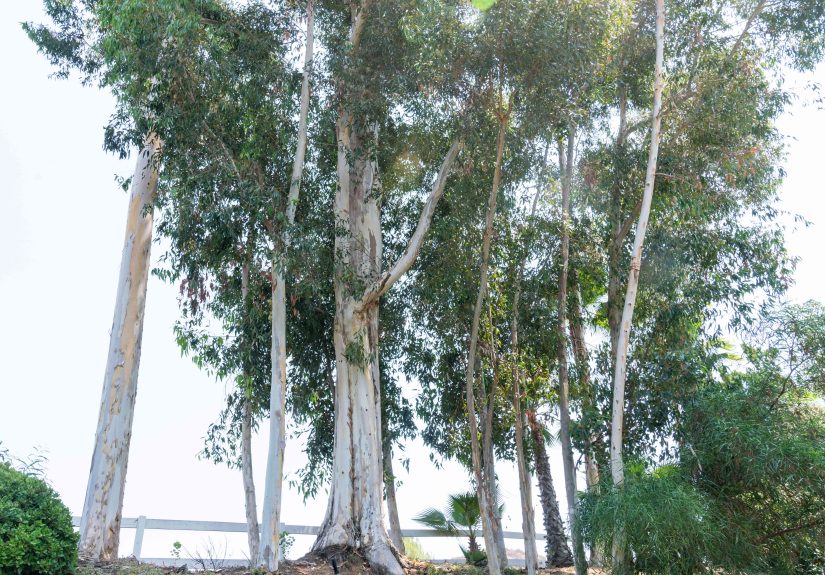
Eucalyptus is a massive genus (hundreds of species) that ranges from shrubs to towering trees.
In U.S. gardening and landscaping, eucalyptus is often associated with:
fragrant foliage, fast growth, drought tolerance once established, and a very recognizable scent when leaves are crushed.
Popular eucalyptus examples you’ll hear about in the U.S.:
-
Tasmanian blue gum (Eucalyptus globulus): historically planted in parts of coastal California;
extremely fast-growing, iconic tall groves, and a frequent topic in fire and land-management conversations. -
Silver dollar eucalyptus / Argyle apple (Eucalyptus cinerea): grown for round, silvery juvenile leaves
used in floral arrangementsoften cultivated as a smaller tree, shrub, container plant, or even an annual in colder regions.
What makes eucalyptus “feel” like eucalyptus? A few common clues:
aromatic leaves; lots of leaf litter; bark with some kind of shedding/peeling behavior; and woody capsules that persist.
Some species also have dramatic differences between juvenile and adult leaves (rounder vs. longer, different arrangement),
which can confuse new plant ID folks in the best way: “Why does this tree look like it has two personalities?”
Real-world caution: Many eucalyptus species contain compounds in their oils that can be harmful if ingested in quantity.
In practical terms: don’t treat eucalyptus oil like a snack, and keep curious pets/kids from chewing foliage.
California’s Eucalyptus Story: Beauty, History, and Management
Eucalyptus has a specific, well-documented history in California: blue gum was introduced to the San Francisco Bay region in the
mid-1800s as an ornamental and later planted widely for windbreaks and perceived commercial value. Over time, many plantings expanded,
creating large groves near and within protected lands.
That’s where the conversation gets complicated. Land managers have noted multiple overlapping concerns:
changes to habitat conditions, displacement of native plant communities in some locations, andespeciallyfire behavior.
Eucalyptus leaf litter and shed bark can contribute to fuel loads, and the aromatic oils that smell amazing to humans can also
increase flammability under the wrong conditions. This is why you’ll see eucalyptus management framed as a balance of
fire safety, historic preservation, and ecosystem health in some parks and public lands.
Corymbia: Spotted Gums and Lemon-Scented Gums
Corymbia is a separate genus closely associated with eucalyptus in the public imaginationpartly because some Corymbia species
were historically classified within Eucalyptus, and partly because common names like “spotted gum” and “lemon-scented gum”
are irresistible.
A standout is lemon-scented gum (Corymbia citriodora), known for foliage with a strong citrus scent.
It’s popular in warm climates, but it comes with a serious footnote in parts of the U.S.: in Florida, it has been evaluated as
a high invasion risk and is not recommended by UF/IFAS without specific management context. Translation: it might be a gorgeous,
fragrant treebut you should check local guidance before planting.
Angophora: The “Apple Gums”
Angophora is another Myrtaceae group sometimes swept into the broader “eucalypt” vibe.
In cultivation (especially in mild climates), these can be prized for smooth, colorful bark and a distinctly Australian look.
You’ll hear common names like “apple gum,” which is less about dessert aspirations and more about bark texture and traditional naming.
In the U.S., Angophora is less common in mainstream nurseries than eucalyptus or sweetgum, but it appears in specialty collections
and in warm coastal areas where the climate fits.
The American “Gum Trees” (Not Eucalypts)
Now for the plot twist: some of the most common “gum trees” in the United States are not in the eucalyptus family at all.
They just share the “gum” nickname thanks to resin or historical useand because common names love chaos.
Sweetgum (Liquidambar styraciflua): Star Leaves and Spiky “Gumballs”
American sweetgum is native across a broad swath of the eastern U.S. and into parts of Mexico and Central America.
It’s a large deciduous tree valued for shade and fall coloroften producing a multicolor show on a single canopy.
How to recognize sweetgum fast:
- Leaves: star-shaped with 5–7 lobes, glossy, and often aromatic when crushed.
- Leaf arrangement: alternate (this is how you tell it apart from many maples, which are often opposite).
- Fruit: the famous woody, spiky balls (“gumballs”) that hang on stems and drop in quantity.
- Bark/twigs: may show corky ridges or “wings” on branches in some trees and regions.
The “gum” part of sweetgum is literal: the tree produces a resinous sap that historically hardened and was used as chewing gum in
multiple Indigenous traditions. Modern sources also discuss the resin (often called storax/styrax in various contexts) as aromatic and
historically used in perfumes, incense, and other preparations. (If you’re thinking, “So… it’s basically a tree that makes its own cologne,”
you are not wrong.)
Landscape reality check: sweetgum is loved and cursed for the same reasonits fruit.
Those gumballs can be messy, tough underfoot, and annoying in lawns, driveways, and patios.
If you want the fall color without the daily game of “dodge the caltrops,” look for named cultivars selected for reduced fruiting,
or place the tree where fruit drop is less of a problem (woodline edge, naturalized area, larger property).
Sweetgum also tends to prefer slightly acidic soils; on high-pH/alkaline soils it can develop iron chlorosis
(yellowing leaves from nutrient uptake issues). In other words: it’s not “picky,” but it does have a type.
Black Gum / Tupelo / Sour Gum (Nyssa sylvatica): Fall Color and Wildlife Value
Black gum (also called sour gum, black tupelo, or simply tupelo in many contexts)
is a native deciduous tree with a reputation for:
glossy leaves, excellent scarlet-to-purple fall color, strong wildlife value, and adaptability from wet sites to uplands.
Quick ID notes for black gum:
- Leaves: simple, oval to obovate, glossy; fall color can be intense and early.
- Bark: on older trees, can become blockyoften compared to “alligator skin.”
- Growth habit: often pyramidal when young, more spreading/rounded with age.
- Flowers/fruit: small flowers; fruit is important for wildlife; some species/varieties are valued for honey production.
Black gum is frequently praised as an ornamental that also behaves like a good ecological citizen:
it supports birds and other wildlife, and it’s often recommended for naturalized edges, moist areas, and mixed native plantings.
It can be slow-growing, but that’s part of its charm: it’s playing the long game.
Quick ID Cheat Sheet: Gum Trees at a Glance
| “Gum Tree” Genus | Leaf Type | Signature Fruit/Seed | Signature Clue | Common Yard Moment |
|---|---|---|---|---|
| Eucalyptus | Evergreen; aromatic; can have juvenile vs adult leaf forms | Woody capsules (“gumnuts”) | Peeling/shedding bark + eucalyptus scent | “Why does my driveway have so much bark?” |
| Corymbia | Evergreen; often aromatic | Woody capsules | Common names like “spotted gum” / “lemon-scented gum” | “This tree smells like lemon cleanerin a good way.” |
| Angophora | Evergreen; Myrtaceae look | Woody capsules | Smooth, showy bark in some species | “That bark looks like modern art.” |
| Liquidambar (sweetgum) | Deciduous; star-shaped | Spiky “gumballs” | Alternate leaves + spiky fruit balls | “My lawn is full of tiny medieval weapons.” |
| Nyssa (black gum) | Deciduous; oval, glossy | Berry-like fruit (wildlife food) | “Alligator” bark + knockout fall color | “Why is this tree already red when everything else is still green?” |
Choosing the Right Gum Tree for Your Space
Picking a “gum tree” isn’t just about the nameit’s about the behavior. Here’s how to think like a practical plant person:
1) Start With Climate (and Be Honest About Winter)
Many eucalyptus and Corymbia species are happiest in warm coastal or subtropical climates. In colder zones,
some will die back or need container culture. If you’re in a frost-prone area and you want the “eucalyptus look,”
silver dollar eucalyptus is often grown as a seasonal or indoor/outdoor container plant for foliage.
2) Decide How You Feel About “Tree Litter”
Every tree drops something. Gum trees just do it with flair:
eucalyptus can shed bark strips and leaves; sweetgum drops fruit that’s famous for being… memorable underfoot;
black gum is comparatively tidy but still drops leaves and fruit as any deciduous tree does.
3) Think About Roots and Space
Large shade trees need roomabove and below ground. Sweetgum, for example, is often noted as performing poorly
where roots are restricted. If you’re planting near sidewalks, driveways, or tight urban spaces, choose carefully,
and favor cultivars or smaller-maturing options when possible.
4) Check Local Guidance on Invasiveness and Fire Risk
This is especially important for non-native eucalypt-type trees. Some regions consider certain species invasive,
and some public agencies highlight how eucalyptus litter and oils can contribute to fire behavior under specific conditions.
The most responsible move is also the simplest: check your state extension resources and local invasive plant guidance
before planting.
Common Problems (and the Least Annoying Fixes)
Sweetgum Gumballs Everywhere
If you love sweetgum’s fall color but hate the fruit, your best strategies are:
(1) pick a cultivar selected for reduced fruiting, (2) plant it where fruit drop isn’t a daily hazard,
or (3) embrace the gumballs as nature’s way of telling you to own a rake.
Yellow Leaves on Sweetgum in Alkaline Soil
Iron chlorosis can show up on higher-pH soils. If your area is known for alkaline conditions,
consider soil testing and tree selection that matches your site rather than trying to “fight” your soil forever.
Eucalyptus Maintenance and Fire-Aware Cleanup
In dry climates or fire-prone zones, management often focuses on reducing hazardous fuelsespecially accumulations of dry leaves
and bark and maintaining defensible space. Even outside high-risk regions, it’s smart to keep litter from piling up against structures
and to avoid planting large trees where their mature size creates conflicts with buildings or power lines.
Experiences With Gum Trees: What Living With Them Is Actually Like (About )
Reading plant descriptions is useful, but gum trees are the kind of plants you also feel in daily lifethrough smell, sound,
mess, wildlife, and the little surprises they drop on your routine. Here are common “gum tree experiences” people report
(and what they usually mean in practical terms).
If you live near eucalyptus: the first thing many people notice is the scent. On a warm day, crushed leaves can release that
unmistakable eucalyptus aromaclean, sharp, almost like the world’s most outdoorsy spa candle. In mild coastal climates, the trees can
grow fast enough that you feel like you can watch the canopy expand between seasons. Along with that speed often comes a steady confetti
of leaf litter and bark. Some homeowners describe it as “mulch that delivers itself.” Others describe it as “mulch that delivers itself
directly onto my gutters.” On windy nights, eucalyptus can also sound dramaticbranches swaying, strips of bark flutteringlike the tree is
rehearsing for a weather documentary.
If you have a sweetgum in the yard: you get a genuine four-season personality. Spring and summer are all shade and glossy star leaves.
Fall is the grand performance: yellows, reds, purples, sometimes multiple colors on the same tree like it can’t commit to one outfit.
Then come the gumballs. If you’ve never stepped on one barefoot, congratulations on your peaceful life. People who plant sweetgum in lawn
spaces often end up with a love-hate relationship: love the look, hate the daily foot patrol. The “happy sweetgum owners” tend to be the ones
who either (a) planted it away from high-traffic areas, or (b) don’t mind letting the tree do what trees do. In naturalized edges, sweetgum
fruit is more “character” than “problem.”
If you plant black gum (Nyssa): the experience is quieter but deeply satisfying. Black gum doesn’t usually dominate the yard the way
eucalyptus can, and it doesn’t booby-trap the ground like sweetgum can. Instead, it’s the tree you notice because it’s early to color up and
looks ridiculously glossy in sunlightlike someone clear-coated every leaf. People often mention that birds show up when fruit is present,
and that the tree feels “woodland authentic,” even in suburban settings. The trade-off is patience: black gum is often described as moderate to
slow growing, so you plant it for the future you. The payoff is that, year after year, it becomes one of those trees you point at and say,
“Okay, that one was a good decision.”
The best overall gum-tree mindset: pick the genus that matches your lifestyle. If you want fragrance and evergreen drama and you live in
the right climate, eucalyptus-type gums can be a signature tree. If you want classic shade and fall fireworks and don’t mind some cleanup, sweetgum
is iconic. If you want native beauty, wildlife value, and autumn color that sneaks up early and steals the show, black gum is hard to beat.
Conclusion
“Gum tree” isn’t one treeit’s a whole nickname ecosystem. The popular gum trees you’ll run into belong to different genera and even different
families, but they share something humans notice: sticky or aromatic plant chemistry, memorable bark or fruit, and enough personality to earn a
common name that refuses to stay in one taxonomic lane.
The trick is to move beyond the nickname. If you can identify the genusEucalyptus, Corymbia, Angophora,
Liquidambar, or Nyssayou instantly understand what the tree is likely to do in your landscape:
how it grows, what it drops, and what kind of maintenance (or forgiveness) it will ask from you.