Table of Contents >> Show >> Hide
- Why Dill Pickle Deviled Eggs Work So Well
- Dilly Deviled Eggs With Dill Pickle (The Core Recipe)
- Flavor Variations (Because Pickle People Contain Multitudes)
- Make-Ahead Tips That Keep Deviled Eggs Fresh (Not Sad and Sweaty)
- Storage and Food-Safety Notes (Because Picnics Are Chaos)
- Troubleshooting: Fix Common Deviled Egg Problems
- Serving Ideas: Where These Shine
- FAQ: Dilly Deviled Eggs With Dill Pickle
- Kitchen Stories & Serving Experiences (About )
- Conclusion
Deviled eggs are the social butterflies of the appetizer world: they show up uninvited, disappear first,
and somehow end up in every family photo taken near the snack table. This version leans hard into the
dill pickle vibetangy, salty, herby, and just crunchy enough to keep things interesting.
If you love pickles the way some people love true crime podcasts, you’re in the right kitchen.
In this guide, you’ll get a reliable, party-proof recipe for dill pickle deviled eggs,
plus the “why it works” flavor logic, make-ahead strategies, and fixes for the classic deviled-egg tragedies
(runny filling, lumpy yolks, eggs that peel like they’re wearing armor).
Why Dill Pickle Deviled Eggs Work So Well
A great deviled egg is basically a balancing act: creamy fat + gentle heat + salt + a little acidity.
Dill pickles bring three of those to the party at oncesalt, acid, and crunchwhile dill adds the fresh,
green “I totally planned this” finish.
- Pickle juice brightens the filling so it tastes lively, not heavy.
- Chopped dill pickles add texture so every bite isn’t just soft-on-soft.
- Dill (fresh or dried) makes the flavor read “deli-style” instead of “mayo-forward.”
- Mustard adds bite and helps the filling taste like a seasoned spread, not mashed yolks.
Dilly Deviled Eggs With Dill Pickle (The Core Recipe)
Quick Recipe Snapshot
- Yield: 12 deviled egg halves
- Prep time: 15–20 minutes (plus egg cooling)
- Cook time: 11–12 minutes (boil) or ~12 minutes (steam)
- Skill level: Beginner-friendly, pickle-lover approved
Ingredients
- 6 large eggs
- 3 tablespoons mayonnaise (see swaps below)
- 1 teaspoon yellow mustard (or Dijon for a sharper bite)
- 1 to 2 tablespoons dill pickle juice (start with 1 tablespoon)
- 1/4 cup finely chopped dill pickles (plus extra for garnish)
- 1 tablespoon finely chopped fresh dill (or 1 teaspoon dried dill)
- 1/8 teaspoon garlic powder (optional, but delightful)
- Salt and black pepper, to taste
- Optional garnishes: smoked paprika, extra dill, tiny pickle cubes, chives, cracked pepper
Step-by-Step Instructions
-
Cook the eggs (boil or steam).
Boil method: Bring water to a gentle boil. Lower eggs in carefully and simmer about 11 minutes
for firm, sliceable yolks.
Steam method: Set eggs in a steamer basket over boiling water, cover, and steam about 12 minutes.
(Steaming is famously consistent and often easier to peel.) -
Ice bath like you mean it.
Move eggs straight into a bowl of ice water for at least 15 minutes. This stops cooking, cools them fast,
and helps the shell release. -
Peel and halve.
Tap eggs all over, then peel under cool running water if you want fewer divots. Slice lengthwise.
Pop yolks into a bowl; line up whites on a platter like little edible boats. -
Mash yolks until smooth.
Use a fork for rustic charm, or press yolks through a fine mesh sieve for a filling that pipes like a dream. -
Build the filling.
Add mayonnaise, mustard, 1 tablespoon pickle juice, chopped pickles, dill, garlic powder (if using),
and a pinch of salt + pepper. Mix until creamy. -
Adjust texture and zing.
If it’s too thick, add a teaspoon more pickle juice. If it’s too loose, add a bit more yolk
(or a spoonful of mayo). Taste and tweakdeviled eggs are basically edible seasoning practice. -
Fill the whites.
Spoon in the filling for a casual look, or pipe it using a zip-top bag with the corner snipped off
(or a piping tip if you’re feeling fancy). -
Garnish and serve cold.
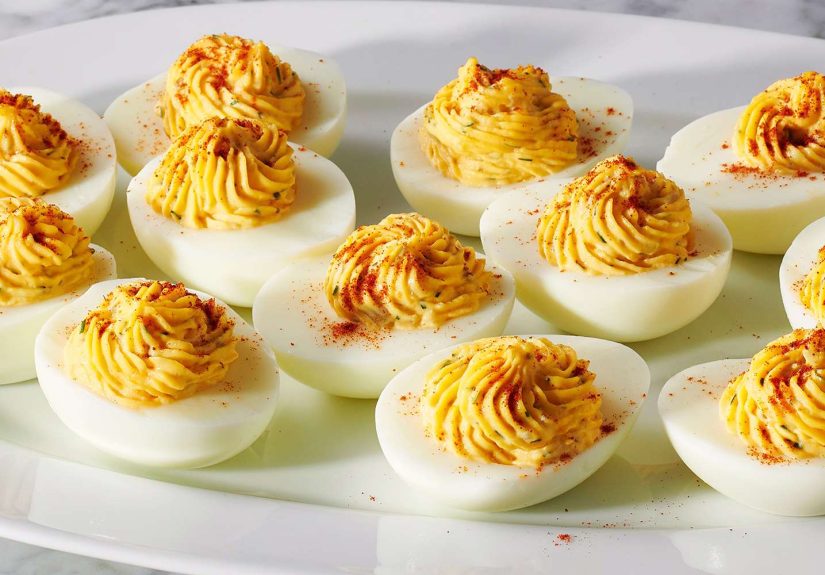
Top with fresh dill, extra pickle bits, and a dusting of paprika or cracked pepper. Serve chilled.
Flavor Variations (Because Pickle People Contain Multitudes)
1) Spicy Dilly Deviled Eggs
Add 1/2 teaspoon hot sauce or a pinch of cayenne. For a jalapeño vibe, fold in a tablespoon of finely chopped
pickled jalapeños (or use some of their brine in place of part of the pickle juice).
2) Ranch-Style Dill Pickle Deviled Eggs
Stir in 1 to 2 teaspoons ranch seasoning (go easyit’s potent). This turns the filling into something that tastes
like your favorite veggie dip decided to become an appetizer.
3) Smoked Pickle Deviled Eggs
Use smoked paprika plus a tiny splash of pickle juice. Add crisp bacon bits if you want the “picnic deluxe” version.
4) Lighter (But Still Creamy) Version
Swap half the mayo for plain Greek yogurt. You still get richness, plus a tang that plays nicely with dill.
If you go all-yogurt, bump the mustard slightly so the flavor stays bold.
5) Extra Crunch Version
Add 1 tablespoon finely chopped celery or scallions. The goal: a little snap in every bite, not a salad situation.
Make-Ahead Tips That Keep Deviled Eggs Fresh (Not Sad and Sweaty)
Deviled eggs are at their best when the whites stay firm and the filling stays bright. If you’re prepping for a party:
- Up to 1 day ahead: cook and peel eggs; store whites and yolk filling separately.
-
Store egg whites in a single layer on a paper towel–lined container to reduce moisture.
Keep them loosely covered to prevent condensation. -
Store filling in an airtight container or a piping bag with the air pressed out. (Less air = less oxidation,
which helps keep the color and flavor cleaner.) - Best move: fill eggs about 30–60 minutes before serving for the prettiest results.
Storage and Food-Safety Notes (Because Picnics Are Chaos)
Deviled eggs are a chilled appetizer for a reason. Keep them cold until serving time, and don’t let them hang out at room
temperature for more than a couple hours (less if it’s blazing hot outside).
- Hard-cooked eggs: generally keep up to 7 days in the fridge (in shell or peeled).
- Deviled eggs: are best eaten within 3–4 days when refrigerated promptly.
- Party rule: set the tray over ice if it’ll be out for a whileyour future self will thank you.
Troubleshooting: Fix Common Deviled Egg Problems
My eggs are impossible to peel
Try steaming next time, and always use a proper ice bath. Also, super fresh eggs can be tougher to peel.
If you can, buy eggs a few days before you plan to boil them.
My yolks have a green ring
That usually comes from overcooking or cooling too slowly. Use a timer and chill eggs quickly in ice water.
The eggs are typically still safe to eat, but the vibe is… less “brunch chic.”
My filling is too runny
Add more mashed yolk, or a little more mayo (yes, ironically, mayo can help if the runniness came from too much pickle juice).
Next time, add pickle juice graduallyteaspoons are your friend.
My filling tastes flat
Add a pinch of salt, a touch more mustard, or a few extra drops of pickle juice. If it needs “zip,”
a tiny splash of vinegar can help, but don’t overdo itpickles already brought plenty of acid.
Serving Ideas: Where These Shine
Dill pickle deviled eggs are basically built for:
- BBQs and cookouts: they love burgers and grilled chicken.
- Easter and spring brunch: fresh dill makes them feel seasonal.
- Potlucks: they travel well if you keep them cold and snug in a deviled-egg carrier.
- Game day: small, snackable, and mysteriously gone by halftime.
FAQ: Dilly Deviled Eggs With Dill Pickle
Can I use dill relish instead of chopped pickles?
Absolutely. Dill relish is a shortcut that still delivers flavor. If it’s very wet, drain it briefly
so your filling doesn’t drift into “egg soup” territory.
Do I have to use fresh dill?
Fresh dill is brighter and prettier, but dried dill works fine in the filling. If using dried,
give it a few minutes to hydrate in the mixture before final tasting.
What’s the best mustard?
Yellow mustard tastes classic and familiar. Dijon is sharper and a bit more grown-up.
If you want a deli vibe, Dijon plus dill is a strong combo.
Can I make these without mayonnaise?
You can. Greek yogurt is the most common swap. Mashed avocado can work too, but it changes the flavor
and color (still tastyjust a different personality).
Kitchen Stories & Serving Experiences (About )
The first time I made dill pickle deviled eggs for a get-together, I assumed I’d be bringing “a nice little appetizer.”
You knowsomething polite. Something that sits quietly on a tray while people hover awkwardly near the chips.
What I actually brought was a chaos agent in a deviled-egg costume.
Within ten minutes, the tray looked like it had been audited. People who “don’t usually like deviled eggs” were suddenly
asking questions like, “Wait… what’s in these?” with the intensity of someone trying to reverse-engineer a secret menu item.
The pickle fans were thrilled, obviously. But the surprise MVP was the person who claimed to be anti-pickle
they ate three, paused, and then announced, “Okay, but these don’t taste like pickles. They taste like… snack science.”
Which, honestly, is correct.
Over time, I learned a few practical, real-life things that recipes don’t always spell out. First: texture is everything.
If you chop the pickles too big, you’ll get a bite that feels like a surprise speed bump. If you chop them too fine,
the crunch disappears and you’re left with “pickle essence,” which is still tasty but less fun.
The sweet spot is a tiny dicesmall enough to mix smoothly, big enough to remind your teeth they’re employed.
Second: pickle juice is not a “glug” ingredient. I know it’s tempting. It smells like flavor and confidence.
But one heroic pour can turn your filling into something that needs a straw. Now I add it one teaspoon at a time,
stir, taste, and pretend I’m judging a cooking show. (“Great acidity. Needs one more drop of brine. Also, please don’t cry.”)
Third: deviled eggs are an event-planning exercise. If you fill them too early and seal them up tightly,
they can get a little weepy from condensationlike they’re emotional about being eaten. So for parties,
I store the whites and the filling separately, then pipe them shortly before serving. It takes five minutes,
looks fancy, and prevents the dreaded “watery egg tray” situation that makes everyone suddenly remember they had
something else to do in the kitchen.
Finally: garnish is more than decorationit’s a roadmap. A tiny sprig of dill and a sprinkle of pickle bits tells everyone,
“Yes, these are the pickle ones.” That’s important, because deviled eggs without a label are basically a trivia game.
I’ve watched people bite into an egg expecting “classic paprika” and get hit with “dill deli delight,” and while that’s
not a crisis, it does lead to dramatic eyebrows. A clear garnish saves friendships.
These days, dill pickle deviled eggs are my go-to when I want something familiar but not boringcomfort food with a wink.
They’re nostalgic, but they’ve also got personality. And if you bring them to a party, just know this:
you won’t be taking leftovers home. The eggs have spoken.
Conclusion
If classic deviled eggs are a greatest-hits album, dill pickle deviled eggs are the remix that becomes the new favorite.
You get creamy yolks, bright pickle tang, herby dill, and that little crunch that makes people reach for “just one more.”
Master the egg-cooking method, add pickle juice slowly, garnish like you’re signaling a flavor flagand you’ll have a
crowd-pleasing appetizer that disappears faster than your guests can say, “Who brought these?”