Table of Contents >> Show >> Hide
- Meet the Retro Unit Converter: a fidget toy that does math
- Why unit conversion still trips people up
- What makes this gadget genuinely useful (not just cute)
- Practical examples you’ll actually use
- Accuracy, rounding, and the “please don’t eyeball this” section
- The cautionary tale: when unit mix-ups cost a mission
- Phone apps vs. a pocket converter: which is better?
- Who this neat little gadget is for
- Conclusion
- Experiences With a Retro Unit Converter
Unit conversions are the kind of “small” problem that somehow manages to show up everywhere: in kitchens, garages,
science labs, hardware stores, travel plans, and that one group project where nobody agreed on whether the “2”
meant inches, centimeters, or “two vibes.” And yes, your phone can convert anything in about two secondsright
after it politely offers you three notifications, a trending video, and a sudden urge to reorganize your entire
photo library.
That’s what makes the Retro Unit Converter such a delight. It’s a tiny, physical gadget that brings
conversions back to your hands: click, spin, convert, done. It’s part tool, part fidget toy, part “why does this feel
so satisfying?” desk companion. And while it’s easy to dismiss unit conversion as boring math, this little device
turns it into something surprisingly funlike a pocket-sized translator for the world’s most stubborn measurement
systems.
Meet the Retro Unit Converter: a fidget toy that does math
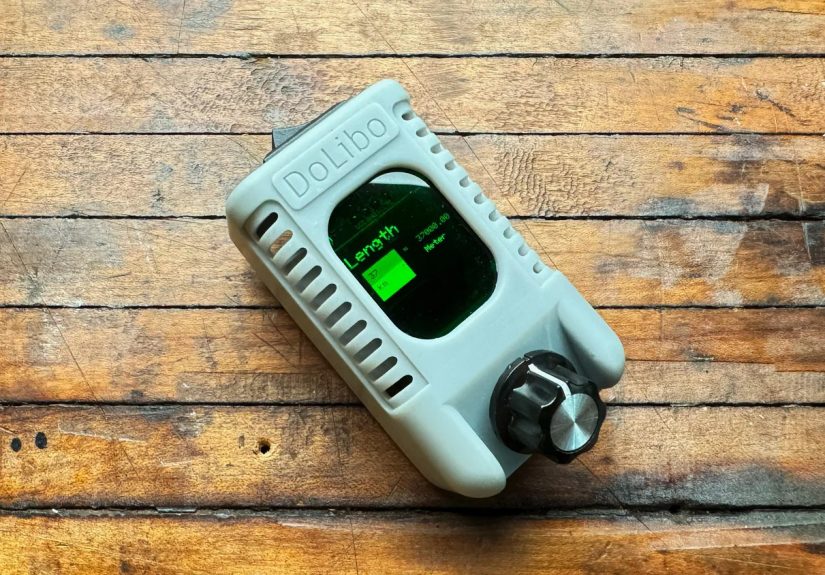
The Retro Unit Converter (often shared online as a DIY “retro-future” unit converter project) is built around a simple
idea: make the conversions you do all the timelike inches to millimeters or ounces to gramsfast and
tactile, without digging through apps or typing into search boxes. Flip it on, choose a category, click the dial to pick
units, and twist to adjust values in real time.
What it feels like to use
The magic isn’t just the numbers. It’s the interface. Instead of tapping a glass screen, you’re working with a
rotary dial that “clicks” as it turns. That click is doing double duty: it’s feedback for your brain (“yes, you moved one
step”), and it’s control for the device (“yes, change the value”). The result is a conversion workflow that feels more
like tuning an old radio than filling out a form.
What’s inside (without getting too nerdy)
Most versions of this gadget use a small microcontroller board, a compact OLED screen, and a rotary encoder (a knob
that can detect direction and steps as you turn itoften with a press-to-click switch built in). Some builds add a
rocker switch for power and clever software touches like “spin faster to jump bigger,” so you’re not turning the dial
for 10 minutes just to reach a large number.
The overall vibe is intentionally retro-industrial: a little “fallout terminal,” a little “old-school calculator,” and a lot
“I could stare at this on my desk and feel productive even when I’m procrastinating.”
Why unit conversion still trips people up
If measurement systems were people at a party, metric would be the friend who shows up on time, labels everything,
and brings a spreadsheet. U.S. customary units would arrive late, carrying a casserole, and insist that 12 of one thing
equals 1 of another thing except when it doesn’t.
Metric vs. U.S. customary: the daily sitcom
In the U.S., you constantly bounce between systems:
building materials sold in inches and feet, science class taught in meters and grams, nutrition labels that flirt with both,
and recipes that somehow treat tablespoons like a universal constant.
Even when you “know” a conversion, you might not know it precisely. For example, 1 inch equals 25.4 millimeters
(exact), while other conversions are often rounded depending on context. Some situations need precision (engineering,
dosing, fabrication), and others only need a good-enough estimate (is that road trip 120 miles or 200 kilometers?).
Rounding is where “close enough” becomes “oops”
Conversions aren’t just multiplication. You also have to decide how many digits you actually need and how to round.
A device like the Retro Unit Converter shines here because it can standardize the output: same conversions, same
rounding rules, fewer “wait, did I use the wrong factor?” moments.
What makes this gadget genuinely useful (not just cute)
A lot of desk gadgets are basically “a toy that happens to have numbers.” This one earns its keep because it focuses on
the conversions people actually do repeatedlyand makes them faster in the real world.
It’s tactile: the rotary encoder “click factor”
Rotary encoders are popular in electronics projects for a reason: they’re great at turning motion into clean input.
They can detect direction (clockwise vs. counterclockwise) and step-by-step movement, which is perfect for adjusting
values and scrolling through options. In plain terms: it’s a knob that feels right for the job.
It’s fast: spin-to-skip makes big numbers painless
One clever software trick used in some versions is an “exponential” or accelerated increase feature. Turn slowly and
you get small, precise steps. Spin faster and the values jump more aggressively. It’s the difference between
turning a dial and rewinding a VHS tapesame motion, totally different speed.
It’s offline: no ads, no distractions, no “agree to cookies”
The phone is powerful, but it’s also a trapdoor to distraction. A single-purpose gadget doesn’t ask you to update,
sign in, or watch a 15-second ad about “the one weird trick.” It turns on and does the job. That simplicity is the point.
Practical examples you’ll actually use
The Retro Unit Converter makes the most sense when you’re doing small conversions repeatedlyespecially when your
hands are busy, your workspace is messy, or your phone is playing music and you don’t want to interrupt it.
1) DIY and home projects
- Drill bits and hardware: converting fractional inches to millimeters when you’re matching screws or bits.
- Woodworking and plans: translating a metric plan into U.S. lumber reality (or vice versa).
- Paint and coatings: converting fluid ounces to milliliters when mixing small batches.
2) Cooking and baking
- Ounces to grams: especially handy when a recipe is written for a kitchen scale.
- Fahrenheit to Celsius: for ovens, candy temperatures, or international recipes.
- Volume approximations: quick sanity checks when converting amounts across measuring systems.
3) 3D printing and maker life
- Filament and hardware: mixing metric fasteners with U.S. tool sizes is a classic maker rite of passage.
- Design specs: converting dimensions from online parts listings to your CAD measurements.
- Tolerances: understanding when “close” is fine and when you need exact numbers.
4) Travel and everyday life
- Distance: miles to kilometers when reading signs or planning trips.
- Temperature: Celsius to Fahrenheit when checking forecasts or packing.
- Weight: pounds to kilograms for luggage limits and shipping labels.
Accuracy, rounding, and the “please don’t eyeball this” section
A good converter tool doesn’t just spit out numbersit respects the rules behind them. That matters more than most
people realize, because unit conversion is one of those tasks that feels simple until it’s suddenly not.
Exact vs. rounded conversions
Some conversions are defined exactly (like inches to millimeters), while others are typically given to a sensible number
of digits depending on use. A well-designed converter draws that line clearlyso you don’t end up using a rounded
“rule of thumb” conversion in a situation that needed precision.
Temperature conversions are nonlinear
Most conversions are multiplications. Temperature is not. Fahrenheit to Celsius isn’t just “multiply by something”;
it involves an offset too. That’s why temperature conversion is a great test of whether a converter is built thoughtfully.
If it handles temperature correctly, it probably handles the rest responsibly too.
Unit names can be sneakily ambiguous
“Ounce” can mean weight (avoirdupois ounce) or fluid volume (fluid ounce). “Ton” can mean different values depending
on context. Even “pound” can be mass-like in everyday speech, while physics sometimes separates pound-mass and pound-force.
A good converter avoids confusion by labeling units clearly and keeping categories separate.
The cautionary tale: when unit mix-ups cost a mission
It’s easy to laugh about mixing up teaspoons and tablespoonsuntil you see what happens when serious systems do it.
NASA’s Mars Climate Orbiter is the famous reminder: investigations described how a mismatch between English units and
metric units contributed to a navigation error and the loss of the spacecraft, and postmortems emphasized not just the
original mistake but the failure of process checks to catch it in time.
No, your home project is not a Mars mission (unless your garage has a Deep Space Network, in which case: respect).
But the lesson scales down: using consistent units, verifying assumptions, and having a tool that reduces “mental math”
can prevent expensive mistakeswhether that cost is money, time, materials, or a weekend you’d rather spend not
redoing something.
Phone apps vs. a pocket converter: which is better?
A phone will always win on raw flexibility. It can convert obscure scientific units, do currency conversions, and graph
things that shouldn’t even be graphable. The tradeoff is friction: unlocking, searching, selecting the right tool, and
then resisting the siren call of everything else your phone can do.
The Retro Unit Converter wins on speed, focus, and feel. It’s the “grab-and-go” option, especially for the same handful
of conversions you repeat again and again.
Where the Retro Unit Converter shines
- Workbenches: dusty hands, gloved hands, hands holding a tape measurestill usable.
- Kitchens: quick conversions without touching your phone mid-recipe.
- Studying and learning: reinforcing unit intuition by making conversions interactive.
- Minimalist workflows: fewer apps, fewer distractions, fewer tabs open.
Where your phone still wins
- Edge-case conversions: rare units, complex scientific constants, niche domains.
- Copy/paste needs: when you have to move numbers into documents or spreadsheets.
- Always-on availability: you already have it with you (even when you wish you didn’t).
Who this neat little gadget is for
The Retro Unit Converter is for people who do conversions often enough to be mildly annoyed by themand who enjoy
physical tools that make small tasks feel smoother.
- Makers and DIYers: mixing metric parts with U.S. tools is basically a hobby inside the hobby.
- Home cooks and bakers: especially anyone using a scale or international recipes.
- Students: physics, chemistry, engineeringunits are half the battle.
- Design and build folks: anyone who reads specs and measures things for a living.
- Gift-givers: it’s charming, unusual, and actually usefulrare in the gadget world.
Conclusion
The Retro Unit Converter isn’t trying to replace your phone. It’s trying to replace the annoying part of using your
phone for one tiny job: unlock, search, tap, scroll, repeat. Instead, it gives you a dial, a screen, and that small hit of
satisfaction you get when a tool feels exactly right for what it does.
In a world where everything wants to be an app, a single-purpose converter with a retro vibe feels refreshingly honest.
It’s a neat little gadget because it respects your timeand because it turns “ugh, I have to convert this” into
“oh nice, I get to use the clicky knob.”
Experiences With a Retro Unit Converter
The best way to understand why a Retro Unit Converter feels so good is to picture the moments it quietly rescues.
Not the dramatic, movie-trailer momentsmore like the everyday “wait, how much is that again?” moments that pop up
just often enough to be annoying.
Imagine a Saturday morning DIY project. You’re building a shelf, you’ve got a plan on your laptop, and the measurements
are a mix of inches and millimeters because the bracket set you bought was designed in a different universe than your
studs. This is where the gadget becomes a tiny translator. You spin to the value, glance at the conversion, and keep moving.
No phone unlock, no smudged screen, no losing your place in the instructions.
Or picture a cooking night where you’re trying a recipe that insists on grams. You could do it with your phone, surebut
your phone is also playing music, and every time you pick it up you risk hitting pause or waking up a notification swarm.
A physical converter lets you keep the kitchen workflow clean: check grams, measure, stir, repeat. It’s the same reason
people like a dedicated kitchen timerless friction, more flow.
The gadget also shines in “learning mode.” Students often struggle with units not because they can’t do the math, but because
the units feel abstract. A tactile converter makes the relationship between measurements more concrete. Spinning from
1 inch to 25.4 mm over and over builds intuition fast. And it can turn practice into a small ritual: click, convert, understand.
It’s oddly motivating in the way a good mechanical pencil is motivatingno one needs it, but somehow it makes you want
to do the work.
Then there are the moments where it’s pure convenience. You’re ordering parts online, the listing is in millimeters, your tool
set is in inches. You’re checking luggage weight, and your airline speaks kilograms while your bathroom scale speaks pounds.
You’re planning a trip, and weather apps shout Celsius while your brain thinks Fahrenheit. These aren’t hard problems; they’re
just frequent. The converter is like a tiny shortcut that prevents dozens of micro-interruptions.
Finally, there’s the simplest “experience” of all: it’s fun to use. The dial click, the quick change on the display, the sense that
you’re operating a little instrument instead of poking at a slab of glassthose details matter. A lot of gadgets promise
productivity and deliver clutter. This one delivers a small, repeatable win: fewer distractions, fewer mistakes, and one more
reason to enjoy the tiny mechanics of getting stuff done.