Table of Contents >> Show >> Hide
- What “Seeing Double” edits are (and why they’re so irresistible)
- The cute science behind it: why baby animals look like tiny aliens (in a good way)
- How to make your own “Seeing Double” edit (without summoning the Photoshop gods)
- Step 1: Pick photos that actually match (your future self will thank you)
- Step 2: Decide the vibe: reunion, cuddle, or “two versions plotting your downfall”
- Step 3: Quick version (phone-friendly): make a clean collage
- Step 4: Clean composite (the “they’re in the same room!” effect)
- Step 5: Pro-level polish: shadows, scale, and believable contact
- 34 adorable “meet your younger self” animal pairings (with edit ideas)
- Pet-friendly photo session tips: keep it adorable, keep it kind
- Pet photography basics that make editing easier later
- Common “Seeing Double” editing mistakes (and quick fixes)
- FAQ: quick answers before you start blending timelines
- Conclusion: one frame, two timelines, a whole lot of joy
- Experiences: the unexpectedly emotional side of “Seeing Double” edits (extra)
If you’ve ever scrolled past a photo where a full-grown dog is “sitting” next to their own puppy selfand your heart did that
dramatic little cartwheelyou already get the magic of “Seeing Double” edits. These are photo composites that place a pet’s
past and present in one frame: the kitten and the cat, the tiny fluffball and the dignified floof, the awkward adolescent ears and
the “I pay taxes now” face.
The result is part time machine, part comedy, part emotional ambush. It’s cute, yesbut it’s also a surprisingly powerful way to
tell a story: growth, rescue, trust, personality, and the way animals somehow become both older and more themselves with time.
This article breaks down what “Seeing Double” edits are, why they’ve become so shareable, how to make your own (without needing a
film degree), and 34 adorable animal pairings to inspire your next post.
What “Seeing Double” edits are (and why they’re so irresistible)
A “Seeing Double” edit is a simple idea executed with delightful precision: you combine two photos of the same animal from different
life stages into one cohesive scene. It can look like they’re meeting, cuddling, or posing like old friends who “just ran into each
other” at the grocery storeexcept it’s the same pet, years apart.
Why it works:
- Instant storytelling: You see a whole timeline in one glancebefore and after, baby-to-grown, then-and-now.
- Built-in contrast: Tiny paws vs. big paws. Baby fuzz vs. adult coat. “Who is this?” eyes vs. “I own this couch” eyes.
- Emotional payoff: It highlights the bond and the glow-up (even when the glow-up includes shedding on your black pants).
- Pure shareability: It’s wholesome content that people can’t help but send to friends with a “LOOK!!!” message.
The cute science behind it: why baby animals look like tiny aliens (in a good way)
A big part of the charm comes from how quickly animals change early in life. Puppies and kittens go through rapid developmenteyes
opening, coordination improving, personalities emerging, proportions shifting. Many baby animals also have “infant” features that
humans naturally find endearing: bigger eyes relative to face size, rounder heads, softer features. It’s basically nature’s
“Please protect me” marketing campaign.
Puppies: fast growth, faster personality
Puppies change dramatically in the first weeks and months: their senses come online, they start exploring, and their bodies stretch
into adult proportions surprisingly quickly. That’s why “then vs. now” dog edits feel so dramaticyour dog didn’t just grow; your dog
evolved from a sleepy potato into a confident, opinionated roommate.
Kittens: tiny chaos to elegant chaos
Kittens also develop in distinct stageseyes and ears opening, wobbly walking, learning litter habits, and becoming more social and
adventurous. By the time they’re adult cats, the body language gets subtler, the face shape changes, and the “kitten roundness”
becomes sleek linesunless your cat’s personal brand is “round,” in which case, respect.
How to make your own “Seeing Double” edit (without summoning the Photoshop gods)
You can create a satisfying “meet your younger self” image at three levels: quick collage, clean composite, or “wait, is that real?”
professional-grade blending. Choose your adventure.
Step 1: Pick photos that actually match (your future self will thank you)
- Similar angle: Both facing left, both sitting, both lying downmatching posture is half the battle.
- Similar lighting: Two indoor photos or two outdoor photos is easier than mixing a sunny yard with a dim bedroom.
- Enough resolution: If the “baby photo” is three pixels and a dream, keep the final edit playful and small.
- Simple background: Busy backgrounds make cutouts harder (and your patience shorter).
Step 2: Decide the vibe: reunion, cuddle, or “two versions plotting your downfall”
Before you edit, decide what story you want:
- Side-by-side: Classic “then and now” pose on the same couch.
- Interaction: Nose-to-nose, paw-to-paw, cuddle pose (you can fake contact with careful placement).
- Mirror moment: Adult pet looking “at” the baby version like it’s a memory.
- Comedic contrast: Tiny kitten in front of a giant adult cat like “This is who you become.”
Step 3: Quick version (phone-friendly): make a clean collage
If you want fast and cute, don’t overthink it. Use a collage tool to place the two photos together and add a tiny caption like
“2019 vs. 2025.” This won’t look like they’re in the same scene, but it’s still shareable and sweet.
- Google Photos: Select photos and create a collage in-app.
- Apple Photos (iPhone/iPad/Mac): Use built-in editing to match exposure and color between the two images before collaging them elsewhere.
Step 4: Clean composite (the “they’re in the same room!” effect)
For the classic “meeting” look, you’re building a composite:
- Choose a base photo: Usually the sharper, better-lit image (often the adult photo).
- Add the second photo as a layer: Place the baby photo on top.
- Mask, don’t erase: Use a layer mask so you can refine edges without regret later.
- Blend the edges: A soft brush on the mask makes fur look natural instead of “sticker slapped on.”
- Match light and color: Adjust exposure, highlights/shadows, and warmth so both versions belong in the same universe.
Step 5: Pro-level polish: shadows, scale, and believable contact
The difference between “cute edit” and “HOW DID YOU DO THAT?” is usually:
- Scale: Make sure the younger self is proportionally smaller. (Yes, this sounds obvious. No, we don’t always do it.)
- Shadow: A subtle shadow under paws/feet anchors the cutout to the floor or couch.
- Soft fur edges: Hard edges scream “clipboard selection.” Soft edges whisper “I belong here.”
- Consistent sharpness: If one photo is super crisp and the other is blurry, add a slight blur to the crisp one or sharpen the softer one.
34 adorable “meet your younger self” animal pairings (with edit ideas)
Here are 34 animal scenarios you can recreate with your own photosor use as inspiration when you’re hunting through your camera roll
like it’s an archaeological dig.
- Golden retriever: Puppy sitting beside adult “smile mode” like they’re posing for a holiday card.
- French bulldog: Tiny bat-ears next to adult bat-earssame hardware, upgraded software.
- German shepherd: Floppy-eared pup meeting the fully deployed radar-dish adult ears.
- Dachshund: Small hot-dog dog next to longer hot-dog dog. Evolution, but make it stretched.
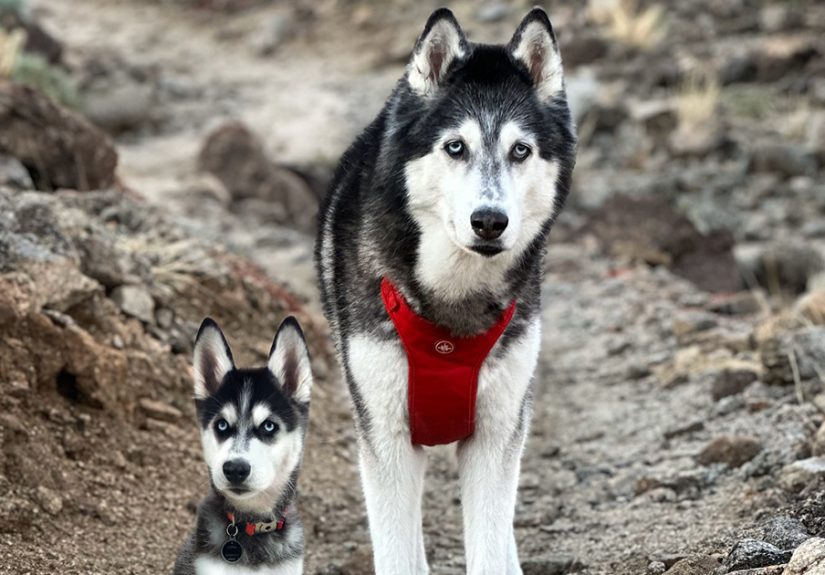
- Husky: Puppy fluff meeting the adult who looks like they have opinions about your life choices.
- Rescue mutt: “First day home” pup with adult version on the same blanket for maximum heart punch.
- Tabby cat: Kitten stripes aligned with adult stripeslike a matching set that grew into itself.
- Black cat: Tiny void meeting full void. Add a soft rim light so the cutout blends smoothly.
- Orange cat: Baby chaos meeting adult chaos. Caption optional; the face tells the story.
- Ragdoll (or longhair): Kitten fluff meeting adult FLOOFplace them on the same bed for cozy vibes.
- Rabbit: Baby bun beside adult bun, both nibbling the same (imaginary) lettuce leaf.
- Guinea pig: Tiny potato meeting bigger potato. Add a little shadow to “seat” them on the same towel.
- Hamster: Baby hamster “peeking” from behind adult hamster like a tiny sidekick.
- Rat: Young rat perched near adult ratgreat for matching hand/shoulder perches.
- Ferret: Baby noodle meeting adult noodle. Bonus points if both are mid-slink.
- Chinchilla: Young fluff meeting adult cloud. Keep backgrounds simple to preserve fur detail.
- Hedgehog: Baby hedgie beside adult hedgie, both in the same “I didn’t ask for this photoshoot” pose.
- Sugar glider: Tiny glider meeting adult glideruse a branch background for natural placement.
- Parakeet (budgie): Young bird on the left, adult on the right, both on the same perch line.
- Cockatiel: Baby crest meeting adult crest. Align the eye highlight for realism.
- Parrot: Young parrot beside adult parrotmake it look like they’re sharing a snack (no unsafe foods).
- Chicken: Chick next to hen, same yard background. Scale sells the whole illusion.
- Duck: Duckling beside adult duck at the waterlinesoft reflections make it extra cute.
- Goose: Gosling meeting goose like “Welcome to the honk economy.”
- Goat: Kid goat next to adult goat, both with identical “mischief in progress” energy.
- Sheep: Lamb beside sheepgreat for cozy field edits with gentle blur on the background.
- Horse: Foal meeting adult horse in the same stable doorwaylight direction matters here.
- Donkey: Tiny donkey ears meeting full donkey ears (the ears are always the headline).
- Pig: Piglet beside adult pig on the same hayadd a soft shadow under hooves for grounding.
- Turtle: Baby turtle beside adult turtle on a rockmatch the texture so it doesn’t look pasted.
- Tortoise: Small tortoise meeting big tortoise, both facing the same direction like a slow-motion parade.
- Bearded dragon: Tiny dragon meeting adult dragon on the same basking spotwarm color grading helps.
- Frog: Tiny frog beside adult frog on a leafmacro-style photos make this extra believable.
- Fish (yes, really): Juvenile fish beside adult fish in a split-frame “aquarium timeline” collage.
Pet-friendly photo session tips: keep it adorable, keep it kind
The goal is a cute photo, not a pet who files a complaint with HR. A good rule: if your animal looks uncomfortable, pause the session.
Many pets communicate stress subtlylip licking, yawning, avoiding eye contact, ears pinned back, hiding, or freezing. Cats may show
wide eyes, flattened ears, or a tucked posture; dogs may pant, fidget, turn away, or refuse treats.
Quick ways to make photos easier on your pet
- Use natural light: It’s generally softer and less startling than flash.
- Keep sessions short: Think minutes, not a full-length documentary.
- Let them choose the pace: A calm pet photographs better than a coerced pet.
- Reward generously: Treats, praise, playwhatever your pet loves most.
- Prioritize safety: No unstable props, no forced positions, no “just one more” when they’re done.
Pet photography basics that make editing easier later
The best edits start with better photos. You don’t need fancy gear, but you do want clarity, consistent lighting, and minimal blur.
If your pet moves a lot (spoiler: they do), faster shutter speeds help freeze motion. If you’re using a phone, use burst mode and
shoot in good light. If you’re using a camera, a faster shutter speed and a comfortable ISO can make a huge difference.
Three simple upgrades for better “then and now” shots
- Get down to their eye level: The photo instantly feels more intimate and less “security camera footage.”
- Focus on the eyes: Sharp eyes make everything look professional.
- Choose a clean background: Blank walls, grass, a couchyour cutouts will be cleaner and faster.
Common “Seeing Double” editing mistakes (and quick fixes)
- Mismatched lighting: If one photo is warm indoor light and the other is cool daylight, adjust white balance or warmth until they match.
- Wrong scale: If the puppy is bigger than the adult dog, you’ve invented a new genre: “reverse growth horror.” Resize thoughtfully.
- Sticker edges: Feather the mask slightly and refine fur edges with a soft brush.
- Floating pet syndrome: Add a subtle shadow under paws so the cutout sits on the surface.
- Too much sharpening: If the cutout looks crunchy, reduce clarity/sharpening and match it to the base photo.
FAQ: quick answers before you start blending timelines
Do I need professional software to make a “Seeing Double” edit?
Nope. You can start with a simple collage. If you want the “same scene” illusion, software with layers and masking helpsbut you can
still get impressive results with beginner-friendly tools as long as you match lighting and scale.
Should I use flash for pet photos?
If your pet startles easily, skip it. Natural light is often more comfortable and flattering. The calmest photos usually come from
calm conditions.
What if my pet hates photos?
Respect that. Use shorter sessions, shoot from farther away, or capture candid moments. You can also build your edit from relaxed
everyday photos instead of staging anything.
Can I do this with a rescue pet if I don’t have baby photos?
Absolutelytry a “first day home” photo paired with a current photo in the same spot (same blanket, same doorway, same couch). It’s a
different kind of then-and-now, and it’s just as powerful.
Conclusion: one frame, two timelines, a whole lot of joy
“Seeing Double” edits are more than a cute trendthey’re a tiny celebration of growth. They honor the goofy beginnings, the awkward
teen phase, and the confident adult your pet becomes. Whether you make a quick collage or a polished composite with realistic shadows
and perfectly matched color, you’re doing something simple and meaningful: telling a love story in pixels.
And if you cry a little while placing baby paws next to grown-up paws… congratulations. You are a completely normal human who lives
with an animal.
Experiences: the unexpectedly emotional side of “Seeing Double” edits (extra)
The first time you make a “meet my younger self” edit, you expect it to be a fun little project. A quick cutout here, a gentle color
tweak there, post it, collect heart emojis, move on. Then you zoom in and notice the tiny detailsthe same freckle on the nose, the
same eyebrow dot, the same slightly crooked ear that never quite “fixed itself.” And suddenly you’re not editing a photo anymore.
You’re rewatching years.
People who live with pets know how time works differently around them. Days can feel long (especially when someone is teething, zooming,
or auditioning for the role of “loudest creature alive”). But the years? The years sprint. A “Seeing Double” edit forces a gentle pause.
It puts two versions of the same animal in a single frame and quietly asks, “Do you remember when this was new?”
One of the sweetest experiences is recreating a scene on purpose. Maybe you find an old puppy photo taken on a specific couch cushion
or under a favorite table. You position your now-adult dog in the same spot, at the same angle, in similar light. Even if the room
changednew paint, different rug, fewer shoes on the floor (or more, no judgment)the pet is the continuity. When you blend the images,
it feels like you built a tiny doorway between then and now. The edit becomes less about perfection and more about recognition.
Another powerful version happens with rescue pets. Sometimes you don’t have baby pictures at all, and that’s okay. The “younger self”
can be the first safe moment you do have: the first nap in your home, the first curious sniff of a toy, the first time they
chose to sit near you instead of across the room. Pairing that early photo with a current oneespecially in the same placeshows a
different kind of growth: not just physical size, but comfort and trust. People often describe these edits as “proof” of progress,
and you can see why. The body language changes. The eyes soften. The stance becomes less guarded. The animal looks like they belong.
On the practical side, you learn a lot by doing. You start noticing what makes an edit believable: matching the direction of light,
keeping the shadows consistent, scaling the younger version so it feels real. But you also learn what makes an edit feel true:
choosing photos where your pet’s personality shows through. The “same expression years later” shot is gold. So is the goofy habit that
never changedsleeping upside down, sitting like a tiny person, staring dramatically into the middle distance like they’re in an indie
film.
The best part is that you don’t have to be a technical wizard to get the emotional payoff. Even a simple side-by-side “then and now”
can make people smile, laugh, and sometimes tear up. A polished composite just amplifies the storytelling. Either way, “Seeing Double”
edits are a reminder that the small moments matter: the messy puppy phase, the kitten chaos, the calm adult companionship. In one image,
you get the timelineand if you’re lucky, you also get that warm realization that you were there for it.