Table of Contents >> Show >> Hide
- Meet Momosan Shop: A Tiny Store With Big Taste
- The Momosan Philosophy: Practical + Poetic (Without the Corny Part)
- What You’d Find on the Shelves (and Why It Works)
- How to Shop Momosan-Style (Even If You’re Not in London)
- The Experience Economy Meets the Teaspoon
- Sustainable Shopping Without the Lecture
- Gift Guide: Everyday Objects That Feel Like You Tried (Because You Did)
- If You Can’t Visit Momosan on Wilton Way Today
- Conclusion: Why Momosan Still Matters
- Bonus: A 500-Word Shopper’s Diary Addendum (Diary-Style Vignette)
- SEO Tags
I used to think “shopping for everyday objects” meant buying a replacement spatula with the emotional depth of a parking ticket.
Then I met a different kind of storethe kind that makes you stare at a wooden spoon like it’s an art exhibit and a life coach at the same time.
Momosan Shop (on Wilton Way in East London) built a reputation around exactly that: ordinary things, chosen so carefully they feel quietly extraordinary.
This is a shopper’s diary in spiritobservations, takeaways, a little humor, and a lot of practical detailabout how Momosan turned the humble category of
“stuff you actually use” into something more like “objects you keep, love, and maybe even dust on purpose.”
One important note for planning: the Wilton Way shop has since closed, but the ideas it championedcraft, restraint, usefulness, and storyare still worth stealing
for your own home and your own shopping habits.
Meet Momosan Shop: A Tiny Store With Big Taste
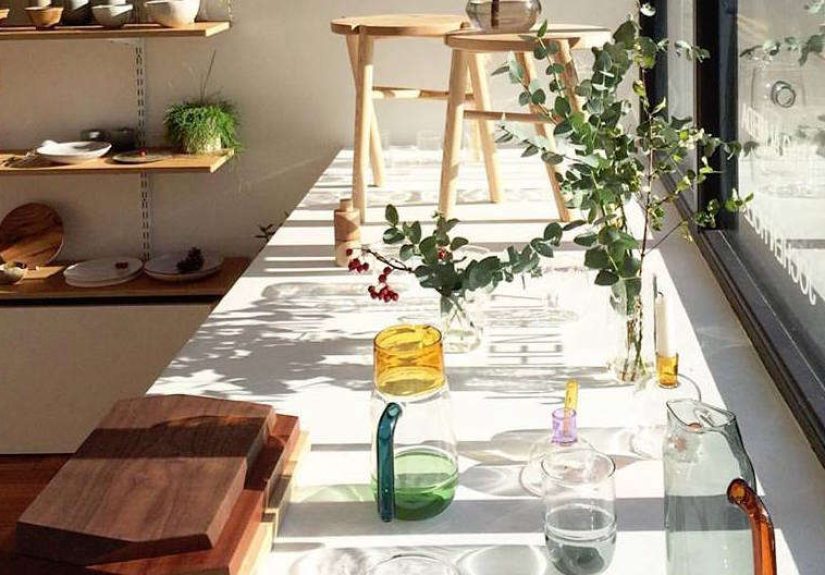
Momosan Shop was the sort of place friends would whisper about like a secret shortcut across London: “Go there. Don’t rush. Touch everything.”
It lived on Wilton Way in Hackney, a neighborhood that’s equal parts local, creative, and “yes, that is a bakery line and no, you can’t skip it.”
The shop was guided by owner Momoko Mizutani, whose curatorial eye leaned calm, practical, and deeply craft-forwardespecially with a Japanese ethos and a love of
traditional making.
The vibe wasn’t “buy more.” It was “buy better, and buy with intention.” You’d see fewer items than a typical gift shop, but more meaning per square inch.
The collection often brought together makers and materials with integrity: woodwork, ceramics, textiles, small tools, and scent-related ritualsobjects that could
live in your kitchen, bathroom, or entryway without turning your home into a showroom.
The Momosan Philosophy: Practical + Poetic (Without the Corny Part)
Momosan’s magic trick was treating function as a form of beauty. In other words: if you’re going to use something every day, it should feel good in your hand,
work well, and age in a way that makes you like it morenot less.
1) Usefulness is the baseline
A tray is a trayuntil it’s a tray that makes your keys look like they belong in a still-life painting. Momosan’s objects were chosen for real-life utility:
things for the table, the bath, the home, the daily routine. Not “decor that panics when you actually live.”
2) Materials are allowed to be themselves
The shop’s world favored honest materialswood that looks like wood, linen that wrinkles like linen, ceramics with glaze variation that proves a human made it.
If perfection is your love language, you might feel mildly challenged. If you like character, welcome home.
3) Beauty can include imperfection
If you’ve heard the term “wabi-sabi,” this is where it stops being a Pinterest caption and becomes a lived experience: the appreciation of impermanence,
irregularity, and the kind of quiet beauty that doesn’t need to shout.
Momosan didn’t sell “flaws.” It sold evidence of craftmarks of hands, fire, grain, and time.
What You’d Find on the Shelves (and Why It Works)
Describing Momosan’s mix is like describing a good dinner party: it’s curated, balanced, and somehow everything gets along.
Below are the kinds of objects Momosan became known for, with examples to make it concreteand shopping lessons you can use anywhere.
Table & Kitchen: The “Every Meal Deserves Good Tools” Section
Momosan had a gift for taking kitchen basics and making them feel like small upgrades to your life. Think:
a tea canister that turns “I drink tea” into “I have a tea practice,” or a serving piece that makes weeknight leftovers look intentional.
- Small-batch ceramics for plates, bowls, and cups that feel balancednot clunky, not precious.
- Wooden utensils and boards where the grain does half the decorating.
- Thoughtful table toolsthe kind you buy once and keep for years.
Shopping takeaway: choose one “anchor” item for your table (a tray, a bowl, a carafe). If it’s beautiful and useful, it will quietly raise the standard for
everything you pair with itlike a friend who convinces you to stop texting exes.
Bath, Scent, and Ritual: Calm You Can Hold
Momosan’s bath-and-scent offerings were never loud. No neon labels screaming “SELF CARE!” (which is comforting, because my self care sometimes looks like
eating cereal over the sink). This was more about gentle rituals: fragrance, soaking, cleansing, and small tactile pleasures.
- Hinoki-scented bath sachets and other wood-forward aromas that turn a bathroom into a reset button.
- Beeswax candles that feel grounded and warm, not overly perfumed.
- Incense or palo santo-style scent options for those who like their home to smell like “quiet competence.”
Shopping takeaway: scent is memory. Buy one scent object that matches the mood you want at home (calm, bright, cozy, clean). Then stop. Let it become “your”
signature rather than a rotating fragrance circus.
Tools and Quiet Heroes: The Stuff That Makes Life Easier
The best shops respect the small tools that keep a home running: brushes, hooks, storage solutions, and daily-use items with a purpose.
Momosan’s curation leaned toward tools that look good because they work wellnot because they’re trying to go viral.
- Brass hooks and hardware that patina with time instead of peeling like a cheap sticker.
- Natural-fiber brushes and cleaning tools that feel oddly satisfying to use (yes, that is a thing).
- Charcoal or natural material home helpers used for freshness and function in understated ways.
Shopping takeaway: buy tools that you won’t hide. If it’s going to sit on your counter, make it nice enough to belong there.
Convenience is great. Convenient and good-looking? That’s the dream.
How to Shop Momosan-Style (Even If You’re Not in London)
Here’s the part where we turn admiration into action. Momosan’s approach can be copiedrespectfullyby shopping with a few rules.
Think of it as “curation for regular people,” no gallery voice required.
Step 1: Start with friction
What’s mildly annoying in your daily routine? A mug handle that’s awkward. A serving spoon that’s too short. A tray that wobbles.
Solve one real problem with one well-made object. That’s how you build a home that feels considered.
Step 2: Pick a material story
Choose a material directionwood, ceramic, linen, brassand stick to it in small doses. Not forever. Just long enough to create harmony.
Cohesion is less about matching sets and more about repeating materials like a chorus.
Step 3: Ask “will I still like this in five years?”
Trendy can be fun, but Momosan’s greatest strength was timelessness. If an object’s charm depends on a trend cycle, it will eventually feel like a joke you
don’t remember telling. Look for shapes and finishes that can grow old gracefully.
Step 4: Touch test (when possible)
Weight, balance, texturethese are the things online photos can’t fully communicate. If you can handle an object in person, do it.
The “right” object often announces itself by feeling correct, not by looking loud.
Step 5: Buy fewer, better, and let them earn their place
Momosan’s shelves didn’t beg. They waited. That’s the energy you want in your own home:
a small number of objects that keep proving themselves through daily use.
The Experience Economy Meets the Teaspoon
There’s a reason people travel across a city to visit a shop like Momosan. It’s not just the inventoryit’s the feeling.
Great retail can be an experience: a slower pace, a sense of discovery, a space that makes you pay attention.
Momosan fit that “experience” model in a quiet way: not with flashing screens or giant installations, but with the gentle theater of craft.
When objects are made with care, the shopping experience becomes less transactional and more like learningabout materials, makers, and your own preferences.
It’s a reminder that “shopping” doesn’t have to mean “scrolling until you forget why you opened the app.”
Sustainable Shopping Without the Lecture
Momosan didn’t need to plaster every shelf with sustainability slogans. The sustainability was baked in:
buying fewer items, choosing durable materials, supporting makers, and valuing repairable, long-life goods.
If you want a practical sustainability checklist that matches this vibe, try these:
- Reduce: buy fewer duplicates, fewer “maybe” purchases, fewer panic buys.
- Reuse: choose items you can keep, gift, repair, or repurpose rather than toss.
- Recycle last: treat recycling as a backup plan, not the main strategy.
A Momosan-style home doesn’t look sparse; it looks intentional. It’s not anti-stuff. It’s pro-the-right-stuff.
Gift Guide: Everyday Objects That Feel Like You Tried (Because You Did)
Momosan was famously good for giftsthe kind that say “I saw this and thought of you” rather than “I panic-bought this near the checkout.”
Here are Momosan-inspired gift categories that land well:
- For the friend who cooks: a beautifully made serving bowl, a well-balanced spoon, or a small tray for oils and salt.
- For the friend who hosts: a candle with warmth (not perfume overload) and a simple ceramic cup that works for tea or wine.
- For the friend who loves calm: a bath sachet, a gentle scent object, or a natural brush that makes routine feel ritual.
- For the friend who “has everything”: a quietly excellent hook, brush, or tabletop tool they didn’t know they needed.
Secret gift trick: choose one “useful luxury.” Not expensivejust better than what they’d buy themselves.
That’s how gifts become daily reminders instead of future clutter.
If You Can’t Visit Momosan on Wilton Way Today
The physical shop on Wilton Way has closed, and the official online storefront reflects that change.
But the story doesn’t end theremany beloved independent shops evolve into new chapters: pop-ups, collaborations, online drops, or maker-led projects.
If you’re inspired by Momosan’s approach, you can still shop the philosophy:
- Follow independent makers and small craft studios who show process, not just product shots.
- Shop museum stores and design-led retailers that prioritize material and making over trends.
- Build slowly: one object at a time, chosen for use and longevity.
Conclusion: Why Momosan Still Matters
Momosan Shop became a reference point because it made everyday objects feel intentional without being intimidating.
It treated craft as practical. It treated function as beautiful. And it gave shoppers permission to slow down and choose well.
Even with the Wilton Way chapter closed, the core lesson is evergreen:
your home is built from what you touch every dayso pick things worth touching.
Bonus: A 500-Word Shopper’s Diary Addendum (Diary-Style Vignette)
Imagine you turn onto Wilton Way with the specific optimism that only a small shop can producethe kind where you don’t know what you’ll find, but you’re sure
it won’t be a mass-produced “Live Laugh Love” situation. The street feels local: not polished in a sterile way, but cared for. You take a breath that says,
“Okay, I’m not rushing this.”
Inside, everything is quieter. Not silentjust calm. The space doesn’t overwhelm you with options. It edits for you. That’s the first gift.
You’re not dodging clutter; you’re noticing details. A glaze that pools at the edge of a bowl like watercolor. A wooden handle that sits in your palm with that
oddly satisfying “oh, this was designed” feeling. You pick something up and instinctively slow down, as if the object has requested good manners.
You realize the store is doing something sneaky: it’s re-teaching you how to shop. Instead of scanning for bargains, you’re scanning for usefulness.
You catch yourself asking new questions. Would I use this every day? Would it make a routine easier? Would it still look good after a hundred washes, a thousand
mornings, a few accidental drops (purely hypothetical, obviously)?
You drift toward the tableware and suddenly you’re picturing your own kitchennot the ideal version, the real one. The one where you eat standing up sometimes.
The one where you’re always short one good spoon. You hold a cup and think, “This would make tea feel like a small ceremony,” then immediately laugh at yourself,
because you are not a person who does ceremonies. And yet… you kind of want to be. Not in a performative wayjust in a “my day deserves one nice thing” way.
The scent corner is subtle. Nothing attacks your sinuses. It’s more like a gentle suggestion: you could make your bathroom feel like a place you like.
You’re surprised by how persuasive that is. You don’t want fifteen products. You want one. One candle that feels warm, one bath item that turns “I’m exhausted”
into “I’m resetting.” Minimal effort, maximum payoff. The dream.
And then you notice the small toolshooks, brushes, quiet practical objects that almost never get the spotlight. You smile because these are the things that
actually change a home. Not the giant sofa you’ll agonize over for months, but the hook that finally gives your bag a place to live. The brush that makes cleaning
feel less like punishment and more like maintenance. You realize you’re not just buying objectsyou’re buying fewer daily annoyances.
When you leave (with one carefully chosen item, because you’re practicing restraint like it’s a sport), you feel oddly refreshed.
Not because you “shopped,” but because you paid attention. Your hands remember what good materials feel like. Your brain remembers that you don’t need more stuff;
you need better stuff. And you walk away thinking: the most beautiful homes aren’t filled with things. They’re filled with decisions.