Table of Contents >> Show >> Hide
- Why Designers Prefer Floor-Length Curtains
- The 3 Curtain-Length Styles Designers Actually Use
- So… Should Curtains Touch the Floor?
- When Curtains Should Not Touch the Floor
- How to Measure Curtain Length the Designer Way
- The “Hang High and Wide” Rule (Because Length Isn’t the Only Magic)
- Common Curtain-Length Mistakes (and How to Fix Them)
- Room-by-Room Curtain Length Recommendations
- Choosing Between Curtains and Drapes (Yes, It Matters)
- Quick Tips for Getting the “Custom” Look on a Budget
- Real-Life Experiences and Lessons People Learn the Hard Way (Extra )
- Conclusion
If your curtains are hovering three inches above the floor like they’re afraid of commitment, I have news:
designers are firmly Team “Touch the Floor.” Not because they’re dramatic (okay, sometimes), but because
floor-length curtains make a room look taller, calmer, and more “I meant to do that,” even if you bought
the panels at 11:58 p.m. during a scrolling spiral.
The short version: in most living rooms, bedrooms, dining rooms, and offices, curtains should either
kiss the floor or float just barely above it. Anything noticeably short tends
to scream “temporary,” like a folding chair at Thanksgiving. There are exceptions (we’ll cover them), but
“almost always” is a solid rule if you want that polished, designer-finished look.
Why Designers Prefer Floor-Length Curtains
Curtains aren’t just fabric; they’re architecture in soft form. When they reach the floor, they create a
strong vertical line that visually stretches walls upward. The result is a room that feels taller, more
balanced, and more intentional.
- They add height: Long lines draw the eye up, making ceilings feel higher.
- They look custom: Floor-length panels mimic tailored drapery you’d see in styled homes.
- They frame the window better: The window looks larger and more “important.”
- They improve light control: Proper length reduces light leaks at the bottomespecially with lining.
- They feel more finished: Short curtains can look like you mismeasured (even if you didn’t).
That said, “touch the floor” doesn’t always mean dragging and collecting every dust bunny in the zip code.
Curtain length has a few accepted styleseach with a different vibe.
The 3 Curtain-Length Styles Designers Actually Use
1) Float (a.k.a. Hover): Clean, Modern, Low-Maintenance
“Float” means the hem sits just above the floortypically around a quarter-inch to half an inch, sometimes
up to an inch in busy homes. This is the easiest option for vacuuming, robot vacs, and households with pets
who treat curtain hems like a snackable fringe buffet.
Best for: modern rooms, high-traffic areas, homes with kids/pets, curtains you open/close daily.
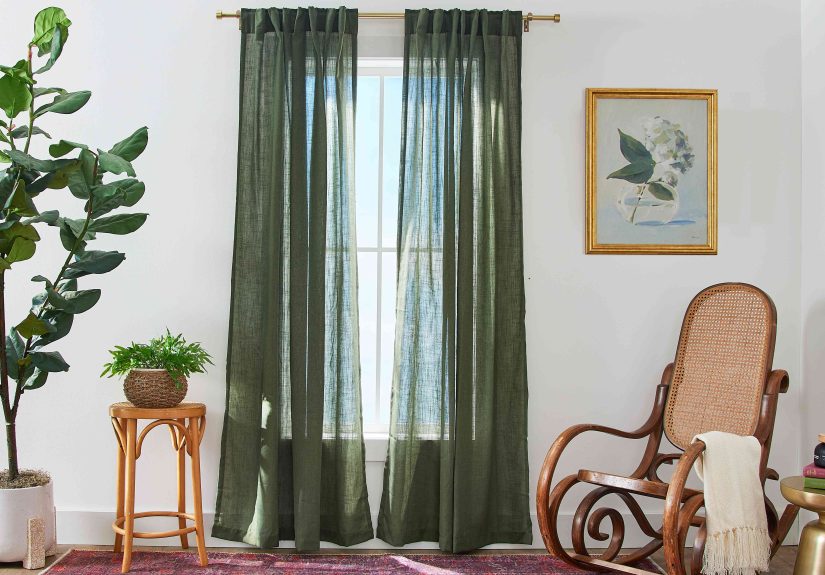
2) Kiss (a.k.a. Just Grazing the Floor): The Gold Standard
“Kiss” means the curtain hem touches the floor lightly (or appears to, depending on how level your floors are).
It’s the most common designer recommendation because it looks tailored without the drama of fabric pooling.
Best for: most spacesliving rooms, bedrooms, dining rooms, officesespecially if you want “custom” without “fussy.”
3) Break or Puddle: Romantic, Traditional, and Slightly Extra (In a Good Way)
A break is a tiny bit of extra length so the fabric softly bends at the floor (think: well-tailored trousers).
A puddle is more fabric intentionally pooling on the floor for a luxe, old-world look.
The key is intentionality. If you’re going for puddle, commitdon’t accidentally “sort of puddle” because you
didn’t hem. That’s not French château; that’s “I lost my iron-on hem tape.”
- Minimal puddle: about 1–3 inches extra length (soft, cozy, still manageable).
- Moderate puddle: about 3–6 inches extra (more formal, more drama).
- Deep puddle: roughly 6 inches or more (statement-making and not for the faint of vacuum).
Best for: formal rooms, decorative panels you don’t open often, spaces where you want softness and luxury.
So… Should Curtains Touch the Floor?
In most rooms: yes. Specifically, aim for either:
- Kiss the floor for a tailored, designer-default finish, or
- Float slightly (about 1/4–1/2 inch) for a crisp look that stays cleaner.
The look designers avoid is what you might call the “high-water hem”: panels hanging several inches above the
floor. It tends to make windows look smaller, ceilings feel lower, and the whole setup feel like a placeholder
rather than a choice.
When Curtains Should Not Touch the Floor
“Almost always” leaves room for reality. Here are the most common exceptions where a slight floator a totally
different window treatmentis smarter:
Kitchens and Bathrooms (a.k.a. Splash Zones)
Floor-length fabric near sinks, stoves, or steamy showers is basically a sponge with ambitions. In these rooms,
café curtains, Roman shades, woven shades, or shorter panels often make more sense.
Baseboard Heaters, Radiators, and Floor Vents
If the heat source sits right under the window, floor-length curtains can block airflow and get warm (or dusty).
In these cases, consider floating hems, side panels that stay open, or a shade-style treatment that sits inside
the window frame.
High-Traffic Doors and Walkways
Patio doors, frequently used French doors, and tight walkways can turn floor-length curtains into tripping hazards.
A controlled float (or a different treatment) keeps things safe and practical.
Homes With Heavy Shedding Pets (or Mud-Loving Kids)
If your dog treats the yard like a mud spa, you’ll appreciate a float. A small gap helps avoid constantly
vacuuming hems and washing panels.
How to Measure Curtain Length the Designer Way
Curtain length is less about the package label and more about where your rod sits. Designer-looking curtains
typically start with hanging the rod higher than most people thinkand measuring from the correct point.
Step 1: Decide your rod height first
For a taller, more elevated look, many designers place the rod several inches above the window frameor even
closer to the ceiling in rooms with standard ceiling heights. The higher rod position makes windows appear
larger and ceilings feel taller.
Step 2: Measure from the right spot
Measure from:
- Rod top if you’re using a rod pocket or grommets, or
- Ring/clip bottom if you’re hanging panels with rings or clips.
Then measure down to your finished hem position (float, kiss, or puddle). Always measure in at least two or
three spots across the windowfloors are rarely perfectly level, even in homes that seem innocent.
Step 3: Choose length with your “hem plan” in mind
Off-the-shelf curtain panels typically come in standard lengths (like 84, 96, 108, and 120 inches). If you’re
between sizes, go longer and hem. It’s much easier to shorten curtains than to magically add fabric (unless
you’re friends with a wizard who sews).
A quick real-world example
Let’s say your ceiling is 9 feet (108 inches), your window trim top is at 80 inches, and you want to mount the
rod about 6 inches above the trim to “lift” the room. That puts the rod at 86 inches. If you want curtains that
kiss the floor and your floor-to-rod measurement is 100 inches, you’d buy 108-inch panels and hem them to land
exactly where you want. If you use rings that drop the fabric an extra 2 inches, you’d adjust your measurement
accordingly so the hem doesn’t end up dragging.
The “Hang High and Wide” Rule (Because Length Isn’t the Only Magic)
Curtain length looks best when paired with correct placement. Two classic pro moves:
- Hang high: Mount the rod above the window frame to make the window and room feel taller.
- Go wide: Extend the rod beyond the window so panels stack mostly off the glass when open.
This does two things: it makes your window look bigger, and it lets in more light when the curtains are open.
If you’ve ever wondered why a staged living room feels bright and airy, this is usually part of the trick.
Common Curtain-Length Mistakes (and How to Fix Them)
Mistake 1: The “Too Short” Look
If your curtains stop several inches above the floor, they often look like you settled for the only size in stock.
Fix it by raising the rod (if you have height to spare), switching to longer panels, or adding a coordinating trim
band at the bottom to extend length in a way that looks intentional.
Mistake 2: The “Accidental Puddle”
If you didn’t plan for a puddle, don’t live with one. Hem to a kiss or float. A slight break can be beautiful,
but constant bunching can look messy fastespecially on lightweight fabrics.
Mistake 3: Uneven Floors, Uneven Hemlines
If one side kisses and the other floats, your floor is likely the culprit. You have options:
- Hem panels individually (yes, even if they’re “the same length”).
- Choose a subtle float that hides minor floor slopes.
- Use a slight break to camouflage unevenness in a more traditional room.
Mistake 4: Not Enough Fullness
Even perfectly hemmed curtains can look cheap if they’re too skinny. A good rule is generous widthoften two
panels per side for larger windows, or enough fabric that the curtains still have soft folds when closed.
Room-by-Room Curtain Length Recommendations
Living Room
Go with a kiss or a slight float. It’s the easiest way to make the space feel finished and elevated. If you
love a more formal look and the curtains are mostly decorative, a minimal puddle can work beautifully.
Bedroom
Floor-length is especially helpful here because it feels cozy and private. If you’re using blackout lining,
a kiss or slight break helps reduce light peeking under the hem.
Dining Room
This is the one place where a tasteful puddle can feel appropriately fancylike your room put on a blazer.
If you host often and open/close the panels frequently, choose kiss or float for practicality.
Home Office
A clean float is sleek and professional, especially in modern spaces. If glare control is the goal, consider
layering curtains with a shade for flexible light management.
Nursery / Kids’ Room
Consider a float for safety and easy cleaning. If you want the look of floor-length curtains, mount them in a
way that keeps cords and excess fabric out of curious hands (and paws).
Choosing Between Curtains and Drapes (Yes, It Matters)
In casual conversation, people say “curtains” for everything. But in design terms, drapes are
typically heavier, often lined, and more formal. That weight changes how hems behave:
- Lightweight curtains (like linen blends) look best with a kiss or float so they don’t crumple messily.
- Heavier drapery can carry a break or puddle more gracefully because it stacks and pools with intention.
Translation: if you want a puddle, it’s easier to pull off with substantial fabric. If you want crisp and tailored,
choose a kiss or float and keep your hem tidy.
Quick Tips for Getting the “Custom” Look on a Budget
- Buy longer than you need and hem to fit your exact floor and rod height.
- Use curtain rings for smoother opening/closing and a more elevated look.
- Add weights (like small drapery weights or even discreet “penny weights”) to help corners hang straight.
- Steam, don’t just “hope”: wrinkles make even expensive panels look cheap.
- Layer smartly: sheers + blackout panels give depth and better light control.
When curtains touch (or nearly touch) the floor, you get the high-end effect people assume costs a lot more than it did.
It’s one of the rare design upgrades where the “secret” is mostly measuring and committing to the hemline.
Real-Life Experiences and Lessons People Learn the Hard Way (Extra )
Ask a room full of homeowners what surprised them most about curtains, and you’ll hear the same theme:
everyone underestimates how much a half-inch matters. In real homes (with real floors and real chaos), the
“perfect” curtain length is usually the one that looks intentional while surviving daily life.
One common scenario: someone buys 84-inch panels because the label said “standard,” hangs them right above the
window trim, and feels like something is off. The room doesn’t look tallerit looks chopped. Then they see a
photo of the exact same curtains hung closer to the ceiling, grazing the floor, and suddenly it clicks. The
fabric didn’t change; the placement did. That’s why “high and wide” plus “touch the floor” is such a
repeatable formula: it makes off-the-shelf curtains look like they were chosen on purpose.
Another lesson shows up in households with pets: floor-length curtains can become the unofficial collection bin
for fur, dust, and whatever your dog carried inside like a proud archaeologist. In these homes, people often
switch from a “kiss” to a slight “float” and immediately feel relief. The room still looks tailored, but the
hems stop acting like lint rollers. Robot vac owners learn this fast, tooif the vacuum keeps chewing on the
curtain edges, you either raise the hem slightly or prepare for daily “help, my curtains are trapped” drama.
Uneven floors create their own storyline. A lot of people hang curtains and swear the panels were cut wrong
until they measure the floor and realize it slopes. The practical fix is hemming panels individually so each
one kisses the floor where it hangs, even if the finished lengths differ slightly. When people don’t want to
hem, they choose a subtle float to mask small variations, or a slight break if their style is more traditional.
The big takeaway: “identical panel length” isn’t always the goal; “consistent visual line” is.
Doorways bring another practical twist. In rooms with patio doors, people love the idea of full, luxurious drapes
until they trip over them while carrying groceries. Many end up using floor-length curtains that float just a
bit, or selecting a panel style that stacks neatly away from the walking path. Others keep long side panels as
decoration and use a shade for daily function. It’s a good reminder that your curtains should match your life,
not just your Pinterest board.
Finally, the “puddle phase” is real. People try puddled curtains because they look romantic in photos, then
realize they rarely look romantic next to a muddy footprint. Those who keep puddles usually do it in low-traffic
rooms where the curtains stay mostly stilllike a formal dining roomwhile choosing kiss or float everywhere else.
In other words: puddle is a vibe, not a lifestyle.
The most consistent experience across all these stories is simple: when curtains meet the floor (or nearly do),
the room looks finished. When they don’t, the room looks like it’s waiting for the “real” curtains to arrive.
And nobody wants their living room to look like it’s stuck in shipping.