Table of Contents >> Show >> Hide
- The audition that made Simon Cowell stop being Simon Cowell
- What “the best I’ve ever seen” really signals on AGT
- Breaking down the routine like a coach (minus the whistle)
- What baton twirling actually is (and why it’s a sport, not a gimmick)
- Why audiences love “unexpected excellence” on AGT
- Can an act like this actually win AGT?
- How to watch this audition like a pro (aka: don’t blink)
- Conclusion: the real reason this audition hit so hard
- Extra: The viewer experience of a “best ever” AGT audition (500-ish words of real-life relatability)
There are two kinds of America’s Got Talent auditions: the ones you half-watch while hunting for snacks,
and the ones that make you freeze mid-step like you just heard a noise in the attic.
This one? Pure attic-noise energy.
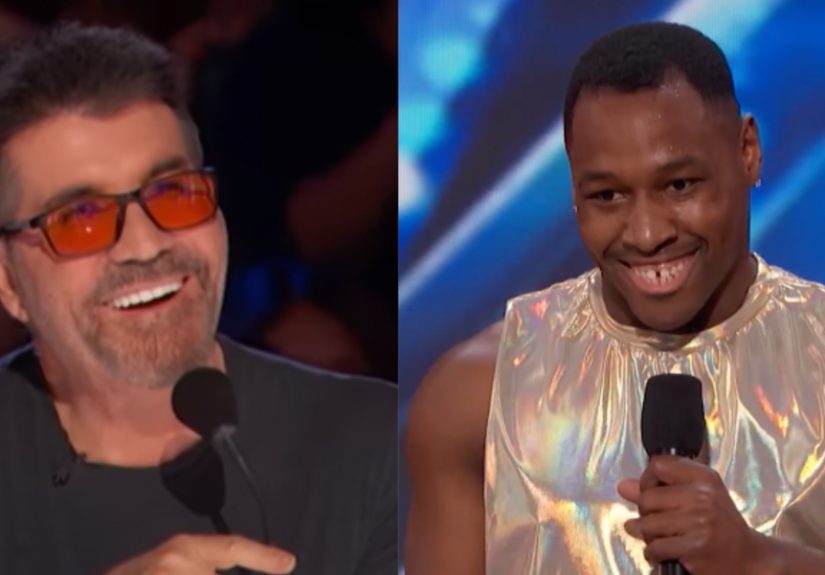
Early in Season 19, Simon Cowellprofessional eye-roller, talent show veteran, and man who has watched more auditions
than most of us have watched entire TV showsdropped a line so big it practically needed its own stage light:
he called a particular audition “the best I’ve ever seen.” And the wild part is: it wasn’t a powerhouse singer,
a magician pulling a tiger out of a hat, or a dance crew arriving with 47 backup dancers and a smoke machine.
It was baton twirling. Yes, baton twirlingthe thing many people associate with marching bands, parades, and that one
halftime show you politely clapped for in high school. Except this performance didn’t ask for polite claps. It demanded
a standing ovation.
The audition that made Simon Cowell stop being Simon Cowell
The act came from Phillip Lewis, a 27-year-old self-taught baton twirler from Statesboro, Georgia, who walked onstage
with the kind of calm confidence that usually belongs to someone who already knows what the judges are going to say.
Before he even started, he won the room with a detail so oddly specific it sounded like a comedy setup: he’d used
doughnuts as part of his practice routine.
And then he performedhigh energy, high difficulty, and high “wait, is this legally possible with a baton?” vibes.
It wasn’t just twirling; it was a full-body, performance-driven routine that mixed athletic timing with dance-level
musicality. The baton didn’t feel like a prop. It felt like a partner who could ruin the whole thing at any moment…
but never did.
Why baton twirling usually gets underestimated
Baton twirling has a branding problem. Say “baton twirling” out loud and many people immediately picture something
“cute,” “old-school,” or “background.” That’s not an insultjust cultural math. In a world where talent shows are
packed with aerialists, danger acts, and vocal acrobatics, baton twirling can sound like it’s going to be a
slow stroll through Nostalgia Lane.
Simon basically admitted that expectation in his reaction. He wasn’t walking into the act thinking,
“Finallymy baton era.” He was bracing for “fine.”
Phillip Lewis took that expectation, folded it into a paper airplane, and launched it into the sun.
How Phillip Lewis flipped the script
Great auditions don’t just show skill; they change what you think the skill can be. Phillip’s routine was built like a
highlight reel: speed changes, clean catches, risky tosses, and choreography that made the baton feel like it was moving
through a story instead of a sequence.
More importantly, he performed it like a headliner, not a hobbyist. The crowd wasn’t reacting to “a baton act.”
They were reacting to a performer who understood pacing, tension, payoffand how to make a room fall in love with a thing
they didn’t know they liked.
What “the best I’ve ever seen” really signals on AGT
In talent-show terms, that compliment is basically a solar eclipse. Simon Cowell has judged thousands of acts across decades
of televised auditions. He’s famous for being blunt, and he doesn’t hand out “best ever” like participation trophies.
So when he says it, it’s not just praiseit’s a signal flare.
It tells viewers: “This isn’t just good. This is historically goodat least in the category you thought couldn’t surprise you.”
Simon’s “best ever” moments tend to share one ingredient
Across the most celebrated AGT moments, the pattern isn’t simply “perfect technique.” It’s transformation:
someone takes a familiar format (a song, a dance style, a novelty skill) and turns it into a must-watch experience.
That’s the difference between “talented” and “unskippable.”
Phillip’s audition fits that mold. The skill was impressive, surebut the bigger shock was the scale of it.
He didn’t just twirl. He built a show around twirling.
The anatomy of a jaw-drop audition
If you dissect why this performance hit so hard, you can see a few components working together:
- Expectation reversal: The act starts with “baton twirling,” but delivers arena-level performance energy.
- Visible difficulty: Even non-experts can sense, “That toss was risky,” or “That catch was not supposed to be that clean.”
- Momentum: No dead air. No long reset moments. The routine moves like it’s chasing the beat.
- Personality: The performance feels humanconfident, joyful, and in control.
- Story-onstage: It doesn’t feel like a practice video; it feels like a moment.
Breaking down the routine like a coach (minus the whistle)
Let’s talk mechanics in plain English: baton twirling is hard because it’s precision under pressure. The baton is a small object,
moving fast, that you have to control while your body is also dancing, traveling, turning, and maintaining timing.
It’s coordination stacked on coordination.
Technical difficulty: the “blink and you miss it” factor
What makes a routine read as “elite” to a general audience is not just how many tricks happenit’s how quickly they happen
without looking messy. Phillip’s performance had that “wait, he already did that?” pace.
When a trick is difficult but looks easy, that’s usually the sign you’re watching someone who has lived inside the skill for years.
And “self-taught” adds another layer of intrigue. Viewers instinctively understand how hard it is to develop a discipline without
a built-in pipeline of coaches, teams, and structured feedback. Whether you’re learning guitar, gymnastics, or baton twirling,
the DIY path is steep.
Performance craft: why the baton felt like a headline act
Plenty of people can do something impressive. Fewer people can sell it on a giant stage.
Phillip’s audition worked because he performed like someone who knows the camera is watching.
He didn’t hide behind the skill. He made it part of his stage identity. That kind of showmanship is its own talent,
and it’s exactly what reality TV rewards: clarity, confidence, and a “you’ll tell your friends about this” factor.
Stage psychology: the judges want to be surprised
Judges on talent shows aren’t just scoring techniquethey’re reacting as audience proxies. If the act gives them a clean emotional arc
(curiosity → surprise → delight), the “YES” becomes inevitable.
Phillip’s audition gave the panel that arc in a way that felt organic, not manufactured.
What baton twirling actually is (and why it’s a sport, not a gimmick)
If your only baton reference point is a parade, here’s the reality: modern baton twirling is a competitive sport that blends
dance and gymnastic-style movement with object manipulation. In organized twirling, athletes compete in different routine types and
difficulty levels, often training for years to build consistency, speed, and control.
In other words: it’s not “just spinning a stick.” It’s a full athletic discipline that happens to look fun while it’s ruining your
shoulder stability.
Why it reads so “wow” on TV
Baton twirling translates well to a televised stage for one simple reason: risk is visible. When a baton goes airborne, everyone
experts and non-experts alikeunderstands what’s at stake. A clean catch is a tiny victory you can see in real time.
Add choreography, personality, and a big stage? Now you’ve got something that plays like sports and entertainment at once.
Why audiences love “unexpected excellence” on AGT
The internet loves a surprising win. It’s why “ordinary-looking person does extraordinary thing” is basically an entire genre.
AGT thrives on that genre because it compresses discovery into minutes.
The underdog spark
Phillip Lewis didn’t walk out with an army of dancers or a million-dollar production.
He walked out with one baton and the confidence to say, “Trust me.”
That’s underdog storytelling in its purest form, and it’s catnip for viewers.
Novelty without the novelty-act aftertaste
Talent shows get plenty of novelty. The difference here is that baton twirling wasn’t presented as a joke or a throwback.
It was presented as a legitimate, high-performance skill. That seriousnesspaired with joykeeps it from feeling like a gimmick.
Can an act like this actually win AGT?
Winning AGT usually requires two things beyond a great audition: growth and range.
The audition is the hook; the later rounds are the proof.
For a specialty act like baton twirling, the challenge is escalation. You can’t just do “the same thing, but more.”
You need new staging ideas, new music moments, and new levels of difficulty that still look clean under live pressure.
The good news is that baton-based performance has room for creative expansion: different tempos, different visual patterns,
multi-baton segments, theme-based choreography, and even collaborations. The bad news is that the live-show environment is unforgiving.
Under that kind of pressure, the act has to be both daring and consistent.
Still, if a judge is calling your audition the best he’s ever seen, you’re not entering later rounds as “that baton person.”
You’re entering as “the standard.”
How to watch this audition like a pro (aka: don’t blink)
If you’re planning to watch the performance (or rewatch it like a responsible adult who definitely has other things to do),
here are a few things to notice that make it click:
- Transitions: Watch how the baton work flows into dance movement without awkward resets.
- Timing: Listen for how tricks land on musical accents. That’s performance intelligence.
- Risk placement: Big tosses aren’t randomstrong routines place them where the energy needs a peak.
- Facial performance: The “I’ve got this” look matters. It sells the whole illusion of ease.
Conclusion: the real reason this audition hit so hard
Simon Cowell didn’t call this audition “the best” because baton twirling suddenly became the default coolest thing in America.
He said it because Phillip Lewis delivered what every talent show secretly wants: a skill you didn’t expect to love,
performed at a level you can’t argue with, packaged with enough charisma to make it feel like a headline moment.
That’s the magic of a great AGT audition. It doesn’t just impress you. It updates your beliefs.
And if you walked in thinking baton twirling was background noise, you walked out thinking it might be the main event.
Extra: The viewer experience of a “best ever” AGT audition (500-ish words of real-life relatability)
If you’ve ever watched a talent show long enough, you know the ritual. You hit play thinking it’ll be “something to have on,”
the way people “have on” a lamp. You expect a few decent acts, maybe one great one, and at least one audition that makes you
whisper, “Oh no,” before it even starts. Then an act like this shows upand your entire evening changes.
The experience usually starts with mild skepticism. Baton twirling? Sure. You brace for a nice performance, maybe a little nostalgia,
and then you plan to keep scrolling. But about 20 seconds in, your brain does that little system reboot where it goes,
“Hold on… this is not what I thought this was.” You sit forward. You stop chewing. You suddenly care about a baton the way people care about
a playoff game.
What makes it especially fun is the ripple effect. Viewers don’t just watch a “best ever” auditionthey recruit witnesses.
Someone yells across the house, “Come here. Now.” A friend gets a text that says “WATCH THIS” with absolutely no context.
People who never talk during TV start narrating like sports commentators: “Did you see that catch?” “How is he doing that?”
“That has to be impossible.” It becomes a shared moment, even if you’re technically alone on your couch.
And then there’s the rewatch factor. The first time, you’re reacting emotionallysurprise, joy, disbelief. The second time,
you start watching like a detective. You notice transitions, timing, the way the performer uses the stage, the way the routine builds
instead of dumping all the tricks at once. It’s like hearing a great song twice: the hook got you, but the structure keeps you.
Suddenly you’re appreciating not just talent, but design.
There’s also a weirdly inspiring aftertaste. Not the cheesy “follow your dreams” kind (though, sure, that’s part of it),
but the practical kind: Oh, rightpeople can get absurdly good at niche things. It reminds you that the world is full of skills
you don’t understand yet, performed by people who quietly trained while everyone else was busy underestimating the category.
A self-taught angle adds even more punch, because it turns the performance into proof of persistence, not just natural ability.
Finally, the “best ever” label creates a little debate club inside your group chat. Was it truly the best? Ever?
Maybe, maybe notAGT has decades of iconic moments. But the label does its job: it frames the audition as a benchmark,
and it invites you to compare it against your personal hall of fame. That’s why these moments go viral.
They’re not just performances. They’re conversation starters.