Table of Contents >> Show >> Hide
- What happened on SNL, exactly?
- Aimee Lou Wood’s response: a clap back with a conscience
- Why the “teeth joke” hit a nerve
- The internet reaction: support, debate, and the “you signed up for this” crowd
- Bowen Yang, Sarah Sherman, and what SNL insiders said
- What this controversy reveals about celebrity “clap backs”
- How comedy can be edgy without being cruel
- What happens next for Aimee Lou Wood?
- Conclusion
- Experiences: When a “Joke” Feels Like a Spotlight
Every few weeks, the internet re-learns a lesson it somehow keeps forgetting: parody is not a license to be sloppy, and comedy is not a hall pass for cruelty.
In April 2025, The White Lotus breakout Aimee Lou Wood publicly criticized Saturday Night Live after a sketch parodying the HBO series leaned into a joke about her character’s appearancespecifically, an exaggerated set of fake teethrather than doing what satire does best: aiming up, not down. Her response wasn’t a scorched-earth rant. It was a clear, human boundary: “That one hurt.”
And because this is 2025 (and because the algorithm loves emotional whiplash), the moment instantly expanded beyond one sketch into a bigger conversation about body shaming, “punching down,” the expectations placed on women in the spotlight, and what it looks like to push back without turning into the villain of your own timeline.
What happened on SNL, exactly?
The sketch at the center of the controversy was titled “The White POTUS”, which aired on April 12, 2025. The premise: mash up The White Lotus vibe with political satire, placing recognizable political figures into a luxury-resort-style universe and letting absurdity do the heavy lifting.
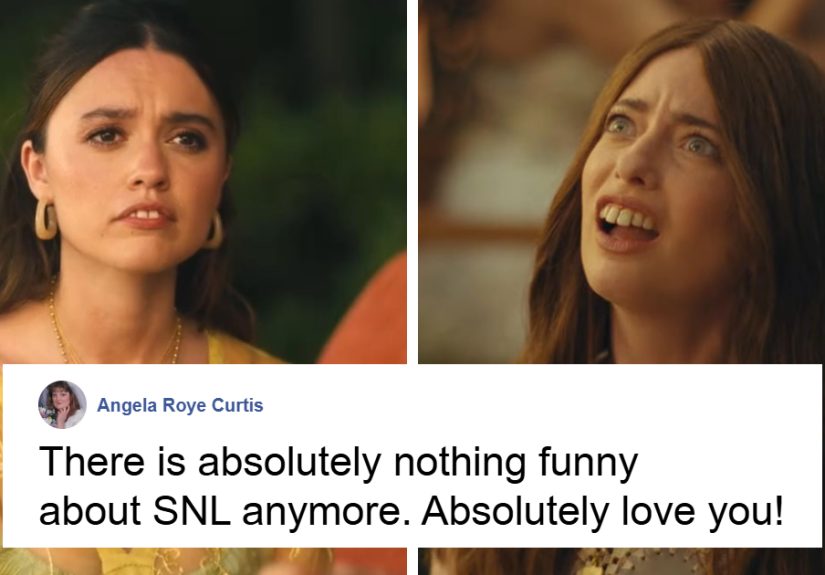
But one element landed differently. In the sketch, SNL cast member Sarah Sherman played a version of Wood’s White Lotus character Chelsea with noticeably exaggerated prosthetic teeth and an accent that Wood later called out as off. The joke didn’t read as “biting cultural commentary.” It readat least to Wood and many viewersas a physical takedown dressed up as a character impression.
That distinction matters because the sketch’s broader target was powerful people and public institutions. Yet the Chelsea beat wasn’t really about power. It was about a person’s face. And when the joke is someone’s body, the room gets quieter fasteven if the laugh track doesn’t.
Aimee Lou Wood’s response: a clap back with a conscience
Wood responded via Instagram Stories, describing the portrayal as “mean and unfunny,” and emphasizing that she’s not anti-parody. She’s anti-cheap. Her point wasn’t “nobody can ever joke about me.” It was “if you’re going to joke, do it well.”
One of the most discussed parts of her reaction was her framing of the sketch as “punching down”. In other words: the satire aimed upward at public figures, but the Chelsea moment felt like the only beat aimed at a personal insecuritymaking her (and her appearance) the easy target in a sketch about everyone else’s power.
She also noted something that’s both funny and deeply revealing: if you’re going to imitate someone, at least get the accent right. It’s a small line, but it carries a big subtext: “If I’m going to be the butt of the joke, don’t make it lazy.”
Apologies, flowers, and a rare moment of repair
The story didn’t end at “celebrity versus sketch show.” According to multiple reports, Wood later said she received apologies, and she publicly acknowledged an olive branch: Sherman sent her flowers, which Wood shared appreciatively.
That detail matters because it shows something we don’t always get online: accountability without theatrics. Not a Notes App manifesto. Not a “sorry you were offended” non-apology. Just a human gesture that says, “I didn’t mean to hurt you, and I hear you.”
Why the “teeth joke” hit a nerve
On paper, SNL has always exaggerated features. Big hair, bigger ears, the occasional prosthetic that looks like it was ordered at 2 a.m. on a website called “TotallyLegitNoses.com.” So why did this moment feel different?
1) It didn’t feel like satireit felt like schoolyard bullying
Satire usually targets behavior, hypocrisy, institutions, or cultural power. Physical mocking targets the bodythe one thing you can’t “fact-check” or “clarify.” When comedy leans hard on a physical feature that’s been publicly scrutinized before, it can land like the world’s loudest callback to a private insecurity.
2) “Punching up” is the point, not a suggestion
Comedy doesn’t have to be polite, but it does have to know where it’s aiming. A sketch built around political figures is inherently “upward.” A beat built around an actor’s appearance is inherently “sideways” at bestand “downward” at worst. Wood’s criticism was essentially: the angle changed, and so did the ethics.
3) Women’s looks are still treated like public property
There’s a long cultural tradition of reviewing women’s faces as if they’re consumer products: “Would you recommend? Would you return? Would you upgrade?” When a joke centers a woman’s appearance, it doesn’t land in a vacuum. It lands in a history of women being told they’re too much (or not enough) of whatever the moment demands.
The internet reaction: support, debate, and the “you signed up for this” crowd
Predictably, the response split into three camps:
- Camp A: “That was cruel. Good for her for saying something.”
- Camp B: “SNL roasts everyone. It’s comedy. Relax.”
- Camp C: “This is why we can’t have anything nice,” said while quote-tweeting it 47 times.
The most meaningful support came from people who saw themselves in Wood: viewers who’ve been teased for “different” teeth, a gap, braces, a crooked smile, or any feature that gets treated like a punchline. In that sense, her pushback wasn’t just celebrity self-defense. It was representationprotecting the idea that you don’t have to “fix” yourself to be worthy of being seen.
Bowen Yang, Sarah Sherman, and what SNL insiders said
Part of what kept the story alive was that it didn’t become a faceless institutional fight. People within SNL were asked about it, and the public heard something close to nuance (which, online, is basically a unicorn doing your taxes).
Bowen Yang: “Valid.”
SNL cast member Bowen Yang publicly supported Wood’s right to feel how she felt, with the core idea being: parody can go too far sometimes. That’s not a surrender of comedy. It’s a defense of better comedycomedy that lands because it’s sharp, not because it’s easy.
Sarah Sherman: regret without defensiveness
Sherman later addressed the backlash in interviews, expressing that she never intended to hurt anyone’s feelings. The key takeaway: you can be a comedian and still care about impact. The job is to be funny, yesbut it’s also to be responsible with the tools that make you funny.
What this controversy reveals about celebrity “clap backs”
There’s a reason Wood’s response resonated: it wasn’t performative. It didn’t sound like PR. It sounded like someone who has been laughed at before and recognized the feeling instantly.
In later commentary, she compared speaking out to breaking a pattern of accepting bullying. That’s a powerful framing because it flips the usual script. Instead of “don’t be sensitive,” it becomes “don’t normalize meanness as entertainment.”
That reframing is also useful for regular people. Most of us aren’t getting parodied on NBC, but many of us know the smaller version of this moment: the coworker joke that lands wrong, the friend “teasing” you always have to swallow, the group chat that makes you laugh even as your stomach sinks.
How comedy can be edgy without being cruel
If you’re wondering, “Okay, so what’s allowed now?”first, comedy isn’t a courtroom. Second, the difference isn’t a list of banned topics. It’s craft.
Better targets make better jokes
- Target choices and power: Institutions, hypocrisy, behavior, public influence.
- Less rewarding targets: Bodies, immutable traits, insecurities people have carried since childhood.
Specificity beats cruelty
A joke that’s specific about a character’s worldview or behavior is usually smarter than a joke that’s generic about a body part. “Teeth” is a shortcut. “Why this character thinks she deserves everything” is comedy.
Intent isn’t impact, but impact can guide intent
You can intend to be playful and still cause harm. The solution isn’t to stop jokingit’s to learn and adjust. The funniest rooms aren’t the meanest rooms. They’re the rooms with the best writers.
What happens next for Aimee Lou Wood?
The dust-up didn’t change the underlying truth: Wood’s success is bigger than a sketch. Her White Lotus role helped cement her as a major presence, and her willingness to speak plainlywithout weaponizing itonly strengthened her public image.
In a media ecosystem that rewards silence (because silence is “easy to manage”), she chose clarity. That’s not just a clap back. That’s a boundarywith a point.
Conclusion
The “So Cruel” moment didn’t explode because people suddenly forgot SNL is a satire show. It exploded because a lot of viewers recognized the shape of the joke: not clever, not nuancedjust familiar in the worst way.
Aimee Lou Wood’s response offered a simple challenge to modern comedy: be sharp, not cheap. And if you miss the mark, do what adults doown it, repair it, and write something better next week.
Experiences: When a “Joke” Feels Like a Spotlight
Not everyone gets mocked on live TV, but a surprising number of people know the emotional geometry of what Wood described: the feeling of being singled out in a room where everyone else is “in on it.” Sometimes it’s a family dinner where a relative makes the same comment about your smileagainbecause it always gets a laugh. Sometimes it’s a classroom where a nickname sticks to you like gum on a shoe. And sometimes it’s adulthood, which is supposed to be more evolved, except the office group chat still has middle school energy.
One common experience is the “compliment-joke” combo: “I love your confidence… I could never pull off teeth like that!” People say it as if they’re praising you, but it lands like a reminder that your body is under review. Another version is the “we’re just teasing” routinewhere the same target gets picked over and over until it stops feeling like comedy and starts feeling like a social hierarchy. You learn to laugh quickly, because the alternative is awkward silence, and awkward silence gets framed as your failure to “take a joke.”
Social media adds an extra layer because it turns private insecurity into public content. A clip travels faster than context. A comment section turns into a voting booth for your face. Even when strangers mean well, the sheer volume of attention can be exhausting: “I love your gap!” sits right next to “Fix it,” and your brain has to process both. People who’ve lived through that describe a strange tug-of-war: you want to be grateful for support, but you also want the topic to stop being your body.
What’s powerful about speaking uplike Wood didis that it models a way out of the script. You can say, “That hurt,” without demanding someone lose their job. You can draw a line without starting a war. And you can accept repair without pretending the harm didn’t happen. In everyday life, that might look like telling a friend, “Hey, jokes about my appearance aren’t fun for me,” or telling a coworker, “Let’s keep it about the work,” or even deciding you don’t owe laughter to anyone.
There’s also a repair experience many people recognize: the apology that changes everything. Not the defensive one“Sorry you took it that way”but the honest one: “I went for the easy laugh. I get why it landed badly. I won’t do it again.” When that happens, it doesn’t just heal one moment; it breaks a pattern. It teaches everyone watching that humor can be bold without being crueland that accountability doesn’t kill comedy. It improves it.