Table of Contents >> Show >> Hide
- What Happened With the Recent Ariana Grande Snap?
- Why Some Fans Found It “Unsettling”
- Ariana Grande Has Already Addressed This Kind of Scrutiny
- The Real Story Is Bigger Than One Image
- Why Celebrity Photo Reactions Get So Intense
- A Smarter Way to Talk About Ariana Grande’s Recent Snap
- Related Experiences: Why This Story Feels Familiar Beyond Celebrity Gossip
- Final Take
- SEO Tags
The internet has many talents. It can launch a song to No. 1, turn a movie quote into a lifestyle, and somehow transform one celebrity photo into a full-blown forensic investigation before lunch. Ariana Grande is the latest star to get that treatment again, after a recent image sparked a wave of online reactions ranging from amused to concerned to flat-out dramatic. Some viewers called the snap “unsettling.” Others said the whole conversation was “so messed up.” And honestly? Both reactions say a lot.
On the surface, this looks like standard celebrity-news chaos: one viral image, one flood of comments, and one more day when social media acts like it has a doctorate in body language, photo editing, and emotional anthropology. But underneath the noise is a bigger story about fandom, image culture, and why Ariana Grande remains one of the most over-read celebrities on the internet. Every expression, styling choice, camera angle, and posture shift gets treated like a clue. The photo becomes less of a photo and more of a Rorschach test.
That is what makes this moment worth unpacking. The recent Ariana Grande snap did not just go viral because of what was in the image. It spread because of everything people have already decided the image means. In the world of modern celebrity, a single picture is never just a picture. It is a referendum, a mood board, a conspiracy thread, and a comment section food fight wrapped into one shiny JPEG.
What Happened With the Recent Ariana Grande Snap?
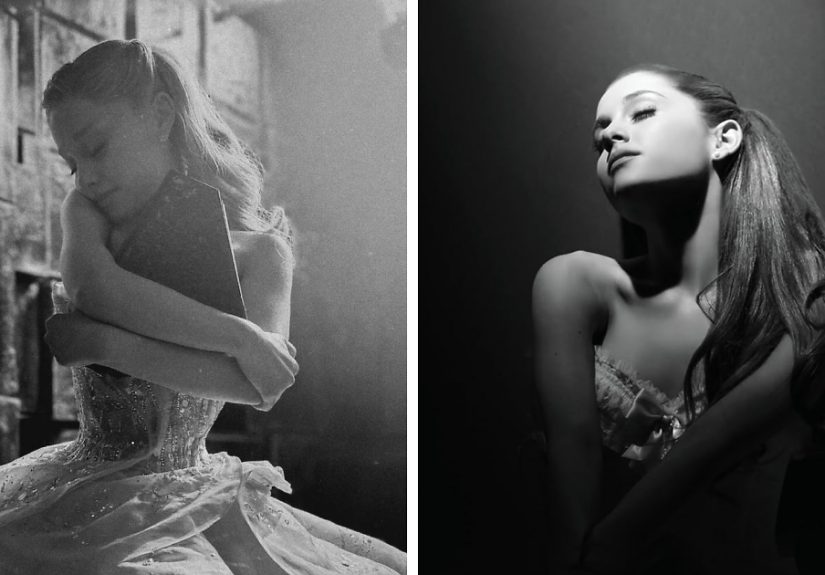
The most grounded explanation is also the least dramatic one: a recent photo associated with Grande’s Vogue Japan cover story went viral after viewers noticed what appeared to be a visual editing glitch, making it look like she had six fingers in one shot. The image was later corrected, and Grande herself reacted with humor rather than panic. That should have ended the story right there. Case closed. Mystery solved. Internet, please go touch grass.
But of course, that is not how the internet works. Once the image began circulating, the conversation widened. Instead of staying focused on an obvious photo-editing mishap, online commentary quickly drifted into familiar territory: Ariana’s appearance, her overall aesthetic during the Wicked era, the way she presents herself in public, and the increasingly strange habit people have of assigning personality diagnoses to celebrities based on still images.
In other words, one visual mistake became a launchpad for a much bigger discussion. Not because the image contained some hidden truth, but because social media rewards overreaction. A photo error is mildly funny. A sweeping narrative about what it “reveals” is algorithm catnip.
Why Some Fans Found It “Unsettling”
When people say a celebrity image feels “unsettling,” they are not always responding to one concrete detail. More often, they are reacting to a mix of context, projection, and internet fatigue. Ariana Grande has spent the past few years in a particularly intense public phase: releasing major music, stepping deeper into film, promoting Wicked, navigating awards-season visibility, and becoming the subject of endless online commentary that often blurs the line between observation and obsession.
Add that to her current visual identity, and you get a recipe for high-volume interpretation. Grande’s styling lately has leaned into softness, vintage glamour, pale palettes, delicate silhouettes, and a highly controlled public presence. That can read as dreamy and elegant to one audience, and eerie or hyper-curated to another. The same image can be seen as fashion-forward, theatrical, fragile, nostalgic, or just heavily art-directed depending on who is doing the looking.
This is where the word “unsettling” starts doing a lot of messy work. Sometimes it really means “I’m not used to this version of her.” Sometimes it means “This styling choice feels more Glinda than pop star.” Sometimes it means “I spend too much time online and now I think every editorial image is a coded message from the universe.” None of those interpretations automatically reflect reality. They reflect the viewer.
The Wicked Effect Is Real
Grande’s public image has shifted significantly during the Wicked chapter. The blonde transformation, the gentler styling, the emotional interviews, and the overall theatrical polish have all made her feel different from the Ariana many people associate with the sharp ponytail, oversized sweatshirt era, or the sleek pop maximalism of earlier albums. That does not mean something is “wrong.” It means reinvention is part of show business, and movie roles can leave a strong imprint on a celebrity’s presentation.
Public reaction becomes even more intense when a star is in transition. Fans often want the comfort of a familiar image. When they do not get it, they start inventing explanations. The result is a weird cycle in which normal career evolution gets packaged as a warning sign, a personality shift, or a hidden problem. Sometimes a new look is just a new look. Hollywood, as it turns out, has heard of costumes, hair dye, editorial themes, and character spillover.
Ariana Grande Has Already Addressed This Kind of Scrutiny
One reason the latest debate landed so badly with many people is that Grande has already spoken publicly, more than once, about how harmful unsolicited commentary can be. Back in 2023, she explained that the version of her body many people praised as “healthy” had actually corresponded to a very low point in her life. That statement mattered because it challenged one of the internet’s favorite bad habits: assuming health can be accurately measured by appearance alone.
She returned to the topic again during Wicked promotion, saying she has felt scrutinized since her teens and describing the experience of being publicly dissected for years. Later, she reshared that message as a reminder not to comment on people’s bodies. The through line is consistent: Grande has not been vague on this issue. She has been pretty direct. She does not think strangers should be treating another person’s appearance like an open-source group project.
That history changes how the recent snap should be read. Once a person has already told the public, clearly, that appearance commentary is harmful, continuing to do it under the label of “concern” starts looking less compassionate and more entitled. Concern without boundaries can become intrusion in a hurry.
The Real Story Is Bigger Than One Image
The most interesting thing about the Ariana Grande photo discourse is not the photo itself. It is how quickly public attention jumps from art to anatomy, from styling to speculation, from career to commentary. Grande has been in a creatively busy stretch, yet the online conversation often reduces her work to side notes beneath debates about how she looks in a screenshot.
That disconnect is especially striking right now. She remains closely associated with Wicked and its afterglow, public reporting has tied her to new performances and ongoing artistic projects, and even her lighter recent moments, like joking about the Vogue image or posting rare glimpses of her natural hair, get absorbed into larger narratives about who she “really” is. It is almost impossible for a public figure of her size to post anything without people treating it like a puzzle box.
The irony is that Grande has also spoken about wanting to be seen for her work, not just for celebrity noise. That makes this entire cycle feel especially off. Here is an artist talking about craft, performance, transformation, and visibility, while the internet replies, “Interesting. But let us zoom in on this one photo at 400% and make it weird.”
Why Celebrity Photo Reactions Get So Intense
There are at least three reasons these moments explode so fast.
1. Social Media Trains People to Read Too Much Into Still Images
A still image freezes a person at one exact angle, under one exact light, with one exact expression. That is not a full reality. It is a split second. But online culture has trained people to treat those split seconds like evidence. If a star smiles too little, they are miserable. If they smile too much, they are hiding something. If their pose changes, they are reinventing. If their pose stays the same, they are stuck. Conveniently, the internet is always right, no matter what the photo shows.
2. AI Anxiety and Editing Mistakes Have Made People Suspicious of Images
The six-finger incident is a perfect example. People are now more alert to visual manipulation, and not without reason. Retouching, AI-assisted editing, and careless post-production can all make images look uncanny. But that awareness can also tip into paranoia, where every odd detail becomes the beginning of a giant theory instead of a simpler explanation like “someone in post-production had a very bad day.”
3. Parasocial Culture Encourages Over-Ownership
Fans often feel deeply connected to celebrities they have followed for years. That emotional connection can be sweet, but it can also become possessive. People start feeling as if they know how a star is “supposed” to look, talk, dress, or evolve. When the celebrity changes, the audience does not just notice it. Some of them take it personally.
Ariana Grande’s situation fits that pattern almost perfectly. She has one of the most loyal fandoms in pop culture, but also one of the most hypervigilant. Every shift becomes a referendum. Every image becomes a campfire around which the internet gathers to tell stories, many of them wildly inaccurate.
A Smarter Way to Talk About Ariana Grande’s Recent Snap
A more useful conversation would separate verified facts from emotional projection. The verified facts are fairly straightforward: a recent image went viral, people noticed a visual oddity, the glitch was corrected, and Grande treated the moment with humor. Everything beyond that should be approached carefully.
It is fair to discuss styling, photography, celebrity branding, or how the Wicked era has influenced Grande’s public image. Those are media questions. They are cultural questions. They are also a lot more interesting than armchair speculation disguised as concern. The second we jump from “this editorial feels eerie” to “this image proves something is wrong,” the conversation stops being analysis and starts becoming projection.
That is why the “so messed up” line rings true in two directions. Yes, some people thought the image itself looked strange. But it is also messed up how quickly online culture can turn one celebrity photo into a referendum on a person’s body, private life, or emotional state. The snap may have been odd. The reaction was often odder.
Related Experiences: Why This Story Feels Familiar Beyond Celebrity Gossip
Part of the reason this story hit such a nerve is because it is not really just about Ariana Grande. It taps into a very common modern experience: seeing a photo of someone and assuming the photo tells the whole truth. Most people have felt some version of this, even without fame, stylists, or a Vogue shoot gone sideways.
Think about how often an ordinary person posts a picture and instantly gets comments that have almost nothing to do with the original post. You share a vacation photo, and someone asks if you are tired. You upload a party picture, and a relative decides you look too thin, too pale, too different, too old, too young, too something. Suddenly, your nice little moment online gets hijacked by someone else’s interpretation of your face. That experience is annoying enough at family-group-chat level. Now multiply it by millions.
There is also the weirdness of being compared to previous versions of yourself. People do this all the time, especially with public figures. They look at an old photo and a new photo and act like they are evaluating two separate people in a lab. But life changes how people look. Work changes how people look. Hair color changes, lighting changes, makeup changes, stress changes, rest changes, camera lenses change, and yes, sometimes a photo editor accidentally invents an extra finger and sends the internet into orbit.
Another familiar part of this story is how style changes get mistaken for identity crises. Someone cuts their hair, softens their wardrobe, leans into a new aesthetic, or starts dressing in a way that reflects a different chapter of life, and suddenly the audience reads that shift as evidence of some hidden drama. In reality, experimentation is normal. Reinvention is normal. Looking different in one season of life than you did in another is the most ordinary thing on earth. It only seems suspicious when people expect public figures to stay frozen in the version they first loved.
The Ariana Grande discourse also mirrors a broader social-media problem: concern gets performed very publicly now. Instead of privately thinking, “I hope that person is okay,” people often post long threads announcing their concern in a way that still centers spectacle. The result is a strange kind of public intimacy, where people sound caring but still participate in the same cycle of scrutiny they claim to dislike. It becomes less about empathy and more about being seen having an opinion.
That pattern affects regular people too. Plenty of folks know what it is like to have one awkward photo become the photo everyone remembers. Maybe it caught you mid-blink, under terrible overhead lighting, or from an angle that made you look nothing like yourself. Then someone decides that image is the real you. It is frustrating because you know a camera can distort. A still frame can flatten. A comment section can exaggerate. Yet once a narrative starts, it sticks.
That is why stories like this resonate beyond celebrity culture. They remind us how quickly visual culture becomes judgment culture. They also remind us that a little humility goes a long way. Not every image is a confession. Not every aesthetic shift is a warning sign. Not every strange-looking picture means something profound. Sometimes the healthier response is the boring one: maybe it was just a weird photo, maybe the edit was off, maybe the internet should take a nap.
Final Take
The recent Ariana Grande snap became a viral talking point because it arrived at the intersection of celebrity, fandom, editing culture, and internet overanalysis. Some fans saw something “unsettling.” Others thought the entire reaction was “so messed up.” The truth sits somewhere in the middle. The image itself may have looked odd, but the bigger issue is how eager online culture is to turn a single photo into a sweeping narrative.
Ariana Grande is hardly the first celebrity to deal with that, and she will not be the last. But her case is especially revealing because she has already explained, publicly and repeatedly, that this kind of scrutiny can be harmful. That should have made the conversation more thoughtful. Instead, it often made the reaction feel even noisier.
So yes, the snap was strange. But the most unsettling thing may not have been the image at all. It may have been how quickly the internet proved, once again, that it cannot resist reading far too much into a face, a pose, a vibe, or one badly edited photo.