Table of Contents >> Show >> Hide
- The Viral Moment: A Mock, Then a Verbal Body Slam
- Why That “Missing ‘The’” Happens (And Why It’s Not a Big Deal)
- Accent Bias: The Quiet Prejudice That Acts Like It’s “Just a Joke”
- The Workplace Reality: When Accent “Feedback” Turns Into Discrimination
- Why the Comeback Worked: Three Powerful Moves
- What to Say If Someone Mocks Your Accent
- What to Do If You’re the Listener (A.K.A. How to Not Be That Guy)
- Accent Bias Isn’t Just About Jobs: “Linguistic Profiling” Is a Real Thing
- Conclusion: An Accent Is Proof of Courage, Not a Punchline
- Real-Life Experiences Around Accent Shaming (And What People Say Helps)
If you’ve ever heard someone snicker at an accentlike English is a private club and the bouncer is a guy named “Grammar”
you already know the vibe: smug, unnecessary, and about as helpful as a screen door on a submarine.
That’s why a story shared on Bored Panda hit such a nerve: a Russian woman got mocked for how she spoke English,
and instead of shrinking, she served a comeback so sharp it could slice a bagel cleanly in half.
But this isn’t just an internet “mic drop” moment. It’s a tiny window into a big, real-world issue:
accent biashow we judge people’s intelligence, credibility, and even competence based on how their English sounds.
Let’s unpack what happened, why the comeback worked, and how to respond (or do better) the next time accent-shaming shows up.
The Viral Moment: A Mock, Then a Verbal Body Slam
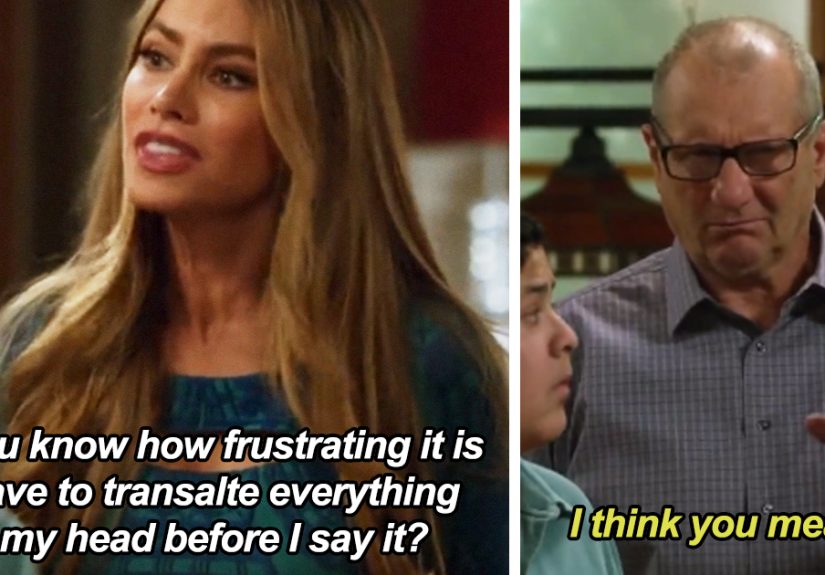
The story goes like this: a Russian woman with a thick accent was hanging out with friends. Like many Russian speakers learning English,
she sometimes skipped articles (“a,” “an,” “the”). So instead of saying “Get in the car,” she’d say “Get in car.”
Totally understandable. Also totally not a sign of low intelligencejust a sign she knows more than one language.
Then someone decided to be cruel. He asked why she “talked like that,” implying it made her sound dumb.
That’s when she fired back with an explanation that was equal parts logic, cultural contrast, and pure roast.
Paraphrased: maybe some people need the word “the” so they don’t hop into a random car, but where she’s from,
people can figure out which car is being discussed without a tiny extra word doing the heavy lifting.
The punchline wasn’t really about cars. It was about the arrogance of assuming your language rules are “normal,”
and everyone else’s are “wrong.” She flipped the script: the “mistake” wasn’t evidence of her stupidityit was evidence
of English being a complicated system she was navigating in real time, while Mr. Mockingbird contributed exactly zero multilingual effort.
Why That “Missing ‘The’” Happens (And Why It’s Not a Big Deal)
Accents and “errors” often come from translation math
When you speak a second language, your brain is basically running a live conversion tool: ideas → vocabulary → grammar → pronunciation,
all while trying not to forget what you were saying mid-sentence. People who’ve done it describe it perfectly:
in their native language they’re witty, precise, and quick; in their second language they can feel slower or simplereven though
their thoughts haven’t changed.
Some languages don’t use articles the way English does
English articles (“a,” “an,” “the”) feel “obvious” to native speakers because we learned them before we learned to tie our shoes.
But many languages either don’t have articles at all or use them differently. So learners may drop them, overuse them,
or put them in the “wrong” placenot because they’re careless, but because their first language trained their brain on a different system.
English is chaotic in ways natives don’t notice
English spelling and pronunciation can be wildly inconsistent (looking at you, “through,” “though,” “tough,” and “thought”),
and idioms can be basically prank-level nonsense (“hold your horses,” “break a leg,” “hit the sack”).
So when someone is brave enough to speak English with an accent, what you’re hearing is effortand a willingness to be imperfect in public.
Accent Bias: The Quiet Prejudice That Acts Like It’s “Just a Joke”
Accent mocking loves to wear a disguise. It shows up as “I was only teasing,” “I’m just correcting you,” or “I can’t understand you”
(even when everyone else clearly can). But the impact is real: people feel embarrassed, get interrupted more, speak less,
and start self-editing every sentence like they’re defusing a bomb.
What listeners think they’re judging vs. what they’re actually judging
Many people believe they’re judging clarity. In reality, they often slide into judging intelligence, trustworthiness, or competence.
Research has shown that foreign-accented speech can be perceived as less credible, partly because it can require more mental effort to process.
That extra effort can get misread as “this person is less reliable,” which is a pretty unfair leap.
Bias doesn’t stop at social settings
Accent bias isn’t just a rude comment at a party. It can shape hiring decisions, workplace evaluations, customer interactions,
classroom dynamics, and even whether someone gets treated respectfully on the phone.
In other words: it can mess with people’s money, safety, and opportunitiesnot just their feelings.
The Workplace Reality: When Accent “Feedback” Turns Into Discrimination
In the U.S., accent-related treatment can overlap with national origin discrimination. That matters because employers can’t just hide behind
“communication” as an excuse if the real issue is bias or a customer’s prejudice.
What “legitimate communication needs” actually mean
Yes, some jobs require clear spoken communication. But “I prefer a different accent” is not the same as “this person cannot do the job.”
Guidance from U.S. enforcement agencies emphasizes that employers should have evidence if they claim an accent materially interferes
with job performance. Otherwise, “no accent” expectations become a socially acceptable way to filter people out.
English-only rules and “no-accent vibes” can get risky fast
Blanket rules about language use or constant nitpicking of an employee’s speech can create a hostile environment.
If teasing, mocking, or repeated comments about someone’s accent become severe or frequent, that’s not “office banter.”
That’s a potential discrimination and harassment problem.
Why the Comeback Worked: Three Powerful Moves
1) She reframed the “mistake” as a difference
The comeback didn’t beg for approval. It explained that language structures vary, and English isn’t the default setting for humanity.
She turned “you’re speaking wrong” into “you’re assuming your rules are universal.”
2) She exposed the mocker’s laziness
The subtext was delicious: “I’m doing something hardspeaking your language. You’re doing something easybeing rude in your only language.”
That contrast is hard to unsee once it’s stated.
3) She added humor with a backbone
Humor is a social jiu-jitsu move. It keeps the room from turning into a lecture while still setting a boundary.
It’s not mean; it’s correctivelike resetting someone’s moral Wi-Fi.
What to Say If Someone Mocks Your Accent
Not everyone wants to clap back. Sometimes you just want to finish your sentence and live your life. Both are valid.
Here are a few options, from gentle to spicy:
Low-drama, high-confidence
- “I have an accent because I speak more than one language.” (Simple. True. Hard to argue with.)
- “If you understood me, then communication happened.” (Because it did.)
- “Correct me if you want, but don’t mock me.” (Boundary + clarity.)
Humor with a message
- “I’ll trade you: you learn my language, and I’ll work on your tiny words.”
- “My accent is just proof I didn’t grow up in one ZIP code.”
When you want to shut it down
- “That comment was disrespectful. Don’t do it again.”
- “If you’re confused, ask. If you’re mocking, we’re done here.”
What to Do If You’re the Listener (A.K.A. How to Not Be That Guy)
If you’re a native English speaker, you have immense power in multilingual conversationsmostly because society has weirdly decided
your accent is “neutral” and everyone else’s is “an accent.” (Spoiler: everyone has an accent.)
Try these instead of corrections-as-sport
- Ask for repetition once, politely: “Sorrycould you say that again?”
- Confirm meaning, not perfection: “You mean the blue car, right?”
- Offer help only if invited: “Want a quick grammar tip, or should we just keep rolling?”
- Don’t “perform” the correction: If you must correct, do it quietly and kindlynever as entertainment.
Professionals who work with speech and communication often emphasize an important point:
accents are differences, not disorders. Treat them that way.
Accent Bias Isn’t Just About Jobs: “Linguistic Profiling” Is a Real Thing
Accent and dialect can act like a social “label” people slap onto you in secondssometimes with consequences.
Researchers have discussed how people can be judged (or filtered) based on how they sound over the phone.
That’s one reason the term linguistic profiling comes up in conversations about fair access to housing and services.
In plain terms: if someone hears your voice and decides what kind of person you arebefore you’ve even said your name
that’s not a cute quirk. It’s bias in a trench coat.
Conclusion: An Accent Is Proof of Courage, Not a Punchline
The Bored Panda story lands because it’s satisfying: someone tried to shame a woman for her English,
and she refused to accept the premise. Her comeback reminds us that language learning is hard,
accents are normal, and the real “dumb” move is mocking someone who’s doing something brave.
If you speak with an accent: you don’t owe anyone embarrassment. You owe yourself clarity, safety, and dignity.
If you don’t: the next time you hear an accent, try awe instead of judgment. You’re listening to someone
cross a bridge you never had to build.
500-word experience add-on
Real-Life Experiences Around Accent Shaming (And What People Say Helps)
Accent mockery rarely shows up with a neon sign that says “I’m being discriminatory today!” It’s usually smaller and sneakier
a laugh at the wrong moment, a “say that again” delivered with eye-rolling, or a correction that’s less about clarity and more about control.
Many multilingual speakers describe the same emotional pattern: you start a sentence confidently, hear a reaction, and suddenly you’re
monitoring every syllable like it’s being graded. The content you wanted to shareyour idea, your joke, your opiniongets replaced by
performance anxiety. You’re no longer just communicating; you’re auditioning.
One common setting is customer service. People report getting interrupted mid-sentence, spoken to slowly (as if volume equals understanding),
or treated as less competent even when they’re clearly handling the task. Another setting is the workplace meeting:
someone with an accent makes a point, the room moves on, and then a native speaker repeats the same ideaonly this time it gets credit.
In classrooms, students sometimes share that they avoid raising their hand because they don’t want the “accent moment” to become the lesson.
Online, it can be worse: strangers feel licensed to be cruel because they’ll never face consequences, and “just joking” becomes a shield.
What helps, according to many people’s shared experiences, is surprisingly consistent. First: one ally. Just one person who responds normally
and respectfully can reset the social temperature. Second: listeners asking clarifying questions about meaning, not “fixing” pronunciation in public.
Third: speakers giving themselves permission to pause. A calm “Let me say that again” can feel better than rushing to avoid judgment.
And when someone crosses the line, a short boundary often works best: “I’m happy to repeat that, but don’t mock my accent.”
It’s not aggressive; it’s a basic expectation of respect.
Some people also find confidence in reframing their accent as evidence: evidence of travel, adaptation, education, and resilience.
If your English isn’t “perfect,” that usually means you spent years building a second language on top of an entire first identity.
That’s not lesser. That’s layered. And if you’re the listener, the most powerful “experience” you can offer someone with an accent is simple:
act like they belong in the conversationbecause they do.