Table of Contents >> Show >> Hide
- What Makes a Minestrone “Spring”?
- Spring Minestrone Recipe (Pesto + Lemon + Peak Veg)
- Pro Tips for the Best Spring Minestrone
- Easy Variations (Choose Your Own Minestrone Adventure)
- What to Serve with Spring Minestrone
- Make-Ahead, Storage, and Freezing
- Troubleshooting (Because Soup Has Opinions)
- Why This Spring Minestrone Recipe Works (A Little Analysis)
- Real-Life Experiences with Spring Minestrone (500-Word Notes From the Soup Trenches)
- Conclusion
If winter minestrone is a cozy sweater, spring minestrone is the “I opened a window and remembered I have hopes and dreams” version.
It’s still hearty (beans! pasta!), but it leans into bright producepeas, asparagus, tender greensand finishes with a punchy swirl of pesto and lemon.
The goal: a bowl that tastes like the first farmers’ market haul you carried home like a proud raccoon with treasure.
What Makes a Minestrone “Spring”?
Minestrone is famously flexiblean Italian “big soup” built around vegetables, beans, and often pasta or rice. The spring spin is all about
lighter broth, greener vegetables, and smarter timing.
Instead of simmering everything until it becomes one unified texture (aka “delicious mush”), we add quick-cooking vegetables later so they stay vivid.
You’ll still get depth from aromatics, tomatoes (optional but recommended), a Parmesan rind (optional but magical), and a finishing hit of herbs.
Flavor Strategy (So It Doesn’t Taste Like Warm Salad Water)
- Build a base: onion/leek + carrot + celery (or fennel) cooked until sweet.
- Add umami: Parmesan rind, a spoon of white miso, or extra beans blended in for body.
- Brighten at the end: lemon zest/juice, pesto, herbs, and good olive oil.
- Respect the vegetables: asparagus and peas don’t want a 45-minute sauna.
Spring Minestrone Recipe (Pesto + Lemon + Peak Veg)
This is a spring minestrone recipe designed for real life: flexible, pantry-friendly, and still impressive enough to make you feel like
a person who owns matching food storage containers.
Ingredients (Serves 6)
- 2 tbsp extra-virgin olive oil, plus more to finish
- 1 yellow onion or 2 leeks (white + light green), finely chopped
- 2 celery stalks, diced
- 1 medium carrot, diced (optional, but great for sweetness)
- 3–4 garlic cloves, minced
- 1 tbsp tomato paste (optional, but adds depth fast)
- 1 (14–15 oz) can diced tomatoes or 1 1/2 cups chopped fresh tomatoes (optional but recommended)
- 6–7 cups low-sodium vegetable broth (or chicken broth)
- 1 Parmesan rind (optional) + grated Parmesan to serve
- 1 (15 oz) can cannellini beans, rinsed and drained (or chickpeas)
- 1 small Yukon Gold potato, diced (or 1 cup baby potatoes, halved)
- 1 cup green beans, cut into 1-inch pieces (optional)
- 1 1/2 cups asparagus, cut into 1-inch pieces
- 1 cup snap peas, sliced (optional but very spring)
- 1 cup peas (fresh or frozen)
- 2 cups baby spinach or spring greens (chard/escaraole works too)
- 3/4 cup small pasta (ditalini, small shells, or orzo)
- 1–2 tsp lemon zest + 1–2 tbsp lemon juice (to taste)
- 2–4 tbsp basil pesto (store-bought or homemade)
- 1 tsp dried oregano or 1 tbsp chopped fresh herbs (basil/parsley)
- Salt + black pepper, to taste
- Optional umami boost: 1–2 tsp white miso (stir in off heat)
- Optional heat: pinch of red pepper flakes
Step-by-Step Instructions
-
Start the base. In a large pot, warm olive oil over medium heat. Add onion/leek, celery, and carrot.
Cook 6–8 minutes, stirring, until softened and turning sweet. Add garlic (and red pepper flakes if using) and cook 30 seconds. -
Deepen the flavor. Stir in tomato paste (if using) for 1 minute. Add diced tomatoes (if using) and cook 1–2 minutes.
This step gives your broth a backbone without making the soup feel heavy. -
Build the broth. Add broth and the Parmesan rind (if using). Bring to a gentle boil.
Add potato and oregano. Lower heat and simmer 10 minutes. -
Add the sturdy stuff. Add beans and green beans (if using). Simmer another 8–10 minutes, until potatoes are tender.
Taste the broth nowthis is where “fine” becomes “wow” with salt, pepper, or a little extra herb. -
Cook pasta smart (recommended). While the soup simmers, cook pasta in salted water until just al dente.
Drain and set aside. (This prevents leftover soup from turning into a casserole you eat with a knife.)
Shortcut: You can cook pasta directly in the soup, but plan to eat most of it right away. -
Add spring vegetables late. Stir in asparagus and snap peas. Simmer 3–5 minutes, until bright and just tender.
Add peas for the last 1–2 minutes. -
Finish with greens + brightness. Turn off heat. Stir in spinach until wilted.
Add lemon zest and a squeeze of lemon juice. If using miso, whisk it with a ladle of hot broth in a bowl, then stir it back in. -
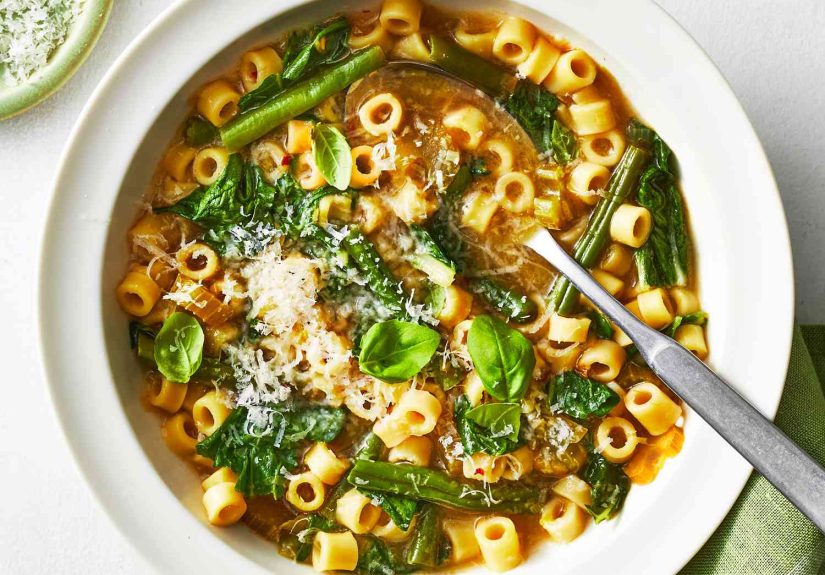
Serve like a pro. Divide pasta into bowls, ladle soup over top. Swirl in pesto, drizzle olive oil,
and shower with Parmesan. If you want to feel unstoppable, add cracked pepper and a tiny extra pinch of lemon zest.
Pro Tips for the Best Spring Minestrone
1) Time the vegetables (your soup has a schedule)
Minestrone is basically a pot of vegetables with boundaries. Potatoes and green beans can simmer. Asparagus and peas cannot.
If you want that “fresh spring vegetable soup” vibe, add tender greens at the end and keep the simmer gentle.
2) Make it creamy without cream
For a fuller-bodied broth, mash or blend 1/2 cup beans with a little broth and stir back in.
It thickens the soup naturally and makes it feel rich without dairy.
3) Use pesto as a finishing sauce, not a simmering ingredient
Pesto’s fresh basil flavor dulls when boiled. Swirl it into each bowl right before eating.
This is the easiest “restaurant move” you can do while still wearing sweatpants.
4) Keep salt under control
Broth + Parmesan rind + canned beans can sneak up on you. Start with low-sodium broth, season gradually, and adjust at the end.
If you oversalt, a squeeze of lemon can help, and adding extra vegetables or unsalted broth can bring balance back.
Easy Variations (Choose Your Own Minestrone Adventure)
Spring Minestrone Verde (Greener, Lighter)
Skip the tomatoes and tomato paste. Use extra leeks, fennel, and greens. Add lemon zest, herbs, and a touch of miso for savory depth.
Finish with pesto and maybe chopped fennel fronds or parsley.
Protein Boost (Without Making It Heavy)
- Chicken: add shredded rotisserie chicken near the end to warm through.
- Sausage: brown a small amount of Italian sausage first, then build the soup in that flavorful fat.
- More beans: add an extra 1/2 can of cannellini or chickpeas.
Vegan Spring Minestrone
Use vegetable broth, skip the Parmesan rind, and use vegan pesto (or make pesto with basil, olive oil, nuts/seeds, garlic, lemon, and nutritional yeast).
White miso is your best friend here for that savory, “wait, is there cheese in this?” effect.
Gluten-Free
Use gluten-free small pasta or swap in cooked rice/quinoa. Add grains at serving time so leftovers don’t absorb all the broth.
What to Serve with Spring Minestrone
- Crusty bread (because soup deserves a sidekick)
- Simple salad with lemon vinaigrette (double down on spring)
- Grated Parmesan or a salty, crunchy topper like toasted breadcrumbs
Make-Ahead, Storage, and Freezing
Minestrone is a meal-prep hero, with one caveat: pasta.
For best texture, store the soup base and pasta separately. Refrigerate soup up to 4–5 days.
Freeze the soup base up to 2–3 months (again: pasta separate). Reheat gently, then add fresh greens and lemon at the end to wake it up.
Troubleshooting (Because Soup Has Opinions)
My soup is too thick
Add broth or water until it’s brothy again, then re-season with salt/lemon.
My soup tastes flat
Add a pinch of salt, a squeeze of lemon, a spoon of pesto, or a tiny bit of miso.
Flat soup usually needs salt + acid (and maybe a little herb).
My vegetables are overcooked
Next time, add asparagus/peas later. For now, finish with extra pesto, lemon zest, and chopped herbs to bring back “spring energy.”
Why This Spring Minestrone Recipe Works (A Little Analysis)
This recipe balances three things that can fight each other in vegetable soup: freshness, hearty satisfaction, and
deep flavor.
The base (aromatics + optional tomato paste + broth) creates structure. Beans and potatoes make it filling.
Late-added green vegetables keep it seasonal and bright. And the finishing triopesto, lemon, and olive oiladds the kind of aroma your brain interprets as,
“Yes, I am a competent adult who has my life together,” even if you ate cereal for dinner yesterday.
Real-Life Experiences with Spring Minestrone (500-Word Notes From the Soup Trenches)
The first time I made spring minestrone, I treated it like winter minestronemeaning I lovingly simmered everything for way too long because I thought
“longer” automatically meant “better.” The flavor was great, but my asparagus had the personality of a soggy green shoelace. It was a humbling moment,
like when you realize you’ve been loading the dishwasher wrong your whole life and everyone was too polite to tell you.
After that, spring minestrone became my “timing practice” soup. I started prepping vegetables in little piles: sturdy (potatoes), medium (green beans),
and delicate (asparagus, peas, spinach). This simple sorting trick made the whole pot taste fresher because each vegetable showed up in its best form.
The peas stayed sweet. The asparagus stayed snappy. The spinach wilted like it was born for the job.
My favorite version is the one that happens after a farmers’ market run when I come home feeling wildly optimisticlike I’m going to start composting,
call my dentist, and finally understand my printer settings. The market version usually includes leeks, a ridiculous bundle of asparagus, and whatever
tender greens are trying to seduce me from the stall. If I find sugar snap peas, they go in too, sliced on a diagonal so I can pretend I trained in Paris.
(I did not. I trained on the internet.)
The biggest “wow” upgrade I learned is finishing each bowl like it’s a tiny stage performance: pasta in first, soup over it, then pesto swirl, lemon zest,
and Parmesan. On nights when I want extra depth, I’ll drop a Parmesan rind into the broth early and fish it out laterlike a savory little plot twist.
For vegan friends, a spoon of white miso stirred in off heat gives that same rounded, cozy savoriness without dairy.
Leftovers taught me the hard truth: pasta is a sponge with goals. If you store pasta in the soup overnight, it will absorb broth until your “soup”
becomes “pasta in a vague vegetable situation.” Now I cook pasta separately and keep it in its own container. When reheating, I add a splash of broth,
then refresh the bowl with lemon and a little pesto. That final hit of brightness makes day-two soup taste like you planned itlike you’re a person who
meal preps on purpose, not someone who is simply afraid of wasting asparagus.
Conclusion
A great spring minestrone recipe is equal parts comfort and freshness: a brothy, bean-y, veggie-packed bowl that tastes like the season
changing. Keep the simmer gentle, add tender greens at the end, and finish with pesto and lemon for maximum spring flavor.
Make it once, then make it your ownbecause minestrone’s whole personality is “use what you’ve got and make it delicious.”