Table of Contents >> Show >> Hide
- Why the LUKE Arm Has Everyone’s Attention
- How a Robotic Arm Can “Feel” at All
- The Moment This Technology Became Real for Ordinary People
- Why Touch Changes Everything
- This Is Bigger Than One Arm
- What Still Stands in the Way
- Why This Story Resonates So Strongly
- The Road Ahead for Sensory Prosthetics
- Human Experiences Behind the Headlines
- SEO Tags
For decades, prosthetic arms have been judged by a brutally simple question: can they move? That made sense for a while. Motion is important. A hand that opens and closes beats no hand at all. But here is the part engineers, doctors, and people with limb loss have known for years: movement without sensation is like typing with oven mitts on. Technically possible. Emotionally irritating. Functionally clumsy.
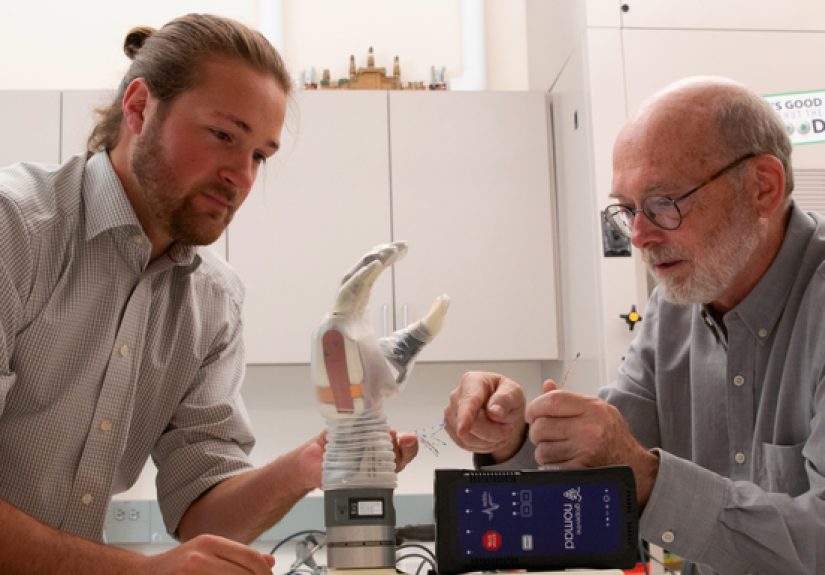
That is why the latest generation of advanced prosthetics feels like such a big leap. Researchers working on the LUKE Arm, a robotic limb inspired by Luke Skywalker’s famous artificial hand in The Empire Strikes Back, have pushed the conversation beyond grip strength and gadget wow-factor. They are chasing something much more human: touch. Not sci-fi magic. Not movie trickery. Real sensory feedback that helps a wearer judge pressure, handle fragile objects, and feel more connected to the device itself.
And yes, the Star Wars comparison is irresistible. A robotic arm named after Luke Skywalker? Someone in branding clearly understood the assignment. But the technology is not just a clever nod to pop culture. It represents one of the most meaningful goals in prosthetics: giving people with upper-limb loss a device that can move more naturally, feel more useful, and stop acting like an expensive, high-tech paperweight.
Why the LUKE Arm Has Everyone’s Attention
The LUKE Arm grew out of years of prosthetics research aimed at making artificial limbs more dexterous and more intuitive to use. The device traces back to the DEKA Arm System, which received FDA authorization as an advanced upper-extremity prosthesis capable of multiple powered motions for adults with certain upper-limb loss patterns. That alone was a major milestone. But the headline-grabbing breakthrough came when research teams began pairing the arm with sensory feedback systems that could send touch information back through the nervous system.
In plain English, the robotic hand does not just grab things. It also gathers information from sensors at the fingertips and hand, then translates that data into electrical signals that can stimulate nerves in the residual limb. The brain reads those signals as touch. Not exactly the same as a natural hand, but far closer than the old “squeeze and pray” method used with many conventional prostheses.
That difference matters in daily life. Without touch, users often have to stare at a prosthetic hand while performing even basic tasks. They visually monitor grip force because they cannot actually feel when an object is slipping, crushing, or balanced just right. With sensory feedback, the hand becomes less like a remote-controlled claw and more like a working body part. It starts to participate in action instead of merely imitating it.
How a Robotic Arm Can “Feel” at All
The idea sounds futuristic, but the logic is surprisingly elegant. Your biological hand constantly sends information to your brain about pressure, contact, movement, and position. Prosthetics researchers are trying to recreate that loop. First, sensors in the prosthetic detect what the artificial hand is doing. Next, software converts that information into nerve-like patterns. Finally, those patterns are delivered to the wearer through implanted or noninvasive stimulation methods so the brain receives usable feedback.
That “closed-loop” design is the holy grail of modern neuroprosthetics. It is not enough for a machine to obey commands. The machine also has to talk back.
Research teams in Utah, at Johns Hopkins, at Johns Hopkins Applied Physics Laboratory, and at Cleveland Clinic have all attacked this problem from different angles. Some focus on peripheral nerve stimulation. Some use sensorized artificial skin. Some improve phantom limb perception so the brain can better interpret the prosthetic as part of the body. Others design more human-like robotic hands that grasp objects with less brute force and more finesse. Different labs, same dream: stop making prosthetic users do all the mental heavy lifting.
The LUKE Arm became a symbol of that dream because it showed the public something instantly understandable. A person with an amputation could think about moving the hand, perform a delicate task, and receive touch feedback that helped guide the action. Suddenly the concept was no longer buried inside engineering journals. It had a face, a story, and an egg that did not get crushed.
The Moment This Technology Became Real for Ordinary People
One reason the story spread so widely is that it was not framed around a vague promise of “someday.” It came with vivid examples. In testing, Utah participant Keven Walgamott used the LUKE Arm to pick up a raw egg without cracking it, pluck grapes without smashing them into sticky confetti, and hold his wife’s hand while experiencing sensation that resembled feeling through a human hand. Those are not just nice demo videos. They are proof-of-concept moments that reveal what touch really means.
Anyone can build a machine that crushes a soda can. Congratulations, robot, you have discovered chaos. The more difficult and more useful trick is handling fragile, slippery, weirdly shaped everyday objects. Eggs, fruit, keys, pillows, zippers, buttons, cups, and hands are where functionality gets tested in the real world. Sensory feedback helps with that because it gives the user information before the mistake happens, not after.
That is also why the Star Wars label works so well. People do not just imagine a shiny robotic arm. They imagine a replacement that restores capability and identity. The fantasy is not metal fingers. The fantasy is normal life.
Why Touch Changes Everything
A prosthetic that restores some form of touch can improve more than performance. It can also change how the device feels psychologically. Researchers often use the term embodiment to describe when a prosthesis starts to feel less like an external tool and more like part of the wearer’s body image. That matters because one of the biggest barriers in prosthetics is not only technical limitation. It is rejection. If a device is heavy, awkward, mentally exhausting, or emotionally alien, people may stop using it.
Touch helps solve several of those problems at once. It can reduce the need to constantly watch the prosthesis. It can improve control by giving the brain more useful information. It may support a more stable sense of the phantom hand, which some researchers have linked to better movement decoding and easier control. And it can make simple social experiences feel less artificial. Holding a child’s hand, gripping a steering wheel-sized object, reaching into a bag without looking, or picking up a soft item without fear of crushing it are all deeply human tasks. They are easy to underestimate until they are hard.
There is another wrinkle here, too: phantom limb sensation and phantom limb pain. After an amputation, the brain does not simply shrug and move on. It keeps expecting signals. That mismatch can cause sensations, discomfort, or pain. Advanced sensory systems are not a miracle cure, but researchers have increasingly explored whether better feedback and better alignment between brain, nerves, and prosthetic device could ease some of that burden. Even when pain is not the central issue, restoring meaningful sensation can help reorganize how the brain relates to the missing limb.
This Is Bigger Than One Arm
The LUKE Arm gets the blockbuster headline, but it is part of a larger revolution in prosthetics. DARPA’s prosthetics programs helped accelerate development of more dexterous limbs and more natural control systems. Johns Hopkins researchers have built electronic skin systems designed to deliver tactile information, including signals related to fine touch and even potentially painful contact that could warn a user about damage. More recently, Johns Hopkins engineers also unveiled a prosthetic hand designed to better detect and adapt to what it is grasping, pushing the field closer to a hand that behaves intelligently rather than mechanically.
Cleveland Clinic researchers, meanwhile, have shown that a neurorobotic arm with sensory and motor integration can help users behave more like people without amputation during everyday tasks. That phrase matters: behave more like. The real win is not just moving a robotic wrist in a lab. It is helping a person rely less on conscious compensation and more on natural action.
Johns Hopkins APL has also reported that sensory stimulation can sharpen phantom limb perception and make muscle signals more reliable for controlling a prosthetic arm. In other words, touch does not merely add a nice bonus feature. It may improve the control pipeline itself. The brain seems to perform better when the loop is complete.
What Still Stands in the Way
Now for the less cinematic part. No, we are not all one software update away from mass-produced Jedi hands.
Advanced prosthetics remain expensive, complex, and unevenly accessible. Some systems still depend on surgical implants, lab calibration, or highly specialized teams. Others are promising in research settings but not yet widely available in everyday clinical practice. Durability, insurance coverage, long-term maintenance, training, comfort, battery life, and regulatory hurdles all stand between a compelling demo and a mainstream medical solution.
There is also the challenge of realism. “Sense of touch” can mean different things depending on the system. In some cases, users feel pressure-like signals that help guide grip. In others, researchers are working toward richer sensations such as texture, temperature, or even warning signals that mimic pain. Those advances are exciting, but they are not interchangeable. A device may offer meaningful touch feedback without fully recreating the natural range of human sensation.
And then there is the daily reality of learning to live with a prosthesis. Even the most advanced arm is not a plug-and-play toaster. It takes fitting, practice, adaptation, and trust. A person with limb loss is not simply “upgraded” by technology. They build a new relationship with it.
Why This Story Resonates So Strongly
Part of the reason this topic captures public attention is that it sits at the intersection of medicine, robotics, neuroscience, and emotion. It appeals to engineers because the control systems are brilliant. It appeals to sci-fi fans because, well, Luke Skywalker. But it resonates most because it addresses something intensely ordinary. Touch is one of those invisible abilities that people rarely appreciate until it disappears.
You do not think much about touch while tying your shoe, carrying groceries, tapping a phone screen, petting a dog, or pulling a blanket into place. Yet all of those actions rely on feedback. Remove feedback, and life turns into a guessing game. Restore even part of it, and the world becomes easier to trust again.
That is why this robotic arm story matters far beyond clicky tech headlines. It is not about building a cooler machine for the sake of a cooler machine. It is about restoring a conversation between body and brain that injury interrupted. The impressive part is not that the arm looks futuristic. The impressive part is that it helps make daily life feel less alien.
The Road Ahead for Sensory Prosthetics
The next chapter will likely involve more portable systems, smarter AI translation of nerve signals, better integration between hardware and residual anatomy, and broader clinical studies that test these devices outside controlled lab environments. Researchers are also working toward richer sensory experiences, more stable long-term use, and devices that fit more seamlessly into daily routines at home, work, and school.
If those efforts succeed, the future of prosthetics may look less like a heroic one-off breakthrough and more like a practical redesign of normal life. That is the goal. Not just a hand that can open. Not just a hand that can close. A hand that belongs.
And that, more than the Star Wars branding, is what makes the LUKE Arm so compelling. It reminds us that the best medical technology does not only restore function. It restores confidence, comfort, and connection. In a world full of flashy gadgets, that is a pretty powerful use of robotics.
Human Experiences Behind the Headlines
Stories about robotic arms often get packaged like movie trailers: dramatic music, sleek machinery, one perfect close-up of metal fingers doing something delicate. But the lived experience is quieter and far more powerful. For a person with upper-limb loss, the biggest changes are not always cinematic. They happen in tiny moments that most people would never think to celebrate.
Imagine reaching for an egg and not having to wonder whether your hand will crack it. Imagine grabbing a grape without turning it into accidental juice. Imagine feeling enough contact through a prosthetic hand that you can stop staring at it every second like an anxious air-traffic controller. Those are the kinds of experiences that turn research into relief.
For many users, the emotional side may hit just as hard as the functional side. A prosthesis that delivers some sense of touch can make the device feel less like an object strapped onto the body and more like something that participates in life. That shift is hard to measure on a spreadsheet, but it matters. Independence is part mechanics, part psychology, and part trust.
Touch also affects social experiences in ways that are easy to miss until they return. Holding a partner’s hand, steadying a child, passing a plate at dinner, or accepting an item from a cashier all involve small calculations of pressure and timing. These interactions are ordinary, but they are also deeply human. When a prosthetic becomes better at handling them, the improvement is not just technical. It is personal.
There is also the mental fatigue issue. Traditional prosthetic use can require constant visual monitoring and intense concentration. That means tasks other people do automatically can feel like multitasking on hard mode. Sensory feedback promises something precious: less guesswork. Less compensation. Less need to think through every movement like you are manually piloting a drone attached to your shoulder.
Of course, no advanced prosthetic erases the reality of limb loss. Users still deal with fit, comfort, training, maintenance, cost, and the emotional aftershocks of injury or amputation. But better touch feedback can change the tone of the experience. Instead of merely coping with a tool, the user begins collaborating with it.
That may be the most meaningful takeaway from the LUKE Arm story. The breakthrough is not simply that engineers built a robotic hand with sensors. It is that people using systems like this can experience a little less distance between intention and action, between contact and understanding, between movement and meaning. In practical terms, that may look like picking up fruit, carrying a bag, or buttoning a shirt. In emotional terms, it can feel much bigger.
So yes, the Star Wars comparison is fun. It grabs attention, and frankly, it deserves to. But the real magic is not science fiction. It is the possibility that someone who lost a hand can regain not only function, but also confidence in everyday touch. And when that happens, the story stops being about a robot arm and starts being about a person getting a piece of normal life back.