Table of Contents >> Show >> Hide
- The Viral Problem Isn’t Just BabysittingIt’s Being “Voluntold”
- Parentification vs. Chores: Same House, Totally Different Universe
- Why Teens Push Back (And Why It Can Sound Harsh)
- Why Parents Lean on Older Kids (Sometimes Desperately)
- The Internet’s Two-Track Judgment: Boundary vs. Tone
- Chores, Babysitting, and “Third Parenting”: Where’s the Line?
- How Families Can Fix This Without Starting World War Sibling
- If You’re the Teen: Scripts That Set Boundaries Without Lighting the House on Fire
- If You’re the Parent: How to Ask for Help Without Parentifying Your Teen
- When It Crosses a Line: Signs a Teen Needs More Support
- Real-Life Experiences That Mirror This Situation (And What They Teach Us)
Picture this: you’re a teenager with school, homework, maybe a part-time job, and a dream of leaving the nest someday. Then your parents hand you a “tiny, adorable, loud” assignment that never ends: daily childcare for your little sisteron demand, unpaid, and with the expectation that your life politely shrinks around it. When you finally say “no,” the internet does what the internet does: it puts your boundary on trial… and then debates your tone like it’s the Supreme Court.
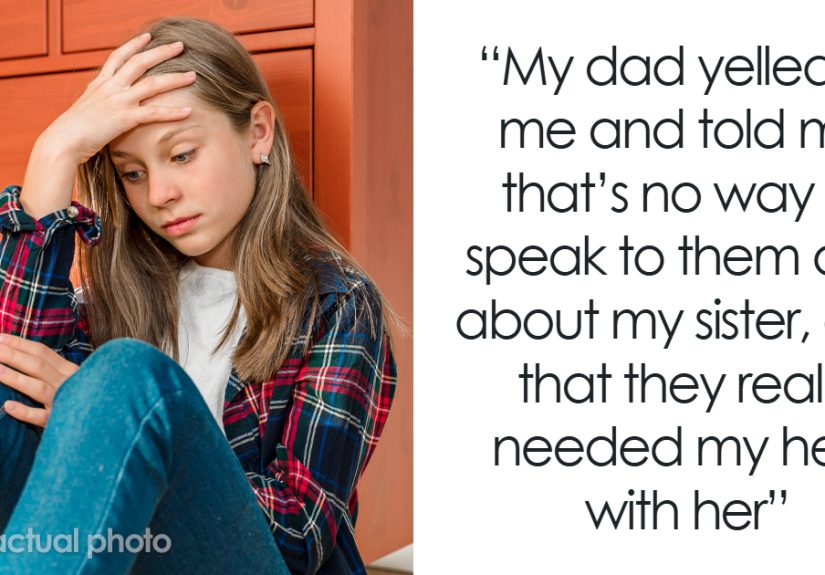
This exact kind of family clash went viral recently: a teen refused to be a live-in babysitter, but got criticized for calling her younger sibling a “quarantine baby” and “the result of their quarantine boredom.” The comments split into two camps: (1) “You’re not a third parent,” and (2) “That wording is… yikes.” And honestly? Both things can be true at the same time.
Let’s unpack what’s really going on: the difference between healthy family responsibility and parentification, why parents lean so hard on older kids, why teens push back (often loudly), and how families can negotiate childcare without turning siblings into lifelong enemies.
The Viral Problem Isn’t Just BabysittingIt’s Being “Voluntold”
Babysitting once in a while is normal in many families. The issue starts when “help out” turns into routine, expected, and indefinite childcareespecially when it affects school, sleep, friendships, extracurriculars, or a teen’s ability to plan for college or work.
In the viral-style scenario, the teen wasn’t refusing to ever help. She was refusing to be the default childcare plan. That’s a huge difference. A few hours on a Saturday is “pitching in.” Being the daily safety netevery day, whenever, foreveris “congratulations, you’ve been promoted to unpaid staff.”
Also, the “live-in babysitter” label hits a nerve because it captures something real: when families rely on one child to raise another child, it can stop feeling like family teamwork and start feeling like a job you never applied for.
Parentification vs. Chores: Same House, Totally Different Universe
What parentification means (and why it matters)
Parentification is when a child or teen is pushed into adult-like responsibilities that aren’t appropriate for their developmental stagelike acting as a caregiver or emotional support system in ways that should be handled by adults. Researchers often describe it as “role reversal,” where the child becomes the helper-parent and the parent becomes the one being supported.
Importantly, experts distinguish parentification from normal, supervised responsibilities (like age-appropriate chores) that build life skills. One is growth. The other is pressure wearing a “character-building” trench coat.
Two types of parentification to know
- Instrumental parentification: taking on practical adult dutiesregular childcare, cooking, managing schedules, getting siblings ready for school, handling household logistics.
- Emotional parentification: becoming the family’s therapistmediating parent conflicts, carrying adult worries, soothing a parent’s stress, or feeling responsible for everyone’s feelings.
In “live-in babysitter” conflicts, instrumental parentification is usually the headline. But emotional parentification often sneaks in as the fine print: guilt trips, “after all we do for you,” or “you’re selfish if you want your own life.”
Why Teens Push Back (And Why It Can Sound Harsh)
Teenagers are still developing independenceidentity, social skills, school goals, and future plans. When caregiving becomes heavy and constant, it can clash with everything a teen is trying to build.
Here’s why teens often hit a breaking point:
- School isn’t optional. Regular childcare can interfere with homework, studying, and sleepespecially if the younger child needs constant supervision.
- Teen time is not “free time.” Sports, clubs, volunteering, part-time jobs, and social life all matter for development and future opportunities.
- They didn’t choose parenthood. Parents chose to have another child. Teens did not sign that contract.
- It can feel unfair and invisible. If a teen’s help is expected but never appreciatedor if boundaries are punishedresentment grows fast.
And about the harsh phrasing (“quarantine boredom”)? When people feel trapped, they often grab the sharpest words they can findbecause polite words failed to get attention. That doesn’t make cruel wording “good,” but it often signals something important: the teen feels unheard.
Why Parents Lean on Older Kids (Sometimes Desperately)
On the parent side, this conflict is rarely just “we want to control you.” It’s often “we are overwhelmed and out of options.” The past several years have been brutal for many families: childcare shortages, high costs, schedule chaos, and stress that piles up like laundry that never ends.
Public health and psychology organizations have repeatedly described how parenting stress affects family well-beingand how support systems (childcare, schools, extended family) are essential, not optional. When those supports break down, families improvise… and older siblings often become the backup plan.
But here’s the hard truth: “We’re overwhelmed” explains the behavior; it doesn’t automatically justify it. When parents turn a teen into a default caregiver, the teen pays the priceoften in academics, mental energy, and relationships.
The Internet’s Two-Track Judgment: Boundary vs. Tone
Why did commenters “drag” the teen more for her wording than for her boundary? Because tone is easier to police than systems.
It’s simpler to say, “Don’t call your sister that,” than to talk about:
- how childcare costs and shortages pressure families,
- how parentification affects kids long-term,
- how a teen’s education and independence matter,
- how families can set fair expectations and backup plans.
Also, people protect little kids instinctively. A toddler can’t defend herself in a comment section. So the teen’s phrase becomes the villaineven if the teen’s situation is genuinely unfair.
A more helpful framing is: The teen can be right about the boundary and wrong about the delivery. If the goal is a healthier family, both parts deserve attention.
Chores, Babysitting, and “Third Parenting”: Where’s the Line?
Many child and adolescent experts encourage age-appropriate responsibilities: chores teach competence, teamwork, and independence. But they also emphasize that expectations should be reasonable, clear, and matched to maturity.
So what separates “helpful babysitting” from “third parenting”? Look for these signals:
Green flags (generally healthy)
- Babysitting is occasional and planned in advance.
- Parents ask, not demandand accept “no” sometimes.
- It doesn’t regularly interfere with school, sleep, work, or activities.
- The teen feels appreciated (and sometimes compensated).
- There’s adult backup for emergencies.
Red flags (parentification vibes)
- The teen is the default childcare plan most days.
- Requests come last-minute, and refusal triggers punishment or guilt.
- The teen manages meals, routines, bedtime, school pickupslike a parent.
- The teen misses schoolwork or opportunities because of childcare.
- The teen feels responsible for adult problems (“We can’t handle this without you”).
If you read those red flags and thought, “Oh no… that’s my house,” you’re not aloneand you’re not doomed. You just need a better system.
How Families Can Fix This Without Starting World War Sibling
Step 1: Name the real problem (without roasting anyone)
Try this: “We need childcare coverage, and we need it in a way that doesn’t derail anyone’s life.” That’s the shared goal.
Then separate two conversations:
- Fairness conversation: How much childcare is reasonable for a teen?
- Respect conversation: How do we talk about each otherespecially the younger child?
Step 2: Create a simple babysitting agreement
A family agreement sounds formal, but it prevents the “just for a minute” trap.
- Schedule: set specific days/times (ex: Tue/Thu 4–6pm).
- Max hours: cap weekly hours (ex: 6–8 hours/week).
- Tasks: what’s expected (snack, playtime, safety) vs. not (full homework policing, deep cleaning, bedtime every night).
- Compensation: pay, rides, extra privileges, or a trade that feels fair.
- Emergency plan: who to call, where contacts are, rules for visitors, and what counts as “call the parent now.”
If your parents want you to babysit like an adult, they should set you up like an adult babysitterwith training and clear rules. Programs like babysitting and child care training exist for a reason: childcare is real responsibility, not “just hanging out at home.”
Step 3: Build a backup plan that isn’t “older sibling forever”
Even if a teen helps sometimes, families need another option for when the teen has exams, activities, work shifts, orwild conceptneeds a life.
Backup ideas (depending on your situation):
- Swap childcare with another family (trading hours).
- Use after-school programs or community centers when available.
- Ask extended family for scheduled help (not last-minute panic calls).
- Split shifts between parents if possible, even if imperfect.
- Consider a part-time sitter for peak hours (even once or twice a week can reduce pressure).
Step 4: Protect the sibling relationship on purpose
The younger child is not the enemy. The system is the enemy.
If a teen starts seeing a sibling as “the reason my life is ruined,” that relationship can get damaged for years. A better goal is: keep the teen as a sibling, not a substitute parent.
One trick that works surprisingly well: schedule small “sibling-only” time that is not childcare. Like 20 minutes of a game, a silly dance break, drawing together, or reading a storywith the parent still responsible. That keeps warmth in the relationship while boundaries stay intact.
If You’re the Teen: Scripts That Set Boundaries Without Lighting the House on Fire
You shouldn’t have to deliver boundaries like a courtroom speech, but having words ready helps when emotions run hot.
- Simple boundary: “I can babysit Saturday from 2 to 5, but not on weekdays.”
- School-first boundary: “If I’m watching her after school, my grades will drop. I can do one day a week, not every day.”
- Fairness boundary: “I’m happy to help sometimes, but I can’t be the default caregiver.”
- Compassion + boundary: “I love her. I just need time to be a teenager too.”
If you regret harsh wording, you can repair without surrendering your boundary:
“I’m sorry for the way I said it. I don’t mean my sister is a problem. I mean the expectation that I’m responsible for daily childcare is too much.”
If You’re the Parent: How to Ask for Help Without Parentifying Your Teen
Parents can be stressed and still be fair. Here’s what helps:
- Ask, don’t assign. Teens deserve some choice.
- Be specific. “Can you watch her from 4:30–5:30?” is better than “Help with your sister.”
- Show appreciation. Gratitude reduces resentment more than lectures ever will.
- Don’t punish “no.” If every refusal triggers consequences, it’s not “help”it’s forced labor with extra steps.
- Support competence. If a teen is babysitting, provide safety info, emergency contacts, and clear rules.
Also: if parents feel like they’re drowning, that’s not a moral failure. It’s often a support failure. National health leaders have emphasized how parental stress affects the whole family and why communities, workplaces, and systems matternot just individual willpower.
When It Crosses a Line: Signs a Teen Needs More Support
If a teen is regularly providing childcare and starts showing these signs, it’s time to change the plan:
- Grades slipping, frequent exhaustion, or missed schoolwork
- Chronic irritability, shutdown, or constant anxiety
- Loss of friendships or withdrawal from activities
- Anger toward the younger sibling that feels out of control
- Feeling hopeless about the future (“I’ll never get out of here”)
If that’s happening, bring in support: a school counselor, trusted family member, pediatrician, or community resource. Sometimes the best solution isn’t “try harder”it’s “get more help.”
Real-Life Experiences That Mirror This Situation (And What They Teach Us)
Note: The experiences below are common patterns families describe. They’re written as realistic composites to show how these conflicts often play outand how they can be repaired.
Experience #1: “It started as one favor… then became my whole personality.”
A 16-year-old agrees to watch her little brother after school “for a couple weeks” while a parent adjusts a work schedule. Weeks become months. She stops joining clubs because she has to be home by 3:30. Teachers notice her homework slipping. When she asks for a schedule, her parent says, “Why are you making this a big deal? You’re already home.” She explodesnot because she hates her brother, but because she feels invisible. The fix wasn’t dramatic: a written schedule, two set babysitting days, and a backup sitter one afternoon a week. Her grades recover, and she actually likes her brother again.
Experience #2: “They called it ‘helping,’ but I was parenting.”
A teen is responsible for dinner, baths, and bedtime for a younger sibling most nights. If the younger child melts down, the teen gets blamed: “You can’t control her.” The teen starts feeling like a failure at a job she never wanted. What changed things was redefining roles: the teen could do a short after-school shift (snack + play), but bedtime became the parent’s job again. The teen wasn’t “lazy.” She was overloaded. Once the workload matched her age, the whole house got calmer.
Experience #3: “My words were rude… because I was scared.”
A 17-year-old wants to apply to colleges out of state. Her parents push her to stay local “to help with the baby.” She makes a brutal comment about the baby being an accident or a “pandemic decision.” The family fight becomes about her “disrespect,” and the real issueher fear of losing her futuregets ignored. Repair came in two parts: she apologized for the insult, and her parents apologized for assuming her life would revolve around theirs. They negotiated: she’d help one weekend day until graduation, then she’d go where she wanted. The baby didn’t need her to sacrifice her future; the family needed a plan.
Experience #4: “I love my sister, but I needed to be her sisternot her third parent.”
An older sibling feels guilty for wanting freedom, because she genuinely loves her little sister. But love doesn’t cancel limits. The family introduced “sibling time” that was purely fundrawing, music, a short walkwhile adults handled real childcare. That shift changed the relationship: the teen stopped feeling trapped, and the younger child stopped seeing her as “the boss.” When siblings get to be siblings, affection has room to grow.
The takeaway: When a teen refuses to be a live-in babysitter, it’s rarely about hatred or selfishness. It’s about boundaries, fairness, and the right to develop a future. And when the teen’s words come out sharp, it often means the pressure has been building for a long time. The healthiest families address both: they fix the system and repair the respect.