Table of Contents >> Show >> Hide
- Why Your Kitchen Deserves a Better Range Hood
- Key Features to Look for in the Best Range Hoods
- The Best Types of Range Hoods for Different Kitchens
- How to Match a Range Hood to Your Cooktop
- Installation and Maintenance Tips That Make Hoods Work Better
- Common Range Hood Mistakes to Avoid
- Real-World Experiences: What It’s Like to Upgrade Your Range Hood
- Conclusion: A Small Appliance with a Big Impact
If you’ve ever smoked out your kitchen just by making bacon, you already know:
a good range hood is less of a “nice extra” and more of a “how did I live
without this?” upgrade. The best range hoods quietly clear smoke, grease, and
odors, protect your cabinets and walls, and even make your kitchen look more
high-endall without sounding like a jet taking off.
In this guide, we’ll walk through how to choose the best range hood to upgrade
your kitchen, what all those specs (CFM, sones, ducted vs. ductless) actually
mean, and which types of hoods work best for different homes and cooking
styles. By the end, you’ll be able to shop like a pro and pick a range hood
that looks good, works hard, and doesn’t annoy everyone at the dinner table.
Why Your Kitchen Deserves a Better Range Hood
Cleaner air and a healthier home
Cookingespecially on gas or high heatreleases smoke, moisture, grease, and
tiny particles into the air. Without proper kitchen ventilation, those
pollutants can hang around, irritate your lungs, and contribute to poor indoor
air quality. A well-designed range hood captures that mess right at the
source, then either vents it outside or filters it before returning air to
your kitchen.
Energy and building science experts consistently highlight kitchen ventilation
as a key part of a healthy home, right up there with insulation and air
sealing. A hood that actually gets used (that part matters!) can reduce
exposure to cooking fumes, cut down on excess humidity, and help prevent mold
and grime from building up on surfaces.
Less grease, less cleaning, longer-lasting finishes
Ever notice a sticky film on top of your cabinets or on the walls near your
stove? That’s airborne grease settling down after each meal. Over time, it
stains paint, dulls cabinet finishes, and attracts dust like a magnet. The
best range hoods capture as much of that as possible before it ends up glued
to your kitchen.
That means your backsplash stays brighter, your cabinet doors stay smoother,
and your “deep cleaning days” get a little less terrifying. In other words,
upgrading your hood is an upgrade for your future self’s cleaning schedule,
too.
Looks that actually match your kitchen style
Range hoods used to be an afterthoughtjust a beige metal box under a cabinet.
Not anymore. Today’s best models are design features in their own right:
slim, stainless-steel under-cabinet hoods; sleek wall-mount chimneys; bold
statement hoods clad in wood, copper, or painted metal.
A good hood makes your kitchen look intentional and finished. Whether you want
a nearly invisible insert that disappears into custom cabinetry or a big,
dramatic focal point over your range, there’s a hood style that can totally
upgrade the feel of the room.
Key Features to Look for in the Best Range Hoods
1. Ducted vs. ductless: how will the hood handle the air?
Before falling in love with a pretty stainless model on sale, you need to know
one thing: where is the air going?
-
Ducted range hoods (also called vented hoods) pull air from
above the cooktop and push it outside through ductwork. They are the gold
standard for performance: they remove smoke, odors, heat, and moisture from
your home instead of recirculating them. -
Ductless range hoods (recirculating hoods) filter the air
through charcoal or carbon filters and send it back into your kitchen. They
don’t require ductwork, which makes them easier to install in apartments or
remodels, but they’re less effective at removing heavy smoke and steam.
If you do lots of searing, frying, or wok cooking, a ducted hood is usually
worth every penny. If you mostly simmer, bake, and sauté in a smaller space
with no realistic path for ductwork, a good ductless hood with quality filters
can still offer meaningful improvement.
2. CFM: how much air the hood can move
CFM stands for “cubic feet per minute” and measures how much air the hood can
pull. Higher CFM generally means stronger ventilation, but bigger is not
always betterespecially if noise and energy use matter to you.
-
For a typical 30-inch range in an average home kitchen, many experts suggest
looking for at least 100–250 CFM for light to moderate
cooking. -
If you cook frequently on high heat, have a powerful gas range, or use
griddles and big pans, you may want 300–600+ CFM. -
Very high CFM (600–900+) is often reserved for pro-style ranges and
wide cooktops, and may require additional make-up air depending on local
building codes.
A helpful rule of thumb is to match the hood’s capacity to the width and power
of your cooking surface. Overshooting “just because” can add noise and cost
without much real-world benefit in a modest kitchen.
3. Noise level (sones): will you actually turn it on?
The best range hood is the one you’ll actually use, and noise is a huge part
of that equation. Hoods are often rated in sones or
decibels, which measure loudness.
- 1–2 sones: Very quiet, similar to a running refrigerator.
- 3–4 sones: Normal conversation level; noticeable but comfortable.
- 6+ sones: Loud; you may find yourself yelling over it.
Many high-quality hoods are designed so that low and medium speeds stay in the
1–3 sone range for everyday cooking, with louder “turbo” settings reserved for
extreme situations. Look for models advertised as quiet or with low sone
ratings at working speedsnot just at the lowest barely-doing-anything setting.
Pro tip: in the store, if there’s a demo, cycle through the speeds while you
imagine trying to chat with someone at the island. If you’d have to lip-read,
keep shopping.
4. Hood style: under-cabinet, wall-chimney, island, or insert
Range hoods come in several main configurations. The “best” one for you
depends on your kitchen layout:
-
Under-cabinet range hoods mount beneath wall cabinets and
vent either out the back or up through the cabinet. They’re common, space
efficient, and available in lots of sizes and price points. Great for most
standard kitchens. -
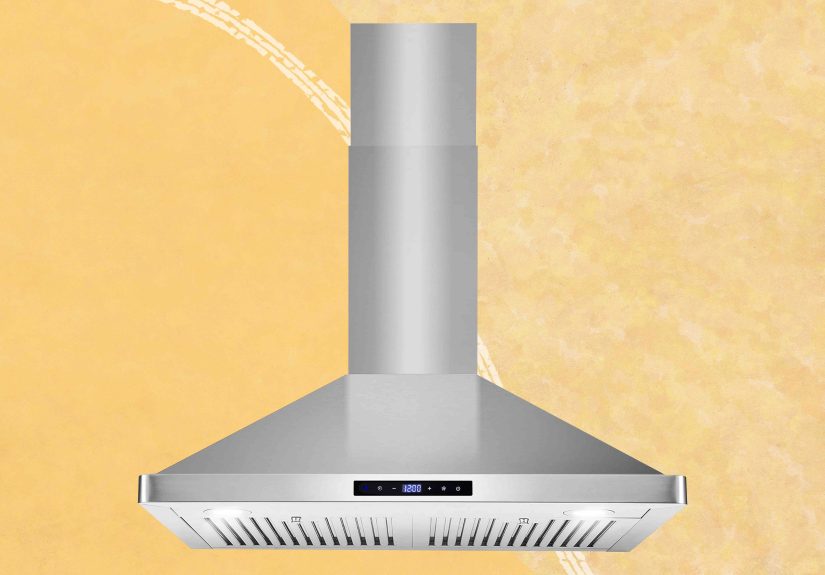
Wall-chimney hoods mount on the wall with no cabinet above
and have a tall chimney that hides the ductwork. They’re popular in remodels
and open kitchens and can look quite dramatic. -
Island range hoods hang from the ceiling over a cooktop on
an island. Because they’re exposed on all sides, they often need more power
and a wider capture area to be effective. -
Insert (built-in) hoods are just the working guts of a
range hood designed to be hidden inside a custom wood or metal surround.
Ideal if you want a fully custom look. -
Over-the-range microwaves with built-in vent fans are
common in smaller kitchens, but they typically offer weaker ventilation than
a dedicated hood. They’re better than nothing, but not the first choice if
you cook heavily.
5. Filters, lighting, and controls
Beyond basic power and noise, a few design details will make your range hood
more pleasant to live with:
-
Filters: Look for dishwasher-safe metal baffle or mesh
filters for ducted hoods; they’re easier to keep clean. Ductless models
also need replaceable charcoal or carbon filters for odor control. -
Lighting: LED lighting is bright, energy-efficient, and
runs cool. Multiple light levels are a nice bonus for late-night snack
missions. -
Controls: Simple push-button or dial controls are usually
fine. Touch controls and remote controls are handy, and some high-end models
add smart features like auto-on when the cooktop heats up. -
Energy efficiency: ENERGY STAR–rated hoods are designed to
deliver good airflow with less electricity and lower noise.
The Best Types of Range Hoods for Different Kitchens
Best for most homes: a 30–36 inch under-cabinet or wall-chimney hood
For a typical home with a standard 30-inch range, a
30–36 inch ducted under-cabinet or wall-chimney hood with
around 250–400 CFM and 1–4 sones at normal
speeds is a sweet spot. These models offer solid performance, good coverage,
and a wide range of stylesfrom minimalist to professional.
Best for small kitchens and apartments
Working with a compact kitchen or a rental? A slim under-cabinet hood or a
ductless unit can still be a huge upgrade from the old, noisy builder-grade
fan.
- Look for a low-profile design that doesn’t dominate the space.
-
Prioritize quiet operation and strong filtration; you’ll be closer to the
hood in a small space. -
Make sure replacement charcoal filters are easy to find and reasonably
priced, since they’ll need periodic changes.
Best for serious home cooks and gas ranges
If you regularly sear steaks, stir-fry on high heat, or use multiple burners
at once, you’ll want a more robust hood:
-
Choose a hood that’s at least as wide as your cooking surface, and consider
going a bit wider (e.g., a 36-inch hood over a 30-inch range). -
Look for 400+ CFM, with higher capacity if you have a
powerful pro-style range. -
Prioritize deep capture areas and high-quality metal filters to grab rising
smoke and grease.
Many premium manufacturers also offer insert blowers that can be paired with a
custom wood or metal hood shell, combining strong performance with fully
tailored style.
Best for islands and open-concept spaces
Island cooktops are beautiful, but they’re harder to ventilate properly. With
no wall to help corral the smoke, you typically need:
- A wider hoodoften 36–42 inches depending on the cooktop size.
- Stronger airflow (often 400–700+ CFM), since air can escape from all sides.
-
A design that doesn’t block sightlines too muchglass and streamlined metal
designs can help.
How to Match a Range Hood to Your Cooktop
Step 1: Size the hood correctly
Most experts recommend that your hood be at least as wide as your cooktop and
ideally extend an inch or two beyond it on each side. For a 30-inch range, a
30–36 inch hood is usually ideal; for a 36-inch cooktop, choose a 36–42 inch
hood.
Step 2: Choose the right CFM for your cooking style
A simple way to think about CFM:
-
Light cooking (boiling pasta, reheating, occasional sauté):
150–250 CFM is often enough in a smaller, well-ventilated kitchen. -
Moderate cooking (regular stir-fry, pan searing,
multi-burner use): 250–450 CFM is a better target. -
Heavy cooking (frequent frying, high-BTU burners, large
ranges): 450–900 CFM, potentially with make-up air if required by local
codes.
Step 3: Check code requirements and make-up air
Some regions require range hoods to meet certain airflow minimums or to
include make-up air systems when the fan capacity exceeds a specific CFM
threshold. This is to prevent the fan from creating too much negative pressure
in tightly sealed homes. If you’re planning a very powerful hood, it’s wise to
confirm local requirements and coordinate with your HVAC or building
professional.
Installation and Maintenance Tips That Make Hoods Work Better
Plan the ducting carefully
Even the best range hood can be underwhelming if the ductwork is poorly
designed. To get the performance you’re paying for:
- Use smooth metal ducting rather than flexible plastic or foil.
- Keep the duct run as short and straight as possible.
- Avoid excessive elbows and tight turns, which reduce airflow.
- Vent all the way outdoorsnever into an attic or crawl space.
Install at the right height
Most hoods perform best when installed about 24–30 inches
above an electric cooktop and usually a bit higher above strong gas burners
(always check the manufacturer’s range). Too low and it gets in the way; too
high and it can’t effectively capture smoke and steam.
Clean and maintain regularly
Your range hood is basically a grease and steam magnet. To keep it working:
-
Wash metal filters in the dishwasher or with hot, soapy water every few
weeks or as needed. -
For ductless hoods, replace charcoal filters on the schedule recommended by
the manufactureroften every 3–6 months depending on use. -
Wipe down the hood exterior regularly to prevent grease buildup from
hardening and becoming harder to remove.
And one more habit shift: turn the hood on before you start cooking
and leave it running for a few minutes after you turn the burners off. That
gives it time to capture rising plumes and lingering steam.
Common Range Hood Mistakes to Avoid
-
Buying only by looks: A stunning hood that barely moves air
will still leave you with steamed-up windows and lingering bacon smells. -
Ignoring noise ratings: If it’s too loud to tolerate, you
simply won’t use it. Prioritize a quiet model at everyday speeds. -
Ventilating into the attic: This is a big no. It can cause
moisture and mold problems. Always vent completely outdoors when possible. -
Forgetting about filters: Running a hood with clogged or
never-changed filters dramatically reduces performance and can be a fire
risk. -
Oversizing without a plan: A monster 1,200 CFM hood over a
modest range in a tight, well-sealed house may require make-up air. Bigger
isn’t always smarter.
Real-World Experiences: What It’s Like to Upgrade Your Range Hood
Specs are great, but what does upgrading your range hood actually feel like in
day-to-day life? Here’s what many homeowners report once they swap out an
older, rattling fan for a modern, well-sized hood.
The “I didn’t know it could be this quiet” moment
A lot of people assume all range hoods are obnoxiously loud because the one
they grew up with roared like a vacuum cleaner. When they install a new hood
with a low sone rating, there’s usually a moment of disbelief:
“Wait, it’s on?”
Being able to hold a normal conversation while the hood is running changes how
you use your kitchen. You’re more likely to turn it on every time you cook,
which means cleaner air, less humidity, and fewer mystery smells drifting into
the living room. That “everyday use” is exactly what building scientists are
aiming for when they recommend quiet, effective hoods.
The “my cabinets don’t feel sticky anymore” bonus
Another common experience after upgrading is noticing that the tops of the
cabinets, the microwave, and the backsplash stay much cleaner. High-heat
cooking will always produce some residue, but a properly sized and installed
hood catches far more of it before it drifts around the room.
People who cook a lot of bacon, burgers, or stir-fries often say the kitchen
just feels cleaner, even between wipe-downs. Over months and years,
that can mean less repainting, fewer deep-degreasing sessions, and nicer
looking finishes.
Lessons from switching from ductless to ducted
Many remodelers who had ductless hoods in the past and switched to a ducted
setup during a renovation describe it as a “night and day” differenceespecially
if they use gas or cook on high heat frequently.
With a ductless hood, odors and moisture are reduced, but not eliminated. With
a well-designed ducted system, smoke leaves the kitchen quickly instead of
drifting down the hallway. That’s especially noticeable in open-concept
layouts where smells used to linger in the living room or upstairs bedrooms.
Design upgrades that feel surprisingly luxurious
On the aesthetic side, homeowners often underestimate how much a new hood can
change the vibe of the kitchen. Swapping a dated, yellowed under-cabinet box
for a sleek stainless chimney or a custom-clad wood hood can make the whole
room feel more intentional and high-endeven if nothing else changes.
In some cases, the hood becomes a subtle but powerful focal point: a matte
black metal shell over a built-in insert, a brushed brass trim on a white
plaster hood, or a simple, clean-lined stainless design that complements
modern cabinets and appliances.
What people wish they had known sooner
When you talk to people who love their upgraded hoods, a few common “wish I’d
known” themes keep coming up:
-
“I should have measured more carefully.” Clearances, cabinet
depths, and duct locations matter. Double- and triple-check before
ordering. -
“I’m glad I paid attention to noise.” Many users say caring
about sones was the difference between a hood they use and a hood they
ignore. -
“Cleaning the filters isn’t as big a deal as I feared.”
Once you get in the habit, tossing them in the dishwasher every few weeks
becomes routineand it keeps performance strong. -
“I didn’t realize how much steam I used to tolerate.” After
upgrading, people notice less condensation on windows and fewer lingering
cooking smells, especially in cooler or more humid climates.
Put simply, upgrading your range hood is one of those projects that doesn’t
scream “instant glamour,” but it quietly transforms how your kitchen feels and
functions. It’s comfort, cleanliness, and peace of mind wrapped in one shiny
appliance.
Conclusion: A Small Appliance with a Big Impact
Choosing the best range hood to upgrade your kitchen is about more than
picking a pretty stainless box. It’s about matching the hood’s power, noise
level, and style to your cooking habits, your kitchen layout, and your local
code requirements. When you get it right, you’ll enjoy cleaner air, less
grease, a calmer soundscape, and a kitchen that looks more polished and
put-together.
Focus on the basicsducted when possible, appropriately sized CFM, quiet
operation, and easy-to-clean filtersthen choose the style that makes your
space feel like the upgraded kitchen you’ve been picturing. Your lungs, your
cabinets, and anyone who spends time in your kitchen will thank you.