Table of Contents >> Show >> Hide
- First, which “best temperature” do you mean?
- The best internal temperature for beef tenderloin
- Why tenderloin is happiest at medium-rare
- The thermometer rules that save expensive dinners
- The best oven temperature for beef tenderloin (by method)
- A practical example: a 3-pound center-cut tenderloin, medium-rare
- Common temperature mistakes (and how to avoid them)
- What “best” looks like on the plate
- Extra: Real-world experiences that teach you the temperature lesson (about )
- Conclusion
- SEO Tags
Beef tenderloin is the luxury sedan of the meat case: smooth, elegant, and wildly expensive to “parallel park” if you don’t watch your temperature.
The good news? Tenderloin is also one of the easiest cuts to nail once you stop cooking by minutes and start cooking by degrees.
This guide covers the exact temperatures that matter most (internal doneness, pull temps, resting, and oven settings), plus a handful of practical
examples so you can serve slices that are rosy, buttery, and not tragically gray.
First, which “best temperature” do you mean?
When people ask for the best temperature for beef tenderloin, they usually mean one (or both) of these:
- Best internal temperature (the number your thermometer reads in the meat)
- Best oven temperature (the heat setting that cooks it evenly and builds a great crust)
Internal temperature determines doneness. Oven temperature determines how evenly the tenderloin cooks and how good the outside looks and tastes.
Get the internal temperature right and you’re 90% of the way to perfection.
The best internal temperature for beef tenderloin
For most people, the sweet spot for beef tenderloin is medium-rare: tender, juicy, and gently rosy in the middle.
Because tenderloin is very lean, it can go from “wow” to “why is it dry?” faster than you can say “just five more minutes.”
The quick answer
- Best final doneness for tenderloin: 130–135°F (medium-rare)
- Pull it early: remove from heat around 5–10°F lower, then let carryover cooking finish the job
Beef tenderloin temperature chart (pull temp vs. final temp)
Use this chart as your “don’t panic” roadmap. The exact carryover depends on roast size and cooking method, but these targets are reliable for most kitchens.
| Doneness | Pull From Heat | Final After Rest | What It’s Like |
|---|---|---|---|
| Rare | 115–120°F | 120–125°F | Very red center, ultra-soft |
| Medium-rare (best for most tenderloins) | 120–125°F | 130–135°F | Rosy pink, tender, juicy |
| Medium | 130–135°F | 135–145°F | Pink fades, firmer bite |
| Medium-well | 140–145°F | 145–155°F | Mostly brown, noticeably drier |
| Well-done | 150°F+ | 155°F+ | Very firm; tenderloin starts losing its superpower |
A quick (important) food safety note
U.S. food safety guidance for whole cuts (steaks/roasts) commonly states a minimum internal temperature of 145°F with a
3-minute rest. Many cooks still prefer tenderloin at lower temps for texture and juicinessespecially medium-rarebut it’s smart
to follow the more conservative target if you’re cooking for someone who’s pregnant, immunocompromised, or otherwise needs extra caution.
Why tenderloin is happiest at medium-rare
Tenderloin is already tender because it’s a muscle that doesn’t do much work. Translation: it doesn’t have a lot of tough connective tissue that
needs long, slow cooking to break down. But it also doesn’t have much fat to keep it juicy when temperatures climb.
As internal temp rises, muscle fibers tighten and squeeze out moisture. On a fattier cut, melting fat can mask some dryness. On tenderloin,
there’s less “insurance.” That’s why the same 10°F difference that barely registers on chuck roast can feel dramatic on filet.
The thermometer rules that save expensive dinners
1) Use a thermometertime is a liar
“Minutes per pound” is fine for a rough plan, but tenderloin is too pricey to cook on vibes alone. Use an instant-read thermometer or, better,
a probe thermometer you can leave in while it roasts.
2) Measure the thickest center, not the tip
Insert the probe into the center of the thickest part of the roast. Avoid hitting a pan, a rack, or a knot of twine. If your roast
has a skinny tail, tuck it under and tie so the shape is more even.
3) Plan for carryover cooking
After you remove tenderloin from heat, the outside is hotter than the center. That heat travels inward during rest and
raises the internal temperature. The bigger the roast (and the hotter the cooking method), the more carryover you’ll see.
The best oven temperature for beef tenderloin (by method)
There’s more than one “right” way to cook tenderloin. Pick the method that fits your schedule and your preferred crust-to-center ratio.
Method A: Classic high-heat roast (fast, great crust)
- Oven: 425°F (some recipes go even hotter)
- Pull temp for medium-rare: 120–125°F
- Rest: 15–25 minutes (watch your final temp)
This is the go-to for holiday dinners because it’s quick and produces a beautiful exterior. Just don’t walk away at the endtenderloin finishes fast.
Method B: Reverse sear (most even doneness, low stress)
- Oven: 225–250°F until nearly done
- Pull temp before sear: about 115–120°F for medium-rare
- Finish: blast at 450–500°F (or sear in a hot pan) to brown the exterior
- Final target: 130–135°F
Reverse sear is the “calm, confident” method. Low heat cooks the center evenly, then high heat gives you the crust.
It’s especially helpful if you hate that gray overcooked ring near the surface.
Method C: High-heat “restaurant style” (very hot, very quick)
- Oven: 500°F for a short time
- Pull temp for medium-rare: around 120–125°F (then rest up)
- Best for: smaller roasts or when you want speed
This method can be fantastic, but it punishes inattention. If you’re prone to “checking one email,” choose reverse sear instead.
Method D: Sous vide + sear (maximum precision)
- Water bath: set to your final doneness (often 129–133°F for medium-rare texture)
- Then: dry thoroughly and sear hard and fast for color
Sous vide lets you lock in a specific internal temperature, then add a crust at the end. If you like “exactly medium-rare everywhere,” this is your method.
A practical example: a 3-pound center-cut tenderloin, medium-rare
Here’s a simple, reliable plan using a reverse sear approach (because it’s forgiving and consistent).
Step-by-step
- Trim and tie: remove silver skin if needed; tie every 1.5–2 inches so it’s evenly thick.
- Season smart: salt and pepper (plus herbs if you want). If you have time, salt a few hours ahead for better flavor.
- Slow roast: put it on a rack and roast at 225°F until it reaches 115–120°F in the center.
- Rest briefly: 10 minutes while you preheat the oven to 450–500°F (or heat a skillet).
- Sear to finish: return to oven (or sear in pan) until the center hits 125°F.
- Final rest: 10–20 minutes, aiming for a final internal temp of 130–135°F.
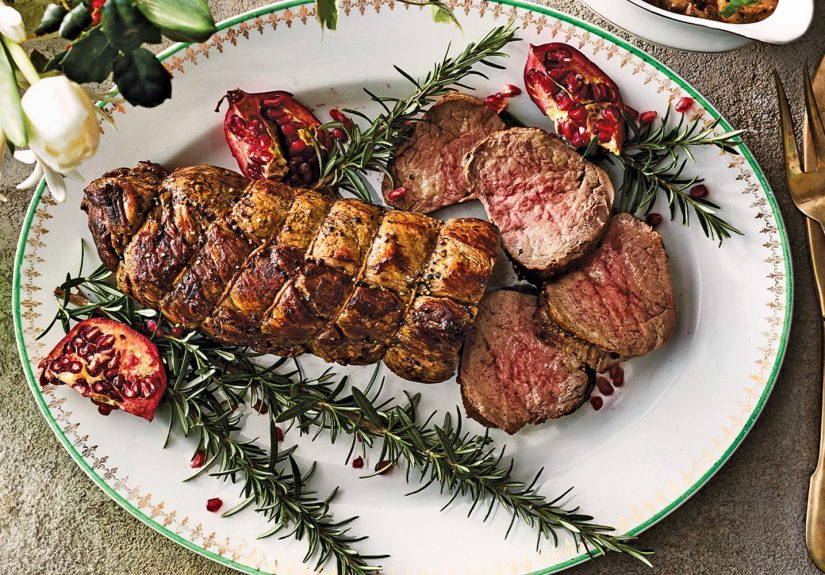
The result: evenly rosy slices in the center, darker end pieces for the “no pink please” crowd, and a crust that tastes like you knew what you were doing the whole time.
Common temperature mistakes (and how to avoid them)
Mistake 1: Cooking to “done” in the oven instead of “pull” temperature
If you wait until the thermometer reads 130–135°F while it’s still cooking, you’ll usually overshoot after resting.
Pull early and let carryover finish.
Mistake 2: Putting the thermometer in the wrong spot
If the probe is too shallow, the surface heat lies to you. If it’s too deep and touching a pan/rack, it lies in a different direction.
Center of the thickest part is the truth.
Mistake 3: Overcooking ends because the roast is uneven
Tenderloins often taper. Tuck the thin end under and tie it, or consider cutting the tenderloin into two pieces and tying them to similar thickness.
Mistake 4: Slicing too soon (or resting too long)
Resting is mostly about temperature control. Slice too soon and you may cut while the center is still climbing.
Rest too long without keeping it warm and you may lose that “hot and juicy” serving moment. Watch the thermometer and serve when it hits your target.
What “best” looks like on the plate
If you want the classic tenderloin experiencesoft, buttery, still juicyaim for a final internal temperature of 130–135°F.
Serve with a sauce that loves lean beef (au poivre, horseradish cream, red wine reduction), and let the meat be the star.
Extra: Real-world experiences that teach you the temperature lesson (about )
Almost everyone’s first tenderloin story starts the same way: “I didn’t want to mess it up.” And that very reasonable fear leads to the most common
tenderloin tragedycooking it “just to be safe,” which usually means cooking it to a texture that feels more like polite disappointment than celebration.
Tenderloin is lean, so it doesn’t forgive hesitation the way a rib roast might. The best “experience-based” advice is this: decide your target
temperature before you turn on the oven, then treat your thermometer like it’s the GPS and not a vague suggestion from a passenger.
Another universal experience: the carryover surprise. Home cooks often pull a roast at the exact number they want to servesay 135°F
then watch in confusion as the final slices land closer to medium. What happened? The outside of a tenderloin (especially after a hot roast or sear)
stores a lot of heat. While the roast rests, that heat migrates inward. People learn this lesson once, then forever after become the person at the party
saying, “We’re pulling at 125°F, trust the process,” like a calm meat whisperer.
Then there’s the thermometer placement saga. If you’ve ever checked a tenderloin and thought, “Wow, it’s done already,” only to slice
it and find the center lagging behind, you’ve lived this. The probe was too close to the surface, or angled into a hotter zone. The real-world fix is
boring but effective: insert into the thickest center from the side (not from the top), and don’t let the tip touch metal. If you’re cooking a tapered
tenderloin, tying and tucking the tail end feels fussyuntil you realize it’s the difference between one perfect roast and two different doneness
arguments happening on the same cutting board.
Many cooks also discover the secret joy of having multiple doneness options without making multiple roasts. A whole tenderloin naturally
gives you a gradient: the center is medium-rare perfection, the ends drift closer to medium. In real kitchens, that’s not a flawit’s diplomacy.
You can quietly hand the end slices to the “no pink” guests and save the center for the people who know what they’re doing (or at least know what they like).
Finally, there’s the “I cooked it exactly right… then ruined it at the finish line” experience: slicing too early, slicing too thin, or letting the roast
sit so long it cools off. The best habit is to treat resting as an active step, not a nap. Set a timer, keep the thermometer in, and slice when the center
hits your final target. The result is the kind of tenderloin that makes people assume you trained under a chef. You didn’tyou just cooked by temperature,
which is the closest thing to a cheat code that beef will allow.
Conclusion
The best temperature for beef tenderloinif you want peak tenderness and juicinessis a final internal temperature of 130–135°F
(medium-rare). Pull it early (usually 120–125°F), rest strategically, and let carryover cooking finish the job.
Choose a cooking method that fits your comfort level: classic high-heat roast for speed and crust, reverse sear for even doneness, or sous vide for
maximum precision. Your tenderloin will taste like it costs what it cost.