Table of Contents >> Show >> Hide
- What Makes a Great World War 2 TV Series?
- The Best World War 2 TV Series, Ranked By Fans
- 1. Band of Brothers (2001)
- 2. The Pacific (2010)
- 3. Masters of the Air (2024)
- 4. The World at War (1973)
- 5. Foyle’s War (2002–2015)
- 6. World on Fire (2019– )
- 7. Das Boot (2018– )
- 8. Generation War / Unsere Mütter, unsere Väter (2013)
- 9. World War II: From the Frontlines (2023)
- 10. The Greatest Events of World War II in Colour (2019)
- 11. World War II: The Complete History (2000)
- 12. Hogan’s Heroes (1965–1971)
- More Great World War 2 Shows to Add to Your Watchlist
- Watching WWII TV Series Responsibly
- Fan Experiences: How to Get the Most Out of World War 2 TV Series (Extra Deep Dive)
- Final Thoughts: Why World War 2 TV Shows Still Matter
World War II has been over for decades, but on TV it’s very much still happening.
From muddy foxholes in Europe to burning skies over the Pacific, filmmakers keep
returning to this conflictand audiences keep pressing “next episode.” When fans
talk about the best World War 2 TV series, the same titles get
name-dropped again and again in forums, fan-voted lists, and watchlists.
This ranking pulls from what fans actually love: user-voted lists, audience scores,
and word-of-mouth favorites. Think of it as a truce between the “historical accuracy”
crowd and the “I just want something gripping to binge on Sunday night” crowd. Whether
you’re a history buff, a war-movie addict, or you just followed one miniseries here
after finishing a hit on a streaming platform, these are the top WWII TV
shows ranked by fans.
Fair warning: these series are often brutal, emotional, and occasionally surprisingly
funny. They’re also some of the best TV ever madeof any genre. Let’s dig in.
What Makes a Great World War 2 TV Series?
Before jumping into the rankings, it’s worth asking why certain World War II
TV shows rise to the top of fan lists while others quietly disappear.
The best series usually hit a few key notes:
- Human-scale storytelling: Following a platoon, a bomber crew, a family, or a small community makes the war feel real and personal.
- Historical authenticity: Fans reward shows that get the uniforms, tactics, timelines, and attitudes rightor at least try very hard.
- Emotional impact: It’s not just battles. The best WWII TV series dive into grief, brotherhood, trauma, resistance, and moral gray areas.
- Production quality: Cinematic visuals, strong writing, and committed performances turn “good history” into “great television.”
- Rewatch value: Fans keep coming back for nuanced characters, memorable episodes, and new details they missed the first time.
Using these criteriaand the way actual viewers rate and rank these titleshere’s a
fan-powered list of the best World War 2 TV shows.
The Best World War 2 TV Series, Ranked By Fans
1. Band of Brothers (2001)
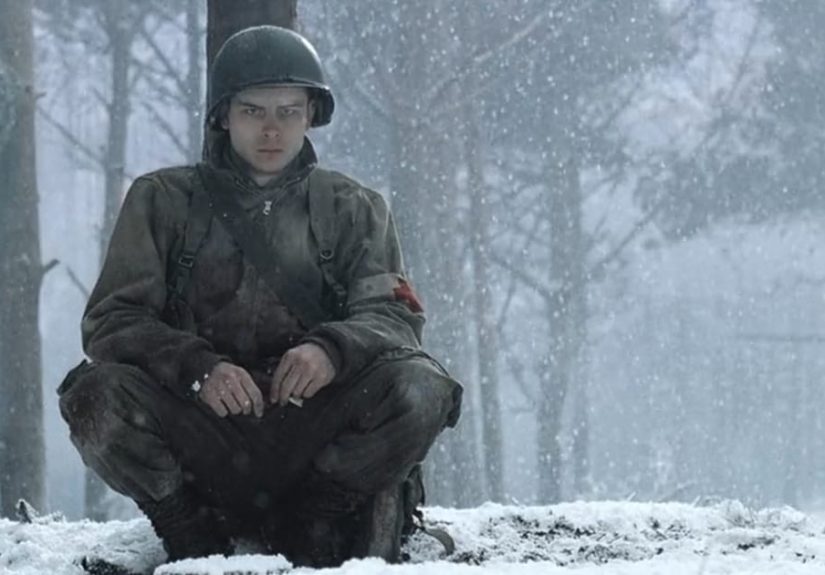
If you ask fans to name the single best WWII series, Band of Brothers
almost always lands at the top. The HBO miniseries follows Easy Company of the 101st
Airborne from jump training in Georgia through D-Day, Operation Market Garden, the
frozen hell of Bastogne, and into the heart of Germany.
Based on Stephen Ambrose’s book and produced by Steven Spielberg and Tom Hanks, it
combines meticulous historical detail with gut-punch emotional storytelling. The
real Easy Company veterans appear in interviews, reminding viewers that these
fictionalized scenes are rooted in actual experiences. For many fans, this is the
gold standard for WWII TV dramasdeeply human, beautifully shot, and
almost impossible to watch without getting attached to every single character.
Watch it if you want: a definitive, emotionally rich view of the European theater,
anchored by incredible performances and some of the most intense battle sequences
ever made for television.
2. The Pacific (2010)
Where Band of Brothers looks at Europe, The Pacific turns
toward the islands. This companion miniseries shifts the focus to U.S. Marines fighting
in places like Guadalcanal, Peleliu, and Okinawacampaigns notorious for their brutal
conditions and staggering casualties.
Fans praise the show for its unflinching portrayal of combat stress, psychological
trauma, and the environmental horrors of jungle warfare. It’s less about clear-cut
heroism and more about what sustained exposure to violence does to people. Because of
that, many viewers consider it harder to watch than Band of Brothers, but
just as essential.
Watch it if you want: a visceral, deeply uncomfortable, but powerful look at the
Pacific theater and the inner lives of the men who fought there.
3. Masters of the Air (2024)
The newest entry in the unofficial “Band of Brothers universe,”
Masters of the Air shifts the action to the skies over Europe. It
follows the U.S. Eighth Air Force’s 100th Bomb Groupnicknamed the “Bloody Hundredth”
because of heavy lossesas they fly dangerous daylight bombing runs over Nazi-occupied
territory.
Fans immediately responded to the intense aerial combat sequences, the mix of swagger
and vulnerability in the bomber crews, and the focus on the math of survival: each
mission is a roll of the dice. It’s a high-tension series where steel nerves, luck,
and teamwork matter as much as firepower.
Watch it if you want: soaring, cinematic visuals, high-stakes mission drama, and
another emotionally grounded look at a different branch of WWII service.
4. The World at War (1973)
Long before prestige war dramas were a thing,
The World at War set the standard for WWII documentaries. This
26-part British series, narrated by Laurence Olivier, weaves archival footage with
interviews from soldiers, civilians, and major political figures.
Fans of history (and many historians) still regard it as one of the most important
television documentaries ever produced. It doesn’t just cover the big battles; it
explores economic pressures, ideology, genocide, and the war’s global impact.
Compared to modern fast-cut docuseries, the pacing is slowerbut that deliberate
approach lets the material breathe.
Watch it if you want: the broadest, most comprehensive overview of World War II
available on TV, told with gravity and care.
5. Foyle’s War (2002–2015)
Not every great WWII show lives in the trenches.
Foyle’s War is a British crime drama set on the home front, where
Detective Chief Superintendent Christopher Foyle investigates murders and espionage
cases against the backdrop of wartime England.
Fans love the show’s combination of cozy mystery pacing with sharp commentary on
rationing, black-market operations, refugees, war profiteering, and shifting social
norms. It’s low on explosions and high on moral complexityand it reminds viewers
that the war transformed life far beyond the battlefield.
Watch it if you want: slow-burn mysteries, richly drawn characters, and a look at
how World War II reshaped civilian life.
6. World on Fire (2019– )
World on Fire is a more recent entry that quickly found a loyal
fanbase. This drama follows interconnected characters in Britain, Poland, France,
and Germany as the war erupts, shifting perspectives between soldiers, resistance
members, and civilians.
Viewers praise its ensemble cast and its effort to show that war is never just one
country’s story. Instead of obsessing over a single battle,
World on Fire explores how ordinary peoplein multiple languages
and locationsgrapple with impossible choices and sudden dangers.
Watch it if you want: an emotional, character-driven, multi-country drama that
feels very modern but respects its historical period.
7. Das Boot (2018– )
Inspired by the classic film of the same name, the TV version of
Das Boot dives (literally) into submarine warfare. It follows
German U-boat crews and resistance activity on land, giving viewers a rare look at
the war from the Axis side without glorifying it.
Fans highlight the suffocating tension of the underwater sequencesthe creaks of
the hull, the sonar pings, the limited air and spaceas well as the moral conflicts
facing sailors caught between duty, propaganda, and survival.
Watch it if you want: claustrophobic, nerve-shredding naval warfare and a complex
look at life inside a U-boat.
8. Generation War / Unsere Mütter, unsere Väter (2013)
This German miniseries, often referred to in English as
Generation War, follows five young friends whose lives are pulled
in different directions by the conflicttwo brothers in the Wehrmacht, an aspiring
singer, a nurse, and a Jewish tailor trying to escape persecution.
Fans applaud its unflinching portrayal of moral compromise and complicity within
Nazi Germany, even as the characters struggle with loyalty, love, and survival.
It sparked intense debate about memory, guilt, and how a generation remembers
itself, which only made it more talked about among WWII TV enthusiasts.
Watch it if you want: a challenging European perspective that forces you to grapple
with the moral messiness of war.
9. World War II: From the Frontlines (2023)
For viewers who love archival footage and modern editing,
World War II: From the Frontlines offers a fresh docuseries
approach. Using restored and colorized film, it brings historic footage into
crisp focus, framing the war through first-hand images and personal stories.
Fans appreciate how contemporary documentaries like this use technology to make
history feel immediate, especially for younger audiences who may be encountering
these events for the first time. It’s less about a single narrative voice and more
about letting the original images speak.
Watch it if you want: a bingeable documentary that combines modern pacing with
historical footage that feels shockingly present.
10. The Greatest Events of World War II in Colour (2019)
Another fan favorite in the documentary lane,
The Greatest Events of World War II in Colour zooms in on major
battles and turning pointslike Pearl Harbor, D-Day, and the Battle of Britainand
presents them with restored colorized footage.
Many viewers say the use of color makes the war feel less distant. Tanks, uniforms,
and cities suddenly look familiar, not like something confined to a black-and-white
museum reel. That visual shift gives the series a surprising emotional punch,
especially when paired with concise narration and clear timelines.
Watch it if you want: a “big picture” overview of the conflict, told through
iconic operations and turning points.
11. World War II: The Complete History (2000)
World War II: The Complete History is an accessible documentary
series that aims to cover the entire conflict in a compact format. It’s not as deep
as The World at War, but many fans appreciate its straightforward narration
and clear chronological structure.
For viewers just getting into the subject, it’s a friendly on-rampsomething you
can watch before diving into more specialized series about individual fronts,
campaigns, or units.
Watch it if you want: a survey course in WWII that’s easy to follow and ideal for
newer history fans.
12. Hogan’s Heroes (1965–1971)
Yes, really. Among all the gritty dramas and documentaries, fans still have a soft
spot for Hogan’s Heroes, an old-school sitcom set in a German POW
camp. It’s broad, silly, and absolutely not a model of historical realismbut it
built a surprisingly loyal following over the years.
Today, the show is more of a curiosity than a go-to for accuracy, but viewers who
grew up watching reruns often rank it highly in “favorite WWII shows” polls for
nostalgia value alone. It’s a reminder that pop culture has always processed war in
multiple ways: solemn, serious, and sometimes absurd.
Watch it if you want: vintage TV comfort food and a very 1960s spin on a very
serious subject.
More Great World War 2 Shows to Add to Your Watchlist
Fan rankings shift over time as new series debut and older ones find new audiences
on streaming platforms. Alongside the heavy hitters above, you’ll often see titles
like:
- The Narrow Road to the Deep North – A POW-camp love story and trauma drama that’s quickly climbing modern fan lists.
- Hitler’s Circle of Evil – A docudrama zooming in on the Nazi inner circle and their toxic power struggles.
- X Company – A character-driven series about Allied spies from a secret training facility in Canada.
- World War II: Secrets from Above – A docuseries combining aerial views and modern recon tech to reexamine key battlefields.
They don’t always crack the very top of “best ever” rankings, but they’re strong
picks if you want fresh angles on familiar history.
Watching WWII TV Series Responsibly
These shows are gripping entertainment, but they’re built on real suffering.
Bombing raids, death marches, concentration camps, and scorched cities were lived
experiences for millions of people. Fans who watch a lot of WWII content often
develop their own ground rules: taking breaks, looking up context, and remembering
that real peoplemany of them still alive or one generation removedwent through
these events.
It’s also worth balancing dramatized series with documentaries and books. Even the
most accurate show simplifies timelines and compresses events. Using dramas as a
gateway and then digging deeper is a healthy way to appreciate the storytelling
while respecting the history.
Fan Experiences: How to Get the Most Out of World War 2 TV Series (Extra Deep Dive)
Spend enough time around fans of WWII TV shows and you’ll notice something funny:
very few people just “put one on in the background.” These series tend to become
full experiencesmini projects, conversation starters, even emotional check-ins.
One common fan ritual is the group rewatch. Friends or family pick
a series like Band of Brothers or The Pacific, sync up their
schedules, and watch it together episode by episode. Some treat it almost like a
book club: you watch an episode, then talk about what stood outmaybe a particular
character arc, a tough command decision, or a scene that was hard to shake.
Watching this way helps you absorb the story without binging past the emotional
impact.
Another favorite fan habit is pairing episodes with maps and timelines.
It sounds nerdy, but it works. When a bomber crew in Masters of the Air
heads to Regensburg or Schweinfurt, pulling up a map makes you realize just how far
they flew into enemy territory. When paratroopers jump into Normandy, tracing their
drop zones on a map helps you appreciate how scattered and chaotic the operation
really was. Fans who do this often say the geography suddenly “clicks,” and the
war feels less abstract.
A lot of viewers also use these shows as a way to connect with older
relatives. People whose grandparents or great-grandparents lived through
the war sometimes sit down with them (or watch separately and talk later) and ask
what feels accurateor what feels very different from their stories. Even if
relatives didn’t serve in combat, they may remember air-raid drills, rationing, or
family members who never came home. Shows like Foyle’s War or
The World at War can open doors to conversations that might not happen
otherwise.
On the flip side, there’s an important emotional boundary many fans discover:
it’s okay to step away. Some episodes (especially concentration
camp liberations, civilian bombings, or POW camp sequences) are emotionally heavy.
Viewers sometimes choose to watch those episodes earlier in the evening rather than
right before bed, or follow them with something light as a palate cleanser. That
doesn’t mean taking the subject lightlyit means taking your own mental health
seriously while engaging with difficult history.
Fans also recommend mixing different types of WWII content rather
than consuming only one perspective. Pair a high-budget drama with a documentary,
or alternate something like World on Fire with
The Greatest Events of World War II in Colour. This keeps you from
unconsciously treating a single series as the definitive version of events and
reminds you that every show is a lens, not the whole picture.
Finally, many long-time viewers find that WWII series quietly change the way they
look at modern life. Once you’ve spent ten episodes watching characters freeze in
foxholes or hide from bombing raids, everyday annoyances feel a little smaller.
That doesn’t mean you have to romanticize hardshipbut it can deepen your sense of
gratitude for basic stability, and sharpen your awareness of how fragile peace
can be.
However you approach themalone with headphones, with family on the couch, or in a
Discord or group chat with fellow history nerdsthe best WWII TV series aren’t just
background noise. They’re invitations to feel, question, and remember. Fans keep
ranking and re-ranking these shows not just because they’re “good television,” but
because they make history feel heartbreakingly human.
Final Thoughts: Why World War 2 TV Shows Still Matter
When fans vote for their favorite World War 2 TV series, they’re
doing more than picking which show had the best battle sequences. They’re choosing
the stories that helped them understand the war in a new waythe series that gave
faces and voices to statistics, that turned maps and dates into human lives.
From the foxholes of Europe to the skies over Germany and the jungles of the Pacific,
these fan-favorite series prove that historical TV can be thrilling, devastating,
thoughtful, and even darkly funny. If you’re ready to dive into the best
World War II TV shows ranked by fans, start at the top of this
list and work your way down. Just be prepared: once you get to know these characters
and stories, they tend to stay with you long after the credits roll.