Table of Contents >> Show >> Hide
- The title was the clue hiding in plain sight
- Why this Easter egg matters more than a normal hidden detail
- The show keeps whispering death long before the ending
- Why so many people missed it the first time
- The real brilliance is that the show never stops being tender
- What this dark Easter egg says about the whole series
- Extra reflections: what it feels like after you notice the clue
- Conclusion
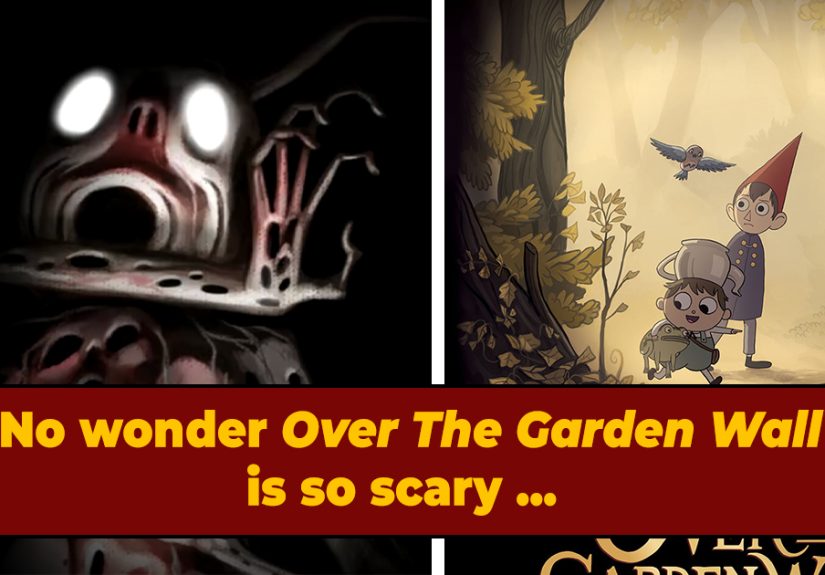
At first glance, Over the Garden Wall looks like a charming autumn postcard that learned how to whisper. It has pumpkins, frogs in tiny clothes, old-timey music, and enough sepia-toned coziness to make you want apple cider immediately. Then the show keeps going, and suddenly you are dealing with soul-fueled lanterns, a beast made of despair, and the nagging feeling that this sweet little Cartoon Network miniseries would absolutely leave a skull under the floorboards if nobody was looking.
That is why the show has aged so beautifully. It is funny, musical, and weirdly comforting, but it is also full of rot, grief, fear, and death. And once you rewatch it with that in mind, one dark Easter egg starts glowing brighter than the Woodsman’s lantern: the title itself. “Over the Garden Wall” is not just a quaint phrase. It is a clue. More specifically, it points toward the moment Wirt and Greg go over the wall of the cemetery before tumbling toward the Unknown, turning the title into a sly threshold between life and death rather than a random bit of folk poetry.
That is the kind of reveal this series loves. It does not stomp on your toes and yell, “Observe my symbolism!” It leaves breadcrumbs in the leaves and waits for you to come back older, sadder, and maybe holding a seasonal beverage. On a rewatch, the title no longer feels decorative. It feels ominous. It feels like the show quietly told us the answer before the story even began, then smiled and handed us a frog song.
The title was the clue hiding in plain sight
One reason this detail lands so hard is that Over the Garden Wall is built to reward second and third viewings. The series is deliberately foggy, dreamlike, and stitched together through mood as much as plot. So when the real-world flashback arrives and we see Wirt and Greg fleeing through a cemetery before going over the wall and falling toward disaster, the title suddenly stops sounding whimsical and starts sounding literal.
That is the dark genius of it. The phrase “over the garden wall” sounds harmless, almost nursery-rhyme sweet. But in the context of the series, that “garden” becomes associated with a cemetery, with crossing a boundary, with stepping from the ordinary world into a liminal one. The show takes a cozy phrase and quietly embalms it. Very rude. Very effective.
This is also why the title feels so much heavier after the finale. Before you know the brothers’ backstory, the words seem folkloric, maybe even random in the way fairy-tale titles often do. Afterward, they feel like a coded summary of the whole journey: the boys cross a wall, slip out of everyday reality, and enter a place that behaves like a dream, a fable, and an afterlife all at once.
And that reading is not coming out of nowhere. Early development material for the project described the Unknown as a place between life and death, and an even earlier version of the story involved a train headed for the afterlife. So the title’s cemetery-wall resonance does not feel accidental. It feels like a refined echo of what the story was always circling: a threshold space, a dangerous crossing, and two boys who wander into it before they truly understand what has happened.
Why this Easter egg matters more than a normal hidden detail
Most Easter eggs are fun because they make you feel clever. This one is better because it changes the emotional weather of the whole show. Once you catch it, the Unknown stops being merely “mysterious woods with folklore DLC” and becomes a place haunted by transition. Every oddball encounter feels less random. Every warning sounds sharper. Every joke comes with a little frost on it.
That is what makes Over the Garden Wall so different from a lot of modern animated fantasy. It is not interested in solving every mystery with a neat little bow. Patrick McHale has been open about wanting the series to feel foggy, dreamlike, and full of connections that only emerge over time. The show does not force a single rigid interpretation on the viewer. Instead, it builds a world where an afterlife reading, a purgatory reading, a Dante-inspired reading, and a psychological coming-of-age reading can all sit at the same spooky dinner table without throwing bread rolls.
So the “garden wall” clue matters because it does not close the story down. It opens it up. It gives the viewer permission to see the Unknown as a borderland, not just a fantasy map. It helps explain why the place feels stitched together out of lost stories, dead eras, half-remembered songs, and old American ghostliness. The Unknown does not feel built. It feels drifted into.
The show keeps whispering death long before the ending
Once you notice the title clue, a lot of the series’ imagery starts acting like backup singers. Suddenly the whole show seems to be muttering, “Yes, exactly, that’s what we’ve been saying.” The brilliance is that it never says it in one loud speech. It says it through atmosphere, objects, settings, and recurring motifs.
Pottsfield is adorable, and that is exactly why it is creepy
The Pottsfield sequence is one of the earliest signs that the series is not just spooky in a kid-friendly way. It is spooky in a “hello, these smiling harvest people may be linked to the dead” way. The town is festive, communal, and weirdly tender, but its whole vibe is built on burial imagery, harvest rituals, and the feeling that everyone there belongs to a cycle Wirt and Greg do not yet understand.
That is the trick Over the Garden Wall pulls again and again: it coats death in hospitality. Pottsfield is warm. The songs are catchy. The colors are gorgeous. And yet the place hums with the logic of an afterlife stop, a place where one season has already ended and something else has taken root. It is less “cute pumpkin town” and more “memento mori in a cardigan.”
The Beast turns despair into fuel
If the title clue points toward a crossing into a liminal realm, the Beast explains the cost of staying there. He is not just a monster in the woods; he is a system. He thrives on hopelessness. He manipulates grief. He turns people into Edelwood trees and burns them as oil in the lantern. That is not ordinary fantasy-villain behavior. That is mythic, infernal, and deeply bleak.
The series softens none of that. In fact, it makes the idea even nastier by tying it to emotional surrender. The Beast wins when people stop resisting, when they accept loss as destiny, when they let fear rot into obedience. He is less a dragon to be slain and more a theology of despair with antlers. Cheerful!
And that is why the title clue is so powerful. Crossing the wall is not just entering a magical adventure. It is stepping into a place where hopelessness can become a literal resource. The Unknown may look like folklore, but it operates like judgment, temptation, and spiritual danger.
The black turtles are small, silly, and wrong
No discussion of dark details in Over the Garden Wall is complete without the black turtles, those tiny recurring agents of “absolutely not.” They appear often enough to feel important, but not clearly enough to settle into one meaning. McHale has famously refused to explain them directly, joking that their mystery is the show’s “imperfect stitch.”
That refusal is part of why they work. The turtles are less satisfying as a solved symbol than as a smear of corruption moving through the edges of the story. They are little reminders that the Unknown is not clean folklore. Something is off in the weave. Something dark keeps crawling under the quilt.
In a series obsessed with thresholds and contamination, the turtles function like visual static. They do not need one locked-in explanation to do their job. Their job is to make you uneasy, to make a scene feel just slightly poisoned, to suggest that beneath the autumn charm is decay that cannot be fully named.
Even the “friendly” world is lined with graves
One of the most quietly haunting details in the series is that the Unknown keeps leaking into the boys’ real world and vice versa. Quincy Endicott, for example, is not just a bizarre tea magnate in a haunted mansion. The series also hints at his death in the cemetery scene, linking the “storybook” realm to actual mortality. That overlap matters.
It means the Unknown is not just a detached fantasy level. It is entangled with the boys’ reality, with memory, with history, with what has already been lost. The world of the show feels populated by leftovers: old songs, old fashions, old stories, old souls. It is not merely strange. It is haunted by preservation.
Why so many people missed it the first time
Honestly? Because the show is too good at seducing us. It arrives wrapped in humor, music, and gorgeous design. Greg is a chaos goblin in a teapot hat. The frog is perfect. The Highwayman exists. There are just enough jokes to keep you from fully bracing for what the show is doing underneath.
That tonal balancing act is not accidental. McHale has described the series as presenting the Unknown through Wirt and Greg’s combined perspective, which is why some moments feel like pure cartoon nonsense and others feel like genuine horror. Greg sees wonder. Wirt sees dread. The audience gets both at once.
That split perspective is exactly why the title Easter egg can hide so effectively. Greg’s imagination keeps the series buoyant, while Wirt’s anxiety keeps it shadowed. So when the title quietly turns out to be connected to a cemetery crossing and a near-death plunge into water, it feels both surprising and inevitable. We missed it because the show wanted us to experience enchantment and danger at the same time.
The real brilliance is that the show never stops being tender
Here is the part that makes Over the Garden Wall more than a clever theory machine: for all its darkness, it never becomes cynical. The show is full of death imagery, but it is not in love with nihilism. It cares too much about mercy, brotherhood, forgiveness, and the possibility of choosing hope even when hope looks ridiculous.
That is why the title clue hits emotionally, not just intellectually. If the boys really do cross a boundary into a realm brushing against death, then their journey is not only about escaping. It is about learning how to live. Wirt has to stop hiding inside embarrassment and self-loathing. Greg has to remain generous without becoming helpless. Beatrice has to move from self-interest to sacrifice. Even the Woodsman has to confront the lie that grief must keep him chained forever.
In other words, the show uses afterlife imagery to tell a life story. It dresses up emotional paralysis as folklore, then hands its characters chances to choose courage anyway. That is why it lingers. It is not merely spooky. It is humane.
What this dark Easter egg says about the whole series
So, what is the dark Easter egg we missed in Over the Garden Wall? It is not just one gravestone, one turtle, or one creepy line from the Beast. It is the realization that the title itself is a threshold marker. The boys go over a cemetery wall, and everything after that plays like a journey through a realm suspended between story and death.
Once you see that, the rest of the show rearranges itself. Pottsfield becomes more than quirky. The Beast becomes more than scary. The Unknown becomes more than odd. Even the autumn aesthetic deepens. Fall is not just pretty here; it is transitional. Leaves turn, light fades, warmth thins out, and the world starts looking like memory while you are still standing in it.
That is the true accomplishment of Over the Garden Wall. It makes mortality feel folkloric and folklore feel immediate. It turns a title into a warning, a joke into a shiver, and a cozy cartoon into one of the most elegant little meditations on fear, loss, and hope that American animation has produced.
And yes, it also gives us a frog in a waistcoat. Balance is important.
Extra reflections: what it feels like after you notice the clue
Once you catch the “garden wall” detail, watching the series changes in a way that is hard to undo. The first time through, the Unknown can feel like a collection of marvelous episodes tied together by a nervous teen, a fearless little brother, and a bird with baggage. The second time, it starts to feel like a place where every joke is standing on a trapdoor. You laugh, but you also lean forward. You stop seeing the show as simply episodic and start feeling the pull of one continuous undercurrent. It is the same series, but the air pressure changes.
That shift is part of the pleasure. Rewatching Over the Garden Wall after noticing the title clue feels a bit like revisiting your childhood neighborhood and realizing the street was always a little stranger than you remembered. The trees look the same. The road bends the same way. The light still falls across everything just so. But now you can see the melancholy built into the place. The show thrives on that exact sensation. It wants to feel remembered as much as watched. It wants to feel like something you dreamed once, forgot, and then recovered at exactly the wrong and right moment.
It also explains why the series has become such a ritual watch for so many people. There are plenty of Halloween shows. There are even plenty of cozy spooky shows. But very few of them understand that autumn is not just pumpkins and jokes; it is also the season of endings. It is beautiful because it is temporary. The leaves are gorgeous because they are on their way out. Over the Garden Wall captures that better than almost anything on television. The title clue sharpens that feeling. Going over the wall means crossing into a place where beauty and decay are roommates, and neither one pays rent on time.
There is also something deeply satisfying about a show that trusts its audience enough to let the darkest idea stay mostly implied. A lot of modern storytelling is terrified that viewers might miss a point, so it circles the runway for twenty minutes and lands with the subtlety of a marching band. Over the Garden Wall does the opposite. It leaves the clue in the title, lets the imagery do the heavy lifting, and allows you to discover the chill for yourself. That makes the experience feel personal. The show is not just informing you that it is profound. It is letting you stumble into the profundity like Greg wandering toward a talking animal because it seemed like a fun afternoon plan.
And maybe that is why the series still sticks. The dark Easter egg is not merely dark. It is intimate. It reframes the whole story without ruining its softness. It lets the show stay funny, musical, and oddly comforting even while it brushes up against death. That combination is rare. Most stories are either desperate to reassure you or eager to devastate you. Over the Garden Wall does both, then hands you a lantern and says, more or less, keep going. There might be something terrible in the woods, but there might also be a song. That is a pretty good description of growing up. It is also a pretty good description of why this miniseries keeps finding people year after year, waiting patiently in the orange light like it knew we would come back.
Conclusion
Over the Garden Wall is one of those rare shows that gets richer the more attention you give it. What looks like a compact fall fantasy turns out to be a carefully layered tale about thresholds, fear, grief, and choosing hope when the dark starts sounding persuasive. The darkest Easter egg is not buried in a frame-by-frame freeze or some impossible lore spreadsheet. It is sitting in the title, calm as can be, waiting for you to realize that the story begins when the boys go over a cemetery wall and into a world that behaves like an afterlife dream.
That is why the series remains so rewatchable. It is not just because the animation is beautiful or the soundtrack is wonderful or Greg is a tiny agent of delightful chaos. It is because the show respects mystery. It gives you enough to feel the pattern, but not so much that the magic dies under fluorescent explanation. Once the title clicks, the whole miniseries becomes sadder, smarter, and somehow even sweeter.
Which is a pretty impressive trick for a show that can make you laugh at a frog one minute and contemplate mortality the next.