Table of Contents >> Show >> Hide
- Why Pompeii’s Plaster Casts Became “Stories” Instead of Just Evidence
- DNA Enters the Ash: What Scientists Actually Did
- The Findings That Flipped Pompeii’s Script
- What This Changes: From Romantic Narratives to Messier, Truer Human Stories
- How Ancient DNA Gets Tricky in a Place Like Pompeii
- Connecting the Dots: Earlier DNA Work Set the Stage
- What We’ll Probably Learn Next (And What We Shouldn’t Assume Yet)
- of Experiences: How This Research Changes the Way We Feel Pompeii
- Conclusion: Pompeii’s Victims Are Becoming People Again
- SEO Tags
Pompeii has always been the world’s most famous “group photo” taken at the worst possible time.
For nearly two millennia, Mount Vesuvius’ eruption in 79 CE froze everyday life into an ash-and-stone time capsule
ovens mid-bake, shops mid-sale, and people mid-sprint. And then, in the 1800s, archaeologists added a haunting
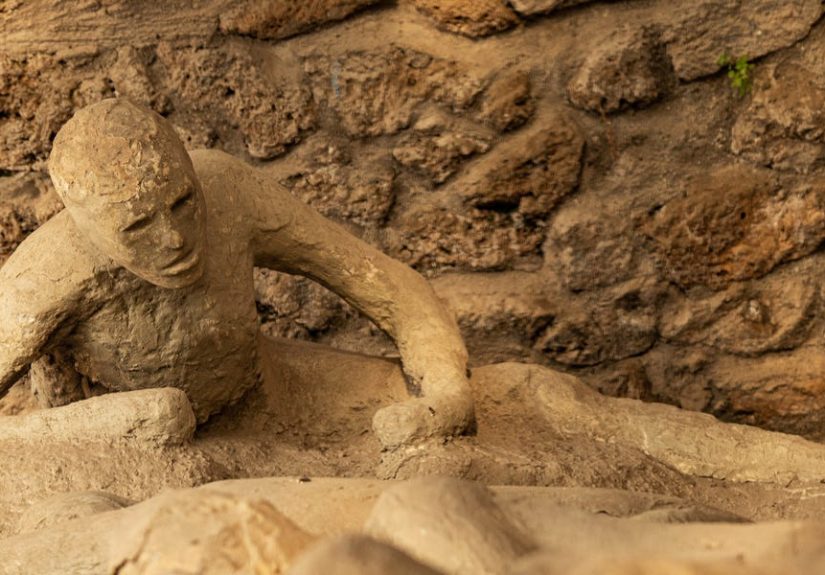
second layer to the story: plaster casts made from the hollow spaces left behind when bodies decomposed inside the ash.
These casts became the tragedy’s emotional shorthand“the mother and child,” “the sisters,” “the lovers,”
“the family hiding under the stairs.”
Here’s the twist: the casts may be telling the truth about fear, but not always the truth about identity.
New genetic work is now prying actual biological clues from those iconic formssex, ancestry, and relationships
and the results are forcing researchers (and tour guides, and all of us) to admit something uncomfortable:
sometimes our interpretations say more about modern assumptions than ancient reality.
Why Pompeii’s Plaster Casts Became “Stories” Instead of Just Evidence
When early excavators saw bodies locked in embraces or grouped tightly together, they did what humans do best:
they narrated. A smaller figure near a larger one? Parent and child. Two figures intertwined? Sisters or lovers.
Jewelry on a wrist? Woman. A protective pose? Motherhood. These interpretations spread because they were compelling,
easy to remember, and honestly… they felt true.
But archaeology has a long history of “pretty sure” turning into “definitely,” especially when the visuals are
as powerful as Pompeii’s casts. Over time, the casts became more than remainsthey became characters.
The problem with characters is that they come with tropes.
DNA Enters the Ash: What Scientists Actually Did
The big breakthrough came from treating Pompeii’s casts not just as sculptures, but as containers.
Many casts still contain skeletal fragments embedded inside the hardened material. During restoration work,
researchers were able to sample tiny bits of bone and extract ancient DNAa tricky feat when heat, time, and
contamination all try to ruin the party.
From “Impossible” to “Genome-Worthy”
Ancient DNA is fragile. Add volcanic heat and you’d assume the genetic signal would be toast (sometimes literally).
But improved methodsclean-room protocols, targeted sampling, next-generation sequencing, and careful authentication
have made it possible to retrieve genome-wide data even from tough contexts.
In the Pompeii plaster-cast study, DNA was attempted from multiple casts, with genome-wide data successfully recovered
for a subset of individuals. The team didn’t just guess; they tested sex genetically, looked for biological relatedness,
and examined ancestry patterns across the genome.
Why the Sample Size Still Matters
If you’re thinking, “Okay, but is this enough to rewrite everything?”great instinct.
The data are powerful, but the number of individuals with high-quality genome-wide results is still limited.
That means the study is best at overturning specific assumptions about specific casts, and at suggesting broader patterns,
not delivering a final census of Pompeii. In science terms: it’s a flashlight, not a stadium floodlight.
The Findings That Flipped Pompeii’s Script
The headline result is simple: some of the most famous “relationships” inferred from the casts don’t match the genetics.
People long described as families were sometimes unrelated. People assumed to be women were sometimes genetically male.
And some casts that seemed to depict close relatives appear, biologically, to be strangers who died together.
The “Family Under the Stairs” That Wasn’t a Nuclear Family
One of the most talked-about examples involves a group of victims found together and often interpreted through a modern
“mom/dad/kids” lens. DNA results suggest that at least some of these presumed family ties were incorrect.
In one widely discussed case, an adult previously described as a mother was genetically male and not closely related
to nearby childrenmeaning the emotional tableau may represent something else entirely: neighbors, enslaved people,
caretakers, strangers seeking shelter, or a group formed in panic rather than kinship.
The “Embrace” That Challenged Gender Assumptions
Another scenetwo people clasped togetherhas often been framed as sisters, mother-and-daughter, or lovers.
DNA evidence indicates the individuals were not maternally related, and at least one was genetically male.
That doesn’t erase intimacy or human connection; it simply removes our certainty about what kind of connection it was.
Pompeii Was More Diverse Than the Stereotype Version of Rome
Genetic ancestry signals point to a population shaped by mobility around the Mediterraneanparticularly connections
with the eastern Mediterraneanmatching what historians already know about the Roman world as a web of trade,
migration, and forced movement through slavery.
In other words: Pompeii wasn’t a sleepy, uniform “Italian” town in the modern sense. It was Roman-era global-ish.
What This Changes: From Romantic Narratives to Messier, Truer Human Stories
The goal isn’t to scold earlier archaeologists for telling storiesnarrative is how museums teach, how visitors learn,
and how we empathize. The goal is to separate empathy from certainty. DNA is introducing a new discipline to Pompeii:
humility.
1) Physical Closeness Doesn’t Equal Biological Relationship
In disasters, people cluster. They grab whoever is nearest. They hide in groups because being alone feels like surrender.
DNA evidence reinforces that a final moment of proximity may reflect circumstance, not genealogy.
2) Jewelry Isn’t a Chromosome Test
One of the quiet lessons here is how confidently we assign gender based on objects. A bracelet becomes “female.”
A posture becomes “motherly.” DNA is reminding us that identity is more complicated than accessories,
and that artifacts can travel between bodies for all kinds of reasonstrade, gift-giving, inheritance, theft, or caretaking.
3) The “Pompeii Experience” Is Shifting From Spectacle to Biography
For a long time, Pompeii’s victims were used as symbols: “Look what a volcano can do.”
DNA makes them individuals againnot because it gives them names, but because it gives them constraints.
It narrows what can be true. It challenges what was convenient.
How Ancient DNA Gets Tricky in a Place Like Pompeii
Heat, Ash, and Time: The Preservation Lottery
Volcanic contexts are weird. Sometimes extreme conditions destroy organic material.
Sometimes they protect it by sealing it away. Pompeii includes both outcomes, depending on where someone died,
what covered them, and how the chemistry of ash and moisture behaved over centuries.
Contamination: The Modern World Leaves Fingerprints Everywhere
Pompeii has been excavated, handled, restored, displayed, photographed, and (let’s be honest) dramatically narrated.
Ancient DNA labs treat contamination like a horror movie monster: you can’t see it, but it can ruin everything.
That’s why authentication mattersdamage patterns typical of ancient DNA, negative controls, and careful cross-checks
are essential before anyone should believe a result.
Ethics: The People Aren’t Props
Genetic analysis of human remains always raises ethical questionsespecially when remains are also tourist icons.
Researchers have to balance scientific value with respect and transparency, and museums have to think hard about how
to present results without turning bodies into “plot twists.”
Connecting the Dots: Earlier DNA Work Set the Stage
This isn’t the first time genetics has entered the Pompeii conversation. In 2022, researchers reported the first
successful sequencing of a human genome from a Pompeii victim (from skeletal remains, not a plaster cast).
That earlier milestone helped prove that usable genetic material could survive in this environment,
and it opened the door to the newer cast-based work that’s now reshaping public narratives.
What We’ll Probably Learn Next (And What We Shouldn’t Assume Yet)
More Casts, Better Coverage
As restoration continues and methods improve, more individuals may yield genome-wide data.
That could help answer bigger questions: Were certain neighborhoods more diverse than others?
Did enslaved and free populations show different mobility patterns? Can isotopes and DNA together reveal who grew up
locally versus who arrived later?
But DNA Won’t Tell You Everything
DNA can’t confirm if two people loved each other. It can’t identify who was brave, who was selfish,
who was funny at parties, or who always “borrowed” olives without asking.
Genetics is a tool for identity and kinship, not a full biography.
The best reconstructions will combine DNA with archaeology, inscriptions, diet studies, health markers, and context.
of Experiences: How This Research Changes the Way We Feel Pompeii
If you’ve ever stood in front of a Pompeii castwhether in the Archaeological Park or in a museum exhibityou know the
feeling hits fast. The space gets quieter. People stop scrolling. Someone inevitably whispers, “That’s a child,” as if
speaking louder might be disrespectful. For years, the experience has been guided by a set of familiar labels:
“This is the mother holding her baby.” “These are the sisters.” “These are the lovers.” The labels are emotional
shortcuts, and they work. They pull you out of the present and shove you into 79 CE.
Now imagine hearing, right there in the gallery, that the “mother” might not be biologically femaleand might not be
related to the child at all. At first, it can feel like the floor shifts under your feet. Not because empathy disappears,
but because certainty does. The scene stops being a neat story and becomes a question mark. And question marks are
strangely intimate. They force you to look longer.
Many visitors describe Pompeii as “eerily modern” because the city preserves ordinary details: street corners, snack bars,
graffiti, gardens. DNA research adds a new kind of modernityone that mirrors how we interpret people today. We are used to
labels that can be wrong. We’re used to identity being complicated. We’re used to the idea that the story you assume from
a snapshot might not match the truth. Pompeii is becoming less like a frozen morality tale and more like a real community:
diverse, mobile, interconnected, and sometimes misunderstood by outsiders (including us).
There’s also a subtle emotional upgrade here: even if DNA removes a “family” label from a group, it can replace it with
something arguably more profound. If unrelated people died together, that doesn’t make their final moment colderit may
make it more human. Disasters create temporary families: strangers sharing shelter, adults shielding children who aren’t
theirs, neighbors grabbing hands because they can’t outrun the sky. When the genetics says “not related,” it doesn’t say
“not connected.” It says the connection might have been chosen in the moment, not inherited at birth.
For educators and museum writers, this research changes the storytelling job. The old approach was: give visitors a tidy
narrative so they can feel something quickly. The new approach is: teach visitors to feel and think at the same time.
Instead of “This is a mother,” the label might become, “This adult and child were once assumed to be family, but DNA suggests
they were not closely related. What does that change about how you imagine their last minutes?” That question invites a
deeper kind of empathyone that respects the dead enough to admit we don’t fully know them, and that respects the living
enough to let them wrestle with uncertainty.
And personally, for anyone fascinated by history, there’s a strange comfort in the messiness. DNA doesn’t drain Pompeii of
meaning; it rescues Pompeii from cliché. It reminds us that ancient people were as complicated as we are, and that the past
doesn’t owe us a simple story. Sometimes the most respectful thing we can do is stop pretending we already know who someone
wasjust because their final pose looks familiar.
Conclusion: Pompeii’s Victims Are Becoming People Again
Pompeii will always be tragic. DNA doesn’t soften the eruption, and it doesn’t undo the horror of an entire city being
overwhelmed by ash, gas, and time. What it does do is change the kind of truth we can claim.
For decades, many cast interpretations relied on modern assumptions about gender roles and family structure.
Ancient DNA is now showing that some of those assumptions were wrongand that the real stories, while messier,
are often more revealing about life in the Roman world: diverse ancestry, complex social ties, and human connection forged
under pressure.
The next era of Pompeii research won’t be just about what we can see in ash impressions.
It will be about what we can measurecarefully, respectfully, and with the humility that the dead deserve.
Pompeii’s casts will still break hearts. They’ll just do it with fewer fairy tales and more facts.