Table of Contents >> Show >> Hide
- Diversity Is Already the Direction (It’s Just Becoming More Obvious)
- Hardware Diversity: More Watches for More People
- Feature Diversity: From Fitness Tracker to Health Companion
- User Diversity: Designing for Kids, Older Adults, and Everyone Between
- Accessibility Diversity: More Ways to Control a Small Screen
- Fairness and Accuracy: Diversity Includes the Data
- Regulation and Regional Differences: Diversity Isn’t Only Personal
- What Might Be Next: A More Diverse Apple Watch Ecosystem
- So What Does “More Diverse” Mean for You Right Now?
- Conclusion: The Apple Watch’s Future Is “Different by Design”
- Real-World Experiences: How “More Diverse” Could Feel Day to Day (Extra)
- SEO Tags
The Apple Watch started life as a fashionable wrist computer that politely asked you to stand up once an hour (and then got
personally offended when you didn’t). Today, it’s something else entirely: a health-and-safety companion, a training partner,
a tiny communications hub, anddepending on your householda “first phone” for kids.
So when people say “the future of the Apple Watch could be more diverse,” they’re not just talking about new band colors
(although yes, we will all argue about which shade of blue is “actually” teal). They’re talking about who the watch is
for, how it fits into daily life, and what it can do across different bodies, budgets, lifestyles, and needs.
And if Apple’s recent product and software direction is any clue, “diverse” isn’t a marketing buzzwordit’s the next logical
chapter.
Diversity Is Already the Direction (It’s Just Becoming More Obvious)
Apple’s Watch lineup has been quietly diversifying for years: different tiers, different sizes, different materials, and
different “personalities.” There’s the mainstream flagship watch, the rugged Ultra line for people who treat weekends like a
nature documentary, and a more affordable SE line that keeps the essentials without asking your wallet to run a marathon.
Add cellular options, a massive band ecosystem, and software that adapts to different usersand the Apple Watch is already a
“choose your own adventure” device.
What’s changing now is the center of gravity: the Apple Watch is becoming more health-forward, more
context-aware, and more tailored to different kinds of users. That naturally pushes the product toward diversity in three
big ways:
- Hardware diversity: more models, materials, durability levels, and price points.
- Feature diversity: more sensors, more clinically grounded insights, and more personalized coaching.
- User diversity: better support for different ages, abilities, skin tones, and real-world lifestyles.
Hardware Diversity: More Watches for More People
Flagship gets thinner, tougher, and more connected
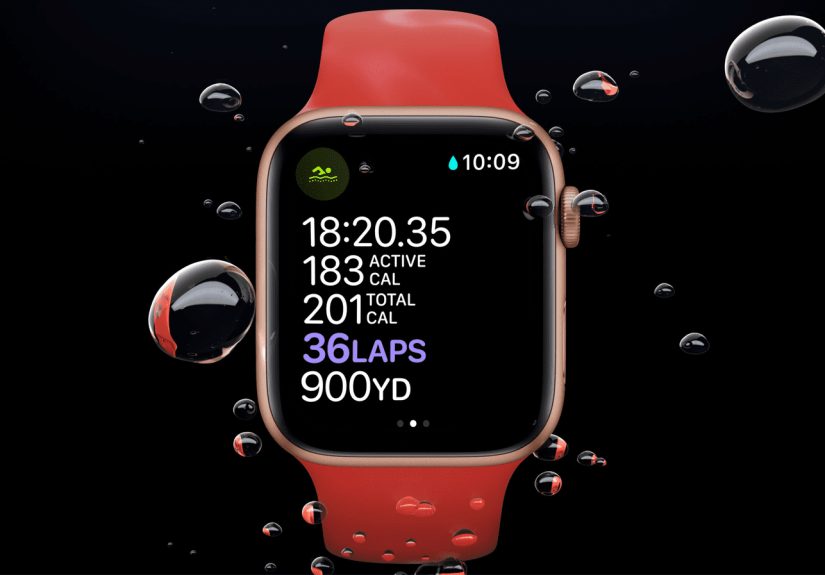
Apple Watch design has been trending toward “wear it all day, forget it’s there.” For example, Apple Watch Series 10 leaned
into a thinner profile, bigger display, and faster charging, while also adding water depth and temperature sensingfeatures
that signal the Watch is just as interested in your weekend swim as it is in your Monday meeting.
Then the more recent flagship direction pushes even further into durability and connectivity: longer battery life, more
scratch-resistant glass, and upgraded cellular performance. When the Watch becomes something you can comfortably wear day
and nightworkouts, sleep tracking, and health notifications includedthe “right model” becomes less about what’s new and
more about what fits your day.
Ultra is a different species (in a good way)
The Ultra line isn’t just “a bigger Apple Watch.” It’s the version built for people who want loud speakers, serious GPS,
more rugged design choices, and sensors that match outdoorsy and water-heavy activities. That’s diversity in purpose:
a watch that isn’t trying to be everyone’s minimalist accessoryit’s trying to be a capable tool.
SE broadens access without feeling “cheap”
A diverse future also means lowering the barrier to entry. The SE line has typically been the on-ramp for first-time buyers,
families, and people who want core Apple Watch benefits (fitness, safety, communication) without paying flagship prices.
When the affordable model still supports meaningful health and safety features, Apple isn’t just diversifying the lineupit’s
diversifying the audience.
Fit matters: wrists aren’t one-size-fits-all
Wearables live or die by comfort. Small wrists, larger wrists, sensory sensitivities, allergies, and lifestyle constraints
all influence whether someone can wear a watch 23 hours a day (and charging becomes the only break). Expect the “future is
diverse” story to include more attention to:
- Case size options that feel proportional and comfortable.
- More band materials for different skin sensitivities and activities (work, sweat, water, sleep).
- Durability choices for kids, outdoor jobs, and accident-prone adults (you know who you are).
Feature Diversity: From Fitness Tracker to Health Companion
The Apple Watch has a long-running theme: take sensors that were once “nice-to-have,” validate them with real-world data,
and turn them into features that people can actually act on. That’s why recent Watch headlines aren’t about gimmicksthey’re
about sleep, heart rhythms, and longer-term health signals.
Sleep is becoming a first-class citizen
Sleep tracking used to be a checkbox feature. Now it’s an ecosystem: sleep stages, respiratory metrics, temperature trends,
and practical summary tools like sleep scoring. The value of a sleep score isn’t that it gives your night a grade like an
angry teacherit’s that it can highlight patterns you can change, like inconsistent bedtimes, too many wakeups, or not enough
time in restorative stages.
Apple has also pushed into sleep-related health notifications, including sleep apnea notifications designed to look for
breathing disturbances over time and flag consistent signs associated with moderate to severe sleep apnea. This is where
consumer wearables start acting like early-warning systemswithout pretending to replace a clinician.
Heart health remains the headline act
Heart rate notifications and irregular rhythm notifications helped make Apple Watch feel “protective” rather than merely
informative. Add the ECG capability and the Watch becomes a tool that can capture a moment of concernpalpitations, a weird
flutter, a “this feels off” feelingand turn it into something you can share with a clinician.
The diversity angle here is subtle but important: the more health features expand, the more Apple has to consider varied
health baselines, different risk profiles, and different “normal” ranges across people. A future Apple Watch that serves more
people well isn’t just adding sensorsit’s improving interpretation and communication.
Blood oxygen: a feature with a plot twist
Blood oxygen (SpO2) became mainstream during the pandemic era and turned into a staple smartwatch metric. But the
Apple Watch’s blood oxygen story also highlights a modern wearable reality: features don’t exist in a vacuum.
Patents, regulation, and software design can change how a feature is delivered.
Apple has used software redesigns to navigate legal constraints in the U.S., including approaches where sensor data is
captured on the watch but processed and viewed on the paired iPhone. For users, this kind of “hybrid” experience is a preview
of a broader future: some health features may increasingly rely on the combined horsepower of the Watch + iPhone + on-device
intelligence, rather than being fully self-contained.
Workout personalization is moving beyond “generic encouragement”
If you’ve ever been told “Great job!” by a device while you’re actively regretting your life choices on a hill sprint, you’ve
experienced the limits of one-size-fits-all motivation.
Apple’s direction with personalized workout coachingpowered by on-device intelligence and your own workout historypoints to
a more diverse future in fitness features. The goal isn’t simply more data, it’s better guidance: pacing support,
training feedback, and motivation that reflects your real baseline rather than a generic average person who apparently never
skips leg day.
User Diversity: Designing for Kids, Older Adults, and Everyone Between
Apple Watch for kids (and peace of mind for parents)
One of the clearest examples of Apple Watch “diversity” is Apple Watch For Your Kids (formerly Family Setup): the idea that a
child can use an Apple Watch with cellular even without having their own iPhone. That’s a totally different user story from
the adult who buys a Watch to close rings or triage notifications.
This isn’t just a featureit’s a product philosophy. A kids-oriented wearable needs different defaults: communication with
approved contacts, location awareness, safety features, and “independence training wheels” that feel empowering to kids and
reassuring to adults.
Safety features that matter more as life gets complicated
Crash Detection, Fall Detection, Emergency SOSthese are the kind of features that don’t make headlines every day, but they
matter profoundly when they’re needed. A more diverse Apple Watch future likely means:
- More reliable detection in varied real-world contexts (sports, work, travel, older adults).
- Better escalation optionswho gets notified, what info is shared, and how quickly.
- Smarter “false alarm” handling so safety tools remain trusted, not annoying.
Women’s health and cycle insights
Wrist temperature sensing and retrospective ovulation estimates show how Apple is expanding beyond “exercise and heart rate”
into health insights many people actively use for planning and understanding their bodies. This kind of feature is a strong
example of diversity done right: it acknowledges different health priorities and uses sensor data in a way that can support
everyday decisionswithout overselling certainty.
Accessibility Diversity: More Ways to Control a Small Screen
A tiny touchscreen on your wrist is convenientuntil your other hand is busy, you’re wearing gloves, you have limited
dexterity, or you simply don’t want to poke at your arm in public like you’re trying to open an invisible elevator.
Apple has invested in alternate interaction methods like hand-gesture control through accessibility settings (AssistiveTouch)
and “double tap” style gestures on supported models. This expands the Watch’s usefulness for people with disabilities, for
people temporarily limited (injury, carrying groceries, pushing a stroller), and for anyone who prefers a less fussy
interface.
The more diverse the Watch becomes, the more important these interaction methods becomebecause “diverse users” includes
diverse contexts. The future Apple Watch doesn’t just add features; it adds ways to use those features.
Fairness and Accuracy: Diversity Includes the Data
Wearables rely heavily on optical sensors, and the broader industry has had to confront a difficult truth: some medical and
wellness devices have shown accuracy differences across skin tones. The FDA has pushed for improved guidance and better
testing standards in pulse oximetry performance across skin pigmentation, reflecting ongoing concern about disparities.
Apple’s own blood oxygen saga (including legal battles and redesigns) is separate from the FDA’s broader accuracy push, but
the big picture is the same: a truly “diverse” wearable future must include:
- More representative validation (different skin tones, ages, health conditions, and body types).
- Clearer user education about what a metric can and can’t tell you.
- Better trend-based insights that reduce overreliance on a single number in a single moment.
Encouragingly, research on wrist-based photoplethysmography (the light-based method used for many wearable heart metrics) has
continued to evaluate performance across diverse skin tones, and findings can vary by metric and context. The takeaway for
consumers is practical: treat the Watch as a powerful tool for trends, context, and promptsnot a standalone medical verdict.
The takeaway for Apple is strategic: the more health-forward the Watch becomes, the more rigorous and inclusive its testing
needs to be.
Regulation and Regional Differences: Diversity Isn’t Only Personal
The Apple Watch is sold globally, but health features don’t always roll out globally at the same speed. Regulatory clearance,
local rules, and region-specific availability can shape what people get and when they get it. Apple’s own feature-availability
documentation reflects how certain capabilities can vary by country and language.
In the future, “diversity” may also mean clearer transparency: a Watch that helps you understand what features are available
where, why certain functions require specific hardware, and how software updates unlock (or adjust) capabilities over time.
What Might Be Next: A More Diverse Apple Watch Ecosystem
Apple doesn’t announce future products years in advance, so anything beyond currently announced features requires caution.
Still, a few directions are consistently signaled by reporting, patents, and Apple’s own trajectory:
Blood pressure insights that are actually useful
The Apple Watch has moved toward “notification-style” health featuresalerts for signs that warrant attentionrather than
pretending to be a full clinical instrument. Blood pressure-related insights fit that model well: trends and notifications
can help prompt follow-up without replacing a cuff.
Noninvasive glucose and hydration: the holy grail category
The industry would love noninvasive glucose monitoring in a mainstream wearable, and Apple has been associated with ongoing
research and patents in this territory. If Apple ever cracks a reliable approach, that would be diversity at scale: a feature
with enormous relevance to people managing metabolic health and chronic conditions. Hydration and other wellness signals
could follow the same patternuseful trend data, contextual coaching, and privacy-preserving processing.
More form factors, not just more watches
The future “Apple wearable” might not always be a watch. The broader market is exploring rings and other sensors, and Apple
has its own patent history in wearables beyond the wrist. If Apple expands its wearable ecosystem, the “Apple Watch future”
could become “Apple health wearables future,” where different form factors serve different needs: athletes, sleepers,
professionals, kids, and people who simply don’t like watches.
So What Does “More Diverse” Mean for You Right Now?
If you’re buying today, the most useful question isn’t “What’s the best Apple Watch?” It’s “What’s the best Apple Watch
for my life?” Here’s a quick, practical filter:
- If you want the broadest health features: prioritize newer flagship models that support ECG, sleep apnea notifications, and the latest watchOS capabilities.
- If you want rugged and outdoors-ready: Ultra models are built for that lifestyle, with specialized sensors and durable design choices.
- If you’re buying for a family or budget: SE models can deliver core safety, fitness, and connectivity at a friendlier price point.
- If you’re buying for a child: focus on GPS + Cellular models that support Apple Watch For Your Kids and match your carrier situation.
- If accessibility matters: explore gesture controls (AssistiveTouch, double tap on supported models) and choose comfort-first bands for all-day wear.
Conclusion: The Apple Watch’s Future Is “Different by Design”
The Apple Watch used to be “one watch, many bands.” Now it’s becoming “many watches, many kinds of people.” That’s the heart
of a more diverse future: not just more products, but better fitphysically, financially, and functionally.
As Apple adds new health insights like sleep scoring, expands clinically grounded notifications, refines accessibility
controls, and continues to split the lineup into clearer purpose-driven choices, the Apple Watch becomes less of a single
gadget and more of a wearable platform. And platforms thrive when they’re built to serve different livesnot just different
wrists.
Real-World Experiences: How “More Diverse” Could Feel Day to Day (Extra)
To make this less abstract, here are a few real-world-style scenarios that show what a more diverse Apple Watch future might
look like in practice. These aren’t “fairy tale” use cases where technology fixes everything; they’re the small, realistic
wins that add up when a wearable fits your life instead of asking you to fit the wearable.
1) The busy parent experience: You’re making breakfast, packing lunches, and negotiating with a tiny human
about why socks are not optional. A gesture-based control (like a double tap) matters because you can answer a call or
dismiss a reminder without smearing peanut butter on your screen. If your child wears an Apple Watch with cellular, it
becomes a “lightweight independence tool”: they can message approved contacts, you can check in, and everyone gets a little
less anxious without handing a kid a full smartphone at age eight.
2) The older adult experience: Comfort and confidence become the main features. A watch that’s easier to read,
easier to charge, and more durable is not “nice-to-have,” it’s the difference between wearing it daily or leaving it on a
dresser. Safety features matter most when they’re dependable and not overly sensitive. And health alerts matter most when
they’re explained clearlywhat it noticed, why it matters, and what to do nextso the user feels informed rather than
alarmed.
3) The athlete experience (and not just the marathon crowd): “Fitness diversity” isn’t only about extreme
athletes. It’s about the person training for their first 5K, the weekend cyclist, the swimmer, the person rehabbing after an
injury, and the worker who gets 15,000 steps a day without ever calling it a workout. A watch that offers more personalized
coaching based on your baselinerather than comparing you to an imaginary superhumancan keep motivation realistic and reduce
burnout. It’s the difference between “Try harder!” and “Try smarter.”
4) The sleep-improvement experience: Sleep data is only helpful if it changes behavior. A sleep score that
highlights consistency (bedtime regularity), interruptions (how often you wake), and stages (time spent in restorative sleep)
can help people experiment: earlier caffeine cutoff, cooler room, consistent wind-down routine. And a sleep apnea notification
featureused responsiblycan act as a nudge to talk to a clinician when patterns look concerning, especially for people who
wouldn’t otherwise suspect an issue.
5) The “health anxiety” experience: More health metrics can be empowering, but they can also be stressful.
A diverse future should include better guardrails: education that emphasizes trends over single readings, clear language about
limitations, and designs that reduce panic. In other words, the watch shouldn’t accidentally turn someone into a full-time
self-monitoring detective. The best wearable health features make you feel supportednot watched.
Ultimately, these experiences point to the same theme: diversity isn’t only about adding features. It’s about making the
watch work for different lives, different bodies, and different prioritieswithout requiring everyone to behave like the same
“ideal user.”