Table of Contents >> Show >> Hide
- What happened to the Internet Archive?
- Why this hack mattered more than the average breach
- What data was exposed?
- The hack was not only about stolen data
- How the Internet Archive responded
- What users should do after an Internet Archive breach
- Why the breach became a warning for libraries and archives
- The bigger lesson: the internet’s memory needs bodyguards
- Real-world experiences and what this felt like for users
- Conclusion
- SEO Metadata
For a lot of people, the Internet Archive feels less like a website and more like the internet’s memory foam mattress: a little creaky, wildly useful, and somehow always there when you need to look up a deleted page from 2011. That is why the news that the Internet Archive had been hacked landed with the emotional grace of a bookshelf falling on your foot. It was not just another cybersecurity headline. It was a reminder that even institutions built to preserve history can become part of it in the worst possible way.
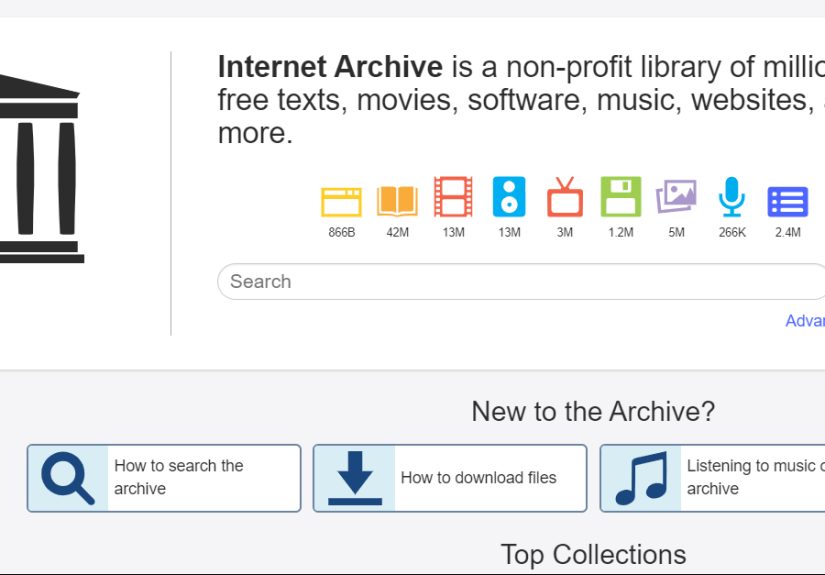
The Internet Archive, home of the Wayback Machine and a sprawling library of books, music, software, video, and web history, suffered a high-profile cyberattack in October 2024. The incident reportedly exposed data tied to roughly 31 million users and disrupted access to one of the internet’s most important public-interest tools. That combination is what made the story so unnerving. This was not merely a technical failure. It was a hit on digital preservation, public trust, and the idea that knowledge infrastructure should be sturdy enough to survive the chaos of the modern web.
What happened to the Internet Archive?
The breach became public in dramatic fashion. Visitors to the site were met with a defacement-style pop-up message claiming that the Internet Archive had suffered a major security breach and pointing to the exposure of 31 million users. Soon after, outside reporting and official statements confirmed the situation was not a hoax. The organization acknowledged it had been dealing with multiple security issues at once, including a data breach, website defacement, and distributed denial-of-service attacks that made services unstable or inaccessible.
In plain English, this was not just a case of “the site was down.” It was more like a three-ring cyber circus, and nobody wanted tickets. Attackers reportedly got hold of an authentication database containing user information such as email addresses, screen names, and password hashes. Security reporting also noted related internal metadata in the compromised data set. While hashed passwords are better than plain-text passwords, they are not magical fairy dust. Weak or reused passwords can still become a real problem if attackers have enough time and computing power.
The Internet Archive later said that its stored collections were safe, but access to services had to be restricted while the team scrubbed systems, strengthened defenses, and worked through recovery. The Wayback Machine and other tools gradually came back online in limited or read-only modes. Features like uploading, borrowing, reviewing, and other account-based actions were temporarily unavailable during the recovery period. In other words, the library’s shelves were still there, but the librarians had to lock half the doors while checking the wiring.
Why this hack mattered more than the average breach
Plenty of data breaches are serious. This one felt bigger because of what the Internet Archive represents. It is one of the closest things the web has to a public memory institution. Journalists use it to verify what politicians, companies, and public figures said before they quietly edited a page. Researchers use it to trace digital history. Students use it when citations point to dead links. Open-source communities use it to recover documentation, tools, and software that vanished from official websites. Ordinary people use it because the internet is a place where pages disappear like socks in a dryer.
When the Internet Archive goes dark, the impact stretches beyond inconvenience. Access to old pages, archived publications, software references, digitized media, and historical snapshots suddenly becomes fragile. That raises a bigger question: if institutions that preserve digital knowledge can be disrupted this easily, what does that say about the long-term stability of the web itself?
This is what made the Internet Archive hack feel symbolic. It was not just an attack on user accounts. It was an attack on the infrastructure of remembering. That may sound dramatic, but the internet has always had a memory problem. Content gets deleted, domains expire, companies shut down, journalists update stories without preserving earlier versions, and platforms reinvent themselves every other Tuesday. The Internet Archive helps hold the line against all that erosion.
What data was exposed?
Reporting on the breach consistently described the exposed data as including email addresses, usernames or screen names, and bcrypt-hashed passwords. Some reports also mentioned password change timestamps and other internal account-related metadata. Even though bcrypt is a strong hashing method compared with older approaches, users should not shrug at the word “hashed” and move on with their day. A compromised credential set can still lead to trouble, especially if the same password was reused elsewhere.
That last point matters because password reuse is the cybersecurity equivalent of giving every room in your life the same key, then acting surprised when one stolen key opens the whole building. If someone used the same password on the Internet Archive and on email, cloud storage, shopping accounts, or work tools, the blast radius could grow fast.
The hack was not only about stolen data
One reason this story kept evolving is that the breach was tied to broader operational disruption. The Internet Archive had already faced DDoS pressure earlier in 2024, and the October incident intensified concern around service availability. During recovery, the organization said attackers had also exploited a third-party helpdesk system to send emails to patrons. That detail matters because it shows how modern security incidents rarely stay in one neat box. A breach can spread into support systems, communications tools, and customer trust channels.
In practice, that means an organization can be dealing with several crises at once: stolen data, broken availability, damaged reputation, and uncertainty about which systems are still clean. It is the digital equivalent of discovering your house has a leaky roof, a busted lock, and a raccoon in the attic on the same day. None of those problems are improved by pretending they are “basically one issue.”
How the Internet Archive responded
The Internet Archive’s response focused on containment, restoration, and defense hardening. It took services offline or limited them, disabled compromised components, and gradually restored access in stages. Public updates emphasized that preserving the integrity of stored collections and protecting patrons came first. Later updates also described changes to firewalling, monitoring, and system architecture as the organization adapted to a more hostile environment.
That phrase, “more hostile environment,” is important. The Archive is a nonprofit library, not a giant consumer tech platform with a private army of security engineers and a budget that could casually fund a moonshot. The organization has a public mission and finite resources. That does not excuse security gaps, but it does explain why the incident sparked broader debate about whether society expects public-interest digital infrastructure to function at enterprise-grade resilience without consistently funding it like enterprise-grade infrastructure.
What users should do after an Internet Archive breach
If you had an Internet Archive account, the smartest response is not panic. It is housekeeping. Boring, disciplined, unglamorous housekeeping. Cybersecurity is often like flossing: nobody wants a lecture, but you really do notice when it has been skipped for too long.
1. Change the password tied to that account
Start with the Internet Archive password itself. Then move immediately to any other account where that same or a similar password was used. That includes email, social media, banking dashboards, shopping accounts, and work tools.
2. Turn on 2FA or MFA wherever possible
Multifactor authentication adds an extra checkpoint. Even if a password is exposed, a second factor can block easy account takeover. It is not perfect, but it is far better than leaving a lone password to do all the heavy lifting.
3. Use a password manager
A password manager makes it much easier to create unique passwords for every account. That way, one breach does not become a franchise. It also reduces the temptation to invent “clever” passwords like Summer2024!, which are clever only in the same way hiding a spare key under the doormat is “secure.”
4. Watch for phishing emails
When attackers gain access to user data or support systems, phishing risks can rise. Be cautious with emails claiming to be from the Internet Archive or asking you to click urgent reset links. Go directly to official channels when possible rather than trusting an email at first glance.
Why the breach became a warning for libraries and archives
The Internet Archive is not the only knowledge institution to face cyberattacks. Libraries and public-serving archives have increasingly found themselves in the line of fire. That matters because libraries are no longer just buildings with shelves. They are software systems, identity systems, lending systems, search systems, digital storage systems, and public-access systems. In other words, they now inherit the same threat landscape as any major online service, but they often do so without the same financial cushion.
The Internet Archive hack underscored a growing reality: digital preservation is not only about scanning, storing, and indexing. It is also about cybersecurity, resilience engineering, incident response, vendor oversight, authentication policy, and sustainable funding. Preserving history in the 21st century means defending it from deletion, decay, lawsuits, outages, and now direct cyber aggression.
The bigger lesson: the internet’s memory needs bodyguards
There is a temptation to treat hacks like weather events. Something bad happened, everyone groans, passwords get changed, and the news cycle runs off to chase the next flaming object. But the Internet Archive breach deserves a longer memory than that. It exposed a truth that should be obvious by now: the public web depends on fragile institutions doing heroic work with limited resources.
The Archive’s mission is unusual because it serves almost everyone while belonging to no single platform ecosystem. That independence is part of its value, and also part of its vulnerability. It preserves content across time, across technologies, and across disappearing corners of the web. If that kind of institution is expected to remain available, secure, and trustworthy, it cannot be treated like a side project run on goodwill and duct tape.
The Internet Archive has been hacked, yes. But the more enduring story is that a breach at a digital library can shake journalists, researchers, students, developers, librarians, and ordinary web users all at once. That is not because the Archive is niche. It is because it has become part of the internet’s civic plumbing.
Real-world experiences and what this felt like for users
One of the most revealing parts of the Internet Archive hack was the reaction from people who depend on it every day. This was not a story that stayed trapped inside security circles. It spilled into classrooms, newsrooms, libraries, fan communities, coding forums, and research threads because so many kinds of work now rely on archived web access.
For journalists, the outage was a direct headache. Reporters often use the Wayback Machine to confirm how a page looked before it was edited, deleted, or cleaned up after the fact. When the Archive became unstable, that verification workflow suddenly turned into a scavenger hunt. If you have ever tried to prove that a company quietly changed a policy page and the key evidence is sitting behind a broken archive, you know this is not a tiny annoyance. It is the sort of problem that makes a deadline feel personal.
For students and researchers, the experience was more quietly frustrating. Academic work increasingly cites digital material that may not stay live forever. A working archive can rescue those citations. A broken one turns careful research into a game of “I swear this source existed yesterday.” That is funny for about six seconds, and then it becomes a real problem for coursework, documentation, and long-term scholarship.
For developers and open-source communities, the incident highlighted how much technical history lives in unofficial corners of the web. Old manuals, software builds, source references, compatibility notes, and abandoned project pages often survive only because the Internet Archive captured them. When access is interrupted, troubleshooting older systems becomes harder. Suddenly the internet’s dusty back closet turns out to contain the exact screwdriver everyone needed.
For families, hobbyists, and internet nostalgists, the emotional side was surprisingly strong. People use the Archive to revisit vanished blogs, old fan sites, early web design experiments, and pages created by friends or relatives who are no longer around. That gives the platform a strange and powerful role: part research tool, part attic, part time machine. A hack against that kind of service feels less like losing an app and more like finding water damage in a box of photo albums.
Even for users who never created an account, the breach changed how they think about digital permanence. The incident reminded people that the web does not remember itself automatically. Preservation is active work. It requires servers, funding, staffing, security planning, and constant maintenance. If any of those pieces wobble, access to history wobbles with them. The Internet Archive hack therefore produced two simultaneous reactions: immediate concern about exposed data and a broader, almost philosophical anxiety about what happens when the institutions guarding our digital memory come under attack.
That is why this story lingered. It was not just about hacked accounts. It was about trust, continuity, and the uneasy realization that preserving the internet is not a background process. It is a public service, and public services need protection.
Conclusion
The Internet Archive hack was a serious cybersecurity event, but it was also a cultural wake-up call. Roughly 31 million records were reportedly affected, services were disrupted, and the recovery stretched across multiple systems and phases. Yet the biggest takeaway is not only that users should change passwords and enable MFA, though they absolutely should. It is that digital preservation has become essential infrastructure. If society values access to the web’s past, then institutions like the Internet Archive need more than admiration. They need durable security, durable funding, and durable support.