Table of Contents >> Show >> Hide
- What “The Lexington Ranch” Actually Was
- Why Ranch Houses Are Loved… and Also Roastable
- The Big Idea: Give the House a “Heart”
- Turning a Cramped Ranch Into a Light-Filled Family Home
- Curb Appeal: When the House Stops “Disappearing”
- The “Quiet Superpower” of The Lexington Ranch: Building Science
- What You Can Steal (Politely) From The Lexington Ranch for Your Own Remodel
- Conclusion: The Lexington Ranch as a Blueprint for Smart Renovation
- of Real-World “Lexington Ranch” Experiences
“Ranch house” can mean two very different things. In your head, it’s either a breezy, open, midcentury dream where everyone glides from kitchen to patio like they’re starring in a vintage magazine ad… or it’s a long, low box where the hallway feels like it was designed by someone who really, really loved bowling lanes.
The Lexington Ranch sits right at that crossroads. It’s the name of a memorable This Old House project centered on a tired, cramped 1950s ranch in Lexington, Massachusettsone of the most common (and often most criticized) American house styles. And it became a case study in how to take a ranch that’s “fine, I guess” and turn it into a bright, flowing, modern family home without bulldozing the whole thing or moving away from the life you’ve built.
What “The Lexington Ranch” Actually Was
The original home was a wood-framed ranch built in 1958 on a sloping lot in Lexington, MA. Like many postwar ranches, it had a practical footprintbut the layout wasn’t kind to a growing family. The kitchen and dining area were tight, bedrooms felt cramped, and the single bath turned daily routines into a polite (or not-so-polite) traffic jam.
The homeowners weren’t chasing a “trend.” They were chasing space, light, and sanitywhile staying in the same neighborhood, schools, and community routines that made the location priceless.
Why Ranch Houses Are Loved… and Also Roastable
Ranch homes became wildly popular because they’re approachable and functional: typically one story, easy indoor-outdoor connection, and a casual layout that fits real life. But many midcentury ranches also come with predictable pain points:
- No clear “center”rooms can feel flat and same-sized, with no sense of arrival.
- Low ceilings and small windows that limit daylight and make spaces feel compressed.
- Choppy or undersized kitchens that don’t match how families actually live now.
- Storage shortages that force every room to do triple duty.
- Energy inefficiency in older envelopesdrafts, uneven temps, and high utility bills.
In other words: ranch houses are like classic jeans. They fit a lot of people, but sometimes you’ve got to tailor them before you feel confident leaving the house.
The Big Idea: Give the House a “Heart”
A standout lesson from The Lexington Ranch is that a successful renovation often starts with a single organizing idea. Here, that idea was creating hierarchy and focusdesigning a home with a clear center and a mix of room sizes that feel intentional.
One reason ranches can feel “amorphous” is that many lack vertical movement. No stairs, no transition moments, no dramatic shift in volume. Everything happens on one level at roughly the same height and scale. The redesign tackled this head-on by introducing:
- A second-floor addition to add needed rooms without expanding endlessly outward.
- A soaring great room with a cathedral ceiling to create volume, light, and drama.
- A real entry sequencean arrival that feels like a front door, not an afterthought.
- A connective “spine” (including a second-floor walkway) that organizes flow.
Turning a Cramped Ranch Into a Light-Filled Family Home
1) Add Space Where It Matters Most
Square footage isn’t automatically the enemywasted square footage is. The Lexington Ranch approach wasn’t “make everything bigger.” It was “make the right things bigger.”
The wish list focused on functional upgrades that change day-to-day life:
- A primary suite that doesn’t feel like a corner of the house pretending to be a retreat.
- A guest room that lets visitors stay without everyone else reorganizing their existence.
- A family room that’s genuinely comfortablewithout someone’s desk in the corner.
- A kid-friendly entry (mudroom energy) for backpacks, sports gear, and the mysterious sticky items children bring home.
2) Create a Great Room Without Making It “Echo-y”
Cathedral ceilings can be gorgeousand also a bit like living inside a guitar if the acoustics aren’t considered. The Lexington Ranch concept worked because the great room wasn’t just “tall.” It was integrated into the home’s circulation and sightlines.
A tall central space can:
- Pull daylight deeper into the floor plan.
- Make the home feel open even when individual rooms stay modest.
- Create natural gathering gravity (the “everyone ends up here” effect).
The key is balancing it with smaller, quieter spaceslike a library, office nook, or snug loungeso the home doesn’t feel like one giant lobby.
3) Fix Flow: Stop Forcing Rooms to Do Triple Duty
One of the most relatable parts of The Lexington Ranch story is the “everything room” problem: office + laundry + storage + computer station + life management hub. When rooms become multi-use by necessity, they often become stressful.
A renovation that improves flow usually does three things:
- Separates functions (work, play, sleep, storage) so you don’t feel “on duty” everywhere.
- Creates natural paths so you’re not squeezing past each other in choke points.
- Adds storage with intentionbuilt-ins, closets, mudroom zonesso surfaces stop becoming storage.
Curb Appeal: When the House Stops “Disappearing”
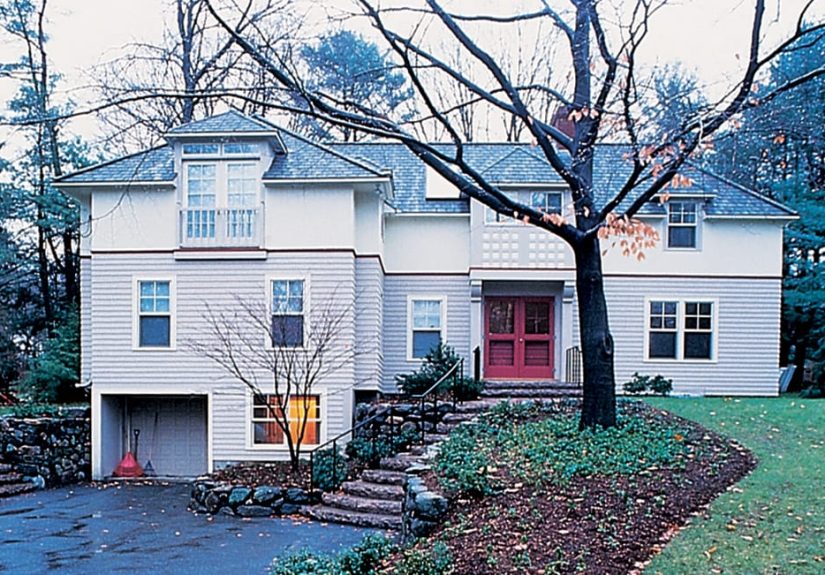
Many 1950s ranches have a quiet exteriorsometimes charming, sometimes bland. The Lexington Ranch transformation leaned into giving the house character and presence through:
- Dormers and new window groupings to add rhythm and proportion.
- A more dramatic entryway to create a true focal point.
- Mixed siding textures (like clapboards and shingles) for depth and detail.
- Exterior contrast so the home feels designed, not camouflaged.
Translation: the house no longer looked like it was trying to hide behind the trees. It finally introduced itself.
The “Quiet Superpower” of The Lexington Ranch: Building Science
Great design makes you say “wow.” Smart construction makes you say “why is this room so comfortable?” and then you forget to complain about the weather like a normal person.
SIPs: Faster Builds, Strong Envelopes, Better Comfort
The project used Structural Insulated Panels (SIPs)factory-made panels that combine structure and insulation into one high-performance system. When installed properly, SIPs can reduce thermal bridging and help create a tighter envelope, which supports comfort and efficiency.
Practical benefits homeowners notice:
- More consistent temperatures (fewer hot/cold spots).
- Quieter interiors because a tight envelope can reduce outdoor noise intrusion.
- Potential energy savings compared to conventional construction, especially when paired with good air sealing.
Air Sealing: The Unsexy Upgrade That Pays You Back
Air sealing is the behind-the-scenes hero of comfort. A tighter building envelope can reduce drafts, improve comfort consistency, and support better moisture control when paired with proper ventilation.
If you renovate a ranch and only do one “invisible” thing, make it this: seal the leaks you’ll never want to chase again after drywall goes up.
ICF-Style Stay-in-Place Forms: Strong Foundations, Better Performance
The Lexington Ranch build also referenced a stay-in-place foam form approach for foundation wallsoften associated with insulated concrete form (ICF) methods. In general, ICF-style construction is valued for strength, thermal performance, and sound reduction compared with some conventional approaches.
What You Can Steal (Politely) From The Lexington Ranch for Your Own Remodel
1) Start With Lifestyle Math, Not Square Footage
Instead of asking, “How many square feet do we need?” ask:
- Where do mornings jam up?
- Where do we drop stuff the second we walk in?
- What activities keep colliding (work vs. play vs. laundry vs. homework)?
- Which room do we avoid because it feels cramped or dark?
Those answers tell you what to build. Square footage is just the packaging.
2) Give the Entry a Job
Ranch houses are famous for entries that feel like “door… room.” A great remodel gives the entry an assignment:
- Buffer the interior from outdoor chaos.
- Create storage for coats, shoes, bags.
- Direct guests toward gathering spaces without walking through private zones.
3) Mix Big and Small Spaces for Emotional Comfort
People love open conceptsuntil they don’t. The Lexington Ranch idea of “hierarchies” is gold: pair an airy great room with smaller spaces that feel cozy, focused, and calm.
4) Plan the Future: Flex Rooms Win
The best ranch remodels handle change: remote work seasons, teens who need privacy, aging-in-place needs, guests who stay longer than “just one night,” and hobbies that require more than a kitchen table.
Flex strategies include:
- A pocket office or study alcove near the main living space.
- A guest room that can serve as a second office.
- Storage rooms that prevent the garage from becoming a museum of forgotten purchases.
Conclusion: The Lexington Ranch as a Blueprint for Smart Renovation
The reason The Lexington Ranch still resonates is simple: it wasn’t a makeover chasing aesthetics alone. It was a renovation that solved real problemsspace, flow, light, and comfortwhile respecting the emotional value of staying put.
It also shows what ranch homes do best: they’re adaptable. Their simple forms and straightforward footprints make them ideal candidates for thoughtful transformation. With the right plan, a ranch can go from “we’re squeezing by each other in the hall” to “wow… I didn’t realize how cramped we felt until we weren’t.”
of Real-World “Lexington Ranch” Experiences
If you’ve never lived through a ranch renovation (or you’ve blocked it out for emotional health), here’s what the experience often feels likeespecially when the end goal is a Lexington Ranch–style transformation: more light, more flow, and fewer daily bottlenecks.
The first experience is the “false progress high.” Demo starts, walls come down, and suddenly the house feels bigger… because it’s temporarily missing half its parts. You stand in the middle of your living room holding a coffee like a foreman and say things like, “You can really see the potential.” This is the renovation equivalent of seeing your bank app after paydaybriefly thrilling, immediately followed by reality.
Then comes the hallway reckoning. In many old ranches, hallways are unavoidable. During planning, you start noticing how often you squeeze past someone, how backpacks reproduce overnight, and how one narrow corridor can somehow host the entire family at exactly 7:42 a.m. A Lexington Ranch–inspired redesign tackles this by improving circulationcreating a real entry zone, widening or re-routing pinch points, and giving “drop zones” an actual home. The day you can walk through without side-stepping a laundry basket feels like winning a small but meaningful championship.
Light changes everything. Homeowners often describe the first morning after the great room (or any major daylight upgrade) is finished as a mood shift. You notice the ceiling height. You notice the air feels calmer. You stop turning on lights out of habit. It sounds dramatic, but natural light has a sneaky way of making a home feel more generous, even when the footprint hasn’t doubled.
Sound becomes a surprise character in the story. With higher ceilings and open connections, you might hear laughter carry farthergreat for parties, less great for nap time. That’s why the “big space + small space” strategy matters. A library, office nook, or snug room becomes the escape hatch: a place where you can take a call, read, or breathe without hearing someone practice the same guitar riff for the 400th time.
Comfort gets noticeably better when the envelope is improved. People often report fewer drafts, more even temperatures, and quieter interiors after upgrades like SIPs and thorough air sealing. The funny part is you don’t constantly think, “Ah yes, my building science choices are paying off.” You just stop arguing about the thermostat. That’s the true luxury.
Finally, the most “Lexington Ranch” experience of all is emotional: the sense of expanding into your own home. When rooms stop doing triple duty and the house finally has a center, you don’t just gain spaceyou gain ease. And that’s the kind of upgrade you can’t always measure in square feet.