Table of Contents >> Show >> Hide
- What the Milwaukee 2930 Rear-Handle Circular Saw Actually Is
- How Popular Mechanics Tested It
- Performance: Where the 2930 Earns Its Keep
- Build Quality and Jobsite Features
- What the Milwaukee 2930 Does Better Than the Last Version
- Who Should Buy This Saw
- Verdict: Is the Milwaukee 2930 Worth It?
- Extended Experience: What Living With the Milwaukee 2930 Feels Like on Real Workdays
If circular saws had personality types, the Milwaukee 2930 would be the big, confident coworker who shows up early, lifts the heavy stuff without complaining, and somehow still has enough energy to help clean up at the end of the day. This is Milwaukee’s M18 FUEL 7-1/4-inch rear-handle circular saw, model 2930-20, a cordless framing saw built for people who expect serious cutting power without dragging an extension cord across a jobsite like it’s a needy pet snake.
Popular Mechanics put the Milwaukee 2930 to work in a real framing situation, and the results were hard to ignore. The saw chewed through dimensional lumber, handled rafters without drama, and impressed with its dust control, visibility, and balance. Add in Milwaukee’s official performance claims and the broader reaction from tool retailers and pro-focused review outlets, and a pretty clear picture emerges: this is not a casual weekend trim saw. It is a pro-grade rear-handle beast made for framing, ripping sheet goods, and tackling demanding cuts all day long.
That said, “beast” is still the right word. The 2930 is lighter than the previous generation, but it is not tiny, dainty, or remotely interested in pretending to be. This saw is here to work, not flirt.
What the Milwaukee 2930 Rear-Handle Circular Saw Actually Is
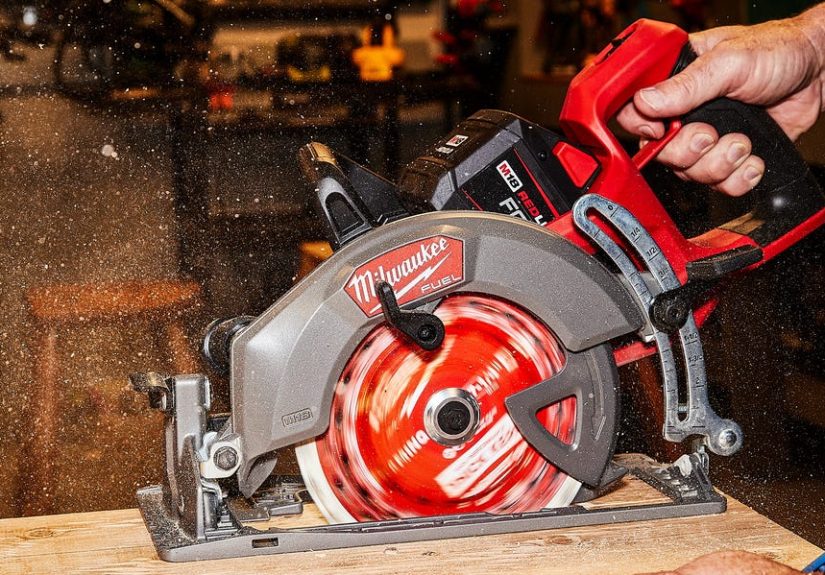
The Milwaukee 2930 is a cordless, rear-handle, worm-drive-style circular saw built on the M18 platform. It uses a POWERSTATE brushless motor, runs at 6,000 RPM, and is designed to give professional carpenters, remodelers, and general contractors the kind of cutting speed and torque they usually expect from a corded framing saw. Milwaukee also equips it with features that matter on real jobs: a 2-5/8-inch cut capacity, 53-degree bevel capacity, positive bevel and depth detents, an LED work light, a rafter hook, magnesium guards and shoe, and a dust-management setup meant to be more useful than decorative.
Milwaukee says the saw can deliver up to 700 cuts per charge when paired with the M18 REDLITHIUM FORGE HD12.0 battery. That number will obviously depend on the material, blade, and how aggressively you cut, but the larger point is obvious: this tool is designed around runtime as much as speed. In other words, Milwaukee did not build a rear-handle saw for people who enjoy changing batteries every 20 minutes and muttering darkly at plywood.
How Popular Mechanics Tested It
One reason the Popular Mechanics review stands out is that it did not feel like a sterile spec-sheet exercise. The saw was used during the framing of a large backyard shed, which is exactly the kind of environment where a rear-handle saw should either prove itself or get exposed. According to the review, the tool handled plates, studs, headers, and then moved into heavier 2×8 rafter work without bogging down.
That matters. Plenty of saws look strong on paper. The trick is staying smooth under load when you move from basic cuts into the kind of repetitive framing work that reveals every weakness in balance, ergonomics, battery endurance, and cut-line visibility. Popular Mechanics came away impressed not only by the raw power, but by the way the tool behaved while doing real work. The review described the cuts as smooth and precise, and noted that the updated design solved several complaints associated with the older version.
The review also highlighted the saw’s performance on plywood. Once connected to a vacuum, the repositioned dust port helped keep the cut line cleaner, while the front-mounted LED improved visibility. That combination may not sound glamorous, but on a long day of ripping sheet goods, small usability improvements are exactly what separate a “pretty good” saw from one you actually look forward to grabbing.
Performance: Where the 2930 Earns Its Keep
Power and Cutting Speed
The Milwaukee 2930 is clearly designed for users who cut structural lumber, engineered wood, and sheet goods on a regular basis. Pro Tool Reviews found that it maintained speed impressively in treated pine and triple-stacked 3/4-inch OSB, noting that the saw held RPMs well under demanding conditions. That lines up neatly with Milwaukee’s own positioning of the saw as a top-tier, high-output framing tool.
In plain English, this is the kind of saw that wants a challenge. It is not most impressive when slicing a lonely piece of plywood in a suburban garage. It shines when you stack material, make repeated cuts, and ask the motor to keep delivering without sounding like it is reconsidering its career choices.
Cut Capacity and Bevel Range
Milwaukee gave the 2930 a 2-5/8-inch cut capacity, which allows it to cut 3x material in one pass. For framers and remodelers, that is not a boring spec. That is a real time-saver. The 53-degree bevel range is equally useful, especially with positive detents at 22.5 and 45 degrees. The depth detents also make setup faster for common cut depths, which is the kind of convenience that feels minor until you use it repeatedly over a full day.
Popular Mechanics specifically praised the bevel setup once the saw got into real-world use. What may seem like a detail on a showroom floor becomes more valuable when you are balancing a saw, lining up a cut, and trying not to waste time fussing with adjustments between tasks.
Handling and Ergonomics
Here is the good news: the Milwaukee 2930 is lighter than the previous generation by roughly a pound and a half, and that reduction matters. Multiple sources describe the new model as a meaningful improvement in portability and day-long usability. In rear-handle saw territory, dropping weight without sacrificing performance is not a little win. It is the whole game.
Here is the honest news: this is still a hefty saw. Popular Mechanics praised how well it handled, especially with the rear grip position and overall balance during downward cuts, but also made it clear that the tool is still substantial enough to give your arm a workout. That is the tradeoff. You get real power, real depth, and real productivity, but you are not going to confuse this with a compact sidewinder.
Dust Control and Visibility
One of the most welcome updates is the redesigned dust-port setup. Popular Mechanics noted that the previous rear-mounted arrangement could interfere with visibility by sending dust where you did not want it. On the 2930, Milwaukee moved the port forward, and the difference seems to be more than cosmetic. Connected to a vacuum, the saw reportedly kept the line much cleaner during plywood work.
The LED light also deserves credit. Good saws are not just about cutting power; they are about helping you see what you are doing before you make a mistake that turns a twenty-dollar board into firewood with ambitions.
Build Quality and Jobsite Features
The Milwaukee 2930 includes an electric brake, magnesium components, a folding rafter hook, and compatibility across the M18 battery system. Those are the kinds of details professionals expect in this category, and Milwaukee seems to have avoided cutting corners where it matters. The saw feels designed by people who understand that framing tools are not pampered. They get set down on subfloors, carried up ladders, bumped against material stacks, and used by tired humans with deadlines.
That jobsite-first thinking is also reflected in the saw’s overall identity. It is not trying to be everything for everyone. It is a rear-handle saw made for users who want torque, tracking, runtime, and cleaner lines on demanding cuts. If that sounds like your workday, the 2930 makes a compelling case for itself.
What the Milwaukee 2930 Does Better Than the Last Version
The biggest story here is not that Milwaukee made a good saw. It already had one. The real story is that the company appears to have meaningfully refined the platform. Reviews repeatedly point to three improvements: lower weight, stronger cutting performance, and a better dust-port layout. Those are not gimmicky upgrades. They address exactly the issues users notice first in the field.
That makes the 2930 feel more like a smart evolution than a lazy refresh. It is faster where it needs to be faster, more comfortable where the old saw needed help, and more thoughtful in the little details that affect everyday use.
Who Should Buy This Saw
The Milwaukee 2930 makes the most sense for professional framers, remodelers, deck builders, and serious tradespeople who already work on the M18 platform or want a cordless rear-handle saw that can legitimately compete with corded options. It is also a strong fit for advanced DIY users who routinely tackle structural work, sheds, fences, additions, or heavy sheet-good projects.
It makes less sense for occasional users who mainly cut trim, small panels, or hobby materials. That would be like buying a pickup truck to transport a sandwich. Yes, it will work. No, that is not really the point.
Verdict: Is the Milwaukee 2930 Worth It?
Yes, for the right buyer, the Milwaukee 2930 absolutely looks worth it. The combination of serious power, better ergonomics, pro-focused features, strong runtime potential, and improved dust handling makes it one of the more convincing cordless rear-handle saws in its class. Popular Mechanics came away impressed by its real-world cutting performance and precision, while Pro Tool Reviews viewed it as a clear upgrade over the previous model.
The best way to describe the 2930 is simple: it feels like a cordless saw built by people who are tired of hearing that corded is always better. It does not erase every advantage of a traditional corded framing saw, and it is still heavy enough to remind you that physics remains undefeated. But it narrows the gap enough to make the old debate much more interesting.
If you need a rear-handle circular saw that can rip plywood cleanly, fly through framing lumber, and stay productive over a long day, the Milwaukee 2930 deserves a spot near the top of your list.
Extended Experience: What Living With the Milwaukee 2930 Feels Like on Real Workdays
What makes the Milwaukee 2930 especially interesting is not just what it does in short bursts, but how it seems to behave over the course of an actual workday. Rear-handle circular saws are not tools you judge after two ceremonial cuts and a proud nod in the driveway. You judge them when the material stack is still tall, your shoulders are warming up in all the wrong ways, and you have entered that jobsite rhythm where a tool either fades into the background or begins annoying you with every pass.
By that standard, the 2930 seems to be built for long-form use. In the Popular Mechanics test, it moved from basic framing lumber into 2×8 rafter work without the battery falling apart or the saw losing its composure. That kind of performance matters because heavy framing cuts are where confidence lives or dies. If a saw flinches, bogs, wanders, or sprays dust straight into your line of sight, the user starts compensating. Once that happens, fatigue increases, accuracy drops, and the whole day gets a little more irritating.
The Milwaukee 2930 appears to avoid a lot of that irritation. Its rear-handle design gives it the push-through feel many framing carpenters like, especially on long rips and repetitive structural cuts. The grip position encourages a natural driving motion through lumber, and the improved balance seems to make ladder work and downward cuts less awkward than you might expect from a saw in this class. It is still a substantial tool, of course, but the weight reduction over the previous version seems to be just enough to move it from “brute force only” into “powerful but manageable.” That is a meaningful shift.
Then there is the plywood experience, which often tells you more about a circular saw than marketing copy ever will. Sheet goods demand tracking, visibility, and smoothness. A saw can have all the power in the world and still feel clumsy if the cut line disappears under dust or the shoe does not inspire confidence. Popular Mechanics found the 2930 especially impressive here, noting clean tracking, minimal splintering, and far better dust behavior when paired with a vacuum. That suggests Milwaukee did not just tune the motor and call it a day. The company appears to have improved the entire cutting experience.
Over time, that kind of refinement is what users remember. They remember whether a saw makes setup simple. They remember whether bevel adjustments are easy to trust. They remember whether the light is actually useful or just technically present. They remember whether the tool feels planted during a long rip or whether it fights them like a shopping cart with one bad wheel. On those points, the 2930 seems to leave a strong impression.
And that may be the biggest compliment you can give a serious framing saw: it lets you focus on the build instead of the tool. It still asks for strong hands and a realistic respect for its size, but it appears to repay that respect with speed, accuracy, runtime, and confidence. For pros and committed builders, that is exactly the kind of relationship worth having.