Table of Contents >> Show >> Hide
- A Tiny Paris Apartment with Big Ambitions
- Why an Ikea Kitchen Belongs in a Paris Pied-à-Terre
- Design Lessons to Steal from This Paris Pied-à-Terre
- Creating Your Own Perfect Pied-à-Terre (Even If It’s Not in Paris)
- Lived-In Experiences: What It Really Feels Like to Own a Two-Room Paris Pied-à-Terre
- Conclusion: Small Footprint, Big Life
Somewhere on an upper floor of a Parisian building, past a creaky elevator and a worn limestone stair,
sits the kind of apartment most people save on Pinterest and never actually live in: a compact, two-room
pied-à-terre with herringbone floors, tall windows, and an Ikea kitchen that somehow looks more boutique
hotel than budget flat-pack.
This small-but-mighty Paris apartment, as featured on Remodelista, is a masterclass in how thoughtful
design can make 40-ish square meters feel generous, glamorous, and surprisingly practical. The architect
and owners didn’t try to turn it into a full-time family home. Instead, they leaned into what a pied-à-terre
really is: a place to land lightly, cook something simple, sleep very well, and soak up the city in between.
The secret sauce? A clear layout, a restrained palette, clever built-ins, and an Ikea kitchen that’s been
treated less like a compromise and more like a smart, flexible building block. Let’s walk through what
makes this two-room Paris pied-à-terre so perfectand how you can steal its ideas no matter where you live.
A Tiny Paris Apartment with Big Ambitions
The Genius of the Two-Room Layout
At its core, this pied-à-terre is organized into just two main spaces: a combined living/dining/kitchen
room and a separate bedroom. Instead of chopping the apartment into awkward micro-rooms, the architect
allowed each space to be clearly defined and generously proportioned for its function.
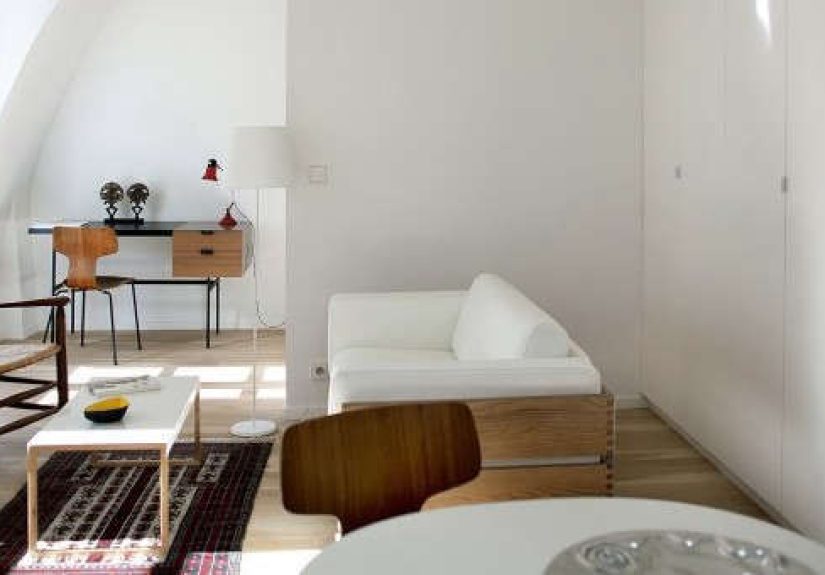
The living room is the social heart. It holds a compact sofa, a small dining table, and the Ikea kitchen
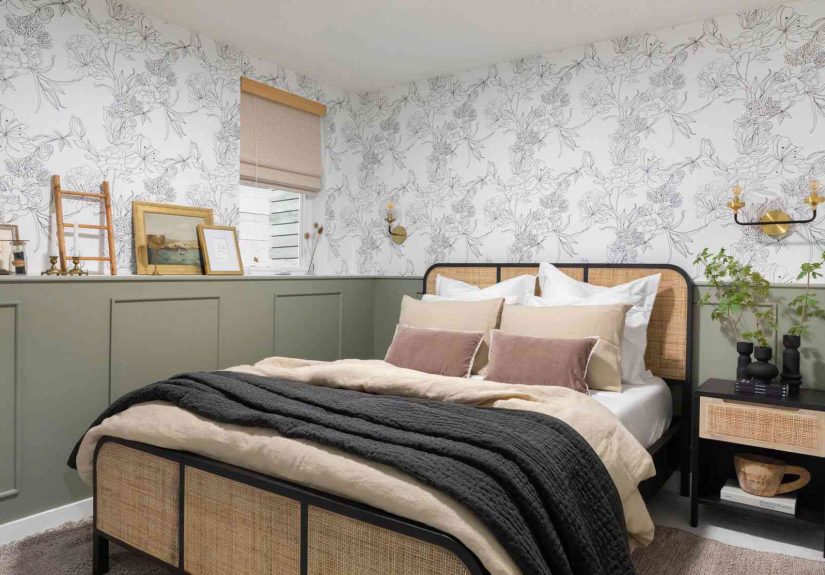
running along one wall. The bedroom is calm and almost monastic, with soft textiles, simple lighting,
and built-in storage that lets the architecturenot the cluttertake center stage. This “two real rooms”
approach is classic Paris: a place to gather, and a place to retreat. No wasted corridors, no random corners
you don’t know what to do with.
Light, Views, and Classic Parisian Bones
Of course, the apartment has a head start: tall windows, high ceilings, and original wood floors. But the
design doesn’t just lean on the charm; it amplifies it. Walls are kept light and neutral, allowing daylight
to bounce across the space. Window treatments are minimal, framing views rather than blocking them.
Instead of heavy furniture, the pieces are visually light: slender-legged chairs, streamlined sofas, and
small occasional tables that don’t crowd the floor. The effect is that the apartment feels airy and open,
even though it would technically qualify as “tiny” in most real estate listings.
Why an Ikea Kitchen Belongs in a Paris Pied-à-Terre
If you’ve ever fallen down a design rabbit hole online, you know that Paris apartments and Ikea kitchens
are a surprisingly common pairing. There’s a reason: Ikea’s modular cabinets are relatively affordable,
easy to customize, and sized well for small European rooms, where every centimeter counts.
Smart Storage in a Sliver of Space
In this pied-à-terre, the kitchen runs in a single line along one wall of the main room. Instead of
overstuffing it with bulky appliances, the designer prioritized essentials: an induction cooktop, compact
oven, undermount sink, hidden dishwasher, and carefully planned storage. Upper cabinets are used selectively,
so the kitchen doesn’t feel like a wall of boxes looming over the room.
Drawers do most of the heavy lifting. Deep pull-outs hold pots, pans, and pantry staples. Narrow pull-outs
corrall spices and oils. Integrated organizers keep flatware and utensils from turning into a junk drawer
black hole. It’s very “tiny galley kitchen,” but with hotel-level order.
This matches what many Ikea kitchen owners report: done well, an Ikea system can feel surprisingly premium
because of how efficiently it uses space, especially with full-extension drawers and tall pantry units.
In other words, it’s less about brand prestige and more about making breakfast at 7 a.m. without bumping
into every cabinet door.
Mixing High and Low for a Luxe Look
The magic move here is mixing Ikea basics with elevated finishes and hardware. In the Remodelista apartment,
the kitchen gets upgraded through choices like:
- Custom countertop: Stone or composite counters instantly make simple cabinets feel more luxurious.
- Tailored hardware: Swapping in solid-brass or blackened-metal pulls gives the kitchen a bespoke vibe.
- Thoughtful backsplash: Simple tiles, installed with care, add texture and depth without overwhelming the room.
- Integrated lighting: Under-cabinet lighting and minimal fixtures keep the work surface bright and inviting.
Recent Paris projects by designers and magazines have shown the same strategy: Ikea cabinet boxes paired
with designer hardware, professional-grade ranges, custom hoods, and statement lighting. The result is
a kitchen that looks like it belongs in a design book, even though the bones came from a flat-pack store.
The lesson for any small-space dweller is simple: splurge where you touch and see things every daycountertops,
hardware, faucets, lightingand let the core cabinet system quietly do its job.
Design Lessons to Steal from This Paris Pied-à-Terre
1. Let Layout Lead Everything
In small apartments, layout is destiny. The Paris pied-à-terre works because traffic patterns are clear.
You enter, hang your coat, walk into a defined living area, and move naturally toward the kitchen or
bedroom. Nothing feels accidental.
If you’re reworking your own space, start with a simple question: where do you walk, sit, cook, and sleep?
Arrange furniture so those movements are easy and direct. Move storage to peripheral zonesbuilt-ins around
doors, vertical cabinets in cornersso the center of the room stays open.
2. Prioritize Storage, Then Disappear It
Paris designers are masters at “invisible storage.” In a small pied-à-terre, there’s no garage, no basement,
and usually no walk-in closet. So storage is integrated into the architecture: floor-to-ceiling wardrobes,
wall-hung cabinets, built-in benches with hidden compartments, and even narrow niches beside doorways.
The Remodelista apartment embraces this trick. Wardrobes are flush with the wall and painted in the same
color as the room, so they read as quiet planes rather than bulky furniture. In the kitchen, tall cabinets
hide pantry goods and cleaning supplies. The result: you get real, adult-level storage without sacrificing
visual calm.
3. Keep a Light, Calm Baseand Layer Character
The color palette is restrained: soft whites, warm neutrals, maybe a muted gray or dusty blue. That quiet
base lets the architecture breathe and makes the apartment feel larger than it is.
Character comes from layers: a patterned rug under the dining table, a vintage chair, a small gallery wall,
a stack of books, a single bold lamp. This is a very Parisian movemixing flea market finds with simple
modern pieces, all against a clean backdrop. It’s curated but not precious.
4. Use Mirrors and Glass to Stretch the Space
Many small Paris apartments rely on mirrors, glass doors, and interior windows to cheat a bit more light
and “borrowed” space. A mirror placed opposite a window doubles the view; a glass-panel door between living
room and bedroom preserves privacy while keeping the apartment bright.
You don’t need classic Haussmannian bones to steal this trick. Even in a modern studio, a well-placed mirror
above a console or sofa can make the room feel deeper and airier. Just be intentional: reflect something
prettylike a window, plant, or piece of artnot the TV or the kitchen trash can.
5. Choose a Few Really Good Things
The best pied-à-terres don’t try to cram in everything. Instead, they focus on a short list of pleasures:
a comfortable bed with quality linens, a small dining table that can host two or four, a sofa that’s actually
nap-worthy, and a compact but well-equipped kitchen.
Designers of high-end tiny apartments often talk about “hotel thinking”: you may not have a ton of square
footage, but what you do have should feel considered and indulgent. In this apartment, that might mean a
great mattress, real art on the walls, thick curtains, and a beautiful teapot on the stove. None of those
require extra square metersjust good choices.
Creating Your Own Perfect Pied-à-Terre (Even If It’s Not in Paris)
Step 1: Define How You’ll Really Use It
Not every “pied-à-terre” is in another country. Yours might be a city crash pad, an in-law studio, or a
small condo you visit on weekends. Decide what matters most: Do you actually cook, or just reheat? Will
you work there, or treat it like an offline escape? Do you host guests, or keep it just for yourself?
In the Paris apartment, the layout clearly assumes a rhythm of short stays: a kitchenette rather than a
full chef’s kitchen, a living area that can host a few friends but not a crowd, and a bedroom designed
for deep sleep more than daytime multitasking. Your priorities should guide your layout the same way.
Step 2: Embrace the Ikea (or Modular) Mindset
You don’t have to use Ikea, but you should steal its logic:
- Mix modular cabinet boxes with upgraded fronts and hardware.
- Use drawers over doors wherever possible for better access.
- Run cabinets all the way to the ceiling for maximum storage.
- Lean on planning tools (digital or old-school graph paper) to get every inch right.
In a pied-à-terre, you’re designing more like a boat or a clever hotel room than a sprawling house. Every
piece needs to earn its keep, and modular systems make it easy to swap components if your needs change.
Step 3: Layer in Parisian Atmosphere
You may not have chevron oak floors, but you can nod to Paris with:
- A small cafe table and two chairs as your dining zone.
- Wall sconces instead of relying only on ceiling fixtures.
- Neutral walls with one subtle, moody accent color.
- Framed art (not just posters pinned to the wall) in simple black or brass frames.
- A mix of linen, cotton, and wool in your bedding and textiles.
Together, these choices create that “collected over time” look that so many Paris apartments are known for,
even if your space was assembled in one whirlwind weekend.
Step 4: Edit Ruthlessly
A pied-à-terre is not the place for your entire mug collection, five sets of sheets, and three slow cookers.
The owners of the Paris apartment understood this: they curated down to favorites and necessities, then let
the empty space do some of the talking.
Before you move anything in, ask: “Would I miss this if it weren’t here?” If the answer is no, let it live
somewhere else. Think like a frequent traveler. A suitcase’s worth of clothes, a handful of beloved objects,
and a few kitchen basics is often all you need to feel at home.
Lived-In Experiences: What It Really Feels Like to Own a Two-Room Paris Pied-à-Terre
It’s one thing to admire photos of a perfect Paris pied-à-terre. It’s another to actually live in one
even if only for a few days at a time. Here’s what the experience typically looks like when the Instagram
grid gives way to real life.
Arriving with Just a Carry-On
Owners of small city pieds-à-terre quickly learn to travel light. You arrive with a carry-on, unlock the
door, and everything you need is already in place: slippers by the bed, coffee in the pantry, your favorite
olive oil in the cabinet. The apartment doesn’t feel like a hotel; it feels like a paused version of your
life that you simply press “play” on again.
In a two-room layout, arrival is smooth. The living room is open enough to drop your bag, hang your coat,
and get your bearings without tripping over extra furniture. The Ikea kitchen stands quietly ready: kettle,
cups, a small stash of chocolate and crackers that somehow taste better because you’re in Paris.
Cooking in a Tinybut EfficientKitchen
The first time you cook in an Ikea galley kitchen, you realize how little space you actually need when
everything is within arm’s reach. A simple dinnerpasta, salad, a loaf of bread from the corner bakery
becomes a kind of ritual. You pull a pan from a deep drawer, grab utensils from an organizer that fits
perfectly, and never once go hunting for lids in the back of a cabinet.
The compact footprint forces good habits. Surfaces get wiped down immediately. Dishes go straight into the
dishwasher, not the sink. The trash is small, so it’s taken out often. In a funny way, the tiny kitchen
makes you a tidier cook, just because there’s nowhere to hide a mess.
Living with Lessand Loving It
Many pied-à-terre owners talk about how freeing it feels to live with a stripped-down version of their daily
life. There’s one favorite pan, not five. A curated rack of clothing, not a bursting closet. A small stack
of books, chosen intentionally for this place. The apartment gently nudges you to slow down: enjoy your
coffee by the window, read a few pages before dinner, stroll to the market instead of ordering delivery.
The bedroom in a two-room pied-à-terre is often the biggest surprise. Because it isn’t competing with a
desk, a TV, or storage overflow, it can be truly restful. Thick curtains block morning light when you need
sleep; a narrow nightstand holds only a lamp, a phone, and maybe a paperback. You sleep unusually well
not just because of the mattress, but because there’s so little visual noise.
Hosting in a Space That Forces Intimacy
When friends come over, the scale of the apartment shapes the evening. There’s no sprawling sectional or
twelve-person dining table. Instead, you squeeze around a small table meant for four, maybe borrow a chair
from the bedroom, and pass dishes carefully. Conversations stay focused and personal because there’s nowhere
to drift off to.
The Ikea kitchen holds its own here, too. Open shelving or glass-front cabinets let guests see where things
are, so they can grab glasses or plates without asking. A narrow counter becomes a self-serve aperitif
station. Everyone always seems to end up in that tiny kitchen, which is very on-brand for both Paris and
Ikea.
Leavingand Knowing You’ll Be Back
On departure day, you do a quick reset: sheets washed, towels hanging neatly, dishes put away, fridge cleared
except for a few long-lived staples. Because there isn’t that much stuff, the process is fast. You close up,
lock the door, and the little apartment waits quietly for the next arrival.
That’s the real magic of a well-designed two-room pied-à-terre with a smart Ikea kitchen: it asks very little
of you but gives a lot back. It’s not about perfection in the magazine sense. It’s about landing in a tiny
slice of the city that feels completely, unmistakably yourseven if you only live there part-time.
Conclusion: Small Footprint, Big Life
The Perfect Two-Room Paris Pied-à-Terre, Ikea Kitchen Included proves that you don’t need a huge space or
a luxury brand list to live beautifully. With a clear layout, invisible storage, a calm palette, and a
well-planned modular kitchen, a tiny apartment can feel generous, welcoming, and deeply personal.
Whether your own “pied-à-terre” is in Paris, a downtown high-rise, or a compact suburban condo, the lessons
are the same: let function guide form, invest in a handful of quality pieces, edit ruthlessly, and don’t
be afraid to mix humble building blocks with elevated details. Do thatand your home, however small, will
feel as effortlessly charming as any Paris postcard.