Table of Contents >> Show >> Hide
- From Magazine Pranksters to Radio Renegades
- Meet the Cast That Would Rewrite TV Comedy
- The Sound of Smart, Tasteless, and Weirdly Therapeutic
- How the Radio Hour Pointed Straight to Saturday Night Live
- The Complicated Feelings Behind the Origin Story
- The Lasting Legacy: From Tape Reels to Podcasts and 50th Anniversaries
- What It’s Like to Discover the Radio Show Behind SNL Today
- Conclusion: From Static to “Live from New York”
Before there was “Live from New York, it’s Saturday night!”, there was the sound of tape hiss, cheap microphones,
and a gang of dangerously funny weirdos crowding around a studio console in midtown Manhattan. Long before
Saturday Night Live turned late-night TV into a weekly comedy event, a scrappy little audio experiment called
National Lampoon Radio Hour was already doing the job and annoying hundreds of radio stations while it was at it.
The Cracked.com piece “The Radio Show That Became Saturday Night Live” shines a spotlight on this almost-mythical
bridge between underground ‘70s counterculture and mainstream network comedy. In this article, we’ll unpack the
real history behind that headline: how a magazine became a radio show, how that radio show became a talent pipeline
for SNL, and why the story still matters in a world of podcasts and streaming.
From Magazine Pranksters to Radio Renegades
National Lampoon: The Comedy Lab Before SNL
To understand the radio show, you have to start with the magazine. National Lampoon, created in 1970,
took the irreverent spirit of campus humor and dialed it up to “please don’t show this to my parents.” It mixed
smart satire with gleeful bad taste, mocking politics, advertising, religion, rock culture pretty much anything
that stood still long enough to be parodied.
The magazine didn’t stay confined to print for long. By the early ‘70s, the Lampoon brand had already spawned live
stage shows and comedy albums. That experimental mindset led to a simple but revolutionary idea: if they could make
people laugh on the page and on stage, why not on the air?
The Birth of the National Lampoon Radio Hour
In late 1973, that idea became reality with the launch of the National Lampoon Radio Hour, a weekly
syndicated comedy program recorded in a custom-built studio at the Lampoon offices in New York City. The show
kicked off as an hour-long blitz of sketches, fake commercials, songs, news spoofs, and general chaos, before
eventually shrinking to a half-hour because, shockingly, writing an hour of dense, layered satire every week turned
out to be exhausting.
The program was distributed to hundreds of stations across the United States, many of them college or
progressive rock outlets hungry for something edgier than the usual DJ chatter. What they got instead was a
hurricane of jokes about politics, TV, advertising, and the culture at large not all of which went over well with
nervous station managers. Cracked’s cheeky tagline that it “ticked off 400 radio stations” isn’t just a punch line;
it captures how far the Lampoon crew pushed the boundaries of what radio comedy could get away with.
Meet the Cast That Would Rewrite TV Comedy
The Future SNL All-Stars, Huddled Around a Microphone
If you could time-travel into that radio studio, you’d be surrounded by names that would soon dominate American
comedy. The cast and writers of the National Lampoon Radio Hour included:
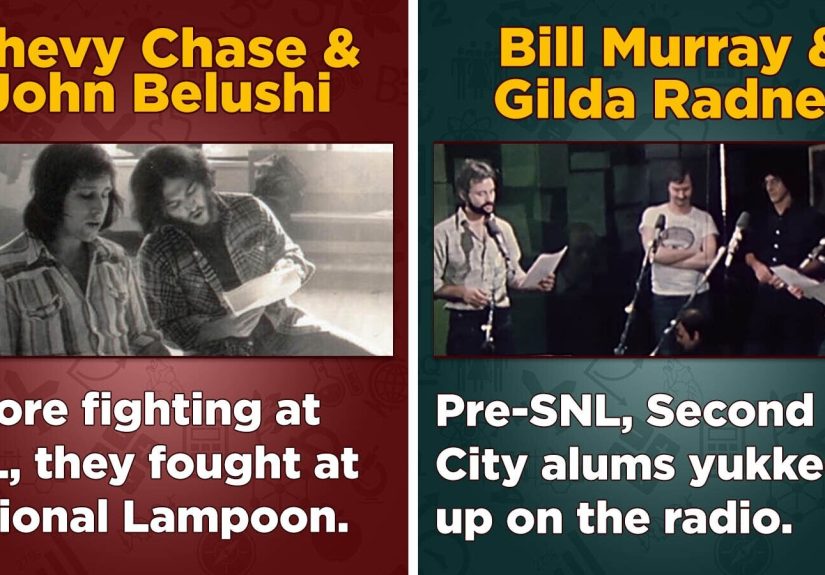
- John Belushi – a force of nature whose voice performances were somehow just as big as his later physical comedy.
- Gilda Radner – already crafting characters that felt at once unhinged and heartbreakingly human.
- Chevy Chase – delivering deadpan absurdity and elastic newscaster parodies.
- Bill Murray – arriving a little later, bringing that signature mix of charm and menace.
- Harold Ramis – a writer-performer who would help shape movies like Animal House and Ghostbusters.
- Brian Doyle-Murray, Christopher Guest, Richard Belzer, Anne Beatts, Michael O’Donoghue and more.
Together they mixed Second City-style improv instincts with the Lampoon’s sharper, more vicious editorial voice.
The result sounded like a college radio station seized by pirates who also happened to be grammar nerds and news
junkies.
Training for Live TV Without Knowing It
Even though they were “only” making radio, the Lampoon crew was accidentally rehearsing for live television:
- Tight deadlines: A new show every week meant learning how to write, edit, and perform under pressure.
- Character rotation: Performers were constantly trying new voices and personas, exactly the muscle SNL would demand.
- Topical satire: Sketches reacted to Watergate, political scandals, and media clichés in real time.
- Collaborative chaos: Writers and performers blurred roles, pitching in wherever something needed to be punched up.
By the time NBC came calling, this radio ensemble already functioned like a sketch-comedy machine just one that
nobody outside the cool kids’ radio dial had heard of yet.
The Sound of Smart, Tasteless, and Weirdly Therapeutic
Sketches That Went for the Jugular
The National Lampoon Radio Hour wasn’t “light chuckles while you do the dishes” listening. Its sketches were fast,
dense, and often mean in a way that felt shocking for the era. The writers would parody solemn newscasts, consumer
ads, political hearings, and even the wholesome tone of public radio.
One moment you might hear a straight-faced announcer calmly introducing a quiz show where the penalty for losing is
hilariously disproportionate. The next moment, a fake public-service announcement would spiral into something that
sounded like a fever dream. The goal was rarely polite laughter; it was more like nervous, cathartic wheezing.
Contemporary reviewers picked up on that vibe, noting that the show could be both “scattershot” and strangely
healing as if the best way to process a scandal-soaked decade was to roast everything in sight and see what
survived. The sensibility that would later define Saturday Night Live smart, topical, a little smug,
and not afraid to bomb was already there, just hiding on the AM and FM bands.
How the Radio Hour Pointed Straight to Saturday Night Live
NBC Needs a Saturday Night Experiment
Meanwhile, over at NBC, a different problem needed solving. Johnny Carson wanted fewer reruns of The Tonight
Show on weekends, which left the network with a gaping hole in its late-night schedule. The solution:
invent something fresh for Saturday nights, ideally something that would grab younger viewers instead of sending
them to bed.
Producer Dick Ebersol and Canadian writer-producer Lorne Michaels were tasked with creating this
new show. They imagined a live variety format built around sketches, music, and a rotating set of hosts loose
enough to feel dangerous, structured enough to keep affiliates from panicking. They were also smart enough to
notice that a ready-made farm team of fearless sketch comics already existed… on the radio.
From 635 Madison Avenue to Studio 8H
As the National Lampoon Radio Hour faded out in 1974, NBC started scooping up its stars and sensibility. Gilda
Radner became the first official cast member hired for the new show. John Belushi followed. Chevy Chase signed on,
then Bill Murray later joined in season two. Writers and producers from the Lampoon orbit including Michael
O’Donoghue and Anne Beatts moved into the new operation at Studio 8H in Rockefeller Center.
When Saturday Night Live debuted in October 1975, you could hear the radio hour’s DNA everywhere:
- Fast, sometimes baffling pacing.
- Jokes that punched up at politics, media, and corporate culture.
- Characters who were both ridiculous and strangely familiar.
- A willingness to lean into awkward silences instead of smoothing them over.
Cracked.com’s framing that a radio show “became” Saturday Night Live isn’t literal, of course. But in
terms of style, tone, and especially people, the path is remarkably straight. Take away the Lampoon radio
era and SNL looks much less like a lightning bolt from nowhere and more like a network trying very hard to reverse
engineer the cool kids’ station.
The Complicated Feelings Behind the Origin Story
When Underground Comedy Becomes Network Property
There’s a reason some veterans of National Lampoon have mixed feelings about SNL’s success. From their perspective,
the magazine and radio show did the risky early work: pushing taste, developing a tone, nurturing talent, and
proving there was a hungry audience for dark, topical, sketch-based satire.
Then NBC swept in, hired away their people, toned the material down just enough for broadcast standards, and built a
billion-dollar cultural machine. You don’t have to be a Lampoon loyalist to see why there might be lingering
resentment and why articles like “The Radio Show That Became Saturday Night Live” feel a bit like overdue
credit.
At the same time, the migration from a scrappy radio show to a major TV institution also shows how creative scenes
naturally evolve. Underground experiments tend to either burn out or get absorbed into the mainstream. In this case,
the absorption led to five decades of sketches, from “Cheeseburger, cheeseburger” to viral digital shorts.
The Lasting Legacy: From Tape Reels to Podcasts and 50th Anniversaries
National Lampoon Radio Hour Won’t Stay Buried
For a show that originally ran only about a year, the National Lampoon Radio Hour refuses to stay in the past.
Episodes have been reissued on albums and digital platforms, and there’s been a full-fledged podcast
revival that resurrects the brand with a new generation of comics paying homage to its anarchic spirit.
Modern retrospectives often treat the radio hour as a kind of Rosetta Stone of ‘70s comedy: listen closely and you
can hear not just SNL, but the seeds of movie franchises, stand-up personas, and even the rhythm of modern sketch
podcasts. It’s the missing link between the counterculture era and the network era.
SNL at 50: Still Living in the Radio Show’s Shadow
Meanwhile, Saturday Night Live itself has become an institution celebrating its 50th anniversary with live
concerts, international spinoffs, and enough alumni to populate several small countries. The fact that a late-night
experiment born in 1975 is still on the air in 2025 is wild enough. The fact that its roots trace back to a
relatively obscure radio show from 1973 is even wilder.
When you see a modern SNL sketch that savages a political scandal in prime time or watch a digital short go viral
within hours, you’re watching a format that Lampoon’s radio crew road-tested with nothing but tape recorders,
caffeine, and a dangerous amount of freedom.
What It’s Like to Discover the Radio Show Behind SNL Today
Hearing Young Belushi in Your Headphones
Imagine this: you’re a lifelong SNL fan scrolling through a streaming app late at night when you stumble on a dusty
thumbnail labeled “National Lampoon Radio Hour.” You hit play out of curiosity. Instead of a polished TV cold
open, you hear crackly intro music and a voice that sounds suspiciously like John Belushi doing an ad for something
that could never legally exist.
A few minutes in, another voice pops up familiar, but not quite fully formed. It’s Gilda Radner, years before
“Roseanne Roseannadanna” or “Emily Litella,” already nailing the kind of slightly unhinged, overly earnest character
that would later make her a star. Chevy Chase drones his way through a parody newscast where nothing goes right.
Somewhere in the chaos, a young Bill Murray sneaks in with a line that sounds like it wandered in from the future.
The experience is strangely intimate. You’re not watching legends; you’re listening to ambitious young performers
try things. They step on each other’s lines, double over laughing, and occasionally push a joke way past the point
where any network censor would step in. Instead of the glossy SNL studio, the mental picture is a cramped room
full of cigarette smoke, coffee cups, and scripts taped together at the edges.
Why It Hits Differently Than SNL Reruns
Old SNL episodes feel historic but familiar: you’ve seen the sets, the live audience, the hosts. The National
Lampoon Radio Hour feels like you’ve discovered the rehearsal tapes the raw, unfiltered thoughts before the suits
showed up. Because you can’t see anyone, you zero in on the writing and timing. When a bit whiffs, you feel it.
When a sketch absolutely lands, it’s like hearing the moment someone invents a new kind of joke.
There’s also something inspiring about how small the operation sounds compared with what it helped
create. SNL launched from one of the most famous studios in American broadcasting. The radio hour was cobbled
together in an office building by a crew who probably never imagined their work would echo half a century later.
For modern creators, that’s a powerful reminder: the studio doesn’t make the show. The people and their sense of
humor do.
Lessons for Today’s Comedy Nerds
If you’re a podcaster, sketch writer, or just a comedy nerd, the story behind “The Radio Show That Became Saturday
Night Live” holds a few practical takeaways:
- Side projects can change everything. The radio hour started as a spin-off of a magazine, not a grand plan. It became a career-launching machine.
- Audio is a great training ground. Stripping away visuals forces you to sharpen timing, dialogue, and structure all skills that transfer to big platforms later.
- Pushing boundaries is risky, but memorable. The show annoyed stations, angered some listeners, and still wound up shaping mainstream TV.
- Scenes matter. National Lampoon, Second City, and later SNL weren’t isolated geniuses; they were overlapping communities of comics constantly feeding each other ideas.
Listening to those old recordings after reading the Cracked.com article feels a bit like finding the pilot episode
of a series you’ve loved your entire life only the pilot is audio-only, twice as strange, and somehow even more
fearless.
Conclusion: From Static to “Live from New York”
“The Radio Show That Became Saturday Night Live” isn’t just a clever headline. It’s a reminder that the biggest
institutions in pop culture often begin as scrappy experiments nobody expects to last. The National Lampoon Radio
Hour ran for just over a year, irritated a lot of radio executives, and delighted a self-selected audience of
comedy fans who happened to be tuned to the right frequency.
Out of that chaos came a core group of performers and writers who would define an entirely new era of television
comedy. When you watch SNL today celebrating anniversaries, launching new stars, and still trying to shock
audiences awake at 11:30 p.m. you’re also watching the afterglow of a short-lived radio show that treated the
airwaves like a playground.
The next time that familiar phrase rings out “Live from New York, it’s Saturday night!” remember that, in a
different decade, the same rebels were doing it live from a cramped studio, for whoever was brave enough to tune
in.