Table of Contents >> Show >> Hide
- What Happened: A Robin Williams Musical Number… That Never Was
- The Weird Cultural Spark: SpongeBob, “Tolerance,” and a Very 2005 Freakout
- The “Too Scandalous” Song: Satire Turned Up to Cartoon Volume
- Why ABC’s Standards & Practices Freaked Out
- Robin Williams’ Response: One Piece of Tape, One Loud Message
- Animated Feature, Real Stakes: Why This Segment Mattered That Night
- This Wasn’t the Oscars’ First “Uh-Oh” Song Moment
- Why We Heard About It Again in 2025
- What This Says About Censorship (and Why Comedy Always Finds a Side Door)
- Conclusion
- Bonus Epilogue: The “Experience” of a Cut Joke (500+ Words on What It Feels Like)
The Oscars are famous for two things: sparkling gowns and the kind of “live TV” chaos that makes you grip your snack bowl like it’s a life raft.
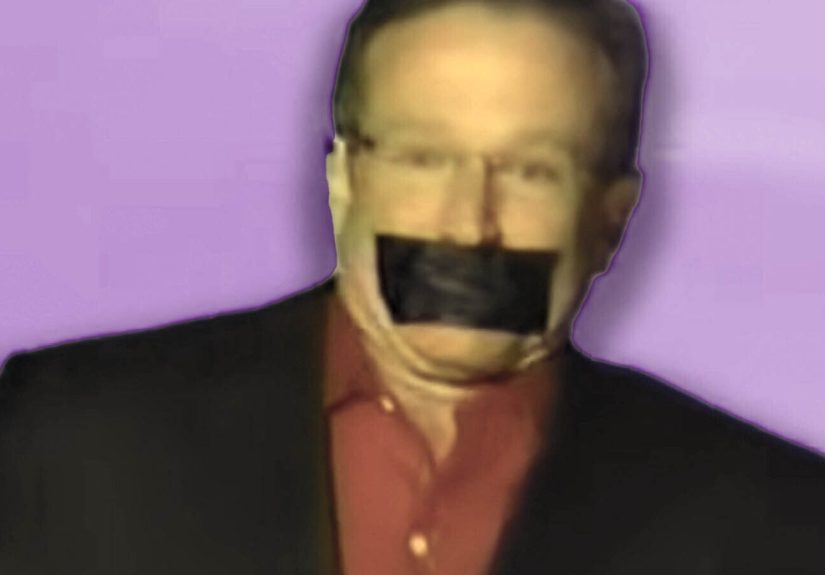
Sometimes that chaos is accidental (a cue missed, a mic gone rogue). And sometimes it’s deliberatelike the year Robin Williams stepped onstage
with tape over his mouth, silently saying what the broadcast couldn’t.
The moment was quick, clever, and perfectly Williams: a visual punchline that landed before he even spoke. And it pointed to a behind-the-scenes
battle that most viewers never knew happeneda parody song written for him to sing at the 2005 Academy Awards that ABC standards-and-practices
wouldn’t let air. The lyrics were outrageous, the target was a very specific moral panic, and the whole situation was so absurd it could’ve been
animated itself.
What Happened: A Robin Williams Musical Number… That Never Was
In 2005, Robin Williams was scheduled to present the Oscar for Best Animated Feature. That alone was a great match: a master improviser honoring
an art form built on voice, timing, and character. But Williams didn’t just want to read nomineeshe wanted to sing. So a satirical song was
commissioned from Broadway veterans Marc Shaiman and Scott Wittman.
The idea was simple: take the culture-war frenzy swirling around a children’s cartoon (yes, really) and respond with comedy that was bigger,
sillier, and more theatrical than the controversy deserved. The song would list beloved animated characters and jokingly accuse them of ridiculous
“scandals,” building to a chorus that made it sound like cartoonland had a secret underbelly. It wasn’t meant to be mean; it was meant to be a
giant, glittery eye roll.
But the network started flagging lines. Then more lines. Then the concept itself. After a painful back-and-forthrewrites, objections, and repeated
“you can’t say that” notesthe creative team ultimately pulled the number rather than perform a version that no longer felt like the same joke.
Williams still presented. He just did it the Robin Williams way: with tape over his mouth and a wink to anyone paying attention.
The Weird Cultural Spark: SpongeBob, “Tolerance,” and a Very 2005 Freakout
To understand why a cartoon-themed parody could trigger real-world censorship, you have to revisit the early-2000s media climatewhen debates about
children’s TV, “values,” and representation could light up talk radio and cable news faster than you could say “commercial break.”
The immediate spark was a controversy involving SpongeBob SquarePants and a pro-diversity campaign tied to the We Are Family Foundation. The project
encouraged kids to embrace tolerance and featured a “tolerance pledge” associated with the campaign. Some conservative groups attacked it, arguing
the pledge’s language (including a reference to “sexual identity”) crossed a moral line. The situation was widely reported, debated, anddepending
on the tellingsometimes simplified into a louder headline: “They’re saying SpongeBob is gay.”
Even at the time, there was plenty of pushback and nuance. Coverage emphasized that SpongeBob is an animated character and that the real complaint
was often framed around the pledge and messaging, not an actual storyline in the show. Around that same period, reporting also noted statements
that SpongeBob wasn’t written as “gay” or “straight” in the first place (and later conversations frequently described him as effectively asexual).
Which, of course, made the moral panic feel even more like arguing over the romantic intentions of a kitchen sponge.
For a satirist, it was irresistible: adults projecting adult anxieties onto kids’ cartoons, then demanding everyone treat the projection as an
emergency. If comedy is a pressure valve, this was a boiling pot.
The “Too Scandalous” Song: Satire Turned Up to Cartoon Volume
The song Shaiman and Wittman wrote wasn’t subtleand that was the point. It wasn’t trying to “win” an argument; it was trying to show how silly
the argument looked from orbit. The structure was a rapid-fire list of famous animated characters paired with absurd allegations: cosmetic surgery,
substance use, identity theft, scandalous romance, you name it. The joke was that if you’re determined to find corruption everywhere, you can invent
it anywhereeven in a universe where animals wear pants.
A Few Examples (Because the Joke Was the Escalation)
Some lines leaned into over-the-top tabloid energyaccusing classic characters of outrageous behavior the way gossip columns frame human celebrities.
Others were pure wordplay: a clever rhyme, a surprising reference, a twist that made you laugh because it came out of nowhere. The song’s engine
was escalation: each new “revelation” got a little more ridiculous, daring the audience to recognize the satire.
Importantly, the song wasn’t “about” the animated characters. It was about the impulse to police culture through fear. The characters were props in
a bigger comedic point: when people panic about “hidden messages,” they often end up exposing more about themselves than about the thing they’re
criticizing.
Why ABC’s Standards & Practices Freaked Out
Network broadcast televisionespecially a massive, family-viewed event like the Oscarshas always been a tightrope walk between edgy and acceptable.
The paradox is that awards shows want to feel daring (it’s Hollywood, after all), but broadcasters don’t want phone calls from viewers, watchdog
groups, advertisers, or anyone with the words “legal department” in their job title.
According to the songwriter’s own recounting at the time, the objections stacked up fast: references to drugs, references to sex, references to
“strippers,” references to disability, andmost importantlythe fear of naming real people and organizations in a way that might provoke backlash.
There’s also the classic broadcast problem: satire requires the audience to understand the joke. Standards teams are paid to worry about the subset
of viewers who won’t.
That’s the heart of why this got squashed. Not because the song was truly dangerous, but because it was unpredictable. A musical number is harder to
“steer” once it starts. It’s rhythm and momentum and punchlines on a trackgreat for comedy, terrifying for risk managers.
Robin Williams’ Response: One Piece of Tape, One Loud Message
The song didn’t happen. But the story still made it onstagebecause Robin Williams made sure of it.
When he walked out with tape over his mouth, it was a comedian’s version of a protest sign, except funnier. It communicated: “Yes, something was
cut. Yes, I know. And yes, I’m going to let you know without getting anyone fired.” Then he did what he always did: he performed anywayjust in a
different form.
This is why Williams’ live appearances remain legendary. He could pivot in real time, turn restriction into material, and make the audience feel
like they were in on the joke. Even when a segment was removed, the spirit of the segmentrebellious, playful, a little mischievousshowed up in
his presentation.
And while the Oscars can feel like a highly controlled machine, moments like that remind you it’s also a room full of artistssome of whom are
very good at slipping a message past the bouncers.
Animated Feature, Real Stakes: Why This Segment Mattered That Night
On paper, Best Animated Feature is a celebratory categoryan excuse to honor craft, imagination, and the kind of storytelling that can make both kids
and adults ugly-cry in the same two-hour window. In 2005, the category went to The Incredibles, a film that itself is partly about identity,
fear, and the pressure to conformironically relevant themes for a segment that got cut for being “too much.”
That’s what makes the censorship story so sticky: it wasn’t a random joke in a random spot. It was a creative response to a real public debate,
placed in a category that symbolically represents “family entertainment.” The irony isn’t subtle. The Oscars were honoring animation while also
treating satire about cartoons as too hot to handle.
This Wasn’t the Oscars’ First “Uh-Oh” Song Moment
If the phrase “scandalous Oscars song” rings a bell, you might be thinking of a different animated-related controversy: the year “Blame Canada”
from South Park: Bigger, Longer & Uncut was performed at the Academy Awards. That performance became famous not only for its shock value,
but for how it tested the boundaries of what the Oscars would put onstage in front of a mainstream audience.
The Robin Williams non-performance sits in the same neighborhood of cultural tension: animation colliding with adult politics, satire colliding with
broadcast caution, and producers trying to keep the night “safe” while comedians try to keep it honest. The difference is that “Blame Canada” made
it to airwhile Williams’ song became a ghost story told backstage and, years later, online.
Why We Heard About It Again in 2025
For two decades, the song existed mostly as a piece of Oscars trivia: a “can you believe this?” anecdote. Then, in 2025, Marc Shaiman publicly
shared the demo and revisited the story in a way that made it newly vividcomplete with context about why it was written, what the network objected
to, and how much bigger it might have been if performed with the full orchestration originally planned.
The timing mattered. The mid-2020s are a period when media companies feel pressure from multiple directions at once: political polarization,
social-media outrage cycles, advertiser sensitivities, and audiences that splinter into competing expectations. In that environment, the idea that a
network once panicked over a satirical cartoon song feels less like a quirky relic and more like a preview.
In other words: the story resurfaced because it still describes the entertainment world’s central anxietyhow to make culture that’s bold enough to
matter but safe enough to survive the Monday morning reaction.
What This Says About Censorship (and Why Comedy Always Finds a Side Door)
“Censorship” can sound dramatic, like secret police storming a stage. In reality, broadcast censorship often looks like a conference call,
a spreadsheet of flagged lines, and someone saying, “We love it, but…”
The Robin Williams song story captures how that process can flatten satire. Standards teams are trained to evaluate literal content (“Did you say
that word?”), while satire depends on context (“Do you understand why that word is there?”). When the gatekeepers fear misunderstanding more than
they value meaning, the safest option becomes cutting the bit entirely.
But it also shows the resilience of performers. Williams didn’t get the song, but he got the moment. The tape gag took one second, required zero
lyrics, and communicated the entire conflict. That’s why great comedians are hard to silence: even when you cut the microphone, they still have a
body, a face, and timing.
Conclusion
The “scandalous song” Robin Williams wasn’t allowed to sing at the Oscars wasn’t scandalous because it revealed real dirt about cartoon characters.
It was “scandalous” because it made the adults in the room nervousnervous that satire might poke the wrong bear, nervous that viewers might take a
joke literally, nervous that a broadcast designed to celebrate art might accidentally start a culture-war food fight.
And yet, the enduring image isn’t of a censored lyric. It’s of Robin Williams stepping onstage with tape over his mouthturning restriction into a
punchline, and reminding everyone that the most powerful part of live television is still the live human being who refuses to act pre-recorded.
Bonus Epilogue: The “Experience” of a Cut Joke (500+ Words on What It Feels Like)
If you’ve ever watched a live awards show with friends, you know the vibe: half celebration, half group chat with a remote control. Someone is
rating outfits like it’s the Olympics. Someone else is yelling “wrap it up!” at acceptance speeches. And everyone is waiting for that one moment
that feels spontaneous enough to prove you’re not just watching a fancy slideshow.
That’s why a tiny visual like Robin Williams’ taped mouth can hit so hard. Viewers may not know the full backstory, but they can feel the subtext:
something was supposed to happen, and it didn’t. In a medium that usually hides its seams, that kind of wink is electric. It creates a shared
experiencelike the performer is telling the audience, “You and I both know how this works.”
Behind the scenes, the experience is often less glamorous and more like speed-running a bureaucracy maze in formalwear. Comedy writers for live TV
frequently describe the same emotional arc: exhilaration at a bold idea, confidence during rehearsal, then a slow drip of notes that turns a sharp
joke into something softer, safer, and sometimes unrecognizable. The frustrating part isn’t just being told “no.” It’s being asked to remove the
very elements that make the joke coherentlike taking the spice out of salsa and acting surprised when it tastes like tomato water.
There’s also a very specific kind of whiplash that comes with standards-and-practices objections. On one hand, the network worries about words like
“strippers” or references that sound sexual. On the other hand, the same broadcast environment may promote scripted shows full of scandal, violence,
or melodramabecause fiction is expected to be “just entertainment,” while a comedian’s single line can be treated like a public policy statement.
For writers and performers, that inconsistency can feel surreal: you’re being asked to protect the audience from a joke on a night when the
commercial breaks may contain content that’s far more explicit.
For performers, the experience can be equal parts rage and opportunity. A less agile presenter might freeze, deliver the safe version, and move on.
But someone like Robin Williams could metabolize the restriction into new material instantly. In live comedy, limits are often fuel: you can’t say
the thing, so you create a new thing that signals the thing. It’s like stage magic, except the trick is emotional honesty. The audience laughs, but
the laugh carries information: “We see the control. We see the edits. We see the invisible hands.”
And for the audience at home, this kind of moment becomes a time capsule. Years later, people may forget who won which category, but they remember
the odd little detailsthe awkward pause, the unscripted jab, the bit that felt like it escaped. That’s the paradox of censorship on live TV:
sometimes cutting a joke makes it more famous. The missing song becomes myth. The taped mouth becomes the headline. And the story keeps circulating
because it speaks to a universal experience: everyone has had a moment where they wanted to say something true, got told “not like that,” and had to
decide whether to complyor get creative.
In the end, the “experience” of this Oscars near-miss isn’t only about one song. It’s about how culture gets negotiated in public: through fear,
through humor, through corporate caution, through artist stubbornness, andif you’re luckythrough a single brilliant gag that says everything in
silence.