Table of Contents >> Show >> Hide
- What “Occasional Furniture” Means (And Why It’s a Design Secret Weapon)
- Remodelista’s Star Example: Philippe Malouin’s Hanger Chair
- The Occasional Furniture Hall of Fame
- How to Choose Occasional Furniture Without Regretting It Later
- Styling Occasional Tables Without Creating Clutter
- Small-Space Superpowers: Fold-Flat, Stackable, and Double-Duty
- Specific Examples: Putting Occasional Furniture to Work
- Conclusion: Occasional Furniture Is the Most Underrated Upgrade
- Experiences: What Living With Occasional Furniture Is Really Like ()
If you’ve ever hosted friends in a small apartment, you already understand the spiritual significance of “occasional furniture.”
It’s the stuff that shows up exactly when you need itextra seating, an extra surface, a place to park a drink, a landing strip for keys
and then politely disappears so you can keep walking through your own home without doing a daily obstacle course.
Remodelista’s post The Ultimate in Occasional Furniture doesn’t treat “occasional” as an afterthought. It celebrates itspecifically
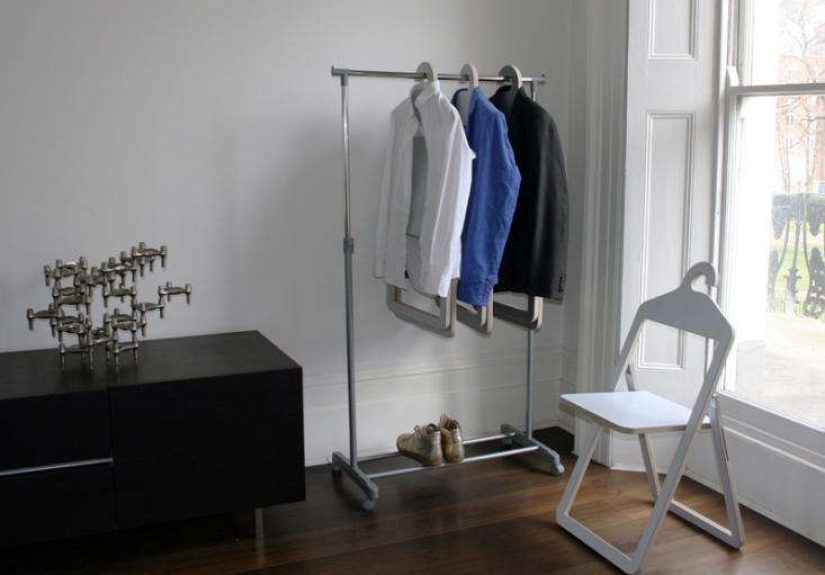
through a brilliantly practical design: Philippe Malouin’s Hanger Chair, a folding chair that can hang up like, well, an actual hanger.
It’s clever, compact, and slightly smug in the best way (like it knows it just solved three problems while you were still debating throw pillows).
What “Occasional Furniture” Means (And Why It’s a Design Secret Weapon)
Occasional furniture is the furniture equivalent of a good supporting actor: it doesn’t steal every scene, but the whole show falls apart without it.
These are the smaller, movable pieces you bring in for function, flexibility, and finishing touchesthink side tables, accent tables, nesting tables,
stools, ottomans, benches, console tables, bar carts, and yes, folding chairs that save the day when your guest list grows faster than your square footage.
The magic is in the “occasion.” You don’t need these pieces every second of the day, but when you do, you really do. And because they’re
usually small-space-friendly and easy to shift around, occasional furniture is often the easiest way to upgrade a room without changing your entire layout.
Remodelista’s Star Example: Philippe Malouin’s Hanger Chair
Remodelista spotlights Malouin’s Hanger Chair as the ultimate in occasional furniture for a simple reason: it does double duty without acting like it’s working
overtime. In chair mode, it’s extra seating for guests. In storage mode, it folds into a slim form that can be hung up, like clothing, which is borderline
miraculous if you live in a place where “storage” is a mythical creature.
The concept is also quietly brilliant from a lifestyle perspective. Remodelista points out the “inveterate host” reality: folding chairs are essential if you
entertain even occasionally. The Hanger Chair upgrades that essential item into something that’s not only functional but genuinely thoughtfulan object designed
around the real friction of small-space living.
The Occasional Furniture Hall of Fame
To build a considered home (without buying a bigger one), it helps to know the main categories of occasional furniture and what each does best.
Here are the MVPs you’ll see in well-designed spaces again and again.
1) Side Tables and End Tables: The “Put Your Drink Here” Professionals
Side tables (also called end tables or accent tables) are the most common occasional furniture for a reason: they solve small daily needslighting,
beverages, books, a phone chargerwithout demanding much space. The best rule of thumb is height: aim for a side table that’s roughly level with your sofa arm
(or just slightly below). Too low and everyone reaches like a sad T-Rex. Too high and it looks like your table is auditioning to be a lectern.
In tight rooms, consider pedestal bases, C-tables that slide under a sofa, or nesting tables that stack together when you’re not hosting.
2) Coffee Tables and Ottomans: The Center of Gravity
Coffee tables anchor a seating area, but the best ones also respect human legs. Spacing matters: keep the coffee table close enough to reach comfortably,
but far enough to allow movementmany designers aim for roughly a foot to a foot-and-a-half of breathing room between sofa and table.
If you want extra flexibility, consider an upholstered ottoman with a tray (or a coffee table with storage). This is classic multifunctional furniture:
it can be a footrest, extra seating, and a surface for snacksaka the holy trinity of casual hosting.
3) Console Tables: Skinny Legends With Big Impact
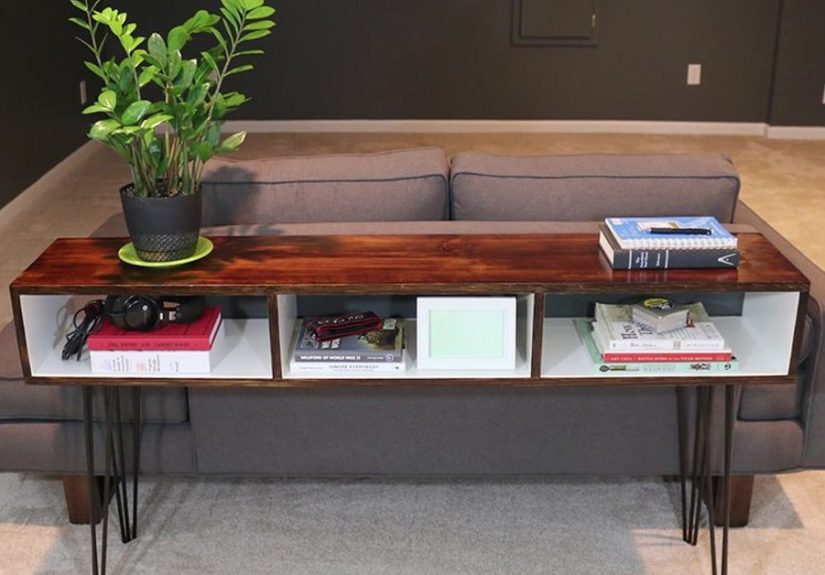
Console tables are slim surfaces that can live behind a sofa, along a wall, or in an entryway. They’re perfect for small homes because they provide function
(lighting, display, drop zone) without eating up the room. Behind a sofa, a console can visually “finish” the back of the seating area and create a spot for
lamps or booksespecially helpful in open floor plans where rooms need gentle definition.
4) Nesting Tables: The Expand-and-Contract Trick
Nesting tables are like furniture origami: you get multiple surfaces when needed, then tuck them away into a compact footprint. They’re ideal occasional tables
for people who love hosting but also love walking through their living room without bumping a shin. They also let you play with shaperound tables soften boxy
furniture lines, and mixed materials add texture without clutter.
5) Stools and Benches: The Ultimate “Floaters”
A stool can be a side table, a footrest, extra seating, or a plant stand in a pinch. Benches do similar work at a larger scalegreat at the foot of a bed,
under a window, or in an entryway where you need a place to sit and slip on shoes. If you’re building a small-space strategy, stools and benches are high-value
pieces because they travel well from room to room.
How to Choose Occasional Furniture Without Regretting It Later
Occasional furniture seems low-stakes because it’s smaller than a sofa, but it can make or break how a room functions. Here’s how to choose pieces that look
good and live well.
Prioritize Scale and Traffic Flow
- Measure first. The “cute” table online can become the “why is my walkway blocked?” table in real life.
- Respect pathways. Leave enough room for people to move around seating areas comfortably.
- Match heights. Side tables should relate to sofa arms; coffee tables should relate to seat height.
Choose a Job (Then Add a Bonus Job)
The best occasional furniture has a clear primary purposethen a secondary benefit. A storage ottoman is seating plus hidden organization. A console is a display
surface plus a subtle room divider. The Hanger Chair is seating plus vertical storage. This is the Remodelista-worthy mindset: usefulness, beautifully executed.
Mix Shapes and Materials for Balance
If your room has a big, boxy sofa, consider a round coffee table, a drum side table, or a curved stool to break up straight lines. Materials matter, too:
wood brings warmth, metal adds crispness, glass visually lightens a tight space, and upholstered pieces soften everything (and invite people to actually sit down).
Styling Occasional Tables Without Creating Clutter
Here’s the secret: a coffee table (or side table) should look intentional, not like a tiny museum gift shop exploded. Designers tend to use a few reliable
moves to keep surfaces functional and calm.
- Use a tray to corral smaller itemsremotes, matches, coastersso “everyday living” looks curated.
- Think in odd numbers (three or five objects) for balance that feels natural to the eye.
- Vary height with a stack of books, a vase, and a candle so everything isn’t the same visual volume.
- Leave landing space at the edges so guests can put down a drink without playing Jenga with decor.
If you want the simplest approach: books + something organic (flowers/branch) + something personal (a small object with meaning). That’s enough. More is not
more when you’re trying to live in your living room.
Small-Space Superpowers: Fold-Flat, Stackable, and Double-Duty
Occasional furniture shines brightest in small homes because it adapts. That’s why the Hanger Chair concept lands so well: it treats storage as part of design,
not an afterthought. If you’re furnishing a compact space, look for pieces that do one (or more) of these:
- Fold flat (chairs, wall-mounted desks, drop-leaf tables)
- Stack or nest (nesting tables, stackable stools)
- Hide storage (ottomans, coffee tables with lift tops or shelves)
- Move easily (lightweight accent tables you can pull closer during movie night)
This isn’t just about saving spaceit’s about reducing friction. When furniture is easy to move, store, and repurpose, your home feels calmer. You stop
“managing” your space and start enjoying it.
Specific Examples: Putting Occasional Furniture to Work
A Tiny Living Room That Still Hosts Friends
Start with one hardworking coffee table (or storage ottoman), add two nesting tables that can spread out when guests arrive, and keep a fold-flat seating option
like a stylish folding chair. This is where something like the Hanger Chair earns its keep: it lives quietly in a closet until it’s showtime.
An Entryway With No Built-In Storage
A slim console table plus a small stool can create a drop zone, a perch for shoes, and a spot for a lamp. Add a tray for keys and you’ve basically invented
daily sanity.
A Work-From-Home Setup That Doesn’t Take Over Your Life
A lift-top coffee table or a compact side table can become a laptop perch. Pair it with a comfortable chair that can also function as guest seating. The goal
is flexibility: work appears when needed, then disappears so your living room can go back to being a living room.
Conclusion: Occasional Furniture Is the Most Underrated Upgrade
Big furniture sets the mood, but occasional furniture sets the rhythm of daily life. It’s where you put things, how you host, how you move, and how your room
stays adaptable as your needs change. Remodelista’s love letter to Philippe Malouin’s Hanger Chair works because it captures the true point of occasional
furniture: smart design that respects space, function, and real living.
Whether you choose nesting tables, a storage ottoman, a slim console, or a fold-flat chair that hangs up like clothing, the best occasional furniture doesn’t
just fill a roomit helps your home behave better. And honestly, we could all use furniture that behaves.
Experiences: What Living With Occasional Furniture Is Really Like ()
People tend to buy occasional furniture in two moods: (1) calm, thoughtful planning or (2) “Help, guests are coming,” which is basically the interior design
version of sprinting through an airport. The lived experience of occasional furniture is that the “small” choices often have the biggest impact on how your home
feels day to day.
One common experience: realizing that a side table’s height matters more than its style name. When a table is too low, you end up hovering your drink
like it’s a delicate science experiment. When it’s too high, you feel like you’re eating chips off a podium. Households that feel “easy” to live in usually have
tables that match the sofa arms and coffee tables that sit naturally with seat height. It’s not glamorous, but it’s the difference between a room that looks good
and a room that works.
Another pattern: once people discover nesting tables, they get a little evangelical about them. The experience is pure practicalitytwo or three surfaces appear
when you’re entertaining, then tuck back into one footprint when you’re done. You don’t have to commit to a giant coffee table just to have enough space for
snacks during movie night. Nesting pieces also make it easier to “float” furniture around: one table by the sofa, one pulled up to an armchair, one pressed into
service as a bedside surface if you’re rearranging.
In small spaces, the most-loved occasional furniture tends to be the stuff that disappears. Folding chairs are a classic example. People often keep them because
they’re useful, but they complain because they’re ugly, bulky, and awkward to store. That’s why designs like the Hanger Chair resonate: the real experience of
hosting in a small home is not wanting your “maybe someday” seating to eat up your everyday space. When extra chairs can store vertically, hang on a peg, or slide
into a closet with a slim profile, hosting feels less like a furniture logistics problem.
Coffee table styling is another lived reality: everyone wants the “effortless” look, but nobody wants to move twelve objects just to set down a mug. People who
stay happiest with their coffee tables usually land on a compromiseone tray, a small stack of books, and one decorative item, with clear space left for actual
life. That’s where the “odd numbers” trick becomes practical: three items feels designed, but still leaves room to function.
Finally, there’s the experience of regret-proofing. The occasional pieces that last are the ones with a clear job and a bonus job: a stool that becomes a side
table, an ottoman that becomes storage, a console that becomes a drop zone. When you buy occasional furniture with flexibility in mind, it keeps earning its place
even as your needs changenew roommates, new routines, new hobbies, or just a new obsession with having somewhere to put your iced coffee that isn’t the floor.